What's the difference?
Eight generations over more than half a century qualifies the Volkswagen Golf as an automotive icon, standing on the shoulders of its original beetle-shaped ancestor.
It remains one of the world’s favourite cars and this 110TSI Life version is the entry-point to the local model line-up, the latest ‘8.5’ version of which arrived here just over 12 months ago.
It sits in a hotly contested small-car category, appealing to those with a preference for a conventional hatch and pure internal-combustion power.
In an automotive world now dominated by increasingly electrified SUVs, we spent a week behind the wheel to see how it shapes up as an urban specialist with occasional open road ability.
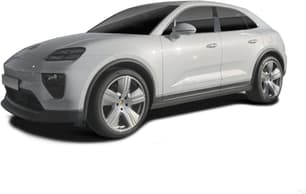
This might be the biggest gamble in Porsche's history. It's the latest version of its best-selling car, the Porsche Macan, only this one has a very big difference.
You see, this time, it’s all-electric. There is not an internal-combustion engine (ICE) in sight. And that makes climbing into an entry-level Macan significantly more expensive than ever before.
So, will this bold shift help or hinder the Macan in Australia? And is this the country’s best all-electric SUV?
There’s only one way find out.
Like the generations that preceded it, the current VW Golf 8.5 is a high-quality, comfortable and efficient small car. Add in good looks, space-efficiency, thoughtful practicality as well as class-competitive safety and you have the makings of a compelling package. The potential sticking point is this entry-level 110TSI Life’s value proposition in terms of included features relative to its purchase price and ongoing cost of ownership.
There is no doubting the substance of the Porsche Macan Electric. Its ride, steering and poise make it a joy to drive on twisting roads, and it ticks the practicality boxes, too.
The only lingering question is whether enough people are ready to make the all-electric switch. Only then will we know if Porsche's Macan gamble has paid off.
Note: CarsGuide attended this event as a guest of the manufacturer, with travel, accommodation and meals provided.
The team at VW’s Design Centre in Wolfsburg grapples with the same challenge when it comes to evolving the Golf as their contemporaries down the autobahn at Porsche face with the 911.
Over successive generations it must remain instantly recognisable as a Golf but move on to a more contemporary look and feel.
And although it’s always a subjective call I’d argue the current ‘8.5’ generation Golf answers the brief nicely.
Its neat, tightly wrapped exterior aligns with the classic Golf profile while including enough detail elements like the angular tail-lights and broad C-pillar to pass the badge removal test. Take away the VW roundels and this car is still clearly a Golf.
Neat touches include illuminated door handle recesses and broad-spoke alloy wheels that lift the visual tone.
Inside, the same juggling act stands up with sizeable screens for instruments and media balanced by a typically teutonic dash, door and console layout (with soft-touch surfaces at key points). Conservative but ultra-functional and easy to live with.
One niggle is haptic slider controls for audio volume and ventilation adjustment below the media screen rather than physical dials (although a steering wheel volume rocker switch helps).
The Macan Electric looks sharp, all aerodynamic and swept-back like a range-maximising electric SUV should.
There’s functional method behind all this swoopy styling, too. The headlights look as though they’ve been chiselled into the body work, and at the grille, you’ll find active venting to help with cooling when needed.
There is also a sizeable front splitter that looks very much like the Macan is sticking its jaw out. All of which is to assist with aero and range.
It’s also a dual charging port layout with access left and right, though the latter is AC charging only, while the one on the left does both.
Step inside the Macan and you’ll find a familiar and very welcoming space. I especially like the twin-screen set-up that looks great in the way it's kind of embedded into the dash. Each is big, clear and easy to use.
I also really like the control panel that gives you quick-button access to the climate control, and the haptic feedback is next level, with the whole screen clicking in or out whenever you hit a button.
That said, in Turbo-guise you’re dropping almost $200,000, and some of the materials feel too hard and plasticky at that price point.
At close to 4.3 metres long, less than 1.8m wide and under 1.5m tall with a 2631mm wheelbase the Golf sits at the more compact end of the small-car spectrum.
But there’s plenty of head and shoulder room up front with relatively large doors making entry and egress easy.
Storage is plentiful with bins in the doors large enough to swallow large bottles, a decent glove box, an open tray in the dash for the front passenger and twin cupholders in the centre console (one able to hide away for extra general storage), a wireless device charging bay and a coin or pen slot next to the gear selector.
Special mention goes to the padded lid on the storage box between the front seats, which in modern VW style, can ratchet up through three positions and extend out to make its side hustle as an armrest even more valuable.
Move to the back and, understandably, there’s adequate rather than copious amounts of space, roughly on a par with others in the class.
Sitting behind the driver’s seat set for my 183cm position I have decent leg and headroom and there’s enough width for three (friendly) full-size adults on a short journey but it’s best for two.
There are generous door bins, again with room for large bottles, map pockets on the front seatbacks, two (and a half) cupholders in the fold-down centre armrest and an oddments slot under twin adjustable vents at the rear of the front centre console.
Power and connectivity runs to dual USB-C jacks and a 12-volt socket up front, with another two USB-Cs in the back and a 12V in the boot.
Speaking of which, the boot measures 374 litres (VDA) with the 60/40 split-folding rear seat upright expanding to 1230L with it folded.
Interestingly, the Golf’s Corolla nemesis offers only 217 litres of boot space with all seats up. But the flagship ZR grows to 333L because it ditches a physical spare tyre for a repair/inflator kit.
Something the Golf, to VW’s credit, doesn’t do, with a space-saver spare under the boot floor. Numerous load anchors and bag hooks in there are a big plus.
The fact you’re able to tow a 1.5-tonne braked trailer (690kg unbraked) rounds out a solid practicality package.
There is a little open-sesame magic at play with the Macan, and that starts at the frunk, where, if you lovingly caress the bonnet, it will automatically pop open for you, revealing an 84-litre storage space.
Rubbing the charging port will see it slide open, too, but just in case you’re not the kind of person who likes to fondle their car in public, you can use the key.
The Macan’s boot is a little more traditional, opening to reveal 540 litres (but just 480 litres in the 4S or Turbo) of storage with the rear seats in place, with a wide, flat and very useable area for your goodies.
The back seat of the Macan feels spacious enough, without being outstanding. There’s more than enough space for my 175cm frame, with enough knee and head room, but the way the middle console juts out will definitely eat into leg room for any middle-row passenger.
Elsewhere you get air-con controls with vents, along with bottle storage in each of the doors. There is also a pull-down divider that’s home to two extra cupholders.
We may have been swamped by the SUV wave over the past couple of decades but the small hatch hasn’t disappeared and at $39,290, before on-road costs, the Golf 110TSI Life lines up against a main quintet of quality internal-combustion alternatives.
Sitting at around the same money (all prices before on-road costs) are the Hyundai i30 Premium 2.0P ($39,500), Kia K4 Sport+ Hatch ($39,090), Mazda3 G25 GT Vision ($40,410), Subaru Impreza 2.0S ($40,990) and Toyota Corolla ZR Hybrid ($39,100).
It’s the Corolla that dominates the category overall, currently outselling the Golf by a ratio of 6.5 to one (5208 vs 799 units - YTD 2026).
And in this instance, the entry-level Golf aligns with the top-spec (non-GR) Corolla ZR which would appear to place it firmly behind the eight ball in terms of value. But does it?
Aside from the performance and safety tech we’ll get to shortly the Golf 110TSI Life’s standard specification includes auto LED headlights, rear fog lights, surround lighting (projected from the door mirrors), 17-inch alloy rims, single-zone climate control, a 10.2-inch instrument display, a 10.3-inch central multimedia screen, six-speaker audio (with digital radio), Android Auto and Apple CarPlay connectivity, ‘GoConnect’ connected services, LED ambient lighting, heated and power-folding exterior mirrors, a leather-trimmed steering wheel and rain-sensing wipers.
Not exactly poverty spec, but for context the Corolla ZR matches all that and picks up 18-inch alloys, high grade LED headlights, front fog lamps, an eight-way power-adjustable driver’s seat, heated front seats, dual-zone climate, leather and synthetic suede seat trim (compared to the Golf’s cloth), a 12.3-inch instrument display, eight-speaker JBL audio and more.
The Macan arrives with four trim levels, the entry-level Macan, the Macan 4, Macan 4S and then the flagship Macan Turbo. The latter is just a name Porsche now applies to its go-fast models — obviously there isn’t an actual turbo in action.
The new electric range opens with the Macan, which lists at $128,400, before on-road costs. A reminder here that the old entry-level Macan with an ICE powertrain would have set you back less than six figures, so this one represents quite the jump.
Now, it should be pointed out that you can still buy the previous-generation ICE Macan, at least until supply runs dry. The brand isn’t getting any more, but suggests there are enough in the country to satisfy demand until around Q2 next year.
Next is the 4, which is $134,400 and adds a second e-motor. Then comes the 4S, yours for $149,300, before the range tops out with the Turbo, which climbs to $184,400. All prices before on-road costs.
Those are big numbers, but at least Australian-delivered cars are some of the best-specified on the planet.
That starts with the Macan, which gets a 12.6-inch digital instrument cluster, and a second 10.9-inch central touchscreen with Apple CarPlay and Android Auto.
It rides on 20-inch alloys, has synthetic-leather seats that are heated up front and Australian cars get things like the clever 'Porsche Active Suspension Management' (PASM) system as standard.
Next up is the Macan 4, which adds a second electric motor, but otherwise largely mirrors the base car’s spec. Next on the list is the 4S, which rides on a different 20-inch alloy, picks up LED matrix headlights, sports a better Bose stereo, a panoramic roof and four-zone climate control.
Finally, the Turbo is the big dog of the electric Macan range, packing serious power, but also arriving with its own 20-inch alloy wheel design (with 21-inch wheels a no-cost option) — an augmented reality head-up display, and things like the 'Porsche Electric Sport Sound', the 'Sport Chrono Package' and a performance-focused 'Sport+' drive mode.
As its name implies the Golf 110TSI Life is powered by a 1.4-litre turbo-petrol four-cylinder engine sending 110kW (there it is) and 250Nm to the front wheels via an eight-speed automatic transmission with shift paddles on the steering wheel.
It’s an all-alloy unit featuring direct-injection and an air-to-water turbo intercooler with variations of it used in other VW models as well as numerous Audis, Cupras and Skodas.
VW doesn’t quote a zero to 100km/h time for the standard Golf but you can expect a number in the mid-eight second bracket.
The entry-level Macan is equipped with a single rear-mounted electric motor, and it will make a total 250kW (265kW with launch control activated) and 563Nm, which is enough to push the cheapest Macan to 100km/h in 5.7 seconds.
The 4 then adds a second electric motor for AWD, upping the grunt to 285kW (300kW with the launch function) and 650Nm, and drops the sprint to a brisk 5.2 seconds.
The 4S is probably the performance sweet spot, with its dual-motor set-up generating 330kW (380kW in launch) and 820Nm, and a blistering sprint of just 4.1 seconds.
But the Macan Turbo is a true monster. We’re talking 430kW (470kW with launch control), 1130Nm and a sprint to 100km/h that’s as fast as a Carrera Cup race car – just 3.3 seconds.
It’s twin-motor, all-wheel drive and offers the kind of brutal acceleration that gives you a little facelift every time you step on the accelerator.
The Golf’s official fuel consumption figure for the combined (urban/extra-urban) cycle is 6.3L/100km, the 1.4L turbo four emitting 143g/km of CO2 in the process.
Over a week of mainly city and suburban running with some freeway sections thrown in, we recorded an on-test average of 7.4L/100km. That’s still a respectable number in the context of the category.
Brim the 50-litre tank with minimum 95 RON premium fuel and using our real-world figure you can expect a driving range in excess of 670km.
Every Macan is fitted with a big 100kWh lithium-ion battery, which helps deliver a solid driving range no matter which one you choose.
The entry-level Macan will cover the most distance, at a claimed 654km, while the 4, 4S and Turbo will travel 624km, 619km and 616km, respectively.
The Macan rides on an 800V architecture, and is set up for 270kW DC high-speed charging, which will take 21min to go from 10 to 80 per cent. It will also accept 11kW AC charging, which should take 10 hours to go from empty to full.
Worth noting, though, that most home wall boxes are around 7.0kW, which means a full charge would take more like 13 hours plus.
The Golf is a comfortable, refined and dynamically capable small hatch.
Suspension is strut front, four-link rear and combined with the 17-inch rims shod with comfy 225/45 Nexen N Fera Sport rubber the 110TSI Life manages to soak up typical suburban and highway bumps and dips well. Especially impressive for a small car with such a short wheelbase.
And despite the fact they’re trimmed in humble cloth, the front seats are super comfy and supportive.
An impressively slick 0.275 drag coefficient makes sense when you experience the modest wind noise at highway speeds.
The steering is vehicle speed and input-sensitive and road feel is outstanding. Slipping into ‘Sport’ mode and pushing through some twisting corners it feels like this humble 110TSI is a hot hatch in hiding.
The eight-speed auto transmission is smooth and taking control for more urgent shifts via the steering wheel paddles adds to the enjoyment when you’re in the mood or the need arises.
You’d never know the engine is turbocharged, with the 1.4-litre four-cylinder delivering its power in satisfyingly linear fashion, even at slow speed from low revs.
You can expect zero to 100km/h acceleration in the mid-eight second bracket with 250Nm of pulling power easily enough for confident urban lane changes and 110kW of power on tap for secure highway overtaking.
No surprise brakes are discs all around, vented at the front, and given the car weighs in at a trim 1345kg stopping power is strong and consistent.
Under the heading of general observations, the media system is quick and intuitive to use, all around vision is good despite the characteristically chunky C-pillar and although an 11.1-metre turning circle is a bit above the class average, parking is easy.
Porsche seemed at pains to prove that, though the all-electric Macan has lost its ICE heart, it's still worthy of the badge, and still very much a Porsche.
First stop, then, was the Norwell race circuit in Queensland, to put the Macan through its paces with 0-100km/h sprints, drifting (well drift attempts... ) on a watered-down skid pan and finally some high-speed running on the circuit.
And two things immediately became very clear. The first, and most obvious, was that, like the first men on the moon, we were likely among only a handful of people that might ever take their all-electric Porsche mid-size SUV to a race track. And second, this is one seriously sorted electric car.
Happily, for the many (read: every) owners who won't be pulling out of a pit garage at their next local track day, the Macan is actually more enjoyable on the road than it is on the track.
On the latter, there's a freedom to push too hard – what with the lack of trees, guard rails or oncoming traffic – and cracks do appear, mostly from the screaming tyres struggling with the two-tonne-plus weight.
But on public roads, where a thick fog of consequence prevents you pushing too hard, the Macan is a gem.
Porsche tends to have a knack for these things, I know, but the Macan is a seriously smooth and satisfying drive.
The ride is bang-on (comfortable enough on rougher surfaces, firm and grippy enough on twisting roads) and the steering is direct and confidence-inspiring.
Body-roll has been largely banished, too, with the Macan staying flat, stable and satisfying, even on the tighter stuff.
In much the same way the ICE Macan defined what it meant to be a driver's SUV, I think this one does the same in the EV space. And the fact that it does it with five seats and a decent boot is a sizeable bonus.
But there's no denying it lacks in the emotion department. That sense of excitement, the sound track, the hard-to-define fizz – as competent its this, and as weaponised as the EV powertrain is – it does feel a little clinical, like a tool doing its job and doing it well.
One important caveat. We've driven the 4 and Turbo to date. The entry-level Macan and the mid-tier 4S are still incoming. And I suspect I wouldn't be dropping my deposit on the Turbo.
Yes, the power is ridiculous, but I don't reckon you need it. For me, the 4 is more than enough, but I suspect the real performance sweet spot will be with the 4S.
The Golf was awarded a maximum five-star ANCAP rating from assessment in 2022, scoring particularly well in terms of adult and child occupant protection.
Active (crash-avoidance) tech includes a suite of ‘IQ.Drive’ features including autonomous emergency braking (AEB) with pedestrian and cyclist detection, blind-spot monitoring, lane-departure warning, park assist, front and rear proximity sensors, a reversing camera, driver fatigue monitoring and more.
Worth noting if you want the rear cross-traffic alert and exit warning you’ll need to step up to the Style grade ($44,350, before on-road costs).
If, despite all of the above, a crash is unavoidable there are nine airbags onboard - front, front side, front centre, rear side and side curtain.
For child seats there are three top tether points across the rear seat with ISOFIX anchors in the two outer positions.
That’s all on the pace for the category.
The Porsche Macan Electric is yet to be assessed by ANCAP, or by Europe’s NCAP, but it doesn’t appear to be missing any key equipment from its safety list.
That includes curtain airbags that extend all the way to the boot, AEB with pedestrian detection, lane keeping assist, a surround view camera and 'Intersection Assist'.
Volkswagen Australia covers the Golf with a five-year/unlimited kilometre warranty, which is on par with other mainstream brands like Ford, Mazda and Toyota, but behind a dozen others including Hyundai, Kia and Skoda at seven years/unlimited km with the likes of Honda at eight and MG, Mitsubishi and Nissan at 10 years conditional.
Servicing is recommended every 12 months/15,000km and three-, four- and five-year pre-paid service ‘Care Plans’ are available, with the latter for the Golf 110TSI Life locked in at $2940, which splits out to a relatively steep $588 per workshop visit. Pay-as-you-go ‘Assured Service Pricing’ works out at $621 per service.
For reference, a comparably priced Toyota Corolla ZR hatch will set you back a flat $250 per service for each of the first five years.
There are more than 100 Volkswagen dealers across the country covering all states and territories including main rural and regional areas.
The Porsche ownership experience is frankly underwhelming by modern standards, with the brand offering just a three-year/unlimited kilometre warranty, plus an eight-year/160,000km battery warranty.
The positive, though, is that servicing should only be required every two years or 30,000km. You also buy a prepaid service plan for three, four or five years, priced at $1495, $2795, $2995.