What's the difference?
Renault Australia has recently launched the first all-new Master commercial van in more than a decade, with its fourth-generation featuring new aerodynamic styling plus more power, torque, safety equipment and load-carrying capacity than the model it replaces.
We recently spent a week aboard one of these new variants, which competes in the ‘3501-7500kg GVM’ segment of Australia's 'Heavy Commercial' vehicle market, to assess its workhorse credentials from a tradie’s perspective, particularly for those thinking about upsizing from a ute or mid-size van.
So, you’re after an affordable alternative to the increasingly expensive Toyota HiLux and Ford Ranger. You need it to be tough enough for work, but also big and comfortable enough to haul family every now and again.
It’s a common predicament, and one that's increasingly served by Chinese and Korean alternatives.
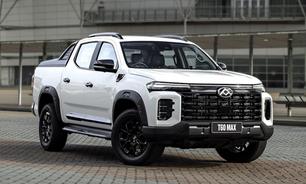
Today, we’re looking at LDV’s latest effort - the T60 Max Plus. While it looks like just another new variant from the outside, it’s hiding some significant changes underneath, and it takes its place at the top of the T60 range in 2024.
Could it be the right ute to fit your budget? Let’s take a look.
The first Renault Master was launched in 1980 and its evolution through four generations and almost half a century of commercial service has resulted in the latest model winning numerous European industry and media awards. It combines practical payloads, tow ratings and load volumes with good driver comfort, energetic performance and thrifty fuel economy, making it worthy of consideration for those wanting a large commercial van that can meet a multitude of job requirements.
The Max Plus brings a lot of welcome upgrades to the T60 range, particularly in its previously non-existent active safety suite, but it’s not all good news. There are still a few areas where this ageing ute could use a lot of polish.
Still, there’s something to be said for how refreshingly straightforward much of it is, and for the most part its specs and features are up to the task of competing with many more expensive alternatives.
Our test vehicle rides on an expansive 4215mm wheelbase with external dimensions of more than six metres in length (6315mm) and more than two metres in width (2080mm) with a height of almost 2.5 metres (2498mm). Its turning circle is 14.9 metres.
The latest Master features new wind tunnel-developed body styling to optimise aerodynamic efficiency (and therefore fuel economy). There’s also ample use of unpainted dark grey plastic in all the usual areas prone to bumps, scrapes and wear in hard-working vans including the grille, bumpers, door handles/mirror-shells and along each lower side.
The latest interior design brings a larger multimedia screen and the e-shifter for the automatic transmission has been relocated to a stalk on the steering column, even though the prominent dash protrusion which previously housed the auto’s shift lever remains (repurposed here with a small storage bin) to accommodate the base model’s manual shifter.
Although seating for up to three occupants is standard issue, a two-seat configuration (with or without the steel bulkhead) is available for MWB Mid-Roof/LWB Mid-Roof automatic models as a $400 option.
The T60 Max Plus takes the visage of a factory-kitted version of the existing T60 Plus. The most notable difference this time around is the unique gloss black grille design which features a new spot to hide the front radar array for the safety suite, alongside new gloss wheel designs and that huge sports bar fitting atop the tray.
To my eye at least the T60 looks a fair bit more rugged and industrial than most of its rivals, which with every iteration are looking more like passenger vehicles than work-ready utes. Still, there’s an aggressiveness to its contrast black trims and tall ride height which may appeal to some. For others it will be more function-over-form, with less bumper overhang than something like the SsangYong Musso and there’s something to be said for that, too, I suppose.
Inside is where this Max Plus version sets itself apart from the rest of the range with its abundance of screen real-estate, upgraded materials, and an almost EV-like centre console treatment.
It’s certainly more digital-feeling and contemporary than the rest of the T60 range, but it might lose some of the simple but rugged appeal of its interior as a result.
The screens look pretty slick, especially when you’re using phone mirroring to hide the otherwise clumsy stock software suite. It’s one thing to have nice big screens, it’s quite another to have slick, attractive, and customisable software to match.
Sadly, that’s not the case for the Max Plus, which offers one lacklustre look and feel for the dash cluster, paired with an array of confusing menus on the multimedia screen.
Our test vehicle’s 2108kg kerb weight and 4000kg GVM results in a payload rating that’s nudging two tonnes (1892kg).
It’s also rated to tow up to 2000kg of braked trailer and with its substantial 6000kg GCM (or how much weight it can legally carry and tow at the same time), it can tow its maximum trailer weight while carrying its maximum payload. And that’s a practical set of numbers for tackling a multitude of jobs.
The cargo bay, with its cavernous 13 cubic metres of load volume, measures 3857mm in length and 1537mm in width with 1885mm of internal load height. And with 1380mm between the rear wheel housings, it can carry up to three standard 1165mm-square Aussie pallets or up to four 800 x 1200mm Euro pallets.
Alternatively, if kitted out with a work bench, cabinets and shelving it could serve as a spacious mobile workspace for a variety of trades.
The cargo bay is accessed via a large kerbside sliding door with a class-leading 1312mm opening width (allowing side pallet loading) or through the twin-swing rear doors which open to a full 270 degrees (with body-mounted magnets to hold them there) for optimum forklift and loading dock access.
It doesn’t come standard with a load floor-liner (ours is fitted with a thick rubber mat) which we’d recommend to avoid scratches and dents, but all walls and doors are lined from floor to roof. There are also internal lights, a 12V power socket and large handles in the side and rear entry points to assist climbing aboard.
Cabin storage includes full-width overhead shelving, two tiers of storage in each door plus three open bins across the top of the dash with cupholders on each side. There’s a small glove box on the passenger side plus more dash storage and another 12V socket.
The hinged passenger seat base cushions also tip forward to reveal a large hidden compartment beneath. And, given our example is fitted with the optional Business Pack, the centre seat backrest folds forward to reveal a large multi-function work station (see image) for those needing an office on wheels.
There are some benefits of the new interior design, and there are some disappointments too. These begin with the seating position, which is still miles off the ground in its lowest setting. This might give you a commanding view of the road, which has benefits, but it also makes you feel like you’re sitting on the T60 rather than in it.
The steering wheel is also only pitch adjustable rather than also offering telescopic adjustment, and even then its range of movement is extremely limited. For me, at 182cm tall, this meant the wheel blocked the top of the digital instruments, and I also felt like I was far too close to the roof. It’s an awkward seating position to say the least.
However, the new cabin layout has quite a bit of storage to play with. There are functional bottle holders and pockets in the doors, a decent glove box, and the new centre console offers a huge tray underneath with a removable dual cup holder insert, which also has two little cutaways for storing your keys. This area also hides some USB ports and a 12-volt outlet, for a nice cable-free interior if need be. The armrest console box offers even more space, and the wireless phone charger perched atop the console area is a welcome touch.
Less impressive is the strip of touch-based controls for the climate which sits underneath the multimedia screen. At least it has some controls which don’t require a screen sub-menu to navigate, but it simply doesn’t compare to having actual buttons and dials.
The most puzzling part of this equation is the lack of physical controls of any kind for the headlights, and no way for the passenger to adjust volume without needing to go one or two sub-menus deep. Inconvenient at best, potentially dangerously distracting at worst.
Again, some rivals get an edge here. The Musso’s multimedia suite looks comparatively old, but has heaps of physical buttons, while the GWM Ute Cannon splits the difference, maintaining buttons but gaining confusing menus. Both are better to use than the T60.
The back seat came as a surprise, as it offers pretty decent legroom for a full-sized adult, something quite rare in this ute segment. It also offers pockets on the backs of both front seats, dual adjustable air vents and a USB port on the back of the centre console, two small bottle holders in the doors, and a further two in a centre drop-down armrest. Underneath the seats there’s access points to small storage areas below.
The tray area seems reasonably well appointed with a pre-applied spray-in tub liner and four tie-down points at the extremes of the bed. The tub dimensions come in at 1485mm long, 1131mm wide (between the arches), and 530mm tall for the standard version. The Mega Tub variant extends the length to 1800mm. Payload for the tray is 840kg for the manual, 830kg for the auto, and 800kg for the Mega Tub.
Interestingly, despite its new coil-sprung rear, the T60 Max Plus maintains its 3000kg braked towing capacity, which isn’t the 3500kg industry standard, but is pretty close.
These specs mean the standard tray version is slightly larger than the Ssangyong Musso with a slightly higher payload, although it can tow 500kg less. It has a lower payload and a smaller tray than the GWM Ute, although it can tow about the same amount.
Australia’s MY27 Renault Master range consists of four diesel models comprising Mid-WheelBase (MWB) and Long-WheelBase (LWB) with a choice of Mid-Roof (aka standard roof) and High-Roof body styles.
Our test vehicle is the LWB Mid-Roof (L3H2) finished in standard solid white paint (premium paint options available) which comes standard with a 2.0-litre turbo- diesel engine, nine-speed automatic (only the entry-level model is manual) and front-wheel drive for a list price of $61,990 plus on-road costs.
That pricing compares well with numerous European rivals including the Fiat Ducato 2.2L LWB Mid-Roof Auto ($60,500), Iveco Daily 35 S14V H2 LWB Auto ($75,447) and Mercedes-Benz Sprinter 315CDI LWB Auto ($86,107).
It comes standard with numerous work-focused features including:
Our example is also equipped with the optional Business Pack ($1000) which includes a fold-down work station (see Practicality), climate control air-conditioning, LED cabin lighting, card-type sensor key with automatic walk-away locking and push-button start.
The T60 Max Plus is the new top-spec version of one of Australia’s most affordable new utes. From the outside it looks very similar to the Max Luxe which sits below it, but hides re-worked suspension, an overhauled interior, and some extra safety kit behind its tweaked grille.
It also continues to be available as a manual at $48,411, an automatic at $50,516 and as an extended ‘Mega Tub’ version at $52,092. LDV deals in drive-away pricing, and you’ll note these prices are roughly equivalent to low-grade versions of the industry leading utes like the Ford Ranger and Toyota HiLux.
The T60 is more likely, however, to compete with other low-cost ute options, like the GWM Ute Cannon also from China (from $52,990 in equivalent XSR form) or the SsangYong Musso from Korea (from $49,500 in equivalent Ultimate form).
Standard equipment is reasonably impressive, with 18-inch gloss black alloys, LED headlights, a sports bar out the rear, spray-in tub liner, a locking tailgate (for the first time), and an abundance of gloss black highlight trims to separate it from lesser models in the range.
On the inside the highlight of the overhauled design is the dual 12.3-inch screens which make up a dash-spanning digital suite. It comes with new-ish software which looks the part at a distance, although I was a little dismayed to discover it had limited functionality, only one ugly theme for the dash cluster, and minimal customisation.
You also score (very) synthetic leather seat trim with power adjust for the driver and front passenger, and an expanded array of soft-touch surfaces throughout. It looks modern and plush from a distance, but feels less impressive once you’re actually inside.
If you want a ute which does a better job of feeling more like a luxurious passenger car, the SsangYong Musso leans into this aspect harder, and if you want something that's bit more accessorised for the rough stuff the GWM Cannon XSR looks more the part. Ultimately it feels as though this new top-spec T60 is left in something of an awkward middle ground between the two.
Of course, the new safety equipment and suspension do add something to the T60 formula, but we’ll talk more about these later in the review.
Our test vehicle is powered by a turbocharged 2.0-litre four-cylinder diesel engine which complies with Euro 6 emission standards using AdBlue and produces 125kW of power at 3500rpm and 380Nm of torque at 1500rpm. Those outputs represent gains of 15kW and 30Nm over the previous model.
It drives the front wheels through a nine-speed torque converter automatic which offers the choice of sequential manual-shifting using the steering wheel-mounted paddles.
The T60 Max range lays claim to one of the most powerful 2.0-litre four-cylinder diesel engines - a bi-turbo unit producing 160kW/500Nm with peak torque arriving from 1500rpm.
It is mated to either a six-speed manual, or an eight-speed ZF-sourced torque converter automatic transmission.
It has a 2H, 4H, and 4L selector (alongside an automatic setting for the Plus Max), and is equipped with a rear differential locker (which can only operate below 30km/h).
For those looking to venture well beyond the tarmac the T60 Max Plus has a 27-degree approach angle, a 24-degree departure angle, 220mm of ground clearance, and a 19-degree rampover angle. Wading depth is 550mm, and it has a 12.7-meter kerb-to-kerb turning circle.
Official consumption figures issued by manufacturers are not mandatory in commercial vehicles above 3.5 tonnes GVM, but for the record we completed a total test distance of 306km in mostly metro driving, of which about one third was hauling a one-tonne-plus payload. We also had the engine’s auto stop/start function switched off for the duration.
When we stopped to refuel, the dash display was claiming a thrifty 8.3L/100km which was close to our own figure of 8.8 calculated from fuel bowser and tripmeter readings.
That’s outstanding sub-10L/100km economy for a vehicle of this size (better than many utes), which should deliver a real-world driving range of around 900km from its 80-litre tank.
The official combined fuel consumption of the diesel-only Max Plus is 9.3L/100km for the manual or 8.9L/100km for the automatic.
With over 500km of testing with plenty of freeway miles, our automatic example produced an as-tested number of 9.3L/100km.
It has a commanding driving position with ample headroom, large glass areas and good vision along both flanks courtesy of its large truck-style mirrors with their lower sections offering wide-angle views.
The height/reach-adjustable steering wheel feels nice in your hands and the driver’s seat offers ample comfort with its fold-down inboard armrest and adjustable lumbar support.
However, some rake adjustment in the base cushion would be welcome as it can feel like you’re sliding forwards at times, given there’s no dedicated left footrest to brace against like the one in the passenger footwell (which of course is the driver's footwell in LHD models).
Unladen ride quality is firm, as you’d expect given its big GVM rating, but supple enough for acceptable driving comfort. The diesel powertrain is impressively quiet which combined with strong braking and responsive steering makes it easy to manoeuvre in busy metro traffic.
Ample torque ensures spirited acceleration from standing starts, combined with efficient gearing that keeps the turbo-diesel engine mostly within its peak torque zone at typical urban speeds.
Although sequential manual-shifting is available using the steering wheel paddles, we found the nine-speed auto’s snappy but smooth shifting optimised the engine’s performance. It’s also a low-stressed highway cruiser requiring only 1800rpm to maintain 110km/h, at which speed the cabin bulkhead blocks most of the cargo bay noise.
To test its GVM rating we forklifted 975kg into the cargo bay which combined with our crew of two equalled a total payload of just under 1200kg, which was still about 700kg short of its payload limit.
There was minimal compression in the leaf spring/solid beam rear suspension and although acceleration was slightly subdued it hauled this one-tonne-plus load with competence, including our 13 per cent gradient, 2.0km set climb which it easily cleared in fourth gear.
Engine-braking on the way down, in a manually-selected second gear, was not as robust as it overrode our manual selection when the engine reached 4000rpm on overrun (tacho reads to 7000rpm with no redline) and self-shifted up to third, which is an engine-protecting protocol commonly found in European vans we’ve tested.
Although the four-wheel disc brakes proved capable of maintaining the speed limit to the bottom of the descent it’s important to be aware of these engine-braking limits in commercial vans, particularly when hauling heavy loads in hilly terrain.
The T60 Max Plus has improved the formula in a few ways, but still feels a bit rudimentary in others.
The awkward seating position does provide quite a commanding view of the road, and makes it easy to gauge where the end of the bonnet is. This is useful parking in a city, but will also have benefits off the road. The 360-degree camera suite also helps with this manoeuvrability.
Interestingly the steering is quite good. This Max Plus is the only variant to score a fully electric power steering rack, as opposed to the lesser power assisted steering rack. It’s initially alarmingly light, but it also makes the T60 a breeze to steer unlike some utes in this class, and I was surprised to find it still had a sufficient amount of feel to give it confidence in the corners.
Yes, this is one of the most powerful 2.0-litre diesels, but it doesn’t feel particularly overwhelming to drive. The transmission, too, despite the brand bragging about its ZF sourcing, feels a bit transparent and rudimentary lumping through the gears with a degree of clumsiness. Still, it’s predictable and does what it says on the tin.
The same goes for the 4H and even ‘automatic’ 4x4 settings, which I found was surprisingly quick to activate if you started slipping on mud or wet tarmac.
Another less than impressive trait is the amount of sound produced. Supposedly this Pro Max version has additional sound deadening over the other variants, and yet the clatter of the diesel engine proved a constant in the cabin at freeway speeds or any time you needed to accelerate hard.
This particular version of the T60 should also feature an improved ride compared to its relations thanks to swapping the leaf sprung rear suspension out for coils, but I was surprised to find it was still quite stiff. No doubt this inherent hardness is down maintaining the same towing capacity. It makes it a bit jiggly when you drive it over the regular sort of road imperfections and corrugations. One wonders what the point of having coil spring suspension is at all if it’s going to feel more or less the same as leaf sprung alternatives.
One area that was particularly pleasing to me was the way the new active safety equipment wasn't overly invasive. There were a few moments where the lane keep tech intervened a bit too hard, but it’s pretty hands off as far as the rest of the systems go.
Overall then it does what it says on the tin, and is surprisingly easy to steer, although it doesn’t really excel at anything, which can be a hard sell in an environment where many utes are more passenger car like than ever.
ANCAP safety ratings do not apply to large commercial vans in Australia but the latest Master did earn a premium Platinum safety rating from Euro NCAP. Comes equipped with standard driver and passenger front airbags plus active safety features including:
Perhaps one of the biggest pieces of new equipment on the T60 Max Plus is the more competitive array of safety equipment than before. It includes auto emergency braking, lane keep assist with lane departure warning, and adaptive cruise control. It also gains a set of front parking sensors to add to its 360-degree parking camera suite.
Technically the LDV T60 range maintains a maximum five-star ANCAP rating, but it dates back to 2017 and is thus about to expire. It has a total of six airbags, consisting of dual front, side, and curtain.
The Master comes standard with a five years/unlimited km warranty plus five years' complimentary roadside assistance if serviced within the Renault dealer network.
Scheduled servicing is 12 months/30,000km whichever occurs first. Capped price servicing for five years/150,000km totals $4125 or an average of $825 annually which is at the higher end of service pricing among its European rivals.
Renault Australia has a national network of 50-55 dealerships across most states and territories and most provide vehicle servicing.
LDV continues to have a confusing array of ownership terms across its range. In the case of the T60, it’s seven years and 200,000km, with five years of roadside assist.
It is also one of the only brands on the market not offering any kind of capped-price service program, so it’s a mystery how much it will cost to run. Servicing is required once every 12 months or 15,000km.