What's the difference?
Renault Australia has recently launched the first all-new Master commercial van in more than a decade, with its fourth-generation featuring new aerodynamic styling plus more power, torque, safety equipment and load-carrying capacity than the model it replaces.
We recently spent a week aboard one of these new variants, which competes in the ‘3501-7500kg GVM’ segment of Australia's 'Heavy Commercial' vehicle market, to assess its workhorse credentials from a tradie’s perspective, particularly for those thinking about upsizing from a ute or mid-size van.
About a decade has passed since the Fiat Scudo mid-size (2.5-3.5 tonne GVM) van was last sold in Australia, when it shared its underpinnings with the Peugeot Expert before Fiat-Chrysler and PSA (Peugeot-Citroën) merged to become the giant Stellantis group in 2021.
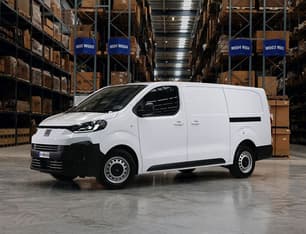
In 2026 the Scudo (which means ‘shield’ in Italian) has returned under the Fiat Professional Australia banner as the Series 3 or third-generation, again sharing its underpinnings and core styling with the Peugeot Expert but now based on the latest Stellantis 'EMP2' platform.
We recently spent a working week aboard Fiat’s new commercial offering to see how it measures up from a tradie’s perspective in this popular van segment.
The first Renault Master was launched in 1980 and its evolution through four generations and almost half a century of commercial service has resulted in the latest model winning numerous European industry and media awards. It combines practical payloads, tow ratings and load volumes with good driver comfort, energetic performance and thrifty fuel economy, making it worthy of consideration for those wanting a large commercial van that can meet a multitude of job requirements.
The Fiat Scudo LWB Primo offers a large payload rating, excellent fuel economy, peppy performance and practical features like its load-through flap. However, it also has shortcomings like a tiny tow rating and no sequential manual-shifting. So, only a potential buyer can determine if the positives outweigh the negatives when deciding if this largely badge-engineered European van is the right fit for their business.
Our test vehicle rides on an expansive 4215mm wheelbase with external dimensions of more than six metres in length (6315mm) and more than two metres in width (2080mm) with a height of almost 2.5 metres (2498mm). Its turning circle is 14.9 metres.
The latest Master features new wind tunnel-developed body styling to optimise aerodynamic efficiency (and therefore fuel economy). There’s also ample use of unpainted dark grey plastic in all the usual areas prone to bumps, scrapes and wear in hard-working vans including the grille, bumpers, door handles/mirror-shells and along each lower side.
The latest interior design brings a larger multimedia screen and the e-shifter for the automatic transmission has been relocated to a stalk on the steering column, even though the prominent dash protrusion which previously housed the auto’s shift lever remains (repurposed here with a small storage bin) to accommodate the base model’s manual shifter.
Although seating for up to three occupants is standard issue, a two-seat configuration (with or without the steel bulkhead) is available for MWB Mid-Roof/LWB Mid-Roof automatic models as a $400 option.
Like its platform-sharing Peugeot Expert associate (which differs only in cosmetic changes) and other continental rivals like the Ford Transit Custom and Renault Trafic, the Scudo has a distinctive ‘Euro’ look which combines boldly sculptured bodywork with work-focused practicality.
It also employs unpainted dark grey plastic in areas most vulnerable to bumps and scrapes including the bumpers, door mirror shells, side protection strips, sliding door tracks and hubcaps.
The cabin is spacious, comfortable and visually appealing but like the exterior is designed with work in mind given its wipe-clean vinyl floor and fabric-trimmed seating for up to three crew members, comprising a driver’s bucket seat and two-passenger bench seat.
Confusingly, the SWB and LWB share the same 3275mm wheelbase. The difference between them is purely in body length, with the LWB being 330mm longer due to its extended rear overhang.
Our test vehicle’s 2108kg kerb weight and 4000kg GVM results in a payload rating that’s nudging two tonnes (1892kg).
It’s also rated to tow up to 2000kg of braked trailer and with its substantial 6000kg GCM (or how much weight it can legally carry and tow at the same time), it can tow its maximum trailer weight while carrying its maximum payload. And that’s a practical set of numbers for tackling a multitude of jobs.
The cargo bay, with its cavernous 13 cubic metres of load volume, measures 3857mm in length and 1537mm in width with 1885mm of internal load height. And with 1380mm between the rear wheel housings, it can carry up to three standard 1165mm-square Aussie pallets or up to four 800 x 1200mm Euro pallets.
Alternatively, if kitted out with a work bench, cabinets and shelving it could serve as a spacious mobile workspace for a variety of trades.
The cargo bay is accessed via a large kerbside sliding door with a class-leading 1312mm opening width (allowing side pallet loading) or through the twin-swing rear doors which open to a full 270 degrees (with body-mounted magnets to hold them there) for optimum forklift and loading dock access.
It doesn’t come standard with a load floor-liner (ours is fitted with a thick rubber mat) which we’d recommend to avoid scratches and dents, but all walls and doors are lined from floor to roof. There are also internal lights, a 12V power socket and large handles in the side and rear entry points to assist climbing aboard.
Cabin storage includes full-width overhead shelving, two tiers of storage in each door plus three open bins across the top of the dash with cupholders on each side. There’s a small glove box on the passenger side plus more dash storage and another 12V socket.
The hinged passenger seat base cushions also tip forward to reveal a large hidden compartment beneath. And, given our example is fitted with the optional Business Pack, the centre seat backrest folds forward to reveal a large multi-function work station (see image) for those needing an office on wheels.
Our test vehicle’s 1796kg kerb weight is relatively light, which when deducted from its 3100kg GVM leaves a substantial 1304kg payload rating of which up to 170kg can be carried on the roof.
However, in stark contrast the Scudo is only rated to tow up to 600kg, which is below the 750kg threshold for mandatory trailer brakes. And Fiat does not publish a GCM rating (how much it can legally carry and tow at the same time) so we don’t know if the Scudo can carry its maximum payload while towing its maximum trailer weight.
In practical terms this tow rating would restrict users to the smallest and lightest box trailers to leave enough capacity for a decent load, which could be a deal breaker for those who need to tow heavier weights.
The cargo bay, which in LWB form provides a competitive 6.1 cubic metres of load volume, can be increased to 6.6 cubic metres by opening the large load-through flap at the lower left of the cabin bulkhead and raising the outer passenger seat’s base cushion into its vertical position.
This extends the load floor to an expansive 4024mm which allows extra-long items like timber, electrical conduit, copper/PVC pipe, carpet roles etc to slide through to the passenger footwell, which greatly increases practicality.
For example, we used this handy feature to transport several 3.6-metre wooden posts from a hardware store (see images) which would have been too long for the standard floor, so it was a convenient solution.
Our only criticism of this feature is that the flap is hinged at its base which means when opened it lies flat on the floor, which makes it more vulnerable to load damage than a top-hinged flap (like the Renault Trafic) which opens upwards and therefore out of harm’s way.
The LWB cargo bay’s load floor is 2862mm long (without using the bulkhead flap) and 1628mm wide with 1397mm from floor to roof. There’s also 1258mm between the rear wheel housings, which means it can carry up to two standard Aussie pallets or up to three Euro pallets, secured by a choice of eight load anchorage points.
The cargo bay is accessed through solid sliding doors on each side and glazed twin barn-doors at the rear (a glazed rear liftgate is available as a $700 option). The barn-doors can swing open to 270 degrees to optimise forklift and loading dock access but there are no detents in the hinges or other stays to hold them open, so they can easily swing shut in a light breeze or if parked on an incline.
There’s no standard floor protection which makes it prone to load damage but the cargo bay walls are neatly lined to mid-height plus there’s ample lighting and a handy 12V socket.
Although it can seat up to three occupants, centre seat comfort is compromised by the large dash protrusion housing the gear selector. This forces the central passenger to sit with knees skewed to the left, which also encroaches on the outer passenger’s legroom. So, a crew of three is okay for short trips but ideally should be capped at two for longer journeys.
Cabin storage includes bins in the base of each door which are big enough to carry large bottles. The dash provides cupholders on each side and a clamshell-lidded compartment in the centre plus a glove box and adjoining open storage compartment.
The Primo’s centre console has wireless phone charging in addition to the standard 12V socket and pair of USB-C ports. The centre seat backrest also folds forward to reveal a handy work desk and under its base cushion is an insulated compartment lined in polystyrene foam to help keep food and drinks hot or cold.
Australia’s MY27 Renault Master range consists of four diesel models comprising Mid-WheelBase (MWB) and Long-WheelBase (LWB) with a choice of Mid-Roof (aka standard roof) and High-Roof body styles.
Our test vehicle is the LWB Mid-Roof (L3H2) finished in standard solid white paint (premium paint options available) which comes standard with a 2.0-litre turbo- diesel engine, nine-speed automatic (only the entry-level model is manual) and front-wheel drive for a list price of $61,990 plus on-road costs.
That pricing compares well with numerous European rivals including the Fiat Ducato 2.2L LWB Mid-Roof Auto ($60,500), Iveco Daily 35 S14V H2 LWB Auto ($75,447) and Mercedes-Benz Sprinter 315CDI LWB Auto ($86,107).
It comes standard with numerous work-focused features including:
Our example is also equipped with the optional Business Pack ($1000) which includes a fold-down work station (see Practicality), climate control air-conditioning, LED cabin lighting, card-type sensor key with automatic walk-away locking and push-button start.
The Scudo is available in a choice of short wheelbase (SWB) or long wheelbase (LWB) and two trim levels across four models, comprising the entry-level Scudo SWB ($48,490, plus on-road costs) and better equipped Primo SWB ($50,990), plus the Scudo LWB ($50,490) and Primo LWB ($52,990).
Our test vehicle is the top-shelf Primo LWB with its sub-$53K list pricing in the same ballpark as the major players in this league including the Ford Transit Custom Trend LWB Auto ($57,890), Hyundai Staria Load Premium Auto ($52,740) and Toyota HiAce LWB Auto ($53,880).
Like all models in the Scudo range, it shares the same 2.0-litre four-cylinder diesel engine and eight-speed automatic transmission plus other standard features including 16-inch steel wheels with 215/75 R16C tyres and a full-size spare, front/rear parking sensors including side-of-vehicle coverage, reversing camera, front fog lamps and heated door mirrors to name a few.
Inside there’s a metal bulkhead to separate the cabin from the cargo bay plus a heated driver’s seat, steering wheel audio controls, 12V socket and two USB-C ports, a 10-inch digital instrument cluster, 10-inch multimedia touchscreen including wireless Apple/Android connectivity and more.
The Primo, which costs $2500 more than the base model, adds body coloured exterior door handles, automatic LED headlights, keyless entry/start, a leather wrapped and heated steering wheel, unique interior door trim highlights, wireless phone charging, dual-zone climate control, LED cargo bay lighting, a fold-down work desk and a load-through flap in the bulkhead (see Practicality).
Our test vehicle is powered by a turbocharged 2.0-litre four-cylinder diesel engine which complies with Euro 6 emission standards using AdBlue and produces 125kW of power at 3500rpm and 380Nm of torque at 1500rpm. Those outputs represent gains of 15kW and 30Nm over the previous model.
It drives the front wheels through a nine-speed torque converter automatic which offers the choice of sequential manual-shifting using the steering wheel-mounted paddles.
The Scudo is powered by a 2.0-litre four-cylinder turbo-diesel engine which produces 110kW at 4000rpm and 370Nm of torque at 2000rpm.
It drives the front wheels through an eight-speed torque converter auto transmission which in Australian delivered specification does not include the choice of sequential manual shifting.
Our test vehicle rides on a quartet of coil springs courtesy of MacPherson strut-style front and oblique wishbone rear suspension. Steering is via electric power-assisted rack and pinion and stopping is courtesy of four-wheel disc brakes.
Official consumption figures issued by manufacturers are not mandatory in commercial vehicles above 3.5 tonnes GVM, but for the record we completed a total test distance of 306km in mostly metro driving, of which about one third was hauling a one-tonne-plus payload. We also had the engine’s auto stop/start function switched off for the duration.
When we stopped to refuel, the dash display was claiming a thrifty 8.3L/100km which was close to our own figure of 8.8 calculated from fuel bowser and tripmeter readings.
That’s outstanding sub-10L/100km economy for a vehicle of this size (better than many utes), which should deliver a real-world driving range of around 900km from its 80-litre tank.
Fiat claims an official average combined (urban/extra-urban) cycle consumption of just 6.3L/100km and the dash display was claiming a slightly higher 7.3 figure when we stopped to refuel at the completion of our test, which covered 334km and included our usual mix of suburban, city and highway driving of which about one third was hauling more than one tonne of payload.
Our own figure, calculated from fuel bowser and tripmeter readings, was only slightly higher at 7.8L/100km which is outstanding economy for a mid-size commercial van in real-world driving conditions. So, based on our test consumption, you could expect a lengthy driving range nudging 900km from its 69-litre diesel tank.
It has a commanding driving position with ample headroom, large glass areas and good vision along both flanks courtesy of its large truck-style mirrors with their lower sections offering wide-angle views.
The height/reach-adjustable steering wheel feels nice in your hands and the driver’s seat offers ample comfort with its fold-down inboard armrest and adjustable lumbar support.
However, some rake adjustment in the base cushion would be welcome as it can feel like you’re sliding forwards at times, given there’s no dedicated left footrest to brace against like the one in the passenger footwell (which of course is the driver's footwell in LHD models).
Unladen ride quality is firm, as you’d expect given its big GVM rating, but supple enough for acceptable driving comfort. The diesel powertrain is impressively quiet which combined with strong braking and responsive steering makes it easy to manoeuvre in busy metro traffic.
Ample torque ensures spirited acceleration from standing starts, combined with efficient gearing that keeps the turbo-diesel engine mostly within its peak torque zone at typical urban speeds.
Although sequential manual-shifting is available using the steering wheel paddles, we found the nine-speed auto’s snappy but smooth shifting optimised the engine’s performance. It’s also a low-stressed highway cruiser requiring only 1800rpm to maintain 110km/h, at which speed the cabin bulkhead blocks most of the cargo bay noise.
To test its GVM rating we forklifted 975kg into the cargo bay which combined with our crew of two equalled a total payload of just under 1200kg, which was still about 700kg short of its payload limit.
There was minimal compression in the leaf spring/solid beam rear suspension and although acceleration was slightly subdued it hauled this one-tonne-plus load with competence, including our 13 per cent gradient, 2.0km set climb which it easily cleared in fourth gear.
Engine-braking on the way down, in a manually-selected second gear, was not as robust as it overrode our manual selection when the engine reached 4000rpm on overrun (tacho reads to 7000rpm with no redline) and self-shifted up to third, which is an engine-protecting protocol commonly found in European vans we’ve tested.
Although the four-wheel disc brakes proved capable of maintaining the speed limit to the bottom of the descent it’s important to be aware of these engine-braking limits in commercial vans, particularly when hauling heavy loads in hilly terrain.
It’s easy to step aboard and the car-like driving position is spacious and comfortable given I’m 186cm and have ample head and legroom with good eyelines to all mirrors. In that context, the centre seat headrest can be easily removed and stored when not required to improve the central mirror’s view through the bulkhead window.
The flat-bottom steering wheel leaves plenty of torso clearance for easy entry and exit plus there’s plenty of adjustment in the driver’s seat with its manually altered lumbar support and fold-down inboard armrest. A wide left footrest provides additional comfort and support.
Unladen ride quality is excellent given the suppleness of its four-coil suspension, enhanced by load-adaptive dampers which allow a softer ride when unladen but automatically increase damping resistance under heavy loads.
The eight-speed auto offers crisp and smooth shifting, which combined with close to 400Nm of torque and a relatively light kerb weight ensures energetic performance. Although torque peaks at 2000rpm the engine displays ample flexibility either side of that figure, which ensures good throttle response in the mostly metro driving we encountered.
The engine is relatively quiet during highway travel with most noise coming from the tyres, which can become intrusive at these speeds particularly on coarse bitumen surfaces.
To test its GVM rating we forklifted 975kg into the cargo bay which combined with driver equalled a total payload of 1075kg that was about 200kg less than its legal limit. The rear suspension only compressed about 40mm under this weight which ensured plenty of travel remained and it hauled this sizeable payload with ease.
Two criticisms, the first being the absence of sequential manual shifting offered in other markets, which is desirable when hauling heavy loads in hilly terrain and optimising engine braking on steep descents.
We also noticed the traffic sign recognition (TSR) function worked fine with traditional metal signage but became glitchy when interpreting the brightly illuminated speed signs displayed on overhead motorway gantries.
ANCAP safety ratings do not apply to large commercial vans in Australia but the latest Master did earn a premium Platinum safety rating from Euro NCAP. Comes equipped with standard driver and passenger front airbags plus active safety features including:
The MY26 Fiat Scudo scored a Gold grading in ANCAP’s Commercial Van Safety Comparison, which is one grade lower than the premium Platinum achieved by several rivals including the Ford Transit Custom and Toyota HiAce. Active safety includes Autonomous Emergency Braking (AEB) with pedestrian and cyclist detection, lane keeping assist, blind-spot monitoring, intelligent speed assist, traffic sign recognition, driver attention assist, front and rear parking sensors including side-of-vehicle coverage, tyre pressure monitoring and more, but no adaptive cruise control like Ford's Transit Custom.
The Master comes standard with a five years/unlimited km warranty plus five years' complimentary roadside assistance if serviced within the Renault dealer network.
Scheduled servicing is 12 months/30,000km whichever occurs first. Capped price servicing for five years/150,000km totals $4125 or an average of $825 annually which is at the higher end of service pricing among its European rivals.
Renault Australia has a national network of 50-55 dealerships across most states and territories and most provide vehicle servicing.
The Fiat Scudo comes standard with a five-year/200,000km warranty and five years' roadside assist which is competitive with the major players.
Scheduled servicing is every 12 months/20,000km whichever occurs first, which is also up there with rivals and twice as good as the Toyota HiAce’s six months/10,000km requirement.
However, local servicing costs for the Scudo are yet to confirmed, which hampers cross-shopping for potential buyers.
Fiat Professional has a relatively small national network of around 10-15 dealers.