What's the difference?
What’s the closest thing we have to a modern-day Holden Statesman/Caprice?
If, like General Motors, you obliterate Australia’s Own from existence altogether, you’re left with time-honoured rivals also made in this country, like the Ford Fairlane, Chrysler by Chrysler and Toyota’s Crown and Avalon.
But they’re also all in history’s dustbin (well, the American ones, anyway), leaving the humble Camry as the sole living nameplate with any connection to Australian manufacturing.
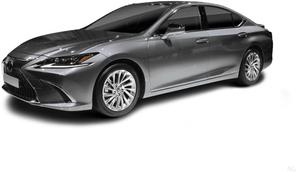
And since the Lexus ES is a close relative, we’re going to take a fresh look at the latest version, with a view of it as a bit of a survivor of a bygone era – where aspirational vehicles were created from normal family sedans.
Just like the Fairlane, Crown and of course, the Caprice.
Launched in mid 2018 but facelifted in 2021, we test the ultimate version of the seventh-generation ES, the 300h Sports Luxury – or SL, if we’re to make yet another tenuous connection to long-gone Holdens.
Let’s go!
If you know the Mercedes-AMG C 63 S, you know it’s a hardcore V8 thumper with little in the way of bashfulness. It’s a brawler. A beast.
Now there’s an even more eye-catching AMG C 63 S Coupe, which we’re testing here. It’s the Aero Edition - a collector’s version of the current-generation C 63 S Coupe with a bit more visual bling that also helps it stick to the road better.
It is a local area special edition, with only 63 examples to be sold across Australia and New Zealand. And if the rumours are true, the next-generation will see the V8 engine in danger of being axed in favour of a hybrid, high-performance four-cylinder version. Say it ain’t so!
Well, if the CarsGuide crystal ball turns out to be right, maybe one of these C 63 S Aero Editions is worth getting in your garage quick-smart. Or is it? Let’s go through the criteria and see how it stacks up.
There’s no denying the Sport Luxury is imposing, spacious, plush, chock-full of kit, efficient, speedy and pleasingly relaxing up to a point.
But its interior is also dated and true ride comfort can be elusive beyond smooth roads for this top-of-the-line version to make the grade as a proper luxury sedan.
The ES 300h feels more like an aspirational Toyota than a Lexus for the (wealthier) masses, especially after recent triumphs like the latest NX and RX SUVs. The Camry DNA is difficult to disguise, as the amused strangers who sat in our test car uninvited thinking it was their Camry highlights.
Sure, the hybrid is no Chevy V8, but in many other ways, the Sport Luxury seems like the modern successor to the Holden Caprice experience.
The Mercedes-AMG C 63 S Aero Edition is an absolute beast of a car, but it comes at a pretty hefty price. Yes you get a lot of performance, and the fact there are only 63 examples being made for Australia and New Zealand could be enough to get you to sign on the line. For me, though, if I was after a C 63, it’d have to be a wagon. It doesn’t need an Aero pack to look better.
Historically, cars like the ES appeal to an older and more conservative demographic, who value imposing, conspicuously-expensive looking sedans offering the luxury of space. This is the Cadillac model and our Lexus embodies it.
Which is why hire company operators snap such vehicles up. Great for airport-hotel-airport runs.
But it’s weird, given how much of Lexus’ design language is in the ES’ elaborate nose and tail treatments, how generically Toyota this looks. Certainly, our test car’s 'Sonic Quartz' white paint job does not help.
Just to reinforce this perception, two strangers were fully sat inside our unlocked test Lexus before they realised it wasn't their actual car parked nearby – a white Camry of course.
How they laughed. But if I had paid over $80K for my ES, I certainly wouldn't be amused.
I’ve never been the biggest fan of the current C-Class Coupe’s styling. To me, it has always looked a little droopy, a little melted at the back.
I have to say, the Aero Edition has changed my opinion somewhat, as the new graphic elements help lift it up a bit, visually raising its rear up like a stretching cat, tail in the air. I’m still not 100 per cent on it, but to my eye it’s better.
The carbon-fibre trim elements that have been added to the exterior certainly add some menace to the look, too, and I simply can’t help but constantly notice out of the corner of my eye the AMG pressing in the staggered, dished rims. At a glimpse, from a distance, it looks like rim damage, but thankfully it’s not!
The staggered set-up does really add some width and mongrel to the look, as if it needed more, with its open maw lower bumper air dam, and the signature 'Panamericana' grille treatment which looks like an evil character out of a movie. If you know the one I’m talking about, let me know in the comments.
As much as the look matters when it’s parked in your driveway, it’s the cabin that arguably matters more, right? That’s where you spend your time, after all. Check out the interior images to see if you think it lives up to the exterior look.
The ES 300h may look like a gussied-up Camry on the outside, but there’s very little evidence of the Toyota inside the stretched cabin, with Lexus-specific seating, trim and dashboard.
However, if you’re familiar with the latest LS, NX or RX models, much of what you see is now dated, previous-gen tech, and that’s an issue in some key ways.
Let’s start with the SL positives, though.
Quiet and free from rattles, the interior is defined by its first-class fit and finish, and then closely followed by the vast length inside, with ample room up front to stretch out and relax in. The ES’ substantial width adds to the sense of spaciousness.
Ventilation is excellent, exemplary even, with strong and effective climate control all around the car. Great for very hot days.
The front seats provide practically infinite adjustment in most directions, and include a handy thigh-support extender that – like everything else inside – moves electrically.
Comfy and supportive, they do a fine job. Effective heated and vented cushions and backrests are further bonuses.
But let's call out the hard front headrests. They feel cheap. And the ES’ age now shows in other, eyebrow-raising ways for an $80K-plus machine.
The dash is a messy mix of now-dated Lexus styling cues – from the ugly asymmetrical centre console to the single circular instrumentation dial for speed and tachometer.
The original IS 200's analogue watch face theme was cool in '99. Today's iteration looks basic.
Storage seems poorly judged given the vastness of this sedan, provided for by cavities in the sub-sized centre armrest, glove box and door bins. Note that the latter cannot hold bottles.
Then, there’s the ill-conceived touchpad that requires brain-surgery precision when fingered to navigate the main display screen when driving (though now it's also a touchscreen, and not before time); after years of various iterations of this, it remains alien and confounding in the extreme to operate. Rest assured, it's been banished in newer-gen Lexuses.
Also annoying is the infernal ‘please obey all traffic regulations’ voice warning, just like you find in a Yaris; the limited and easily-flummoxed voice-control tech and the dated and low-fi graphics for the needlessly complicated sat-nav system.
We relied on CarPlay because the in-built item endlessly let us down. Chuck them all out.
However, there are upsides to a dated interior, because even though this is a confusing and at-times intimidating button-fest, it’s still preferable to the today's everything-behind-a-touchscreen mania.
Give us physical switches and buttons every time, like the ES. Yes, the Lexus also has them replicated within the central display, but the point is, the driver has a choice.
You shouldn't be shocked to learn that the Sports Luxury impresses most as a sumptuously comfortable back-seat experience.
Rear access is easy, the passengers can adjust the front seat, climate control and audio systems via handily-sited switches (meaning they're replicated thrice in some instances).
Limo luxury amenities include individually-reclinable and heated outboard seats that are downright sumptuous, blinds for all glass (electric for the rear window), a lined centre bin, face-level air vents, two USB ports, a 12V outlet, generously-sized elbow rests on the doors, overhead lighting and door pockets are also included.
This is tailored as an airport/hotel shuttle and very comfortable doing so.
No folding backrest, though, meaning the boot – though not small at 454 litres – lacks the load-through facilities now common in most other sedans, including the Camry.
Under the flat floor is a space-saver spare with the words ‘SPACE MISER MKIII’ emblazoned across it. Classy.
In summary, the ES’ interior is one of two parts – comfortable but dated up front, invitingly lush out back. Perfect for its intended station in life then.
No two-door coupe is going to offer you the space and comfort of a sedan or wagon, that’s just a fact. But that only matters if you plan to actually use the rear seats. If you don’t, then the Coupe version of the C 63 S might be perfect for you.
Even so, I managed to (only just) squeeze myself between the seat and the door opening to slide into the rear row. This won’t be easily achieved by all attempters, especially on the driver’s side.
Let’s just say I probably looked like I was doing something very weird to the driver’s seat as I spider-manned my way in.
The rear space is tight for someone my height (182cm/6’0”) behind their own driving position, with knees hard-up against the seat in front and not much headroom (my noggin’ was brushing the ceiling) or toe space (size 12s don’t fit so well) to speak of.
It’s certainly a selfish car. Or maybe it’d be fine for smaller kids. There are two spaces in the back, both with ISOFIX child seat anchors and top-tether points.
But there is storage in the back - cupholders and storage caddies either side of the seats, though the storage situation improves in the front zone, with bottle holders in the doors, cupholders between the seats, loose item storage under the media screen and a covered centre armrest bin, too.
The front cabin is a special looking place, with carbon-fibre abounding across the dash and nice trim on the doors. The AMG steering wheel is a sight to behold - it’s a flat-bottomed unit with carbon-fibre and Dinamica (that’s Benz talk for microsuede) trim: perfect for sapping sweat as you manhandle the C63 through the bends.
The seats are AMG Performance sports units up front, and the trim used is reserved for this model specifically: Nappa leather with yellow stripes. There are yellow details elsewhere, including on the rear seats, centre console and dash, and it certainly adds some visual excitement.
Media is controlled by a 10.25-inch display and Mercedes-Benz’s touchpad control system, but there is no touchscreen - rendering the Apple CarPlay and Android Auto smartphone mirroring technology somewhat tedious.
I’ve always had a gripe with screens that don’t allow touch but feature the tech that’s designed to transfer your phone’s screen to the media unit, and I can tell you the longer you spend twiddling the dial to get where you want to go, the more annoying it becomes.
The Burmester sound system has 13 speakers and is rather good, but I prefer the sound from the standard fit variable sports exhaust. So maybe that quibble with CarPlay isn’t that big a deal.
And if you just want to charge your phone, and there’s a second USB port up front, as well. Note: in non-Aero Edition C 63 models without the carbon-fibre interior pack, you also get Qi wireless phone charging, but it’s deleted from this variant and any model with the carbon pack.
The driver has a 12.3-inch digital info display to show where you are and what the car is up to, and there’s a head-up display as well. Yep, there’s standard sat nav with live traffic updates (and even live fuel price updates) - it’s just a shame the maps still look early 2000s-spec in 2D layout.
Cargo space is okay. The claimed cargo capacity or boot volume is 355 litres (VDA) with the rear seats in place. That’s small for a coupe of this size, and the shape of the boot (with a hump behind the rear seat) isn’t great as things do move around quite a bit.
But, thankfully, Mercedes has included its clever foldable storage box system under the boot floor - it goes where you might usually expect a spare wheel, but there isn’t one in this car. Instead you get Mercedes’ 'Tirefit' repair kit with an electric pump.
The second-oldest Lexus nameplate after the LS flagship, Australia skipped the fifth-gen version from 2006 to 2012 altogether because it was ousted by the smaller, sportier and more-popular IS series.
However, the latter’s 2021 demise saw the situation flipped, with the ES retaking the mantle as the affordable Lexus sedan torchbearer, while also belatedly replacing the larger GS.
This all coincided more-or-less with a facelift later that year, which brought revised front-end styling, uprated safety, updated multimedia, extra kit and a beefier body, among other changes.
Plus, a (slightly) cheaper non-hybrid ES version returned, dubbed 250. Starting from $61,620 (all prices are before on-road costs), it uses the Camry’s 2.5-litre four-cylinder atmo petrol engine.
However, the 300h hybrid from about $2K more is the better seller, with its electric motor and battery pack assistance. Our test SL flagship kicks off from $78,180, and heaves with standard equipment.
On the safety front, the usual array of driver-assist tech is present, starting with Lexus’ pre-collision system that includes Autonomous Emergency Braking (AEB), blind-spot monitor, adaptive cruise control and lane-keep warning/assist. See the safety section for more.
The biggest change inside is the now-touchscreen-enabled 12.3-inch display, boasting a 360-degree view camera, Apple CarPlay, Android Auto, digital radio, a 17-speaker Mark Levinson audio system, CD player (!) and shockingly sub-par satellite navigation.
Beyond that, Sports Luxury buyers also score tri-beam LED headlights with adaptive high beams, an informative 8.0-inch driver display, a heated steering wheel, sunroof, powered heated/vented front seats (with memory setting for the driver), a wireless charger, head-up display, keyless entry/start, powered steering column (including retraction for easier access), active noise-control tech, rear privacy glass with sunshades, a powered boot lid with kick sensor, semi-aniline leather with a choice of walnut trims, tri-zone climate control, powered/reclining/heated outboard rear seats with centre armrest climate and audio controls, 18-inch alloys and performance (but not adaptive, crucially) dampers. More on that later.
All Lexus models also include an ‘Encore’ aftersales subscription program offering myriad offers and services including 'free' car rental.
Everything but the cliché sink, then, but is the 300h SL actually good value for money?
No rival can match the Lexus’ mix of sheer size, hybrid efficiency, spec generosity and aftersales support.
But around that $80K mark, the cheaper yet roomier Skoda Superb and smaller Volvo S60/V60 and VW Arteon 206TSI all feature all-wheel drive, as do the classy Audi A4/A5 quattros, while the rear-drive-biased BMW 3/4 Series, Genesis G70 and Alfa Romeo Giulia are far more focused on character and athleticism. Serious competition all.
And, as we found out, none can be mistaken for a Camry. Image is important at this level.
Look, I’m not likely to ever be in the position to say that a car that costs $188,600 plus on-road costs is “good value”, but to be honest, if you’re in that position, you’ll be getting plenty of car for your cash.
The Carbon Edition of the C 63 S Coupe adds $17,200 over the standard version of the high-performance two-door, but it adds a bunch of extras to help justify its price. A car like this is always going to be seen by some as a profligate purchase, right? You need to be able to justify spending an extra MG3’s worth of cash on this Edition.
The noticeable exterior bits include an AMG Performance rear spoiler, a model specific front lip, rear diffuser, and side facings for the rear apron air vents. Carbon-fibre is used in the front apron A-wing, the side sill inserts, rear diffuser insert, rear spoiler and the side mirror casings.
There’s more carbon-fibre inside the cabin, which we’ll cover off in the interior section. Other additions over the standard C 63 S Coupe include ceramic composite front brakes (402mm six-piston) and 360mm single-piston rear brakes, and there are “ultra-lightweight” AMG forged 'Matt Black' alloy wheels with 19-inch rims at the front and 20s at the rear.
And in nice news, the car you see here has no optional extras fitted at all. The colour is 'Iridium Silver', one of only two options for this limited run model (the other available hue is Polar White, and both come at no extra cost).
Standard inclusions comprise leather interior trim, heated and electric adjustable front seats, dual-zone climate control, a 10.25-inch media screen with sat nav and smartphone mirroring, DAB radio, 13-speaker Burmester sound system, 12.3-inch digital driver info display, head-up display (HUD), ambient lighting, and performance items like active dynamic engine mounts, an adaptive AMG performance exhaust, a rear differential lock, and adaptive sports suspension.
Plus there’s a full-spec safety offering which we’ll cover in the section below.
Thinking about what cars compete with this one? There’s the Audi RS 5 Coupe (from $150,900), the Lexus RC F (from $136,636), and the BMW M4 Competition (from $167,829). So the C 63 S - which is already expensive comparatively - looks positively pricey in Aero Edition spec.
Doing duty in a cornucopia of Toyota products, the ES 300h’s A25A-FXS engine remains the same as the pre-facelift model, meaning it is a 2487cc (2.5-litre), double overhead cam, 16-valve Atkinson Cycle in-line four-cylinder petrol unit with variable valve timing.
In this application, it makes 131kW of power at 5700rpm and 221Nm of torque between 3600rpm and 5200rpm, and sends that through to the front wheels via an e-Continuously Variable Transmission (CVT) with a sequential shift facility offering artificially stepped 'ratios' for a more-conventional automatic transmission sensation.
A series/parallel full hybrid system, the engine is backed up by a permanent magnet synchronous electric motor, delivering 88kW and 202Nm, and is fed by a tiny 1.6kWh Nickel-metal hydride battery pack.
With only a couple of kilometres of pure-EV driving availability, and only under light throttle or when coasting along, the latter is recharged via the petrol engine as well as recaptured energy from the regenerative braking system. Combined power output is 160kW. No combined torque maximum is stated.
With an impressive power-to-weight ratio of 92kW/tonne, the 1740kg 300h needs 8.9 seconds to reach 100km/h, and maxes out at 180km/h.
To handle all that movement and mass, the steering is an electrically powered rack and pinion set-up, the front suspension consists of MacPherson-style struts and the rear suspension is made up of a multi-link arrangement.
Open the shapely bonnet of the C 63 S and you’ll find a hand-assembled horsepower-monster engine with a printed name plaque to prove it.
The 4.0-litre twin-turbo V8 produces 375kW of power at 6250rpm, and 700Nm of torque from 2000-4500rpm. It runs a standard-fit nine-speed 'Speedshift MCT' (multi-clutch transmission) automatic, and it’s rear-wheel drive. And yes, that means it likes to boogie.
The claimed 0-100km/h time is just 3.9 seconds, and top speed is apparently pegged at 250km/h. Yeesh.
The name on the “Handcrafted by” plaque on this particular engine? Hat tip to you, Julian Rembold. This is quite a piece of work.
Rated as Euro 6, the ES 300h requires a minimum brew of 95 RON premium unleaded petrol.
But that’s where the bad news stops, because over 626km of all sorts of driving in hot weather with the tri-zone climate control in full workout mode, we averaged an extremely commendable 5.6 litres per 100km. Well done, Lexus.
That’s against the official combined average of 4.8L/100km, which equates to just 109 grams per kilometre of carbon dioxide emissions. Not bad.
With the 50L tank brimmed, expect a real-world range of about 890km – or 1041km using the official average fuel consumption figure.
Either way, the 300h is mighty frugal for a 5.0-metre long and 1.8-tonne luxury machine. But cab and hire companies already knew that from their Camry hybrids, right?
High numbers are what AMGs are about. Sadly that’s the case not only for performance outputs but also fuel consumption.
The official combined cycle fuel use claim for the C 63 S Coupe is 10.3 litres per 100 kilometres, and you need to fill it with 98RON premium unleaded fuel, too.
On test? Well, across a mix of different driving - urban, highway, back road and spirited stints - I saw an 'at the pump' return of 12.2L/100km, while the digital readout stated 12.0L/100km.
Given the performance on offer, and how much I took advantage of it during my week with the car, that’s not bad…
Fuel tank capacity is 66 litres. So go easy if you know there won’t be a fuel stop for a while.
In the right conditions, the ES 300h is a big, squishy, comfy drive. At low speeds, for instance, thanks to an airtight cabin that does a great job isolating its pampered occupants from the outside world.
You cannot hear the car on start-up because the electric motor whirrs this Lexus off the line instantly, silently and effortlessly. And aided by all the surround-view cameras, the steering is light and direct enough to make parking a breeze. Automotive Valium to soothe your weary head after a long day.
Likewise, get the ES out on a smooth motorway and that relaxed feeling remains, with the 300h being right at home as it lopes along quietly and steadily. Cocooned in sumptuous leather and walnut, the adaptive cruise control gently rolling with the ebb and flow of traffic, it’s easy to zone out in here.
Find an empty stretch of road and you might also be impressed at how instantaneous the 300h’s throttle response is, leaping into action and piling on the speed without even breaking a sweat. This thing ain't slow!
Likewise, if you must hurry through a tight set of corners, the Lexus will remain composed and in control, without skipping a beat. Even the brakes seem well tuned and nicely modulated – something that many electrified vehicles struggle to achieve. It’s all so nice and easy.
So, what’s the catch?
First of all, while hushed when pussyfooting around, the illusion of posh sophistication is shattered once the accelerator pedal is prodded down hard, with the accompanying engine noise seeming incongruous.
Perhaps it’s because we’ve been lulled into an electric peace, but once the revs are up, no amount of sound-deadening will quell the mechanical roar.
And it's that same Camry hybrid symphony you've probably heard hundreds of times before, in the back of a taxi hurrying to the airport.
Except in the Lexus, it's far-more muffled. Like you're wearing headphones.
Then there’s the question of bonding. While the ES 300h will do what’s asked of it capably and without complaint, there is nothing to connect car with driver.
By this, we mean that the steering is remote and feels numb at all times, with little to no feedback. Enthusiasts will search for the short way home. This is the anti-Alfa Giulia - technically a rival.
Most people will not care about that, but on the Sport Luxury’s 18-inch wheel and 235/45R18 tyre package – while modest by today’s standards – the ride quality is less than ideal on anything but smooth roads.
The ES can easily cope with small-frequency surface irritations, but seems to lack sufficient suppleness dealing with larger bumps and pot holes.
There’s an underlying and often unyielding firmness that undermines this car’s luxury aspirations. We’d dial back the taut handling for more cushiness if we could. Or fit a decent set of adaptive dampers.
Plus, the Dunlop Sport Maxx tyres aren’t as quiet as we’d expect on some of our coarser bitumen surfaces.
Comfy on smooth roads, fast when you need it to be, fit enough to go exactly where you point it to without losing composure, and wonderfully economical even when driven like it’s been stolen, the 300h has much to offer from a driving point of view.
But you won’t be aching to drive it just for fun’s sake. And you’ll quickly learn which roads are less than perfect in your neck of the woods.
Just one word sprang to my mind when it comes to accurately describing the performance on offer from this car. The word is ‘brutal’.
Smash the accelerator and the power and torque on offer is enough to make your eyes feel like they’re not doing the right thing anymore. You get pushed back in your seat with a surge, and your ears are also rewarded with one of the best soundtracks in the automotive world.
The engine builds pace with enormous intent, and the sound that comes from under the bonnet and out the back through the exhausts is addictive.
Yes, there is an active exhaust button which you have to press to make sure that you hear all that noise if you’re running around in 'Comfort' mode, and during my time with the car it was active the whole time.
I had some questions from neighbours over the week that I had this car about whether it was actually nice to live with on a day-to-day basis. And the answer is yes, if you put it in comfort mode it’s surprisingly amenable.
The ride is really well sorted at pace despite having a bit of that trademark low-speed wobble that seems to afflict Mercedes products from A-Class through to the GLE SUV. But it wasn’t bad enough to really bother me, as most of my time was on highways and backroads.
The steering is direct and accurate. The only thing you need to be aware of is that you will lose traction at the rear axle when you put your foot down hard. And for the enthusiast that’s exactly what you want.
I know I want to feel the thing squirm under throttle. It’s a rear-drive V8 coupe, after all. You want to feel like you’re a vein in its bicep muscle; you know, the one you see in a weightlifter’s arms – the one that wiggles around a lot. You want to have that. Right?
On the performance front it is exceptional. Twist the little dial on the wheel to 'Sport' or 'Sport+' (I didn’t sample 'Race' mode as I wasn’t at a racetrack), and everything feels like it’s had a protein shake.
Even so, in that mode it steers brilliantly, there's a nice feel through the wheel, and the ride, while stiff, controls the body brilliantly when you change directions.
The transmission is very good, too. In Comfort mode it can take just a second or two at first to become accustomed to the idea that you want to drive aggressively.
But in Sport mode, or when you select the manual transmission mode using the trigger button on the steering wheel, you will certainly get the most out of the engine. That’s what I did when I was driving it in a ‘spirited’ manner.
If you are just after that high-end Coupe cruiser experience, it’s a relatively quiet car (provided the surface below isn’t the coarsest of coarse-chip bitumen), with enough luxuriousness to make it feel premium as well as sporty. That’s an important thing to consider, especially at this price point.
Tested in 2018 under a less-strict regime, the ES delivers a maximum five-star ANCAP crash-test rating result. Back then, it scored especially strongly in Adult, Child and Vulnerable Road User categories, and quite well for Safety Assist tech.
There are 10 airbags in total (offering dual frontal, side chest, side head and front-occupant knee protection). The AEB system works between 10km/h and 180km/h, while the lane-tracing, lane-keep and emergency steering assist systems are operational from 50km/h to 200km/h.
Other driver-assist tech includes rear cross-traffic alert, blind-spot monitoring, adaptive cruise control with full stop/go and road-sign recognition and 'Intersection Assist' with 'Turning Assist'. The latter warns and brakes the car if the driver attempts to turn into oncoming traffic.
These are backed up by adaptive LED headlights with auto high beams, 360-degree view cameras, tyre pressure monitors and 'Lexus Connected Services' that can notify emergency services in an accident and track a stolen ES. An alarm with intrusion sensor is also fitted.
You’ll also find anti-lock brakes with brake-assist and electronic brake-force distribution, stability and traction control systems, three rear-seat child-seat tether anchorages and two ISOFIX latches, fitted to the outboard positions of the back bench.
There is no applicable ANCAP crash test rating for the Mercedes C-Class Coupe, nor is there one for the C 63 specification. But when it was tested back 2014, the sedan scored five stars - as you’d expect.
It is comprehensively equipped in terms of safety technology, including auto emergency braking (AEB) with pedestrian and cyclist detection (from 7.0km/h to 70km/h) and it’s active for cars from 7.0km/h to 250km/h.
Plus there’s lane departure warning and active lane keeping assistance (from 60km/h to 200km/h), blind spot monitoring with 'Active Blind Spot Assist' that will stop you from veering into oncoming traffic, front and rear cross traffic alert, and adaptive cruise control (Distronic) with traffic jam assist.
The C 63 also features 'Route Based Speed Adaptation', which can adjust your speed based on where the car thinks you are on the map. Just note - if you’re driving through new tunnels that haven’t been flashed to your car’s nav (as happened to me in Sydney during my testing week) - then you could find the car dramatically braking for surface-level intersections. You can switch the system off, thankfully.
There are nine airbags fitted, and while you mightn’t use the rear seats much there are ISOFIX and top tether points for both positions (yes, only two).
Here is where Lexus really excels nowadays.
Since the beginning of 2021, it caught up with most other manufacturers by offering a five-year, unlimited kilometre warranty with roadside assistance – up from four-years and 100,000km previously. Free towing and loan vehicles are provided for that period, too.
Service intervals are at 12 months or 15,000km, whichever comes first.
The ES offers three years and 45,000km of capped-price servicing, with each one costing $495 – as well as a free loan vehicle and car wash.
Plus, there’s also Lexus’ ‘Encore’ aftersales subscription program offering myriad offers and services.
Mercedes-Benz is among the minority of luxury brands now offering a five-year/unlimited kilometre warranty plan - most still have three-year cover. So that’s a tick.
And the service intervals are pegged at 12 months/20,000km. Another tick.
Plus you can either pre-pay your service plan in three-year ($3800), four-year ($6000) or five-year ($6550) plans - roll it into the finance package, and it won’t hurt quite as much.
According to Mercedes, the three-year coverage option makes for a $900 discount over pay-as-you-go servicing.
Roadside assistance covers the five-year new car warranty period, too. So Mercedes seemingly takes good care of its customers. But if you have any concerns or questions over reliability, problems, issues or complaints about the C 63, check out our AMG C 63 problems page.