What's the difference?
What’s the closest thing we have to a modern-day Holden Statesman/Caprice?
If, like General Motors, you obliterate Australia’s Own from existence altogether, you’re left with time-honoured rivals also made in this country, like the Ford Fairlane, Chrysler by Chrysler and Toyota’s Crown and Avalon.
But they’re also all in history’s dustbin (well, the American ones, anyway), leaving the humble Camry as the sole living nameplate with any connection to Australian manufacturing.
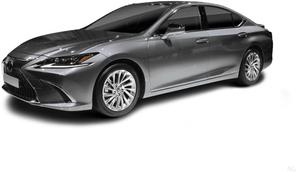
And since the Lexus ES is a close relative, we’re going to take a fresh look at the latest version, with a view of it as a bit of a survivor of a bygone era – where aspirational vehicles were created from normal family sedans.
Just like the Fairlane, Crown and of course, the Caprice.
Launched in mid 2018 but facelifted in 2021, we test the ultimate version of the seventh-generation ES, the 300h Sports Luxury – or SL, if we’re to make yet another tenuous connection to long-gone Holdens.
Let’s go!
As a child, my parents - who aren't car people - would see a Jaguar and point. It didn't matter if it was an XJ, Daimler Double Six or a Mark II, there was a great deal of mystique around these bastions of Britishness. It also didn't matter that these weren't necessarily good cars. The Seventies and Eighties saw the brand slide into a funk while being passed between owners like hot potatoes.
Somehow, the brand survived its brush with Ford's useless Premier Automotive Group strategy which only came good towards the end as Jaguar's management woke up and put in place a change in direction that produced the Ian Callum-designed XF. Riding high on that design, Jaguar then promptly introduced the very pretty Jaguar XJ.
It has been on sale for ages, but with the addition of a few bits and bobs to stay competitive, it's as compelling as ever. Most importantly, the performance-focused R has kept its unique supercharged V8.
There’s no denying the Sport Luxury is imposing, spacious, plush, chock-full of kit, efficient, speedy and pleasingly relaxing up to a point.
But its interior is also dated and true ride comfort can be elusive beyond smooth roads for this top-of-the-line version to make the grade as a proper luxury sedan.
The ES 300h feels more like an aspirational Toyota than a Lexus for the (wealthier) masses, especially after recent triumphs like the latest NX and RX SUVs. The Camry DNA is difficult to disguise, as the amused strangers who sat in our test car uninvited thinking it was their Camry highlights.
Sure, the hybrid is no Chevy V8, but in many other ways, the Sport Luxury seems like the modern successor to the Holden Caprice experience.
It might be old and facing German competition bursting with advanced technology, but the XJR is still a car you can buy with heart and head. But mostly your heart. It goes like stink, has a much better interior than the Quattroporte and is more interesting than just about anything this big or this grand.
It's also a better car than the Maserati Quattroporte if you want to get on with the driving yourself and is far prettier than the Porsche Panamera. It's a wonderful thing and even more wonderful that Jaguar continues to build it. Long live that supercharged V8 and the XJ is a great home for it.
Historically, cars like the ES appeal to an older and more conservative demographic, who value imposing, conspicuously-expensive looking sedans offering the luxury of space. This is the Cadillac model and our Lexus embodies it.
Which is why hire company operators snap such vehicles up. Great for airport-hotel-airport runs.
But it’s weird, given how much of Lexus’ design language is in the ES’ elaborate nose and tail treatments, how generically Toyota this looks. Certainly, our test car’s 'Sonic Quartz' white paint job does not help.
Just to reinforce this perception, two strangers were fully sat inside our unlocked test Lexus before they realised it wasn't their actual car parked nearby – a white Camry of course.
How they laughed. But if I had paid over $80K for my ES, I certainly wouldn't be amused.
The XJ has a marvellously exaggerated length, with a rear overhang redolent of Jag's sporting coupe and roadster pair of the time of its launch, the XK. There's nothing else in the segment like it, with the three Germans - Mercedes' S-Class, Audi's A8 and BMW's 7 Series - having gone all Hugo Boss and and in the latter two's case, almost shrinking violet. The only credible Japanese alternative, the Lexus LS, looks like a Lexused 7 Series. The XJR is a more emotional car, like Maserati's Quattroporte.
The R adds an aggro grille, 20-inch wheels with low-ish profile tyres, a bootlid spoiler, red brake calipers and vents in the bonnet. Bits and pieces get the black gloss treatment and there are V8 and R badges, as well as a rather large leaper on the bootlid. Capping it all off are four exhausts poking out from the bumper and distinctive vertical taillights.
Inside remains largely unchanged. The cabin is big and luxurious, leather-lined and very, very comfortable. The front air vents have to be modelled on the de Havilland Comet's integrated jet engine intakes and, again, the dash design stays away from the horizontal lines of its obvious competition.
There is probably a bit much chrome for my liking, particularly on the centre console and around the rotary dial shifter, which reflects sunlight into your face during the day.
The lovely 'Riva Hoop' - a band that sweeps from door to door across the top of the dash - is a great touch and remains a defining feature in the cabin. The last update brought an Audi-like digital dashboard, including maps, but it's not nearly as slick as the German. The graphics for the dials are good (and quick) but the maps are a bit so-so.
The ES 300h may look like a gussied-up Camry on the outside, but there’s very little evidence of the Toyota inside the stretched cabin, with Lexus-specific seating, trim and dashboard.
However, if you’re familiar with the latest LS, NX or RX models, much of what you see is now dated, previous-gen tech, and that’s an issue in some key ways.
Let’s start with the SL positives, though.
Quiet and free from rattles, the interior is defined by its first-class fit and finish, and then closely followed by the vast length inside, with ample room up front to stretch out and relax in. The ES’ substantial width adds to the sense of spaciousness.
Ventilation is excellent, exemplary even, with strong and effective climate control all around the car. Great for very hot days.
The front seats provide practically infinite adjustment in most directions, and include a handy thigh-support extender that – like everything else inside – moves electrically.
Comfy and supportive, they do a fine job. Effective heated and vented cushions and backrests are further bonuses.
But let's call out the hard front headrests. They feel cheap. And the ES’ age now shows in other, eyebrow-raising ways for an $80K-plus machine.
The dash is a messy mix of now-dated Lexus styling cues – from the ugly asymmetrical centre console to the single circular instrumentation dial for speed and tachometer.
The original IS 200's analogue watch face theme was cool in '99. Today's iteration looks basic.
Storage seems poorly judged given the vastness of this sedan, provided for by cavities in the sub-sized centre armrest, glove box and door bins. Note that the latter cannot hold bottles.
Then, there’s the ill-conceived touchpad that requires brain-surgery precision when fingered to navigate the main display screen when driving (though now it's also a touchscreen, and not before time); after years of various iterations of this, it remains alien and confounding in the extreme to operate. Rest assured, it's been banished in newer-gen Lexuses.
Also annoying is the infernal ‘please obey all traffic regulations’ voice warning, just like you find in a Yaris; the limited and easily-flummoxed voice-control tech and the dated and low-fi graphics for the needlessly complicated sat-nav system.
We relied on CarPlay because the in-built item endlessly let us down. Chuck them all out.
However, there are upsides to a dated interior, because even though this is a confusing and at-times intimidating button-fest, it’s still preferable to the today's everything-behind-a-touchscreen mania.
Give us physical switches and buttons every time, like the ES. Yes, the Lexus also has them replicated within the central display, but the point is, the driver has a choice.
You shouldn't be shocked to learn that the Sports Luxury impresses most as a sumptuously comfortable back-seat experience.
Rear access is easy, the passengers can adjust the front seat, climate control and audio systems via handily-sited switches (meaning they're replicated thrice in some instances).
Limo luxury amenities include individually-reclinable and heated outboard seats that are downright sumptuous, blinds for all glass (electric for the rear window), a lined centre bin, face-level air vents, two USB ports, a 12V outlet, generously-sized elbow rests on the doors, overhead lighting and door pockets are also included.
This is tailored as an airport/hotel shuttle and very comfortable doing so.
No folding backrest, though, meaning the boot – though not small at 454 litres – lacks the load-through facilities now common in most other sedans, including the Camry.
Under the flat floor is a space-saver spare with the words ‘SPACE MISER MKIII’ emblazoned across it. Classy.
In summary, the ES’ interior is one of two parts – comfortable but dated up front, invitingly lush out back. Perfect for its intended station in life then.
It might be over five metres long, but the Jag's cabin isn't as gigantic as that might suggest - luckily, if you want space, the XJ L has it. The SWB version is roomy enough, though, just not palatial. You can fit five people, but the big transmission tunnel will limit the size of that fifth.
Front and rear passengers have a pair of cupholders each, with rubber bubbles to help hold smaller cups in tight. The front and rear doors have pockets but aren't really for bottles.
Boot space is a reasonable 520 litres, with a space saver spare under the floor.
The second-oldest Lexus nameplate after the LS flagship, Australia skipped the fifth-gen version from 2006 to 2012 altogether because it was ousted by the smaller, sportier and more-popular IS series.
However, the latter’s 2021 demise saw the situation flipped, with the ES retaking the mantle as the affordable Lexus sedan torchbearer, while also belatedly replacing the larger GS.
This all coincided more-or-less with a facelift later that year, which brought revised front-end styling, uprated safety, updated multimedia, extra kit and a beefier body, among other changes.
Plus, a (slightly) cheaper non-hybrid ES version returned, dubbed 250. Starting from $61,620 (all prices are before on-road costs), it uses the Camry’s 2.5-litre four-cylinder atmo petrol engine.
However, the 300h hybrid from about $2K more is the better seller, with its electric motor and battery pack assistance. Our test SL flagship kicks off from $78,180, and heaves with standard equipment.
On the safety front, the usual array of driver-assist tech is present, starting with Lexus’ pre-collision system that includes Autonomous Emergency Braking (AEB), blind-spot monitor, adaptive cruise control and lane-keep warning/assist. See the safety section for more.
The biggest change inside is the now-touchscreen-enabled 12.3-inch display, boasting a 360-degree view camera, Apple CarPlay, Android Auto, digital radio, a 17-speaker Mark Levinson audio system, CD player (!) and shockingly sub-par satellite navigation.
Beyond that, Sports Luxury buyers also score tri-beam LED headlights with adaptive high beams, an informative 8.0-inch driver display, a heated steering wheel, sunroof, powered heated/vented front seats (with memory setting for the driver), a wireless charger, head-up display, keyless entry/start, powered steering column (including retraction for easier access), active noise-control tech, rear privacy glass with sunshades, a powered boot lid with kick sensor, semi-aniline leather with a choice of walnut trims, tri-zone climate control, powered/reclining/heated outboard rear seats with centre armrest climate and audio controls, 18-inch alloys and performance (but not adaptive, crucially) dampers. More on that later.
All Lexus models also include an ‘Encore’ aftersales subscription program offering myriad offers and services including 'free' car rental.
Everything but the cliché sink, then, but is the 300h SL actually good value for money?
No rival can match the Lexus’ mix of sheer size, hybrid efficiency, spec generosity and aftersales support.
But around that $80K mark, the cheaper yet roomier Skoda Superb and smaller Volvo S60/V60 and VW Arteon 206TSI all feature all-wheel drive, as do the classy Audi A4/A5 quattros, while the rear-drive-biased BMW 3/4 Series, Genesis G70 and Alfa Romeo Giulia are far more focused on character and athleticism. Serious competition all.
And, as we found out, none can be mistaken for a Camry. Image is important at this level.
As is expected at this level, Jaguar was not mucking about with price or specification - the XJR starts at a mildly terrifying $299,995, which is very close to the rather more tranquil Autobiography long-wheelbase relax-o-mobile.
Standard are 20-inch alloys, a 20-speaker stereo, power everything with three memory positions, four-zone climate control, keyless entry and start, front and rear parking sensors, heated and cooled front and rear seats, sat nav, LED headlights and DRLs, leather everywhere, auto wipers and (LED) headlights, electric boot lid, heated steering wheel and a space saver spare.
The Meridian-branded stereo is an absolute cracker, powered by the improved but still laggy 'InControl Pro' system. Oddly, it's all crammed into an 8.0-inch touchscreen when there is seemingly room for the larger (and better-performing) 10.0-inch screen. The software is far superior than the version that preceded the last update, but the screen is hard to use, as targets are placed right in the corners and are hard to hit.
Apple CarPlay and Android Auto are also absent, and the sat nav is still fairly dopey.
A long list of options are available, some of which should probably be included in the big sticker price - DAB+ ($620), premium paint is a splutter-worthy $2060 (although, to be fair, the vast majority of the 19 colours are free), adaptive cruise with queue assist ($2200), adaptive headlights a further $2620 and 'Parking Assist', which adds side sensors and a front camera, a further $2780. Reverse cross traffic alert, blind spot monitoring and forward collision warning cost yet another $1460. Ouch.
Doing duty in a cornucopia of Toyota products, the ES 300h’s A25A-FXS engine remains the same as the pre-facelift model, meaning it is a 2487cc (2.5-litre), double overhead cam, 16-valve Atkinson Cycle in-line four-cylinder petrol unit with variable valve timing.
In this application, it makes 131kW of power at 5700rpm and 221Nm of torque between 3600rpm and 5200rpm, and sends that through to the front wheels via an e-Continuously Variable Transmission (CVT) with a sequential shift facility offering artificially stepped 'ratios' for a more-conventional automatic transmission sensation.
A series/parallel full hybrid system, the engine is backed up by a permanent magnet synchronous electric motor, delivering 88kW and 202Nm, and is fed by a tiny 1.6kWh Nickel-metal hydride battery pack.
With only a couple of kilometres of pure-EV driving availability, and only under light throttle or when coasting along, the latter is recharged via the petrol engine as well as recaptured energy from the regenerative braking system. Combined power output is 160kW. No combined torque maximum is stated.
With an impressive power-to-weight ratio of 92kW/tonne, the 1740kg 300h needs 8.9 seconds to reach 100km/h, and maxes out at 180km/h.
To handle all that movement and mass, the steering is an electrically powered rack and pinion set-up, the front suspension consists of MacPherson-style struts and the rear suspension is made up of a multi-link arrangement.
Jaguar's lovely 5.0-litre V8 with supercharger continues under the XJ's long and shapely bonnet, delivering a walloping 404kW and a tyre-shredding 680Nm. The sprint to 100km/h for all 1875kg of XJR is completed in an impressive 4.6 seconds, which was very competitive at the car's launch in 2009.
Power reaches the rear wheels via ZF's eight-speed automatic and you can control it with the tacky plastic paddles on the steering wheel. Oh, and it has stop-start.
Rated as Euro 6, the ES 300h requires a minimum brew of 95 RON premium unleaded petrol.
But that’s where the bad news stops, because over 626km of all sorts of driving in hot weather with the tri-zone climate control in full workout mode, we averaged an extremely commendable 5.6 litres per 100km. Well done, Lexus.
That’s against the official combined average of 4.8L/100km, which equates to just 109 grams per kilometre of carbon dioxide emissions. Not bad.
With the 50L tank brimmed, expect a real-world range of about 890km – or 1041km using the official average fuel consumption figure.
Either way, the 300h is mighty frugal for a 5.0-metre long and 1.8-tonne luxury machine. But cab and hire companies already knew that from their Camry hybrids, right?
The combined cycle figure for the V8 is listed at 11.1L/100km but fully expect to see the 16.1L/100km we got, especially as you try and fail to tyre of the monstrous power delivery and lovely (if muted) V8 roar.
Luckily, even if you're belting it, the 82 litre tank is a generous size and you'll cover a fair amount of ground.
In the right conditions, the ES 300h is a big, squishy, comfy drive. At low speeds, for instance, thanks to an airtight cabin that does a great job isolating its pampered occupants from the outside world.
You cannot hear the car on start-up because the electric motor whirrs this Lexus off the line instantly, silently and effortlessly. And aided by all the surround-view cameras, the steering is light and direct enough to make parking a breeze. Automotive Valium to soothe your weary head after a long day.
Likewise, get the ES out on a smooth motorway and that relaxed feeling remains, with the 300h being right at home as it lopes along quietly and steadily. Cocooned in sumptuous leather and walnut, the adaptive cruise control gently rolling with the ebb and flow of traffic, it’s easy to zone out in here.
Find an empty stretch of road and you might also be impressed at how instantaneous the 300h’s throttle response is, leaping into action and piling on the speed without even breaking a sweat. This thing ain't slow!
Likewise, if you must hurry through a tight set of corners, the Lexus will remain composed and in control, without skipping a beat. Even the brakes seem well tuned and nicely modulated – something that many electrified vehicles struggle to achieve. It’s all so nice and easy.
So, what’s the catch?
First of all, while hushed when pussyfooting around, the illusion of posh sophistication is shattered once the accelerator pedal is prodded down hard, with the accompanying engine noise seeming incongruous.
Perhaps it’s because we’ve been lulled into an electric peace, but once the revs are up, no amount of sound-deadening will quell the mechanical roar.
And it's that same Camry hybrid symphony you've probably heard hundreds of times before, in the back of a taxi hurrying to the airport.
Except in the Lexus, it's far-more muffled. Like you're wearing headphones.
Then there’s the question of bonding. While the ES 300h will do what’s asked of it capably and without complaint, there is nothing to connect car with driver.
By this, we mean that the steering is remote and feels numb at all times, with little to no feedback. Enthusiasts will search for the short way home. This is the anti-Alfa Giulia - technically a rival.
Most people will not care about that, but on the Sport Luxury’s 18-inch wheel and 235/45R18 tyre package – while modest by today’s standards – the ride quality is less than ideal on anything but smooth roads.
The ES can easily cope with small-frequency surface irritations, but seems to lack sufficient suppleness dealing with larger bumps and pot holes.
There’s an underlying and often unyielding firmness that undermines this car’s luxury aspirations. We’d dial back the taut handling for more cushiness if we could. Or fit a decent set of adaptive dampers.
Plus, the Dunlop Sport Maxx tyres aren’t as quiet as we’d expect on some of our coarser bitumen surfaces.
Comfy on smooth roads, fast when you need it to be, fit enough to go exactly where you point it to without losing composure, and wonderfully economical even when driven like it’s been stolen, the 300h has much to offer from a driving point of view.
But you won’t be aching to drive it just for fun’s sake. And you’ll quickly learn which roads are less than perfect in your neck of the woods.
Indecently quick, surprisingly agile and heaps of fun. While the first descriptor applies purely because of its size, the next two shouldn't when you're in command of 5.13 metres of motor vehicle. As with the Audi and now the 7, the Jag has a lot of aluminium to help keep the kilos off and good gracious, it has worked.
The R is based around the short wheelbase version of the XJ for perhaps obvious reasons. Even so, it appears to be the shorter-again XF's because this thing turns in like a demon. No, it won't stay with the dearly-departed XF-R but it does a mighty fine impression of one, just with a better ride quality.
Rear seat passengers should be prepared to feel a lot of wheelslip, especially when in Dynamic mode, as even the fat Pirelli P-Zero's struggle for purchase when the right foot hits the carpet. The V8 rumbles rather than bellows, but the rears cheerfully spin up until the computers and active differential rein things in. Traction control off and you've got a proper tyre-smoker if you're not playing by the rules. Jag's engineers are clearly hooligans at heart.
As always, ZF's eight-speed transmission does an incredible job of marshalling the horses in a rearward direction and when you're not after a bit of sound and light, have achieved a tremendous amount with the damping. When in normal mode, the car glides along, so much so that the lady of the house wasn't so sure it was a sporting sedan.
Once she was apprised of dynamic mode (you have to cycle the button through winter mode first, for some reason), her only complaint was that it was too long and the steering wheel too big for this type of car. I was persuaded of the latter, especially after stepping out of an Audi S3 which has a tiny wheel. Long story short, the XJR is now 'her' car (to be more accurate, the XFR is, but that hasn't arrived yet, so...), as it felt smaller than it was when not parking and she's a sucker for a torquey V8.
Tested in 2018 under a less-strict regime, the ES delivers a maximum five-star ANCAP crash-test rating result. Back then, it scored especially strongly in Adult, Child and Vulnerable Road User categories, and quite well for Safety Assist tech.
There are 10 airbags in total (offering dual frontal, side chest, side head and front-occupant knee protection). The AEB system works between 10km/h and 180km/h, while the lane-tracing, lane-keep and emergency steering assist systems are operational from 50km/h to 200km/h.
Other driver-assist tech includes rear cross-traffic alert, blind-spot monitoring, adaptive cruise control with full stop/go and road-sign recognition and 'Intersection Assist' with 'Turning Assist'. The latter warns and brakes the car if the driver attempts to turn into oncoming traffic.
These are backed up by adaptive LED headlights with auto high beams, 360-degree view cameras, tyre pressure monitors and 'Lexus Connected Services' that can notify emergency services in an accident and track a stolen ES. An alarm with intrusion sensor is also fitted.
You’ll also find anti-lock brakes with brake-assist and electronic brake-force distribution, stability and traction control systems, three rear-seat child-seat tether anchorages and two ISOFIX latches, fitted to the outboard positions of the back bench.
The whole XJ range has six airbags, ABS, stability and traction controls, emergency brake assist, reversing camera, three top tethers and two ISOFIX points. The XJ doesn't have an ANCAP safety rating.
Here is where Lexus really excels nowadays.
Since the beginning of 2021, it caught up with most other manufacturers by offering a five-year, unlimited kilometre warranty with roadside assistance – up from four-years and 100,000km previously. Free towing and loan vehicles are provided for that period, too.
Service intervals are at 12 months or 15,000km, whichever comes first.
The ES offers three years and 45,000km of capped-price servicing, with each one costing $495 – as well as a free loan vehicle and car wash.
Plus, there’s also Lexus’ ‘Encore’ aftersales subscription program offering myriad offers and services.
Jaguar offers a three year/unlimited kilometre warranty and roadside assist for the same period.
Like the F-Type, XJ owners benefit from three years/100,000km free servicing.