What's the difference?
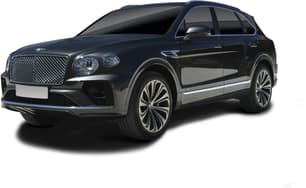
Yes, you can drive your Bentley and keep your family. It's called compromise, or the Bentayga, Bentley's SUV.
The Bentayga my family has been living with is the Azure grade which promises to be even more comfortable and pleasant than the rest of the range.
Comfort is important and we'll cover the Bentayga's lavish details in time, but our mission first and foremost is to find out if the Bentayga makes a good family SUV.
It’s pretty hard to miss the LDV D90.
Mainly because it is gigantic; it's one of the biggest SUVs you can buy. In fact, I’d say what’s drawn you to this review is maybe you’ve seen one of these behemoths trucking past, and you’re wondering what the LDV badge is all about and how this relatively unknown SUV stands up against popular rivals and other notable newcomers.
To get one confusing thing out of the way, LDV once stood for Leyland DAF Vans, a now-defunct British company which has been brought back to life by none other than China’s SAIC Motor – yes, the same one which also resurrected MG.
So, is this MG big brother worth looking into? We took the recently released diesel version of the D90 on test for a week to seek some answers…
The Bentley Bentayga Azure may look a bit awkward and it surely isn't great value for money, but it is a true Bentley and a very good family SUV that not only provides terrific practicality but superb performance and comfort.
Looking for a cheap, powerful diesel SUV with huge cabin space and a humane third row for adults? The D90 is a really sound offering, especially considering the price of entry for this top-spec diesel which should resonate with Aussies a bit better than the petrol version.
It has plenty of issues that could be ironed out, but they’re all so small and not sale-breaking it’s almost annoying how much better the D90 could be with just a little work. Rivals should be looking over their shoulder for what comes next.
You'd think of all automotive brands Bentley, with its beautiful swooping and powerful saloons, would be able to floor us with something just exquisite in SUV form. But right from the 2012 concept the Bentayga has struggled to stun the world with its design.
So, while there are Bentley family traits all over the Bentayga, from the intricate headlights and mesh grille, to the oval tail-lights and body which squats over the rear wheels, the overall design looks awkward to my eyes.
To me it appears the boxy design with the tall, flat roofline and elevated ride height favours practicality over the sleekness possessed by a lower, more coupe-like SUV.
I favour dark coloured clothes because it hides my shapes, creases and bulges, but these are the things you want to see in a car and our Bentley's 'Onyx Black' paint, despite being a beautiful colour with a blue hue added, make it a featureless blob in the sunlight.
A lighter shade or something outlandish like a turquoise or yellow would look amazing, and even better, upset your neighbours.
Let's look at the interior design which is lavish with all the quilted leather and Mulliner customisation, but lacks the modern look of many contemporary cabins with its smallish media screen and busy mosaic of buttons.
I like the little chrome plungers for the air vents, the winged styling to the dashboard and the stitched leather upholstery, but it's easy to spot parts that are shared by other members of the Volkswagen Group (which owns Bentley).
For example, there are the indicator and wiper stalks, as well as the steering wheel buttons, all from Audi. Surely Bentley should have its own crafted parts?
The interior colour scheme on our Bentayga is 'Beluga' (black) and 'Camel' (tan) and the Mulliner option split the colours with a cream tone.
From a family perspective the tan and black will hide dirt, although the cream will struggle. It's possibly the best leather on the planet, however, coming from cattle living high enough that their hides are unblemished by insect stings.
Some colleagues I’ve spoken to like the way the D90 looks. To me, it looks like someone gene-spliced a Hyundai Tucson with a SsangYong Rexton in a lab, then grew it in a stew of peptides and this was the result.
What can’t really be communicated in images is how truly massive the D90 is. At over five metres long, two metres wide and almost two metres tall, the D90 is certifiably huge. Given that’s the case then, it’s admittedly almost admirable that only the side profile makes this thing look a little goofy.
I think LDV has done a pretty good job on the front, and the rear is simple but well resolved for a vehicle that rides on a ladder chassis (just take a look at the Pajero Sport for how ladder-chassis rear designs can get… controversial…).
The wheels, garnishes, and LED headlights are all tastefully applied. It’s not ugly… just confronting… size-wise.
Inside shares some familiar characteristics with sister-brand MG. Look from a distance and it’s all quite nice, get in too close and you’ll see where the corners have been cut.
The first thing I don’t like about the interior is the materials. Apart from the wheel they are all pretty cheap and nasty. It’s a sea of hollow plastics and mixed trims. The faux-wood pattern, which is clearly just a print on a plastic resin is particularly gnarly. Reminds me of some Japanese cars from 20 years ago. It might work for the Chinese audience, but that’s not where the market is in Australia.
On the other hand, you could say “well, what do you expect at this price?” and that is true. Everything is here and works, just don’t expect the D90 to be playing alongside the established players when it comes to fit, finish, or material quality.
The huge screen works to finish the dash, but that darned software is so ugly you’ll wish it didn’t. At least all the major touch-points are ergonomically accessible.
Being shaped like a bus does nothing for the Bentayga's beauty but makes it spacious for cargo and roomy for people.
With its large doors and elevated ride height (the car can be lowered for easier access) it's great for families.
Our Bentayga is a five-seater, which is fine for my little family of four, but there are four- and seven-seat configurations available, too.
Second row legroom is exceptional, even for me at 189cm tall, and sitting behind my own driving position there's still plenty of room.
Headroom is also outstanding throughout. We could be a family that loves top hats, on our way to the top hat championships, and not have to remove our top hats. That's how good headroom and hat room is.
Sun blinds in the second row are vital in Australia, and the electric ones in the Bentayga raise and lower quickly, not just offering protection but also more privacy.
Storage is good throughout with big door pockets and five cupholders.
It seems the cabin space eats into the cargo area because the boot isn't overly large at 484 litres with all seats in place.
Buttons in the cargo area allow the rear of the car to be raised and lowered to make it easier to hoist items in the boot.
For devices there's a wireless phone charger up front along with USB ports in both rows.
The D90 is as massive on the inside as it is on the outside. I’m talking better space than a minivan, and nothing says that more than the humane third row. At 182cm tall, I not only fit in the rearmost two seats, but I can do so in as much comfort as any other row. It’s staggering. There’s actual airspace for my knees and head back there.
The second row is massive and on rails too, so you can extend the amount of room available to third-rowers – and there’s so much room in the second row, you’ll have space even with the seats moved forward.
My only criticism here is that the giant rear door is far enough forward to make clambering into the third row a little tricky. Once you’re there though there are really no complaints.
The boot is even usable with the third row deployed, with a claimed 343L of space. That should be hatchback-sized, but the measurement is a little deceptive as the space is tall but shallow, meaning it will only allow you to place smaller bags (a few, if you can stack them) with the remaining space.
The boot is otherwise cavernous with a wild 1350L available with the third row stowed flat, or 2382L with the second row stowed. In this configuration, with the front passenger seat slid forward to its furthest position, I was even able to get a 2.4-metre-long benchtop in the back. Truly impressive.
Without buying an actual commercial van then, this could be the cheapest way into such room, especially in a 4x4 bi-turbo diesel SUV. No arguing with that.
Second-row occupants get their own climate control module, USB ports and even a full-sized household power outlet, with more legroom than you could possibly need. My only complaint was that the seat trim seemed a little flat and cheap.
Front occupants get large cupholders in the centre console, a deep armrest box (with no connectivity in it, just a randomly placed DPF cycle switch), pockets in the doors, and an awkward binnacle under the climate controls that houses the single available USB port. My phone didn’t fit in there.
No complaints about leg and headroom in the front either, though, with plenty of adjustability to boot. The driver’s seat offers a commanding view of the road, although it can be a little unsettling to be so far off the ground in corners… more on that in the driving section.
Reviewing every type of car on the market provides a pretty good perspective, but when it comes to Bentleys we enter a realm where value-for-money often isn't as crucial as it is for more mainstream options.
The same goes for the price. Bentleys are among the most expensive cars in the world. So if, like me, you flinch at the thought of paying more than half a million dollars for an SUV, it may not be the car for us right now.
With that I can tell you the Bentley Bentayga Azure's list price is $475,000 and our car with all of its options comes to $515,000.
That's more money than any SUV from Mercedes-Benz and BMW costs. Even Range Rover can't quite reach that mark.
Only the likes of Aston Martin's DBX 707 and Lamborghini's Urus can match the price.
There are always bigger fish, though, and Rolls Royce's Cullinan swims in at $700,000, making the Bentayga's price seem quite reasonable.
Let's look at the standard features.
Coming standard on the Bentayga Azure are the prettiest LED headlights in the world. There are LED tail-lights, too, as well as a proximity key, roof rails and a panoramic glass roof, plus a hands-free tailgate.
Inside there's the 10.9-inch media screen, sat nav, wireless Apple CarPlay and wireless Android Auto.
The diamond quilting to the door trims is also standard and so are the Bentley sports pedals.
Many of these features are standard on lower grades in the Bentayga range, but the point in choosing the Azure is that many of the optional bundles on offer are fitted as standard here.
So, while leather upholstery is of course standard the 'Colour Specification' package gives you a choice of all interior colour combinations and an extended choice of hide colours.
The 'City Specification' brings extra safety tech like rear cross-traffic alert and a top view camera.
The 'Front Seat Comfort' specification adds 20-way power front seats, ventilation and massage as well as comfort headrests.
The 'Touring Specification' brings adaptive cruise control, a head up display, lane keeping assistance and 'Night Vision'.
And then the 'Sunshine Package' adds electric sun blinds, which are great for kids in the back.
Despite the multitude of standard packages there's plenty left to option on the Azure.
Our car was fitted with about a dozen options including piano black veneer ($5884), 22-inch alloy wheels ($4733), rear privacy glass ($2617), LED welcome lights ($2238), self-levelling wheel centre caps ($1208), a heated acoustic windscreen ($1094), luggage management for the boot ($937) and a heated steering wheel ($543).
Then there's Mulliner, Bentley's in-house customisation division which will personalise your Bentley.
The Mulliner custom features on our Bentayga Azure include the addition of an extra colour in the leather upholstery ($13,492), 'Honeycomb' stitching on the steering wheel ($5391) and contrasting stitching on the quilted areas of leather trim ($2688).
Best family features would have to be the privacy glass, temperature control in the second row and the rear sun blinds.
The second row also comes with a removable tablet which can be used to adjust the climate control, sunroof and media settings among other functions.
In the hands of children this is every parent's nightmare and there's a 100 percent chance of the tablet being lost forever, possibly on the motorway between Sydney and Canberra.
On paper, the seven-seat D90 is immediately quite appealing. At $47,990, it is literally a lot of car for the money. This latest iteration, the bi-turbo diesel, is only available in Executive trim at this price, but you can pinch pennies further by choosing one of the lesser petrol turbo variants.
Regardless, and much like its MG sister brand, LDV is good at making sure that essential spec boxes are ticked.
This includes screens galore as is popular in the Chinese market, including a massive 12-inch multimedia screen and 8.0-inch digital dash.
A screen is only as good as the software that runs on it though, and let me tell you, the D90’s software is not good. A quick flick through the weirdly small menu reveals barebones functionality, terrible resolution and response time, as well as possibly the worst execution of Apple CarPlay I’ve ever seen.
I mean, it doesn’t even use all of that screen real estate! Not only that, but in a recent overhaul to CarPlay, Apple released software to utilise wider displays – so the car’s own software must simply be incapable of supporting it. Inputs also proved laggy, and I had to repeat myself on multiple occasions to get any use out of Siri. Unlike every other car I’ve used, the software in the D90 wouldn’t return to the radio after you hang up or stop talking to Siri. Frustrating.
I’d rather have a far smaller display that actually worked well. The semi-digital dash was functional, although barely did anything that a small dot-matrix display isn’t capable of and had one screen which for my entire week said ‘loading’. I’m still not sure what it was meant to do…
At least it supports Apple CarPlay at all, which is more than could have been said for segment hero, the Toyota LandCruiser.
The D90 does tick some necessary items that are quite good. LED headlights are standard, as are leather seats with eight-way power adjust for the driver, a heated multi-function steering wheel, 19-inch alloy wheels (which still somehow look small on this huge thing), three-zone climate control, eight-speaker audio system, electric tailgate, keyless entry with push-start ignition, a reversing camera, front and rear parking sensors, tyre-pressure monitoring, as well as a fairly substantial safety suite which we’ll explore later in this review.
Great on paper then, the bi-turbo diesel engine is a boon, as is the fact that the D90 rides on a ladder chassis with an electronically-controlled low-range terrain mode for the transmission, too.
You’d expect to pay more – even from Korean and Japanese rivals for this much specification. No matter which way you cut it, the D90 is good value.
When Bentley stopped putting its W12 into the Bentayga this year I was unsurprised yet sad. The world is moving toward tighter fuel emissions but the twin-turbo petrol V8 in this Azure is still a beast.
The 4.0-litre turbo-petrol V8 is from the Audi family and I love it as much for its plentiful torque and superb acceleration as the deep rumble of its exhaust.
Making 404kW and 770Nm the V8 can lift and throw the 2.5-tonne Bentayga to 100km/h from a standstill in 4.5 seconds and onto a top speed of 290km/h. I reckon you could get it to 300km/h with the wind behind you.
Drive goes to all four wheels via an eight-speed transmission and a Torsen-type centre differential.
Default drive balance is 40/60 front to rear, with up to 70 per cent of power able to be sent to the front wheels and up to 85 per cent to the rear axle.
I don't think you'll be astounded to hear this powertrain uses a lot of fuel? Let's go there...
The D90 was initially offered in Australia with a 2.0-litre turbo petrol four-cylinder, but this 2.0-litre bi-turbo diesel makes much more sense, both for towing and long-distance touring.
It’s a four-cylinder offering a healthy 160kW/480Nm. You’ll note that’s pretty close to Ford’s similar 2.0-litre bi-turbo diesel, which is currently offered in the Everest…
The diesel also gets its own transmission, an eight-speed torque converter automatic with computer-controlled ‘Terrain Selection 4WD’.
This gives the D90 diesel a max towing capacity of 3100kg braked (or 750kg unbraked) with a max payload of 730kg.
Bentley says the Bentayga Azure with the V8 petrol engine will use an average of 11.4L/100km over a combination of open and urban roads.
But what happens if you live in the suburbs not far from the city and drive the Azure every day to do the school drop offs and trips to the shops and then take in some fun country roads? You use an average of 22.8L/100km according to the car's trip computer.
This is still not as high as I was expecting. I've driven V6-powered SUVs which use more than this under the same conditions.
That said, even when using as much fuel as Bentley says you should, an 85-litre fuel tank is only going to deliver an approximate 745km driving range.
The D90 diesel is said to consume 9.1L/100km of diesel on the combined cycle, but ours didn’t score near that with a figure of 12.9L/100km after a week of what I’d consider “combined” testing.
The D90 a big unit, so that number doesn’t seem outrageous, it’s just nowhere near the claim… All D90s have 75-litre fuel tanks.
The Bentley Bentayga doesn't have a safety rating as like many extremely high-end cars it hasn't been assessed by ANCAP or Euro NCAP.
That said, the Azure grade comes standard with an armoury of safety tech including AEB (with turn assistance), lane keeping assistance, blind-spot warning, rear cross-traffic alert, evasive steering assistance, and adaptive cruise control.
Front and rear parking sensors are standard (and the most relied-upon feature I use daily), while exit warning saved my child and myself more than a few times from leaping out into the traffic on the school run.
The LDV D90 carries a maximum five-star ANCAP safety rating as of 2017, and has a fairly comprehensive active safety suite.
Included on the diesel is auto emergency braking (AEB) with front collision warning, lane-departure warning, blind-spot monitoring, driver-attention alert, traffic-sign recognition, and adaptive cruise control.
Not bad for the price, and nice that there’s nothing optional. Expected items include electronic traction, stability, and brake controls, as well as six airbags.
The curtain airbags do extend to the third row, and there’s the bonus of a reversing camera and a tyre-pressure-monitoring system.
There is a full-size steel spare under the boot floor, and the D90 also gets dual ISOFIX and three top-tether child-seat mounting points.
The Bentayga is covered by Bentley's three-year/unlimited-kilometre warranty. Servicing is recommended every 12 months or 16,000km.
The good news is all new Bentley's have five years regular servicing included in the cost of the vehicle.
LDV covers the D90 with a five-year/130,000km warranty, which is not bad… but falls behind sister brand MG, which offers seven years/unlimited kilometres. At the very least it would be nice to have the unlimited kilometre promise.
Roadside assist is included for the duration of that warranty, but there’s no capped price servicing offered through LDV. The brand gave us indicative pricing of $513.74, $667.15, and $652.64 for the first three annual services. An initial six-monthly 5000km checkup is free.
All D90s need to be serviced once every 12 months or 15,000km, whichever occurs first.