What's the difference?
Yes, you can drive your Bentley and keep your family. It's called compromise, or the Bentayga, Bentley's SUV.
The Bentayga my family has been living with is the Azure grade which promises to be even more comfortable and pleasant than the rest of the range.
Comfort is important and we'll cover the Bentayga's lavish details in time, but our mission first and foremost is to find out if the Bentayga makes a good family SUV.
SUV wagons based on their ute stablemates are by no means a new thing – just look to Toyota Fortuner (based on HiLux), Ford Everest (based on the Ranger) and Isuzu’s MU-X (based on the D-Max) for evidence of that.
But the strategy is not always a successful one and these ute-based wagons have already gone through a stage or two of tweaking and refining in an attempt by car makers to shed some of the lingering ute-related niggles (such as work-focused suspension tunes) and improve the final products so they're better suited to a life of work and play.
The 2018 Trailblazer (formerly known as Colorado7, and based on the Colorado ute) is another clear sign that these wagons are indeed getting better, but are those improvements good enough to attract the cash of an otherwise ute-fixated public?
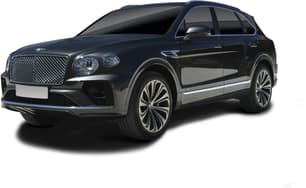
The Bentley Bentayga Azure may look a bit awkward and it surely isn't great value for money, but it is a true Bentley and a very good family SUV that not only provides terrific practicality but superb performance and comfort.
The Trailblazer is a solid all-rounder and deserves the consideration of those in the market for a decent seven-seater 4WD. It does everything well without ever really excelling at any one thing.
Is it fantastic? No. Is it a game-changer? No. Does it represent pretty good value for money in the grand scheme of things? Yep.
The pick of the bunch for me is the LTZ – solid, off-road capable, and suburbs-friendly with just a hint of leather-appointed class. In the LTZ, you get everything worthwhile in the Trailblazer mob and if you’re a family man you won’t feel the need to fork out an extra $1000 for the Z71’s try-hard window dressing.
The Trailblazer is a mostly comfortable SUV wagon, stacked with features and is well worth your consideration if the Isuzu MU-X, Pajero Sport and Toyota Fortuner don’t float your boat.
You'd think of all automotive brands Bentley, with its beautiful swooping and powerful saloons, would be able to floor us with something just exquisite in SUV form. But right from the 2012 concept the Bentayga has struggled to stun the world with its design.
So, while there are Bentley family traits all over the Bentayga, from the intricate headlights and mesh grille, to the oval tail-lights and body which squats over the rear wheels, the overall design looks awkward to my eyes.
To me it appears the boxy design with the tall, flat roofline and elevated ride height favours practicality over the sleekness possessed by a lower, more coupe-like SUV.
I favour dark coloured clothes because it hides my shapes, creases and bulges, but these are the things you want to see in a car and our Bentley's 'Onyx Black' paint, despite being a beautiful colour with a blue hue added, make it a featureless blob in the sunlight.
A lighter shade or something outlandish like a turquoise or yellow would look amazing, and even better, upset your neighbours.
Let's look at the interior design which is lavish with all the quilted leather and Mulliner customisation, but lacks the modern look of many contemporary cabins with its smallish media screen and busy mosaic of buttons.
I like the little chrome plungers for the air vents, the winged styling to the dashboard and the stitched leather upholstery, but it's easy to spot parts that are shared by other members of the Volkswagen Group (which owns Bentley).
For example, there are the indicator and wiper stalks, as well as the steering wheel buttons, all from Audi. Surely Bentley should have its own crafted parts?
The interior colour scheme on our Bentayga is 'Beluga' (black) and 'Camel' (tan) and the Mulliner option split the colours with a cream tone.
From a family perspective the tan and black will hide dirt, although the cream will struggle. It's possibly the best leather on the planet, however, coming from cattle living high enough that their hides are unblemished by insect stings.
The Trailblazer is a solid-looking wagon – all clean, tight lines from front to back – and overall it has a real squat and substantial presence. If we’re going to get all ‘fancy Dan’ with our hyperbole: chrome-accented daytime running headlights swoop back along the chunky body to slick LED tail-lights. If we’re sticking to basics: the Trailblazer looks good.
Inside, the tweaked interior has a tidy if rather basic feel to it – but that’s not a bad thing in a wagon that will have to cop dirt and dropped ice creams amid the general chaos of day-to-day life.
The leather-trim seats add a touch of class to otherwise family friendly dimensions and environment.
Being shaped like a bus does nothing for the Bentayga's beauty but makes it spacious for cargo and roomy for people.
With its large doors and elevated ride height (the car can be lowered for easier access) it's great for families.
Our Bentayga is a five-seater, which is fine for my little family of four, but there are four- and seven-seat configurations available, too.
Second row legroom is exceptional, even for me at 189cm tall, and sitting behind my own driving position there's still plenty of room.
Headroom is also outstanding throughout. We could be a family that loves top hats, on our way to the top hat championships, and not have to remove our top hats. That's how good headroom and hat room is.
Sun blinds in the second row are vital in Australia, and the electric ones in the Bentayga raise and lower quickly, not just offering protection but also more privacy.
Storage is good throughout with big door pockets and five cupholders.
It seems the cabin space eats into the cargo area because the boot isn't overly large at 484 litres with all seats in place.
Buttons in the cargo area allow the rear of the car to be raised and lowered to make it easier to hoist items in the boot.
For devices there's a wireless phone charger up front along with USB ports in both rows.
Climbing in is easy enough with a sturdy "overhead assist handle" for all comers and goers.
All of the Trailblazer’s seats are mostly comfortable except they are quite flat and hard, which may prove a hindrance over longer trips. The driver’s seat is six-way electrically-adjustable and there is little in the way of lumbar support.
The second row will better suit two passengers than three for long-distance comfort but there is enough room all round – head, shoulders and legs – to avoid most complaints, for a little while anyway.
Third-row passengers will need to be children or those of a shorter stature to cope with the ‘back of the bus’ squeeze – and even then trips should be kept to shorter distances to avoid an in-car riot. It’s not a terrible place to be, in the third row of this thing, but it’s not ideal either – pretty much in keeping with the rear-row offerings of its rivals.
Back up the front again and the dash design is clear, user-friendly and easy to get used to with day-in, day-out use.
There is a fair bit of storage space in the cabin but some of it is awkward to access and actually use. The glove box is big enough to cope with one or two handfuls of bits and pieces. There is a sunglass holder up near the rear-view mirror.
Passengers in the back also get air vents and manual aircon control.
There are two cup holders in front of the small centre console housing the USB port which, when used, eats into that available space.
All doors have a moulded bottle bulge, which wouldn’t cop our CarsGuide water bottle without forceful encouragement.
The second-row passengers get a fold-down centre arm-rest/cup holder when there’s no one sitting in the middle. Passengers in the back also get air vents and manual aircon control.
With all seats up, if you pack to the roof, there is 235 litres of cargo space at the very rear; with the 50/50 split-folding third-row seats folded down, there is 878 litres; with the second-row (60/40 split-fold and tumble) and the third-row seats down, there is 1830 litres of cargo space. There is a retractable cargo blind stowed away under the floor at the rear.
With the second-row seats folded forward, it is easy enough to get into the third-row seats; no contortionist moves required.
There are two 12-volt outlets in the centre dash; one at the back of the centre console (for second-row passengers); and one in the rear cargo area.
Up top, the roof rails are rated to carry 100kg.
Reviewing every type of car on the market provides a pretty good perspective, but when it comes to Bentleys we enter a realm where value-for-money often isn't as crucial as it is for more mainstream options.
The same goes for the price. Bentleys are among the most expensive cars in the world. So if, like me, you flinch at the thought of paying more than half a million dollars for an SUV, it may not be the car for us right now.
With that I can tell you the Bentley Bentayga Azure's list price is $475,000 and our car with all of its options comes to $515,000.
That's more money than any SUV from Mercedes-Benz and BMW costs. Even Range Rover can't quite reach that mark.
Only the likes of Aston Martin's DBX 707 and Lamborghini's Urus can match the price.
There are always bigger fish, though, and Rolls Royce's Cullinan swims in at $700,000, making the Bentayga's price seem quite reasonable.
Let's look at the standard features.
Coming standard on the Bentayga Azure are the prettiest LED headlights in the world. There are LED tail-lights, too, as well as a proximity key, roof rails and a panoramic glass roof, plus a hands-free tailgate.
Inside there's the 10.9-inch media screen, sat nav, wireless Apple CarPlay and wireless Android Auto.
The diamond quilting to the door trims is also standard and so are the Bentley sports pedals.
Many of these features are standard on lower grades in the Bentayga range, but the point in choosing the Azure is that many of the optional bundles on offer are fitted as standard here.
So, while leather upholstery is of course standard the 'Colour Specification' package gives you a choice of all interior colour combinations and an extended choice of hide colours.
The 'City Specification' brings extra safety tech like rear cross-traffic alert and a top view camera.
The 'Front Seat Comfort' specification adds 20-way power front seats, ventilation and massage as well as comfort headrests.
The 'Touring Specification' brings adaptive cruise control, a head up display, lane keeping assistance and 'Night Vision'.
And then the 'Sunshine Package' adds electric sun blinds, which are great for kids in the back.
Despite the multitude of standard packages there's plenty left to option on the Azure.
Our car was fitted with about a dozen options including piano black veneer ($5884), 22-inch alloy wheels ($4733), rear privacy glass ($2617), LED welcome lights ($2238), self-levelling wheel centre caps ($1208), a heated acoustic windscreen ($1094), luggage management for the boot ($937) and a heated steering wheel ($543).
Then there's Mulliner, Bentley's in-house customisation division which will personalise your Bentley.
The Mulliner custom features on our Bentayga Azure include the addition of an extra colour in the leather upholstery ($13,492), 'Honeycomb' stitching on the steering wheel ($5391) and contrasting stitching on the quilted areas of leather trim ($2688).
Best family features would have to be the privacy glass, temperature control in the second row and the rear sun blinds.
The second row also comes with a removable tablet which can be used to adjust the climate control, sunroof and media settings among other functions.
In the hands of children this is every parent's nightmare and there's a 100 percent chance of the tablet being lost forever, possibly on the motorway between Sydney and Canberra.
The Trailblazer is available in three spec levels, each with a market-competitive price: base-spec LT (from $47,990, excluding on-road costs), LTZ (which we tested; from $52,490) and the limited-edition Z71 (from $53,490).
But those prices soon start to climb when you add in accessories such as all-weather floor mats ($130 for a pair), boot lip protector ($80) and a rigid cargo barrier ($960). Our test vehicle had a Power Blue (prestige paint) colour on the exterior, at a cost of $550.
All models have the 2.8-litre turbo-diesel engine and six-speed automatic transmission. The 4WD system is a dual-range part-time shift-on-the-fly set-up.
The LT’s standard features include cloth seat covers, 17-inch alloy wheels, a seven-inch touchscreen to go with its Holden MyLink infotainment system, Apple Car Play and Android Auto, Bluetooth connectivity, front fog lamps, signature daytime running lights, side steps, limited slip diff, rear parking sensors and a rear-view camera.
The LTZ gets all of that (although its touchscreen is eight inches) and more: integrated satnav, blind spot alert, forward collision alert and heated front seats and leather-appointed seat trim. It has 18-inch alloy wheels.
The Z71 has all of that gear as well as a distinctive sports look, replete with black bonnet, black mirrors, black exterior door handles, Z71 leather-appointed trim and 18-inch black alloy wheels.
When Bentley stopped putting its W12 into the Bentayga this year I was unsurprised yet sad. The world is moving toward tighter fuel emissions but the twin-turbo petrol V8 in this Azure is still a beast.
The 4.0-litre turbo-petrol V8 is from the Audi family and I love it as much for its plentiful torque and superb acceleration as the deep rumble of its exhaust.
Making 404kW and 770Nm the V8 can lift and throw the 2.5-tonne Bentayga to 100km/h from a standstill in 4.5 seconds and onto a top speed of 290km/h. I reckon you could get it to 300km/h with the wind behind you.
Drive goes to all four wheels via an eight-speed transmission and a Torsen-type centre differential.
Default drive balance is 40/60 front to rear, with up to 70 per cent of power able to be sent to the front wheels and up to 85 per cent to the rear axle.
I don't think you'll be astounded to hear this powertrain uses a lot of fuel? Let's go there...
The 2.8-litre turbo-diesel engine punches out 147kW at 3600rpm and its big-gun 500Nm at 2000rpm and is well-matched to a six-speed automatic transmission. This Trailblazer is, on paper, a very good tow vehicle with so much torque available and from down so low.
Its towing capacity is 3000kg (braked), but I’d prefer to see how it fared in a real-world tow test before I pass judgement.
Bentley says the Bentayga Azure with the V8 petrol engine will use an average of 11.4L/100km over a combination of open and urban roads.
But what happens if you live in the suburbs not far from the city and drive the Azure every day to do the school drop offs and trips to the shops and then take in some fun country roads? You use an average of 22.8L/100km according to the car's trip computer.
This is still not as high as I was expecting. I've driven V6-powered SUVs which use more than this under the same conditions.
That said, even when using as much fuel as Bentley says you should, an 85-litre fuel tank is only going to deliver an approximate 745km driving range.
Claimed fuel economy is 8.6L/100km (combined). We recorded 9.6L/100km fuel consumption after 200km of mixed driving, including about 30km of gravel tracks, and 10km of hard off-roading. As mentioned earlier, it has a 76-litre fuel tank.
The Bentley Bentayga doesn't have a safety rating as like many extremely high-end cars it hasn't been assessed by ANCAP or Euro NCAP.
That said, the Azure grade comes standard with an armoury of safety tech including AEB (with turn assistance), lane keeping assistance, blind-spot warning, rear cross-traffic alert, evasive steering assistance, and adaptive cruise control.
Front and rear parking sensors are standard (and the most relied-upon feature I use daily), while exit warning saved my child and myself more than a few times from leaping out into the traffic on the school run.
The Trailblazer range has a five-star ANCAP rating. The LTZ has seven airbags, and electronic stability control (ABS, EBD etc), rear view camera, front park assist, rear parking sensors, forward collision alert, blind-spot alert, lane-departure warning, rear cross-traffic alert, a tyre-pressure monitoring system and trailer sway control.
The second row has three child restraint anchor points and one ISOFIX child restraint anchor point.
The Bentayga is covered by Bentley's three-year/unlimited-kilometre warranty. Servicing is recommended every 12 months or 16,000km.
The good news is all new Bentley's have five years regular servicing included in the cost of the vehicle.
The Trailblazer comes with a three-year/100,000km warranty. Lifetime capped price servicing includes a free inspection at one month, then $299 (at nine months/15,000km), $399 (18 months/30,000km), $479 (27 months/45,000km), $479 (36 months/60,000km) and so on.
(At time of writing, the LT was being offered for $45,990 driveway with a seven-year/175,000 warranty.)
Potential problems might include cumulative driveline wear and tear from people towing heavy loads (horse floats, boats etc).