What's the difference?
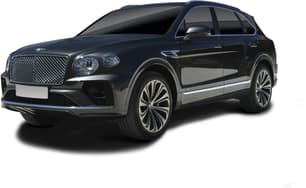
Yes, you can drive your Bentley and keep your family. It's called compromise, or the Bentayga, Bentley's SUV.
The Bentayga my family has been living with is the Azure grade which promises to be even more comfortable and pleasant than the rest of the range.
Comfort is important and we'll cover the Bentayga's lavish details in time, but our mission first and foremost is to find out if the Bentayga makes a good family SUV.
The 2022 Mitsubishi Eclipse Cross has a new high-tech powertrain that allows it to run as an electric car, or run using the petrol engine, or even use both at the same time.
But the new hybrid SUV is not like a Toyota hybrid - because this one can be plugged in at home to recharge the batteries, and you should be able to get at least 50 kilometres of EV driving out of just a few dollars worth of electricity.
We’re talking about the new 2022 Mitsubishi Eclipse Cross Plug-in Hybrid EV, or PHEV as we’ve called it in the past. The brand has renamed it to include both ‘Hybrid’ and ‘EV’ in the name because, well, it reckons those terms have a bit more cut-through today than when the company first launched its Outlander PHEV back in 2014.
But with the new Eclipse Cross PHEV variants attracting a huge premium over the regular petrol-turbo models, does the extra money buy you a better car? Let’s find out.
The Bentley Bentayga Azure may look a bit awkward and it surely isn't great value for money, but it is a true Bentley and a very good family SUV that not only provides terrific practicality but superb performance and comfort.
The Mitsubishi Eclipse Cross Plug-in Hybrid EV is an interesting inclusion for the brand, especially as it is typically considered a ‘value player’ in the market.
But with negligible real-world fuel consumption benefits if you drive beyond the limited EV range and a high price premium over the non-PHEV models, it’s important you see if the sums add up for your particular needs.
Primarily going to use the car for running around town? Cool. Think the 50-ish-kay EV range will work for you and make you happy? Amazing. Sold on the look of the car? Hat tipped.
But let me say this - if you are considering the Eclipse Cross PHEV, there are some alternatives you should also have on your list, including the MG HS PHEV, the Hyundai Ioniq PHEV, Kia Niro PHEV, and - the one I’d buy - a Toyota RAV4 Hybrid. For me, plug-in hybrid tech is a bit of a halfway house, in most instances offering too high a price premium for the range you’re getting to drive electric. Heck, a Kona Electric isn’t much more than the top-spec Exceed PHEV, and I’d have that if I wanted a real day-to-day EV experience.
You'd think of all automotive brands Bentley, with its beautiful swooping and powerful saloons, would be able to floor us with something just exquisite in SUV form. But right from the 2012 concept the Bentayga has struggled to stun the world with its design.
So, while there are Bentley family traits all over the Bentayga, from the intricate headlights and mesh grille, to the oval tail-lights and body which squats over the rear wheels, the overall design looks awkward to my eyes.
To me it appears the boxy design with the tall, flat roofline and elevated ride height favours practicality over the sleekness possessed by a lower, more coupe-like SUV.
I favour dark coloured clothes because it hides my shapes, creases and bulges, but these are the things you want to see in a car and our Bentley's 'Onyx Black' paint, despite being a beautiful colour with a blue hue added, make it a featureless blob in the sunlight.
A lighter shade or something outlandish like a turquoise or yellow would look amazing, and even better, upset your neighbours.
Let's look at the interior design which is lavish with all the quilted leather and Mulliner customisation, but lacks the modern look of many contemporary cabins with its smallish media screen and busy mosaic of buttons.
I like the little chrome plungers for the air vents, the winged styling to the dashboard and the stitched leather upholstery, but it's easy to spot parts that are shared by other members of the Volkswagen Group (which owns Bentley).
For example, there are the indicator and wiper stalks, as well as the steering wheel buttons, all from Audi. Surely Bentley should have its own crafted parts?
The interior colour scheme on our Bentayga is 'Beluga' (black) and 'Camel' (tan) and the Mulliner option split the colours with a cream tone.
From a family perspective the tan and black will hide dirt, although the cream will struggle. It's possibly the best leather on the planet, however, coming from cattle living high enough that their hides are unblemished by insect stings.
You’re going to be able to tell the PHEV model from its more conventional counterparts by those oversized ‘Plug-in Hybrid EV’ badges on the front doors, and if you want to tell those behind you what you’re driving, there’s also a ‘PHEV’ badge there, too. Wait, wasn’t the plan to do away with the term ‘PHEV’, Mitsubishi?
But aside from that, the outside features just the different 18-inch alloy wheels (which are the same on all PHEV models, no matter the cost - I think that’s a bit lame, because if I’m spending $7500 on the Exceed I’d like a different wheel design!). Oh, and the Aspire and Exceed get that different lower front splitter, too.
Plus the PHEV has two fuel filler doors - one on each side of the car over the rear wheels. The driver’s side one is the EV charging ports (x2 - detailed below), and the passenger’s side one is for the petrol. Note: while the EV port is push-openable, the petrol cap still requires you to lift a lever in the driver’s footwell.
It may be categorised a small SUV but at 4545mm long, riding on a 2670mm wheelbase, 1805mm wide and 1685mm tall, it’s big for its boots. The popular Mazda CX-5 is only 5mm longer, and it plays in the midsize SUV segment!
Inside there are some design differences, with a specific gear joystick-style selector, and a different instrument panel.
It is impressive how the brand has managed to shoehorn a petrol engine, two electric motors, a battery pack and more into the car, but there are some practicality implications. Read about them in the next section.
Being shaped like a bus does nothing for the Bentayga's beauty but makes it spacious for cargo and roomy for people.
With its large doors and elevated ride height (the car can be lowered for easier access) it's great for families.
Our Bentayga is a five-seater, which is fine for my little family of four, but there are four- and seven-seat configurations available, too.
Second row legroom is exceptional, even for me at 189cm tall, and sitting behind my own driving position there's still plenty of room.
Headroom is also outstanding throughout. We could be a family that loves top hats, on our way to the top hat championships, and not have to remove our top hats. That's how good headroom and hat room is.
Sun blinds in the second row are vital in Australia, and the electric ones in the Bentayga raise and lower quickly, not just offering protection but also more privacy.
Storage is good throughout with big door pockets and five cupholders.
It seems the cabin space eats into the cargo area because the boot isn't overly large at 484 litres with all seats in place.
Buttons in the cargo area allow the rear of the car to be raised and lowered to make it easier to hoist items in the boot.
For devices there's a wireless phone charger up front along with USB ports in both rows.
Up front, the cabin is a pretty smart place, with nice enough materials and finishes, and a few good storage options. There’s a cubby in front of the shifter, but oddly enough it doesn’t have a wireless charger (there are 2x USB 2.0 ports above) and isn’t quite big enough for a smartphone (even the smaller ones don’t fit there all that easily), and there are cup holders between the seats, a decent covered centre console bin, and door pockets large enough for bottles.
The PHEV models get a different instrument cluster dial for EV driving readout info, but all have the old-school 4.2-inch TFT colour display that lacks the size and usability of some rivals with larger info screens - the MG HS PHEV, for instance, has a 12.3-inch digital display, which shows you a lot more info than this tiny little screen does. Heck, there’s not even a digital speedometer in there - and you only get one if you buy the Exceed model, which has a head-up display (HUD).
That’s part of the problem with the way this car’s interface operates. If you want the most detailed information you need to use the touchscreen media system, but that negates the usability of the media functions. On multiple occasions I found myself switching between Apple CarPlay phone calls and searching for that particular driving info screen I found most useful (there are about 15 screens to choose from, and plenty of them are hard to decipher).
It’s a huge disappointment for a customer who might want to see all that detailed information but also listen to a podcast, answer a call, follow their phone’s mapping or just have anything other than the hybrid info come up on the infotainment screen. The screen itself - an 8.0-inch unit, with sat nav integrated into the top spec only - is fine, but small compared to today’s rivals.
In the back seat, there’s a compromise for cabin space. The leg room is good, but the seat has been bumped up to accommodate some of the electrical hardware and the petrol tank, meaning someone my size (182cm/6’0”) will find they’ve got enough room for their legs but not their head, and those even larger will really need to take care getting in and out. While pre-facelift examples of this car had a clever sliding second row seat, that’s gone. It was never a feature in any PHEV version, and undoubtedly the layout of the battery pack has something to do with that.
The double pane sunroof no doubt eats into the space in the rear to a degree as well, and in the Exceed it likely feels a bit more cramped because of the black headliner.
While three adults could potentially fit across the back row for very short trips, there are dual ISOFIX and three top-tether points for child seats. The Exceed is the one you want if you’re aiming to treat your rear-seat passengers right: it has heated rear outboard seats, rear directional air vents and two USB ports for charging - the ES and Aspire miss out on all that stuff.
Boot space is 359L (VDA) for PHEV models, which is a step down from the 405 litres (VDA) for the non-hybrid models. There is extra hardware under the floor, and you don’t get a spare wheel in the PHEV models either - instead there’s a tyre repair kit. For context, we only just managed to fit all three CarsGuide hard suitcases (124L, 95L and 36L) in the boot of the PHEV version, while it was far less of an issue in the non-PHEV.
Oddly, no model comes with a power tailgate.
Reviewing every type of car on the market provides a pretty good perspective, but when it comes to Bentleys we enter a realm where value-for-money often isn't as crucial as it is for more mainstream options.
The same goes for the price. Bentleys are among the most expensive cars in the world. So if, like me, you flinch at the thought of paying more than half a million dollars for an SUV, it may not be the car for us right now.
With that I can tell you the Bentley Bentayga Azure's list price is $475,000 and our car with all of its options comes to $515,000.
That's more money than any SUV from Mercedes-Benz and BMW costs. Even Range Rover can't quite reach that mark.
Only the likes of Aston Martin's DBX 707 and Lamborghini's Urus can match the price.
There are always bigger fish, though, and Rolls Royce's Cullinan swims in at $700,000, making the Bentayga's price seem quite reasonable.
Let's look at the standard features.
Coming standard on the Bentayga Azure are the prettiest LED headlights in the world. There are LED tail-lights, too, as well as a proximity key, roof rails and a panoramic glass roof, plus a hands-free tailgate.
Inside there's the 10.9-inch media screen, sat nav, wireless Apple CarPlay and wireless Android Auto.
The diamond quilting to the door trims is also standard and so are the Bentley sports pedals.
Many of these features are standard on lower grades in the Bentayga range, but the point in choosing the Azure is that many of the optional bundles on offer are fitted as standard here.
So, while leather upholstery is of course standard the 'Colour Specification' package gives you a choice of all interior colour combinations and an extended choice of hide colours.
The 'City Specification' brings extra safety tech like rear cross-traffic alert and a top view camera.
The 'Front Seat Comfort' specification adds 20-way power front seats, ventilation and massage as well as comfort headrests.
The 'Touring Specification' brings adaptive cruise control, a head up display, lane keeping assistance and 'Night Vision'.
And then the 'Sunshine Package' adds electric sun blinds, which are great for kids in the back.
Despite the multitude of standard packages there's plenty left to option on the Azure.
Our car was fitted with about a dozen options including piano black veneer ($5884), 22-inch alloy wheels ($4733), rear privacy glass ($2617), LED welcome lights ($2238), self-levelling wheel centre caps ($1208), a heated acoustic windscreen ($1094), luggage management for the boot ($937) and a heated steering wheel ($543).
Then there's Mulliner, Bentley's in-house customisation division which will personalise your Bentley.
The Mulliner custom features on our Bentayga Azure include the addition of an extra colour in the leather upholstery ($13,492), 'Honeycomb' stitching on the steering wheel ($5391) and contrasting stitching on the quilted areas of leather trim ($2688).
Best family features would have to be the privacy glass, temperature control in the second row and the rear sun blinds.
The second row also comes with a removable tablet which can be used to adjust the climate control, sunroof and media settings among other functions.
In the hands of children this is every parent's nightmare and there's a 100 percent chance of the tablet being lost forever, possibly on the motorway between Sydney and Canberra.
The 2022 Eclipse Cross PHEV line-up is expensive compared to the petrol-turbo models.
The ES AWD has a list price (all prices MSRP, before on-road costs) of $46,490, while the mid-spec Aspire costs $49,990 and the top-end Exceed lists at $53,990.
I know they’re not like-for-like in every instance - the ES and Aspire petrol-turbo models are 2WD, not AWD, for example, and there are some specification differences, too - but the price jump from each respective non-PHEV version is $15,500 (ES), $14,250 (Aspire) and $12,500 (Exceed).
Yikes.
You’d really, really have to want the EV driving experience to justify that additional expenditure, right?
Here’s a rundown of the specifications across the three PHEV grades.
Standard for the $46,490 ES grade are 18-inch alloy wheels, LED daytime running lights, halogen headlights, keyless entry and push-button start, cloth interior trim, manual front seat adjustment, an 8.0-inch touchscreen media system with Apple CarPlay and Android auto, a reversing camera, a four speaker stereo, digital radio and a rear cargo blind.
Step up to the $49,990 Aspire and you score LED headlights and fog lights, a lower body kit, heated front seats, faux-leather and microsuede trim, auto wipers, adaptive cruise control, an eight-speaker stereo, surround view camera, front and rear parking sensors, and an array of safety equipment that we’ll cover off in the safety section.
Choosing the range-topping $53,990 Exceed model nets you leather seat trim, a heated steering wheel, a head-up display - making it the only grade with a digital speedo! - as well as sat nav, a dual pane sunroof, and a black headliner in the cabin.
When Bentley stopped putting its W12 into the Bentayga this year I was unsurprised yet sad. The world is moving toward tighter fuel emissions but the twin-turbo petrol V8 in this Azure is still a beast.
The 4.0-litre turbo-petrol V8 is from the Audi family and I love it as much for its plentiful torque and superb acceleration as the deep rumble of its exhaust.
Making 404kW and 770Nm the V8 can lift and throw the 2.5-tonne Bentayga to 100km/h from a standstill in 4.5 seconds and onto a top speed of 290km/h. I reckon you could get it to 300km/h with the wind behind you.
Drive goes to all four wheels via an eight-speed transmission and a Torsen-type centre differential.
Default drive balance is 40/60 front to rear, with up to 70 per cent of power able to be sent to the front wheels and up to 85 per cent to the rear axle.
I don't think you'll be astounded to hear this powertrain uses a lot of fuel? Let's go there...
The plug-in hybrid version runs a non-turbocharged 2.4-litre Atkinson cycle petrol engine producing just 94kW and 199Nm.
Meagre outputs, but the petrol unit is backed by two electric motors - the front motor has outputs of 60kW/137Nm, while the rear motor produces 70kW/195Nm. It’s all controlled by a single-speed transmission.
There is no ‘combined power output’ figure, but there is a 13.8kWh lithium-ion battery pack as part of the equation as well.
The engine can power the battery pack in series hybrid driving mode, so if you want to top up the batteries before you get to a city, you can. And there is regenerative braking, of course. More on recharging in the next section.
Bentley says the Bentayga Azure with the V8 petrol engine will use an average of 11.4L/100km over a combination of open and urban roads.
But what happens if you live in the suburbs not far from the city and drive the Azure every day to do the school drop offs and trips to the shops and then take in some fun country roads? You use an average of 22.8L/100km according to the car's trip computer.
This is still not as high as I was expecting. I've driven V6-powered SUVs which use more than this under the same conditions.
That said, even when using as much fuel as Bentley says you should, an 85-litre fuel tank is only going to deliver an approximate 745km driving range.
The Eclipse Cross PHEV has an official combined cycle fuel consumption figure of 1.9L/100km. That’s astounding, really, but you need to realise that the test calculation is only for the first 100 kays - there’s a really good chance your real-world consumption will be a lot higher, as you can only deplete the battery charge once before calling on the engine (and your petrol tank) to juice it back up.
Electric driving range is stated at 55km based on NEDC cycle testing, while the WLTP rating is a more realistic 45km. In our testing we fell between the two during our “fully charged” 100km run, in which the electric charge initially ran for 50km. But, over the 100km run, the dashboard info screen said the car used “82 per cent” electric driving, while somehow also showing 3.9L/100km for petrol consumption.
I did the numbers at the fuel filler, and the actual return was 4.5L/100km. That’s okay, but not nearly as spectacular as you might hope, and I’ve seen very close in a RAV4 hybrid - which in most instances is cheaper than the Eclipse Cross despite being bigger and, frankly, a lot better.
I also ran the car for a further 100 kays without plugging in, just to see what the ‘worst case scenario’ might be - and it wasn’t too bad, with the fuel consumption jumping to a real-world return of 5.5L/100km. But again, that’s worse than you’ll likely get with a RAV4…
When it comes to charging/recharging, there is available AC charging using a Type 2 plug that can fully recharge the battery in as little as 3.5 hours, according to the brand. DC fast charging with a CHAdeMO plug should fill from zero to 80 per cent in 25 minutes. Maximum charge input is 3.6kW.
Like me, you’ll want to do the maths to see what is going to be the most economical way to run your car - aside from just plugging it in at the office and hoping nobody notices.
A standard 10-amp household plug - which should take about seven hours to replenish the batteries - could cost as little as $1.88 to get back your circa-50km EV range - that’s based on overnight charging, off-peak, on an average 13.6c/kWh electricity price. Of course, if you’re considering a PHEV, you might have a solar array and the electricity could well be free. Good for you.
But remember, there’s more to it than just the electricity costs - you need to also consider the additional purchase budget required just to get into the PHEV model over a regular Eclipse Cross.
The Bentley Bentayga doesn't have a safety rating as like many extremely high-end cars it hasn't been assessed by ANCAP or Euro NCAP.
That said, the Azure grade comes standard with an armoury of safety tech including AEB (with turn assistance), lane keeping assistance, blind-spot warning, rear cross-traffic alert, evasive steering assistance, and adaptive cruise control.
Front and rear parking sensors are standard (and the most relied-upon feature I use daily), while exit warning saved my child and myself more than a few times from leaping out into the traffic on the school run.
All Mitsubishi Eclipse Cross models have been awarded a five-star ANCAP crash test safety rating based on 2017 testing for the pre-facelift model.
The range has increasing levels of safety technology the more you spend, but all variants have forward autonomous emergency braking (AEB) with forward collision warning (operates between 5km/h and 80km/h) and the AEB includes pedestrian detection (between 15km/h and 140km/h).
Standard on all grades is a reversing camera, rear parking sensors, seven airbags (dual front, driver’s knee, front side, side curtain for both rows), active Yaw control, stability control, and anti-lock brakes (ABS) with brake force distribution. Lane departure warning is standard too.
Spend up on the Aspire for adaptive cruise control, blind-spot monitoring, rear cross-traffic alert, and front parking sensors. From Aspire up to Exceed, there’s the addition of the brand’s Ultrasonic Misacceleration Mitigation System, which can dull throttle response to prevent potential low speed collisions.
No speed sign recognition is available, and therefore no smart cruise control either. Plus there is no lane centring system fitted either, and nor is there a driver attention monitoring system, so it’s falling behind on the tech front.
The Mitsubishi Eclipse Cross is built in Japan.
The Bentayga is covered by Bentley's three-year/unlimited-kilometre warranty. Servicing is recommended every 12 months or 16,000km.
The good news is all new Bentley's have five years regular servicing included in the cost of the vehicle.
There’s a huge 10 year/200,000 kilometre warranty on offer - but it’s valid if you maintain your car with Mitsubishi’s dedicated dealer service network over the 10 years/200,000km timeline, or else you get a five-year/100,000km plan.
But while the rest of the car will be covered by that decade-long warranty if you service it with Mitsubishi, the battery is only covered for eight years/160,000km, no matter where you have the car serviced.
Maintenance is due every 12 months/15,000km. But just a note - the more complex powertrain means higher service costs than the regular turbo-petrol versions. The annual fees are: $299, $399, $299, $399, $299, $799, $299, $799, $399, $799; so an average cost of $339 for the first five years, or $558.90 per visit over 10 years/150,000kn.
Included for customers who service their car with the brand is four years of roadside assist.
Do you have questions over reliability, issues, concerns, recalls, automatic transmission problems, or anything else of that ilk? Check out our Mitsubishi Eclipse Cross problems page.