What's the difference?
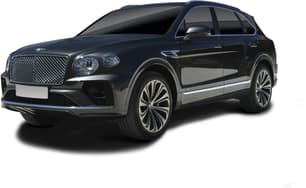
Yes, you can drive your Bentley and keep your family. It's called compromise, or the Bentayga, Bentley's SUV.
The Bentayga my family has been living with is the Azure grade which promises to be even more comfortable and pleasant than the rest of the range.
Comfort is important and we'll cover the Bentayga's lavish details in time, but our mission first and foremost is to find out if the Bentayga makes a good family SUV.
The Subaru Outback holds a special place in the hearts of adventurers everywhere. It’s long been regarded by its fans as a genuine mix of decent on-road manners, family-friendly practicality and sound off-road capability. Just right for light-duty off-roading.
Now, Subaru claims, it has made the Outback even better and a new off-road-focussed variant called the all-wheel-drive Wilderness now sits near the top of the line-up.
The Wilderness is equipped with a 2.4-litre turbo-petrol, four-cylinder, horizontally-opposed 'boxer' engine, 240mm of ground clearance, improved approach/departure angles and electronically controlled dampers.
But is this new Outback all it’s cracked up to be? Read on.
The Bentley Bentayga Azure may look a bit awkward and it surely isn't great value for money, but it is a true Bentley and a very good family SUV that not only provides terrific practicality but superb performance and comfort.
If you’re a Subaru fan chances are the Wilderness will float your boat. It’s an appealing mix of on-road refinement and more than satisfactory capability on bush tracks.
The Wilderness engine-and-CVT combination helps to make this Subaru well refined and highly responsive on-road and it benefits from punchier low-rev output in off-road scenarios.
Subaru has made a habit of producing practical vehicles and this new addition to the upgraded Outback line-up doesn’t disappoint.
Does anyone need a Wilderness version of the Outback? Probably not. Will anyone want a Wilderness edition Outback? I reckon a lot of Outback fans would fall over themselves to get their hands on one of these.
You'd think of all automotive brands Bentley, with its beautiful swooping and powerful saloons, would be able to floor us with something just exquisite in SUV form. But right from the 2012 concept the Bentayga has struggled to stun the world with its design.
So, while there are Bentley family traits all over the Bentayga, from the intricate headlights and mesh grille, to the oval tail-lights and body which squats over the rear wheels, the overall design looks awkward to my eyes.
To me it appears the boxy design with the tall, flat roofline and elevated ride height favours practicality over the sleekness possessed by a lower, more coupe-like SUV.
I favour dark coloured clothes because it hides my shapes, creases and bulges, but these are the things you want to see in a car and our Bentley's 'Onyx Black' paint, despite being a beautiful colour with a blue hue added, make it a featureless blob in the sunlight.
A lighter shade or something outlandish like a turquoise or yellow would look amazing, and even better, upset your neighbours.
Let's look at the interior design which is lavish with all the quilted leather and Mulliner customisation, but lacks the modern look of many contemporary cabins with its smallish media screen and busy mosaic of buttons.
I like the little chrome plungers for the air vents, the winged styling to the dashboard and the stitched leather upholstery, but it's easy to spot parts that are shared by other members of the Volkswagen Group (which owns Bentley).
For example, there are the indicator and wiper stalks, as well as the steering wheel buttons, all from Audi. Surely Bentley should have its own crafted parts?
The interior colour scheme on our Bentayga is 'Beluga' (black) and 'Camel' (tan) and the Mulliner option split the colours with a cream tone.
From a family perspective the tan and black will hide dirt, although the cream will struggle. It's possibly the best leather on the planet, however, coming from cattle living high enough that their hides are unblemished by insect stings.
The most obvious design tweaks include a glare-reducing bonnet decal, the new grille and bumper, substantial durable plastic cladding on each side, and some tailgate trim and lighting variations away from standard Outbacks.
There’s gold edging here and there around the Wilderness exterior (fog lights etc) and it’s eye-catching, but this vehicle attracts some bemused looks.
While it’s based on the mid-spec Outback AWD Premium, the Wilderness stands apart because of its taller stance (with an extra 20mm ground clearance over standard Outbacks) and chunkier overall look.
For numbers nerds, the Wilderness is 4880mm long (with a 2745mm wheelbase), 1880mm wide, 1735mm high and has a listed kerb weight of 1781kg.
Its wheel tracks (1575mm front / 1600mm rear) are 10mm narrower in both cases than those of standard Outbacks.
Inside, the Wilderness has water-repellent upholstery with embossed Wilderness logos on the headrests, Wilderness tags on the seats, orange stitching throughout and all-weather floor mats.
All in all, it looks stylish, inside and out, but it’s also ready to play in the dirt.
Being shaped like a bus does nothing for the Bentayga's beauty but makes it spacious for cargo and roomy for people.
With its large doors and elevated ride height (the car can be lowered for easier access) it's great for families.
Our Bentayga is a five-seater, which is fine for my little family of four, but there are four- and seven-seat configurations available, too.
Second row legroom is exceptional, even for me at 189cm tall, and sitting behind my own driving position there's still plenty of room.
Headroom is also outstanding throughout. We could be a family that loves top hats, on our way to the top hat championships, and not have to remove our top hats. That's how good headroom and hat room is.
Sun blinds in the second row are vital in Australia, and the electric ones in the Bentayga raise and lower quickly, not just offering protection but also more privacy.
Storage is good throughout with big door pockets and five cupholders.
It seems the cabin space eats into the cargo area because the boot isn't overly large at 484 litres with all seats in place.
Buttons in the cargo area allow the rear of the car to be raised and lowered to make it easier to hoist items in the boot.
For devices there's a wireless phone charger up front along with USB ports in both rows.
In terms of practicality the Wilderness doesn’t disappoint. The cabin has a neat and familiar layout with enough soft-touch surfaces, storage space, cupholders and charge points to satisfy most drivers and passengers.
The 12.1-inch horizontal multi-media touchscreen is easy enough to operate, with many cabin functions able to be controlled via on-screen buttons, but some functions (including air-conditioning and auto vehicle hold) can also be adjusted via physical off-screen controls, which is handy.
The seats offer improved lumbar and pelvic support relative to previous Outbacks, there’s more headroom for the driver and passengers and Subaru reckons the rear cargo area opening is more than 50mm higher than standard for easier loading and unloading of gear into the rear.
According to Subaru the Wilderness upholstery is “hydrophobic synthetic leather with an anti-slip embossed finish” which looks good and seems durable enough for a lifetime of weekend road trips with some dirt inadvertently tracked inside for good measure.
Cargo volume is a listed 530 litres (with the rear seat up and in use), and that expands to 1211 litres when the 60/40 split-folding rear seat is down.
You can conceal whatever is in the rear cargo area with the new foldable fabric cargo cover which can be used as a tonneau-style cover, cargo partition, or even to protect the rear load lip. Its rear-most fixing points attach to the inner walls with magnets.
The cargo area has a 12-volt outlet, two shopping bag hooks on each wall, four tie-down points on the floor and a full-size spare wheel stored under that floor.
The Wilderness has new high-strength roof rails which are claimed to offer a static load capacity of 363kg (increased from 318kg).
Subaru has made a habit of producing practical vehicles and this new Outback doesn’t disappoint.
Reviewing every type of car on the market provides a pretty good perspective, but when it comes to Bentleys we enter a realm where value-for-money often isn't as crucial as it is for more mainstream options.
The same goes for the price. Bentleys are among the most expensive cars in the world. So if, like me, you flinch at the thought of paying more than half a million dollars for an SUV, it may not be the car for us right now.
With that I can tell you the Bentley Bentayga Azure's list price is $475,000 and our car with all of its options comes to $515,000.
That's more money than any SUV from Mercedes-Benz and BMW costs. Even Range Rover can't quite reach that mark.
Only the likes of Aston Martin's DBX 707 and Lamborghini's Urus can match the price.
There are always bigger fish, though, and Rolls Royce's Cullinan swims in at $700,000, making the Bentayga's price seem quite reasonable.
Let's look at the standard features.
Coming standard on the Bentayga Azure are the prettiest LED headlights in the world. There are LED tail-lights, too, as well as a proximity key, roof rails and a panoramic glass roof, plus a hands-free tailgate.
Inside there's the 10.9-inch media screen, sat nav, wireless Apple CarPlay and wireless Android Auto.
The diamond quilting to the door trims is also standard and so are the Bentley sports pedals.
Many of these features are standard on lower grades in the Bentayga range, but the point in choosing the Azure is that many of the optional bundles on offer are fitted as standard here.
So, while leather upholstery is of course standard the 'Colour Specification' package gives you a choice of all interior colour combinations and an extended choice of hide colours.
The 'City Specification' brings extra safety tech like rear cross-traffic alert and a top view camera.
The 'Front Seat Comfort' specification adds 20-way power front seats, ventilation and massage as well as comfort headrests.
The 'Touring Specification' brings adaptive cruise control, a head up display, lane keeping assistance and 'Night Vision'.
And then the 'Sunshine Package' adds electric sun blinds, which are great for kids in the back.
Despite the multitude of standard packages there's plenty left to option on the Azure.
Our car was fitted with about a dozen options including piano black veneer ($5884), 22-inch alloy wheels ($4733), rear privacy glass ($2617), LED welcome lights ($2238), self-levelling wheel centre caps ($1208), a heated acoustic windscreen ($1094), luggage management for the boot ($937) and a heated steering wheel ($543).
Then there's Mulliner, Bentley's in-house customisation division which will personalise your Bentley.
The Mulliner custom features on our Bentayga Azure include the addition of an extra colour in the leather upholstery ($13,492), 'Honeycomb' stitching on the steering wheel ($5391) and contrasting stitching on the quilted areas of leather trim ($2688).
Best family features would have to be the privacy glass, temperature control in the second row and the rear sun blinds.
The second row also comes with a removable tablet which can be used to adjust the climate control, sunroof and media settings among other functions.
In the hands of children this is every parent's nightmare and there's a 100 percent chance of the tablet being lost forever, possibly on the motorway between Sydney and Canberra.
The 2026 Subaru Outback Wilderness has a manufacturer list price of $59,690, before on-road costs.
It’s based on the mid-range Outback AWD Premium but offers a lot on more onboard than that variant including an upgraded turbo engine, 240mm ground clearance (20mm more than the standard Outback), electronic dampers and extra 'X-Mode' off-road functionality.
As well it gets a new bumper and front grille (with SUBARU emblazoned across the front), substantial cladding on each side, water-repellent upholstery with embossed Wilderness logos, all-weather floor mats and some Wilderness-specific trim and lighting on the tailgate.
The Wilderness also gets a 12.1-inch horizontal multi-media touchscreen with wireless Apple CarPlay and Android Auto (and wireless charger), a 12.3-inch digital instrument cluster, heated/powered front seats, heated outboard rear seats, a hands-free powered tailgate, X-Mode off-road mode, roof rails, 18-inch black-finish alloy wheels (with full-sized spare).
Annoyingly, the Wilderness misses out on some features included in its cheaper stablemate, the Outback AWD Touring ($56,990, before on-road costs) – namely active lane-change assist, a 360-degree camera system, 12-speaker Harman Kardon sound, Nappa leather, ventilated seats and a sunroof.
Spend another $3000 over the Wilderness price-tag and that $62,690 (before on-road costs) will put you in the top-spec Wilderness Apex. Its extras (over the Wilderness grade) include sat-nav, and the aforementioned 360-degree view monitor and Harman Kardon audio system.
In terms of value for money, you get a lot a of bang for your buck in this Outback and it more than holds its own against rivals, such as the Ford Everest, Isuzu MU-X and Toyota RAV4.
When Bentley stopped putting its W12 into the Bentayga this year I was unsurprised yet sad. The world is moving toward tighter fuel emissions but the twin-turbo petrol V8 in this Azure is still a beast.
The 4.0-litre turbo-petrol V8 is from the Audi family and I love it as much for its plentiful torque and superb acceleration as the deep rumble of its exhaust.
Making 404kW and 770Nm the V8 can lift and throw the 2.5-tonne Bentayga to 100km/h from a standstill in 4.5 seconds and onto a top speed of 290km/h. I reckon you could get it to 300km/h with the wind behind you.
Drive goes to all four wheels via an eight-speed transmission and a Torsen-type centre differential.
Default drive balance is 40/60 front to rear, with up to 70 per cent of power able to be sent to the front wheels and up to 85 per cent to the rear axle.
I don't think you'll be astounded to hear this powertrain uses a lot of fuel? Let's go there...
There are two direct-injection Boxer engines on offer in the Outback line-up: standard Outbacks get a 2.5-litre naturally-aspirated engine (137kW at 5800rpm and 254Nm at 3700rpm), while the Wilderness and Wilderness Apex get a 2.4-litre turbo-petrol boxer engine, producing 194kW at 5600rpm and 382Nm at 2000-3600rpm.
Both engines are matched to a continuously variable auto transmission (CVT) with eight-speed 'manual' mode. No Outback in the new line-up has a manual gearbox.
The Wilderness’s engine-and-CVT combination helps to make this Subaru well refined and highly responsive on-road and it benefits from punchier low-rev output in off-road scenarios.
Bentley says the Bentayga Azure with the V8 petrol engine will use an average of 11.4L/100km over a combination of open and urban roads.
But what happens if you live in the suburbs not far from the city and drive the Azure every day to do the school drop offs and trips to the shops and then take in some fun country roads? You use an average of 22.8L/100km according to the car's trip computer.
This is still not as high as I was expecting. I've driven V6-powered SUVs which use more than this under the same conditions.
That said, even when using as much fuel as Bentley says you should, an 85-litre fuel tank is only going to deliver an approximate 745km driving range.
Official fuel consumption for the combined (urban/extra-urban) cycle is 9.7L/100km.
Fuel consumption on test was 10.8L/100km (combined) and while a lot of this test was spent on sealed surfaces, we did do unsealed road and rough-track driving.
The Outback has a 63-litre fuel tank so going by our on-test fuel consumption figure, you could reasonably expect a driving range of about 583km from a full tank of premium unleaded petrol.
The Bentley Bentayga doesn't have a safety rating as like many extremely high-end cars it hasn't been assessed by ANCAP or Euro NCAP.
That said, the Azure grade comes standard with an armoury of safety tech including AEB (with turn assistance), lane keeping assistance, blind-spot warning, rear cross-traffic alert, evasive steering assistance, and adaptive cruise control.
Front and rear parking sensors are standard (and the most relied-upon feature I use daily), while exit warning saved my child and myself more than a few times from leaping out into the traffic on the school run.
The Wilderness has not been tested ANCAP, but it has an extensive suite of safety gear and driver-assist tech.
Standard safety features include nine airbags, AEB (Auto Emergency Braking), driver monitoring (annoying), active lane-change assist, front and side alert assist, emergency lane keep assist, rear cross-traffic alert, lane-departure warning, blind-spot monitor, traffic-sign recognition, adaptive cruise control and more.
For child seats there are top tether points for all three rear seat positions with ISOFIX anchors on the outer two.
The Bentayga is covered by Bentley's three-year/unlimited-kilometre warranty. Servicing is recommended every 12 months or 16,000km.
The good news is all new Bentley's have five years regular servicing included in the cost of the vehicle.
The Wilderness is covered by a five-year/unlimited km warranty, five-year/75,000km capped price servicing, and comes with 12 months of roadside assistance.
Servicing is recommended at 12 month/15,000km intervals.
The upfront prepaid service plans are a three-year service plan ($1275.37) and a five-year service plan ($2347.31).
For comparison, the first five years' service for a comparable Toyota RAV4 will set you back $1625.
At time of writing, Subaru Australia has more than 114 authorised dealerships and more than 120 service centres around the country.