What's the difference?
Yes, you can drive your Bentley and keep your family. It's called compromise, or the Bentayga, Bentley's SUV.
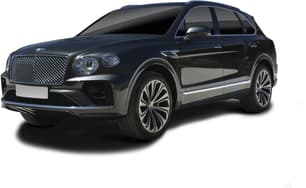
The Bentayga my family has been living with is the Azure grade which promises to be even more comfortable and pleasant than the rest of the range.
Comfort is important and we'll cover the Bentayga's lavish details in time, but our mission first and foremost is to find out if the Bentayga makes a good family SUV.
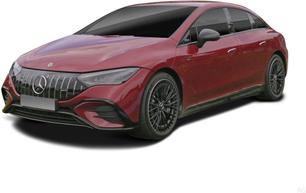
The EQE is more than an important car for Mercedes. Not only is it the German titan’s latest electric offering, on all-new underpinnings, but it represents the very future of its passenger car range.
It adopts a completely new shape and design language, but it also puts its fastest foot forward, launching with the 53 AMG variant first in Australia, by the end of 2022.
We travelled to Europe to sample it for the first time ahead of its Australian arrival to find out what the future of Mercedes feels like, but also how its go-fast AMG division has managed to leave its mark on an electric car.
The Bentley Bentayga Azure may look a bit awkward and it surely isn't great value for money, but it is a true Bentley and a very good family SUV that not only provides terrific practicality but superb performance and comfort.
In the wild new world of fully electric cars there isn’t really an ‘average’ of what to expect. If there was, I’m sure the EQE 53 would exceed it. Its electrification brings the ambiance of a luxury car, while its performance reminds you of what AMG is capable of.
There’s a bit of the mechanical engagement of AMG missing, a relatively small boot, and some won’t be sold on the function-over-form looks, but the EQE 53 is a pleasantly surprising look at the future of fast Mercedes.
You'd think of all automotive brands Bentley, with its beautiful swooping and powerful saloons, would be able to floor us with something just exquisite in SUV form. But right from the 2012 concept the Bentayga has struggled to stun the world with its design.
So, while there are Bentley family traits all over the Bentayga, from the intricate headlights and mesh grille, to the oval tail-lights and body which squats over the rear wheels, the overall design looks awkward to my eyes.
To me it appears the boxy design with the tall, flat roofline and elevated ride height favours practicality over the sleekness possessed by a lower, more coupe-like SUV.
I favour dark coloured clothes because it hides my shapes, creases and bulges, but these are the things you want to see in a car and our Bentley's 'Onyx Black' paint, despite being a beautiful colour with a blue hue added, make it a featureless blob in the sunlight.
A lighter shade or something outlandish like a turquoise or yellow would look amazing, and even better, upset your neighbours.
Let's look at the interior design which is lavish with all the quilted leather and Mulliner customisation, but lacks the modern look of many contemporary cabins with its smallish media screen and busy mosaic of buttons.
I like the little chrome plungers for the air vents, the winged styling to the dashboard and the stitched leather upholstery, but it's easy to spot parts that are shared by other members of the Volkswagen Group (which owns Bentley).
For example, there are the indicator and wiper stalks, as well as the steering wheel buttons, all from Audi. Surely Bentley should have its own crafted parts?
The interior colour scheme on our Bentayga is 'Beluga' (black) and 'Camel' (tan) and the Mulliner option split the colours with a cream tone.
From a family perspective the tan and black will hide dirt, although the cream will struggle. It's possibly the best leather on the planet, however, coming from cattle living high enough that their hides are unblemished by insect stings.
The EQE is certainly a departure from the classic lines of the current E-Class sedan. Mercedes-Benz has chosen to take a completely new approach for the electric era, embracing the need for ultra-low drag designs, and a corresponding newfound love for curvaceous surfaces.
It’s fairly imposing too with enormous wheels and an abundance of panels. Needless to say some will find this new design direction challenging. It proved quite controversial in the CarsGuide office, at any rate.
I can say it looks a bit more approachable when witnessed in the metal, and the AMG branded 53s I sampled for this review added a few more much-needed points of interest to this single curve of a design.
This is particularly notable around the rear of the EQE 53 which adds a little tail spoiler and glossy rear diffuser, which help accentuate the width and terraced design of the rear window.
Around the front is a little more featureless, with the blanked-out grille losing the intricate three-dimensional appeal of this car’s combustion equivalents. There’s just something a bit plain about the EQE’s face, although Mercedes has tried to spice it up with interesting headlight clusters.
The inside is spectacular, with a smorgasbord of screens and lights to match an abundance of glossy touch-based surfaces. Some may not be sold on the over-the-top approach, but it feels as futuristic as an EV should be.
The material choices are nice, too, with soft-touch materials atop the dash, doors, and running down the centre console. The ambient lighting is particularly flashy, and works in with the consistent single-piece sort of design which makes up the whole dash.
While the LEDs might be a little too much for some, there are some more subtle detailing points, like the way the centre air vents are delicately worked into the flow of the dash, and the rotor designs of each vent at the edges are intricate pieces.
Being shaped like a bus does nothing for the Bentayga's beauty but makes it spacious for cargo and roomy for people.
With its large doors and elevated ride height (the car can be lowered for easier access) it's great for families.
Our Bentayga is a five-seater, which is fine for my little family of four, but there are four- and seven-seat configurations available, too.
Second row legroom is exceptional, even for me at 189cm tall, and sitting behind my own driving position there's still plenty of room.
Headroom is also outstanding throughout. We could be a family that loves top hats, on our way to the top hat championships, and not have to remove our top hats. That's how good headroom and hat room is.
Sun blinds in the second row are vital in Australia, and the electric ones in the Bentayga raise and lower quickly, not just offering protection but also more privacy.
Storage is good throughout with big door pockets and five cupholders.
It seems the cabin space eats into the cargo area because the boot isn't overly large at 484 litres with all seats in place.
Buttons in the cargo area allow the rear of the car to be raised and lowered to make it easier to hoist items in the boot.
For devices there's a wireless phone charger up front along with USB ports in both rows.
The EQE is plenty practical up front, with an odd SUV-like seating position providing a commanding view of the road. This seat positioning isn’t an accident or a necessity of facilitating batteries under the floor, but a deliberate design decision by the brand to try to emulate some design choices which have made SUVs so popular.
The result is surprisingly effective, but doesn’t help the view out of the rear of the car, which is a restricted letterbox aspect courtesy of a slinky roofline and tall boot lid.
Still, peering down on the road lets you position and park this large EV more easily. Adjustability isn’t bad for the front passenger, and space is healthy both in terms of width and height. One dimension which can’t be altered is the particularly tall dash height, and while this is largely overcome by the taller-than-average seat, it could be an issue for shorter drivers.
Storage is great, with a big bottle holder and bin in the doors, a huge cutaway below the floating centre console for storage, with an elastic strap for tying down objects. There are a further two bottle holders in the centre console and a bay with a wireless charger, too, and the split-opening armrest box is deep.
One of the more divisive points of this car’s practicality offering is the screen-based functions. Everything has been moved into the massive centre screen. There are no tactile buttons or dials for this car’s functions, with it all controlled through context menus.
To be fair, with the amount of real estate on offer, the touch elements can afford to be massive, and there is a permanent set of climate controls at the base of the screen, but adjusting these functions on the fly is never as easy without physical feedback.
The same goes for the touch-centric wheel controls. Benz says the idea with the four-zoned touch panels on the wheel is to offer unrivalled ability to control the car’s functions even when the wheel is at an angle, but it is also easy to accidentally hit various touch functions, and they can require some delicate action to use properly.
The back seat is impressive. It maintains the tall seating position of the front, letting you look down on the road as though you’re in an SUV, and the comfortable seating and surfaces continue. Legroom is particularly impressive, with leagues of space behind my own driving position. Headroom is even okay considering the descending roofline. It’s quite dark in the EQE 53 we tested thanks to its black-on-black trim, giving the illusion of a space which is smaller than it actually is.
Storage is good, too, with a big bottle holder in the door cards, quad-zone climate control, complete with a separate touch panel for rear passengers, adjustable air vents, and solid clamshell pockets on the backs of the front seats.
The EQE has a boot capacity of 430 litres which doesn’t seem enormous given the footprint of this car, and no doubt has a lot to do with its slinky aerodynamic design around the rear. There’s no ‘frunk’ either so this is a car perhaps more focused on driving and being driven in than its ability to carry things.
Reviewing every type of car on the market provides a pretty good perspective, but when it comes to Bentleys we enter a realm where value-for-money often isn't as crucial as it is for more mainstream options.
The same goes for the price. Bentleys are among the most expensive cars in the world. So if, like me, you flinch at the thought of paying more than half a million dollars for an SUV, it may not be the car for us right now.
With that I can tell you the Bentley Bentayga Azure's list price is $475,000 and our car with all of its options comes to $515,000.
That's more money than any SUV from Mercedes-Benz and BMW costs. Even Range Rover can't quite reach that mark.
Only the likes of Aston Martin's DBX 707 and Lamborghini's Urus can match the price.
There are always bigger fish, though, and Rolls Royce's Cullinan swims in at $700,000, making the Bentayga's price seem quite reasonable.
Let's look at the standard features.
Coming standard on the Bentayga Azure are the prettiest LED headlights in the world. There are LED tail-lights, too, as well as a proximity key, roof rails and a panoramic glass roof, plus a hands-free tailgate.
Inside there's the 10.9-inch media screen, sat nav, wireless Apple CarPlay and wireless Android Auto.
The diamond quilting to the door trims is also standard and so are the Bentley sports pedals.
Many of these features are standard on lower grades in the Bentayga range, but the point in choosing the Azure is that many of the optional bundles on offer are fitted as standard here.
So, while leather upholstery is of course standard the 'Colour Specification' package gives you a choice of all interior colour combinations and an extended choice of hide colours.
The 'City Specification' brings extra safety tech like rear cross-traffic alert and a top view camera.
The 'Front Seat Comfort' specification adds 20-way power front seats, ventilation and massage as well as comfort headrests.
The 'Touring Specification' brings adaptive cruise control, a head up display, lane keeping assistance and 'Night Vision'.
And then the 'Sunshine Package' adds electric sun blinds, which are great for kids in the back.
Despite the multitude of standard packages there's plenty left to option on the Azure.
Our car was fitted with about a dozen options including piano black veneer ($5884), 22-inch alloy wheels ($4733), rear privacy glass ($2617), LED welcome lights ($2238), self-levelling wheel centre caps ($1208), a heated acoustic windscreen ($1094), luggage management for the boot ($937) and a heated steering wheel ($543).
Then there's Mulliner, Bentley's in-house customisation division which will personalise your Bentley.
The Mulliner custom features on our Bentayga Azure include the addition of an extra colour in the leather upholstery ($13,492), 'Honeycomb' stitching on the steering wheel ($5391) and contrasting stitching on the quilted areas of leather trim ($2688).
Best family features would have to be the privacy glass, temperature control in the second row and the rear sun blinds.
The second row also comes with a removable tablet which can be used to adjust the climate control, sunroof and media settings among other functions.
In the hands of children this is every parent's nightmare and there's a 100 percent chance of the tablet being lost forever, possibly on the motorway between Sydney and Canberra.
We don’t yet know which EQE variants will be offered in Australia. The car we drove for this review, the EQE 53 AMG is the top of the range, and will be the launch variant in Australia, but the brand is yet to settle on how it will fill the line-up underneath.
Representatives said to expect at least two more Mercedes-Benz (as opposed to AMG) branded variants, with the option of a rear-wheel drive entry model and an all-wheel drive mid-grade. Whether they adopt the same spec level as the European-market EQE 350 remains to be seen.
As for the EQE 53, CarsGuide understands a price north of $200,000 is likely when it arrives before the end of 2022.
Its rivals will include other high-end four-door models like the Porsche Taycan, Audi e-tron GT, and the updated Tesla Model S. In the coming years this segment will continue to heat up with the yet-to-launch Hyundai Ioniq 6 and Polestar 5.
The EQE is fairly large, offering dimensions comparable to that of the CLS which came before it, and is quite unconventional in a host of areas.
The standard suite of equipment we sampled is impressive, too, with performance enhancements on the 53 including four-wheel steer, adaptive dampers, a performance brake package, and torque-vectoring all-wheel drive.
Massive 21-inch alloy wheels featured on our car, and there is also the option overseas for even higher performance carbon ceramic brakes.
Outside also features LED headlights, DRLs, and tail-lights, while inside impresses with the massive dash-spanning ‘Hyperscreen’ with panels for the digital dash, centre multimedia screen, and a third panel for the front passenger.
This set-up is optional on the EQE range in Europe, but we’ll have to wait and see what becomes standard for the Australian market. The car we sampled had wireless phone mirroring tech, wireless charging pads, built-in navigation with augmented reality directions, a head-up display with configurable panels, and full USB-C connectivity throughout.
Quad-zone climate also features, as does the brand’s latest steering wheel, in our case clad in Alcantara and leather trim.
The seats, even on the EQE 53 ship standard with the ‘Artico’ synthetic leather trim, although they can also optionally be upgraded to full Nappa leather. Electrical adjustment is standard for the front seats.
It’s a flashy cabin which feels primo, and little touches like unique materials for the EQ range across the dash and ambient lighting configurable to any colour you can dream up are neat, too.
Check in closer to the EQE’s local arrival time before the end of 2022 for more accurate pricing and spec, as well as the list of option packs.
When Bentley stopped putting its W12 into the Bentayga this year I was unsurprised yet sad. The world is moving toward tighter fuel emissions but the twin-turbo petrol V8 in this Azure is still a beast.
The 4.0-litre turbo-petrol V8 is from the Audi family and I love it as much for its plentiful torque and superb acceleration as the deep rumble of its exhaust.
Making 404kW and 770Nm the V8 can lift and throw the 2.5-tonne Bentayga to 100km/h from a standstill in 4.5 seconds and onto a top speed of 290km/h. I reckon you could get it to 300km/h with the wind behind you.
Drive goes to all four wheels via an eight-speed transmission and a Torsen-type centre differential.
Default drive balance is 40/60 front to rear, with up to 70 per cent of power able to be sent to the front wheels and up to 85 per cent to the rear axle.
I don't think you'll be astounded to hear this powertrain uses a lot of fuel? Let's go there...
The EQE 53 punches out huge power, with the standard car producing 460kW/950Nm from its dual electric motor set-up, or with the 'AMG Dynamic Plus Pack', producing even higher figures of 505kW/1000Nm.
Clearly, AMG’s electric vehicles will safely outrun their dramatic combustion predecessors. In fact, with the Plus Pack, the EQE 53 is capable of moving its bulk from 0-100km/h in just 3.2 seconds. Extreme for something carrying a whopping 90.6kWh of batteries under the floor.
Enhancements include torque-vectoring all-wheel drive, all-wheel steer, adaptive dampers, and the choice of standard performance brakes or a carbon ceramic package.
Bentley says the Bentayga Azure with the V8 petrol engine will use an average of 11.4L/100km over a combination of open and urban roads.
But what happens if you live in the suburbs not far from the city and drive the Azure every day to do the school drop offs and trips to the shops and then take in some fun country roads? You use an average of 22.8L/100km according to the car's trip computer.
This is still not as high as I was expecting. I've driven V6-powered SUVs which use more than this under the same conditions.
That said, even when using as much fuel as Bentley says you should, an 85-litre fuel tank is only going to deliver an approximate 745km driving range.
Electric vehicles appear to have the same issues as their combustion counterparts, in that they still drop in efficiency the more powerful you make them. In the case of the EQE 53, this means an average WLTP-rated consumption number between 20.3kWh/100km and 23.2kWh/100km.
'Thirsty' for an EV, although it is on par with the Porsche Taycan and still below Audi’s e-tron S.
When it comes to charging the EQE 53 can charge at a rate of 11kW on the AC standard, or a whopping 170kW on DC - allowing 180km of range to be added every 15 minutes. It also has the convenient option of a 22kW AC charger, a welcome inclusion if you intend to charge your car often at public outlets.
Total range for the 90.6kWh battery is 513km on the WLTP cycle.
The Bentley Bentayga doesn't have a safety rating as like many extremely high-end cars it hasn't been assessed by ANCAP or Euro NCAP.
That said, the Azure grade comes standard with an armoury of safety tech including AEB (with turn assistance), lane keeping assistance, blind-spot warning, rear cross-traffic alert, evasive steering assistance, and adaptive cruise control.
Front and rear parking sensors are standard (and the most relied-upon feature I use daily), while exit warning saved my child and myself more than a few times from leaping out into the traffic on the school run.
We don’t yet know what standard safety equipment will arrive on Australian-delivered EQE variants, but you can expect a high-end suite of gear including auto emergency braking to freeway speeds, lane and blind spot assistance, driver and road monitoring tech, as well as the brand’s rather good autonomous cruise suite.
The EQE pairs the expected set of airbags with an additional driver’s knee airbag and centre airbag for some markets, as well as a second set of side impact airbags for rear passengers. There are dual ISOFIX mounts on the rear outboard seats, and expect there to be the usual three top-tether mounts in Australia, too.
Stay tuned closer to the EQE’s arrival toward the end of 2022 for more accurate specification.
The Bentayga is covered by Bentley's three-year/unlimited-kilometre warranty. Servicing is recommended every 12 months or 16,000km.
The good news is all new Bentley's have five years regular servicing included in the cost of the vehicle.
Mercedes-Benz in Australia currently offers a range-wide five-year and unlimited kilometre warranty, a standard which is spreading to other premium brands.
We don’t know what the service schedule or running costs will look like for the EQE range yet, but expect it to be most affordable when chosen with a multi-year prepaid service plan at the time of purchase. Check back closer to its launch time to see the full details.