What's the difference?
The Toyota LandCruiser has joined the ranks of the new wave of hybrid vehicles with a powertrain that combines a 3.5-litre twin-turbo V6 petrol engine and an electric motor.
The 'i-Force Max' hybrid set-up, borrowed from the USA’s big ol’ Tundra, is aimed at improving the LandCruiser’s performance on- and off-road, rather than achieving greater fuel efficiency.
And with substantial increases in power (up 114kW to 341kW combined peak output) and torque (up 90Nm to 790Nm combined peak output) off-road enthusiasts are justifiably interested in how this unit’s on-paper impressiveness transfers into real-world efficacy.
The Cruiser has always been renowned for its prowess in the dirty stuff so will this hybrid powertrain make the classic off-road tourer a whole lot better?
Read on.
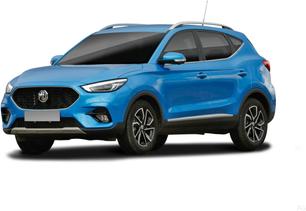
The ZST is essentially an upgraded version of MG's popular small SUV, the ZS.
The ZST sees some tweaks to the overall design and some added standard safety features. So, if you like the original, there's a good chance you'll like the ZST and I've been driving the top-grade Essence variant with my family of three.
The ZST Essence has some stiff competition from similarly specified rivals like the GWM Haval Jolion Lux and Chery Omoda 5 EX offering affordable packages and similar driving experiences. So, what makes the ZST stand out?
The i-Force Max hybrid set-up is aimed at improving performance rather than fuel efficiency, but its effectiveness in that respect is hard to fathom.
Increases in power and torque are welcome, of course, but the 3.3-litre twin-turbo V6 diesel Cruiser is just as good as the hybrid off-road and with a bigger fuel tank and greater driving range.
The hybrid LandCruiser will certainly appeal to some buyers, but the lion’s share of those interested in the 300 Series are looking to tow big loads and go long distances in comfort, which is why the diesel Cruiser at this stage is the better pick of the two powertrains.
Will the MG ZST Essence fit a small family? Absolutely, and all but the middle seat passenger will be comfortable but there are areas open for improvement. Like it's safety, laggy tech and adding a few extra items in the back seat.
Yet, it still offers a good host of features and an attractive package for a reasonable price tag. Unfortunately, my son missed having the basic amenities but did like the sun roof.
Nothing of note has changed onboard the Cruiser and the GR Sport variants are all the same, inside and out, no matter which powertrain you opt for.
And that’s fine because this is a good-looking rooster.
The GR Sport is listed as 4995mm long (with a 2850mm wheelbase), 1990mm wide and 1955mm high. It has a kerb weight of 2620kg.
This 300 Series looks much the same as it did at launch in 2021: big, chunky, imposing – like me if I was wearing high heels.
As a point of difference to other Cruisers, though, all GR Sports have variant-specific badging on the grille, front doors and rear tailgate.
Inside, it’s pretty much the same story which is borne out in how comfortable and practical it remains.
Being the newer and shinier version of the ZS, the ZST presents as a nice little package with its full suite of LED exterior lights, shiny chrome accents and its well-shaped body.
The front is distinctively different from its design muse with a darkened grille, and redesigned fog lights that feature new air intake vents. Other highlights include the 17-inch two-tone alloy wheels with sporty red brake calipers lurking behind them.
The interior is pleasant with a massive sunroof creating a light-filled space and giving the illusion that the cabin is larger than it is.
The synthetic leather upholstery and trims seem robust and perfect for families, but also feel quite plasticky under hand. The red badge embossing on the headrests is lovely, though.
The dashboard is well-proportioned and headlined by an upgraded 10.1-inch touchscreen multimedia system and fully digital instrument cluster.
The gearshift feels a tad too skinny and tall for the general aesthetic but the circular air-vents add some cute personality.
The LandCruiser’s cabin is a functional and comfortable space, and – no matter the spec level – it always has a sense of familiarity about it.
All seats in the GR Sport are leather-accented and comfortable and there are soft-touch surfaces throughout the interior.
The driver gets a heated and power-adjustable steering wheel and both occupants up front cop ventilated and heated, power-adjustable seats (with memory functions for the driver).
The GR Sport’s 12.3-inch colour touchscreen is easy to use, with wired Apple CarPlay and Android Auto, and there’s a wireless charging pad near the shifter.
Physical buttons and dials make operational life in the Cruiser much easier than if all functions were adjusted via on-screen controls, as is the case in some new vehicles.
There are USB and USB-C charging points up front.
There’s a cool box in the centre console and its lid can be opened from either side, so driver or passenger can access whatever is chilling within.
There’s also a powered sunroof if you’re that way inclined.
Beyond those features, there are the usual storage spaces, cupholders, receptacles in the doors for bigger bottles and other spaces for your bits and pieces.
The second-row seats are in a 40/20/40 split-folding configuration.
The GR Sport’s cargo space, when all five seats are in use, is a listed 910 litres behind the second row, somewhat impacted by the underfloor presence of the hybrid battery. That cargo area grows to 1842 litres when the second row is stowed away.
The rear cargo area of the hybrid has a 200V/1500W inverter, four tie-down points and of course, there's a full-size spare.
All in all, the Cruiser has the goods when it comes to practicality.
Practicality is hurt by a lack of individual storage options and a back seat that has only two USB-A ports for its amenities.
The cabin space is spacious, though, and both rows have a decent amount of leg- and headroom despite the massive sunroof.
The steering wheel features height but not reach adjustment and to accommodate I have to sit much closer to the wheel than normal thanks to my poor little T-Rex arms.
Individual storage is the best up front with a small middle console and glove box, two cupholders and two drink bottle holders. The doors also feature large storage bins, which is great to keep the cockpit feeling neat.
The rear row gets two map pockets and a small storage bin in each door. There is also a (very) shallow storage nook at the back of the middle console… think a packet of gum or small wallet size.
My seven-year old isn't as comfortable in the rear because it lacks directional air vents, reading lights and a fold-down armrest. All items which will hinder an adult's comfort, too.
The boot space is a good size at 359L but you can bump it to 1187L with the rear seats folded, the backrest featuring a 60/40 split.
The height of the floor is adjustable and when set in the lowest position creates a deep well to tuck larger items, like luggage, into.
The hard cargo cover can be awkward to shift around or store but is otherwise out of the way when it counts.
Other amenities accentuate the premium-feeling the Essence is going for with the heated front seats and electric drivers seat offering well-padded comfort but on longer journeys, I miss having adjustable lumbar support.
The rear seats aren't as comfortable as the front only because the synthetic leather feels slippery, which is accentuated when you hit corners!
In terms of technology, you get two USB-A ports in each row but the front also gets a 12-volt port. You miss out on fast and wireless charging options.
The multimedia system looks great but can be sluggish to respond and the apps can be slow to load but I like the built-in satellite navigation.
The upgraded sound system has six speakers instead of four but the sound quality is a bit tinny with music and calls.
It was simple to connect to the wired Apple CarPlay. It also has Android Auto, Bluetooth connectivity and AM/FM radio.
The five-seat Toyota LandCruiser 300 GR (Gazoo Racing) Sport Hybrid sits near the top of the 300 Series line-up and as such has a price-tag of $155,990, before on-road costs.
It's worth noting the GR Sport is also available with a 3.3-litre twin-turbo V6 diesel engine at $147,090, before on-roads.
Standard features include a 12.3-inch touchscreen multimedia system, a 14-speaker JBL audio system, as well as leather-accented seats, heated and ventilated power-adjustable front seats, 18-inch alloy wheels and more.
The i-Force Max hybrid set-up is the big attraction in this package and, largely because of that new powertrain, Cruiser buyers have to cop a heftier price – just under $9000 – over the diesel variants.
As the highest off-road grade in the Cruiser line-up, the GR Sport is kitted out with front, centre and rear diff locks, E-KDSS (essentially an electronic active swaybar), and the long-time bolted-on LandCruiser 4WD heritage.
Exterior paint options include the no-cost Glacier White or Ebony, or choose from Crystal Pearl, Arctic White, Graphite, Eclipse Black or Merlot Red, each of which costs $710.
Rivals such as the Nissan Patrol Warrior (priced from around the $110,000 mark) or Land Rover Defender (from $102,000) offer similar levels of standard features, but something like the Denza B8 plug-in hybrid (kicking off from around the $91,000 mark) has a packed standard features list for much less cash.
There are four variants for the ZST and our test vehicle is the top-spec Essence model, priced at $33,990 drive-away.
Our example's 'Pebble Black' finish is an included colour but other paintwork options can cost an extra $700.
The price point positions it right in the middle of its rivals with the Omoda 5 costing $35,990 drive-away and the Jolion sliding into the most affordable spot at $30,990 drive-away.
To highlight the value-for-money comparison, the Kia Seltos Sport+ FWD model costs $38,790 drive-away and then you start creeping up into the $40K bracket for similarly specified small SUVs.
The ZST Essence is the top-grade and it has a decent number of premium features for its price tag, like a panoramic sunroof, synthetic leather upholstery, heated front seats and an electric driver's seat, keyless entry, keyless start and a full suite of exterior LED lights.
Other standard features include wired Apple CarPlay and Android Auto, 10.1-inch touchscreen multimedia system, digital instrument cluster, one-zone air-conditioning, built-in satellite navigation, 360-degree camera system and an upgraded sound system with six speakers.
The big news here is the i-Force Max hybrid powertrain consisting of a 3.5-litre twin-turbo V6 petrol engine, an electric motor and a 10-speed automatic transmission.
Toyota reckons the “purpose‑built 1‑Motor Hybrid system” is designed for towing, off‑roading and heavy‑duty performance and that the additional electric motor “enhances power and responsiveness (compared with an equivalent diesel-only model), working seamlessly alongside the internal combustion engine”.
In general driving, it’s difficult, nigh on impossible, to discern the positive impact, if any, of the i-Force Max. But the 3.5-litre twin-turbo V6 petrol engine alone is impressive.
There’s no denying this Cruiser now benefits from a substantial increase in power (up 114kW to 341kW combined peak output) and torque (up 90Nm to 790Nm combined peak output) over the diesel Cruiser.
The Dakar Rally-inspired LC300 GR Sport’s 10-speed torque converter auto cleverly handles open-road driving and high- and low-range 4WDing, micro-managing power and torque to maintain a level-headed but involved driving experience.
The GR Sport has full-time, dual-range 4WD, a well-calibrated off-road traction control system, as well as front, rear and centre diff locks, so it’s almost unstoppable.
In this realm, the Cruiser holds its own against the likes of Nissan Patrol Warrior and Land Rover Defender.
The Essence variant has a 1.3-litre, three-cylinder turbo-petrol engine with a maximum power output of 115kW and 230Nm of torque.
It's a front-wheel drive and features a six-speed auto transmission. Overall, it has enough power to keep up with traffic on the open road but you have to be firm with the accelerator to keep your speed consistent.
Official fuel consumption is 10.0L/100km on a combined (urban/extra-urban) cycle.
Our fuel consumption on this test was 13.6L/100km, which is substantially more than the claimed figure, but testing did, of course, include high- and low-range 4WDing.
This hybrid Cruiser has a 98-litre fuel tank (the diesel holds 110 litres) so, going by those fuel figures, you could reasonably expect a driving range of about 720km out of a full tank.
The official combined cycle fuel figure is 7.3L/100km and my real-world average came in at 7.7L. That is after a good mix of urban and open-road driving, so the usage is good.
Based on the combined fuel cycle and the relatively small 45L fuel tank, expect a driving range of around 616km.
Steering, now electric, is light but precise and this 4WD wagon feels highly manoeuvrable; with a turning circle of 11.8m it's quite nimble.
The new hybrid set-up is aimed at performance rather than fuel efficiency and as before the Cruiser remains a comfortable open-road cruiser, smoothly tapping into oodles of power and torque when required, all managed smoothly through the 10-speed auto.
This Cruiser’s on-road ride and handling are composed but it is soft rather than dynamic. Its suspension – double wishbone, independent at the front and live axle and multi-links at the rear with coils all-around – soaks up most irregularities in any road surface.
Its ventilated disc brakes front and rear brought the big Cruiser to a controlled stop during our emergency-braking scenarios on test.
When it comes to off-roading, this LandCruiser benefits from handy 4WD gear some other Cruiser grades miss out on, namely Toyota’s swaybar-disconnect equivalent E-KDSS (electronic-Kinetic Dynamic Suspension System), front and rear differential locks, and adaptive variable suspension.
The E-KDSS set-up acts like an electronic active swaybar, adjusting tension on the front and rear sway bars to suit the terrain and driving conditions.
While it’s a high-value addition on-road – tightening them for better body control at higher speeds on sealed surfaces – it gives the vehicle a lot more flexibility in terms of wheel articulation off-road, offering full stretch on the axles when tackling off-road scenarios.
This hybrid 300 Series tackled all obstacles at our unofficial testing and proving ground without any strife; its top-tier power and torque levels are consistently delivered across a broad rev range and that 10-speed auto is never caught out, scrambling through ratios to find the sweet spot.
High- and low-range gearing are solid in the 300 Series, and the suite of driver assist tech, aimed at making off-road driving easier and safer, is comprehensive: the traction control system has been further fine-tuned over previous versions, and is now even more precise in application.
The 300’s multi-terrain select system gives you the option of cycling through driving modes – for example, Sand, Snow, Mud, Rocks and Dirt – to suit the terrain. When engaged, the modes adjust vehicle systems, throttle, engine output etc to best suit the conditions, driving style and terrain.
Off-road measurements and angles are on point for a large 4WD wagon. Ground clearance is 245mm, wading depth is 700mm, and approach, ramp-over and departure angles are 32, 25 and 25 degrees, respectively.
Besides that, whether it’s being able to access 790Nm of useable torque across a broad rev range, or relying on the LC300’s well-calibrated traction control, or if you are engaging front, rear and centre diff locks, this Cruiser is an almost unstoppable off-roader in the right hands.
Even without the diff locks engaged, this 300 conquers every obstacle you drive it at, through and over.
If you plan to use this 4WD wagon for anything more difficult than dry-track 4WDing in good weather then get more aggressive all-terrain tyres to replace the standard Bridgestone Dueler all-terrains (265/65 R18).
The GR Sport’s full-size spare is mounted to the underbody but it doesn’t impact running clearance.
The 300 Series can legally tow 750kg unbraked, and 3500kg braked.
Here, the Cruiser remains true to its old-school spirit – albeit with a tech edge – in the same way the Nissan Patrol Warrior does, while something like the Land Rover Defender is more spaceship than scrub explorer.
The ZST Essence has an okay amount of power relative to the car's small size.
It's an adequate cruiser when I ferry just my husband and son around, but feels a full load of luggage and people.
The steering is responsive and it's an easy car to manoeuvre in tight car parks or city streets, which is great. The visibility is pretty good despite the chunkier pillars and you feel confident when checking your blind-spots.
While the suspension is fairly forgiving and ride comfort is decent, you will still notice the bumps, especially when seated in the back.
The cabin suffers from some wind and road noise and at higher speeds we had to find we raise our voices a bit to be heard. Around town, you don't notice it.
This is just a personal preference but the brake and accelerator pedals are skinnier and more centrally positioned than I prefer. You get used to it, though.
The ZST is pretty easy to park and it's great that you have a 360-degree camera system but the image quality can be grainy. You get rear parking sensors, too, but miss out on ones at the front.
All of the 300 Series line-up, except the GR Sport, have the maximum five-star ANCAP safety rating from testing in January 2022.
Safety gear includes 10 airbags, two ISOFIX anchor points, as well as AEB with pedestrian and daytime cyclist detection, active cruise control (all-speed), lane departure alert (with brake to steer), road sign assist (speed signs only), trailer sway control and more.
Off-road driver-assist tech includes crawl control, downhill assist, hill-start assist, multi-terrain select, multi-terrain monitor with panoramic view and active traction control.
The ZST Essence has a good suite of safety features that now come standard like rear cross-traffic alert and blind-spot monitoring.
Other standard features include tyre pressure monitoring, LED daytime running lights, forward collision warning, lane departure alert, adaptive cruise control, seatbelt reminders, a 360-degree camera system and rear parking sensors.
The ZST only features six airbags, while many of its rivals sport seven, including the newer front centre airbag. The ZST variant scored four- from a possible five-star ANCAP safety rating in 2017 testing.
It's important to note that the tested ZS model did not have AEB or lane support systems at the time of testing, these were introduced from the 2020 model year onwards and the ZST has both.
There are ISOFIX child seat mounts on the rear outboard seats and three top tether anchor points but two child seats will fit best. There is enough room for front occupants when a 0-4 rearward facing child seat is installed.
The hybrid Cruiser is covered by Toyota’s five year/unlimited km warranty.
Servicing is scheduled for every 12 months or 20,000km (whichever occurs soonest) and costs are, at time of writing, $450 per appointment for the first five years or 100,000km (whichever occurs first).
Toyota Australia has more than 300 authorised service centres around the country.
The ZST Essence comes with a seven-year/unlimited km warranty, which is on par with coverage offered by a growing number of its rivals.
There is a seven-year or up to 70,000km servicing program for a total cost of $2339 or an average of $334 per service, which is very competitive for the class.
Servicing intervals are at every 12 months or 10,000km, whichever occurs first, but could be annoying if you travel a lot.