What's the difference?
The truly great thing about great wealth - I mean like, drop $1 million on a new Rolls-Royce with a casual yawn and a mouse click wealth - would be how great it is not having to do anything for yourself.
Personally, I would hire a chef, so I’d never have to cook again, and a pilot to fly my private jet, so I’d never have to catch pneumonia while flying 34 hours to Ibiza with strangers to do my weird job (oh, and if I was rich I wouldn’t have to work anyway), and in theory I might even hire a chauffeur for those odd times when I didn’t want to drive myself in one of my fleet of beautiful cars.
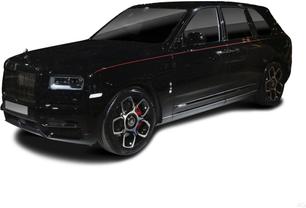
All right, so I can’t even imagine that last one, but the most interesting fact I gleaned while in Spain, tirelessly testing the new Rolls-Royce Cullinan Series II, is that even the ridiculously rich are falling out of love with not driving these days.
Perhaps, being tech-savvy types, they can see the end of driving and the rise of autonomy coming and they want to make the most of it while they still can. But according to Rolls, the percentage of its buyers who sit in the back rather than in the driver’s seat has flipped entirely over the past 15 years.
Back in the day, 80 per cent of Rolls owners were back-seat passengers, blowing cigar smoke at the back of a chauffeur’s head, while 20 per cent actually drove their expensive motors.
Today, the number who drive themselves has soared to 80 per cent, and apparently that’s not just because it would feel weird being chauffeured around in what is now the most popular Rolls-Royce by far - the Cullinan SUV.
The other big change, apparently, is that the average age of a Rolls-Royce buyer has also dropped, from 56 to the low 40s. And that means more buyers with kids, and gold-plated prams and other associated dross, which means they need bigger Rolls-Royces, family-sized SUV ones, which again helps to explain why the Cullinan now makes up as much as half of all the brand’s sales in some markets.
And why the arrival of this, the facelifted, tweaked and twirled Series II version of a car that was greeted cynically by many in the media when it arrived (“one group was not sceptical, and that was our clients,” as a Rolls spokeswoman delightedly pointed out) is such a big deal.
The world is full of shock brand announcements.
Remember the time Coke suddenly changed its cola recipe? Or when Apple decided to take on Nokia with iPhone? Nobody saw those coming.
We all know how the latter turned out and even the former eventually became a marketing masterstroke.
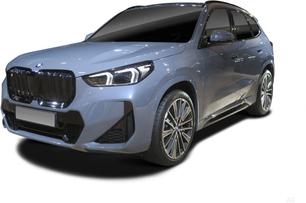
Now here's another super-surprise – a German electric luxury SUV that’s actually comparatively inexpensive. And not stingily equipped. Yep, we’re talking about the iX1.
Based on the really rather impressive third-generation X1, it decisively undercuts similarly-specified rivals from Mercedes-Benz (EQA, EQB) and Genesis (GV60).
But is the Bavarian EV SUV worth paying that little bit extra for against (only very slightly) cheaper alternatives like the Hyundai Ioniq 5, Kia EV6, Tesla Model Y, Polestar 2 and Volvo XC40 Recharge?
Let’s see.
The Cullinan might not be the most beautiful or traditional Rolls-Royce, and it’s a shame modern success means providing an SUV option to everyone, but it’s still a remarkable machine, either to drive or just to sit in. It remains not just a marvel of engineering, but a marvellous of engineering. Hats doffed, old bean.
Note: CarsGuide attended this event as a guest of the manufacturer, with travel, accommodation and meals provided.
BMW is a true EV pioneer, as the 2014 i3 and subsequent models prove. There’s never been one that we didn’t like. The only problem was that all were expensive. And at times, prohibitively so.
Astoundingly, the iX1 breaks that cycle, comparatively speaking, while impressing us with its design, quality, packaging, dynamics and equipment levels.
As it stands, the xDrive30 is one of the most convincing and best-value medium-sized luxury SUV EVs on the market right now.
Who’d have thought it from a BMW?