What's the difference?
The truly great thing about great wealth - I mean like, drop $1 million on a new Rolls-Royce with a casual yawn and a mouse click wealth - would be how great it is not having to do anything for yourself.
Personally, I would hire a chef, so I’d never have to cook again, and a pilot to fly my private jet, so I’d never have to catch pneumonia while flying 34 hours to Ibiza with strangers to do my weird job (oh, and if I was rich I wouldn’t have to work anyway), and in theory I might even hire a chauffeur for those odd times when I didn’t want to drive myself in one of my fleet of beautiful cars.
All right, so I can’t even imagine that last one, but the most interesting fact I gleaned while in Spain, tirelessly testing the new Rolls-Royce Cullinan Series II, is that even the ridiculously rich are falling out of love with not driving these days.
Perhaps, being tech-savvy types, they can see the end of driving and the rise of autonomy coming and they want to make the most of it while they still can. But according to Rolls, the percentage of its buyers who sit in the back rather than in the driver’s seat has flipped entirely over the past 15 years.
Back in the day, 80 per cent of Rolls owners were back-seat passengers, blowing cigar smoke at the back of a chauffeur’s head, while 20 per cent actually drove their expensive motors.
Today, the number who drive themselves has soared to 80 per cent, and apparently that’s not just because it would feel weird being chauffeured around in what is now the most popular Rolls-Royce by far - the Cullinan SUV.
The other big change, apparently, is that the average age of a Rolls-Royce buyer has also dropped, from 56 to the low 40s. And that means more buyers with kids, and gold-plated prams and other associated dross, which means they need bigger Rolls-Royces, family-sized SUV ones, which again helps to explain why the Cullinan now makes up as much as half of all the brand’s sales in some markets.
And why the arrival of this, the facelifted, tweaked and twirled Series II version of a car that was greeted cynically by many in the media when it arrived (“one group was not sceptical, and that was our clients,” as a Rolls spokeswoman delightedly pointed out) is such a big deal.
This week I’ve taken the recently updated Alfa Romeo Stelvio Veloce on a massive road trip and after the first few hours of driving it, I thought this is the sort of car you get when you need some extra boot space but still want that sports car vibe.
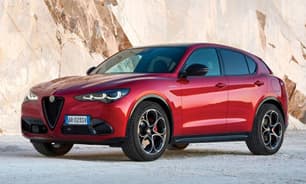
It helps that our test model is finished in the classic 'Alfa Red' but while its on-road performance can't be ignored, it has some tough medium SUV competition from the likes of the BMW X3, Genesis GV70 and Lexus NX.
So, is it just a fun car to drive or will it suit the family, too? I've been cruising around in it for the last week with my family of three to find out for you!
The Cullinan might not be the most beautiful or traditional Rolls-Royce, and it’s a shame modern success means providing an SUV option to everyone, but it’s still a remarkable machine, either to drive or just to sit in. It remains not just a marvel of engineering, but a marvellous of engineering. Hats doffed, old bean.
Note: CarsGuide attended this event as a guest of the manufacturer, with travel, accommodation and meals provided.
The Alfa Romeo Stelvio Veloce is the car you get when you want a sports car but happen to have a kid or two. Its ride comfort is on the lower end but it has heaps of power and enough features that it manages to slide into its price tag without feeling too cheeky. The back seat’s size will limit this to smaller families, though. And I would prefer to see better tech at this grade level, so this gets a 7.1/10 from me.
My son didn’t spend much time in this one but he liked the red paintwork. My mum, however, loved the power and sexy packaging. She gives it an 8/10.
It is something of an achievement when a team of designers manage to make a facelifted version of a vehicle less ugly, daunting and disappointing than the original.
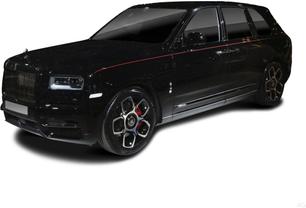
I thought the first Cullinan, launched five years ago, looked like a London black cab that had been mounted and inseminated by a double-decker bus. Big? Sure? Impressive? Yes. Beautiful? Only if you think Boris Johnson is sexy.
There was a lot of chat at the launch about the changes made for Series II, but in summary they tried to make it look more… like a boat, according to Exterior Design Lead Henry Clarke.
“We don’t look for speedy, overcomplicated lines, we take our inspiration from the luxury world, and it’s often from yachts, it’s that same sense of scale and grandeur, that’s the key to the timelessness of a Rolls-Royce,” he explained.
“We’re not focused on the world of automotive design, and if you look at the Cullinan it has that ethos you think of with a yacht, that strong, vital bow and then everything rearwards, the back of a yacht, has an elegance and grace to it.”
Fair enough, but what I appreciated was that they’ve squared the front end off a bit more, by outlining the grille, adding some gills beneath it and putting in some natty DRLs, and then rounded off the rear a little as well, so that it looks less… awful.
Indeed, after a couple of days of staring at it (and particularly admiring how good it looks in your rear-view mirror when behind you), I did come around to its looks. Certainly a lot more than last time.
And strangers driving past seemed to really like it, because they keep smiling and clapping at me.
While the Veloce has had a facelift, the changes are so minor I would dare to ask, why bother?
The daytime running light signature has been tweaked but only die-hard Stelvio fans will notice it. I do like the larger 12.3-inch digital instrument display but surprisingly the multimedia screen remains on the smaller side at 8.8 inches.
Otherwise, there’s no denying the Veloce looks like an Alfa Romeo, staying true to its Italian heritage. It’s solid, with a 1903mm wide stance, but so robust that it moves away from words like 'sleek' or 'sexy'.
The black grille, 20-inch alloy wheels and red brake calipers make it look sports car mean and hint at what's under the bonnet.
The interior looks well made and it's got a bat cave element with the black headliner and panoramic sunroof. There's a plethora of soft touchpoints throughout and the circular air-vents found in both rows add some flair.
Overall, though, the interior is understated and if you’re looking for something as flashy as the exterior, you may be disappointed.
In terms of being a vehicle you might actually use - and keeping in mind that if you can afford one of these you’ve also got at least a half dozen other choices - every day, the Cullinan is the pick of the Rolls-Royce enclosure.
From the big boot space - 600 litres with the seats up, 1930 litres with them down - and its lovely little Viewing Suite, through the spacious rear relaxing zone to the absurdly comfortable and plush front seats, there’s a sense of grandeur about the whole Cullinan experience.
You can opt for a champagne fridge between those rear seats, if you like, or you can just lie back and stare at the blinking pins of light in your 'Starlight Headliner' and imagine that each one of them represents one of your millions, smiling down at you.
It’s a lovely place to be, in short, and with its super-thick double glazed glass, coated with an acoustic layer on top of that, and carpets thick enough to keep out road noise on their own, it’s also a very pleasantly quiet one.
The front row benefits the most in terms of space and features. I have stacks of headroom and legroom in the front seat and didn’t feel like I was too close to my passenger this week.
I like the comfortable electric seats and the fact you can adjust the side bolsters and under-thigh support.
Individual storage options are on the slim side throughout the car and it was something my mum and I found annoying on our road trip because there aren’t a lot of spots to put your little items up front. Think snacks, sunglasses, lip balm etc.
The two cupholders are really drink bottle holders because they’re too large to fit a small takeaway cup without popping the lid off but I like the large storage bins in each front door.
It's a tight squeeze in the back seat for my 168cm (5'6") height and that’s behind my driving position! It could feel a tad cramped back there for those with longer legs.
It’s also a bit awkward getting in and out of the back seat because of the large wheel arches.
The storage bins in the doors are too small to hold a drink bottle but the middle armrest has two cupholders and a phone holder.
Charging options are fantastic up front with two USB-A ports, one USB-C port, a 12-volt socket and a wireless charging pad to choose from. You even get an 'aux' jack, too.
The amenities in the back seat are okay and you get a couple of net map pockets, reading lights, a USB-A and C port, as well as directional air vents.
This Alfa has a no-nonsense approach with the other tech, though. I usually don’t mind that but the touchscreen multimedia system is a little too no-nonsense for this spec-level.
I found it to be laggy and too small. It also regularly turned itself off and rebooted. This happened a few times while needing satellite navigation directions, which was annoying.
Also on the sat nav, you can’t search for a general name of something, like a business, you have to input an address which meant using my iPhone anyway. It’s great that you get wired Apple CarPlay and Android Auto, though.
The digital instrument panel looks upmarket but isn’t properly customisable and I was disappointed the ambient lighting package only meant that there are lights in the footwells and a tiny overhead light. Adding some extra lighting would have transformed the night-time driving experience.
The boot is the highlight for me because you get a decent capacity at 499L. The load space is level and I like the back row's 40/20/40 split-fold. We had plenty of room on our road trip for luggage and shopping.
You get a temporary spare tyre and a retractable cargo blind. The latter is stiff enough to double as a shelf which is handy and a handsfree powered tailgate comes standard, as well.
Value? Price? What are these things you speak of, little plebeian person? Such is the disdain for such things at Rolls-Royce that they wouldn’t even tell us what the Series II is going to cost when it lands in Australia later this year.
The people who can afford one don’t much care, of course, but for the rest of us, who like to shake our heads and make low, whistling noises, you can bet the price will rise just a little from where it was with the original Cullinan - and that was $705,000 for the basic car, or closer to $795,000 for the sportier, and blacker, Black Badge variant.
In terms of value, it’s hard to grasp that any car could cost that much, but for a Rolls buyer the equation is very different. They don’t need a Rolls, no-one does, but it makes a nice change from buying art works, gold or small countries.
In terms of features, it has almost too many to mention, but let’s pause on the marvellous massage seats, the bespoke sound system, entirely unique to this case and built by Rolls itself, with incredible levels of detail, the Rolls umbrellas tucked into each door and the very lovely 'Viewing Suite'.
This consists of two pop-up seats in the rear, with a little champagne and canapés table in between, where “you can watch your children play football”.
Try that in Australia, at the rugby league, and you’ll be covered in half-time oranges and abuse spittle in no time. Stick to the polo, perhaps.
There are three models for the Stelvio and ours is the mid-spec Veloce grade, which will cost you $82,950, before on-road costs. The pricing should make it competitive compared to its rivals but the features list isn’t as robust as it could be.
The interior gets most of the big-ticket items with leather upholstered sports front seats, extended leather trim on the doors and dashboard as well as a heated steering wheel.
Both front seats are electric with six-way power adjustment, powered side bolsters and four-way adjustable lumbar support. They also feature a heat function and extendable under-thigh support.
The luxury items continue with the panoramic sunroof, real aluminium accents throughout and a premium Harman Kardon sound system that boasts 14 speakers.
Other standard features include full LED adaptive 'Matrix' headlights, aluminium sports pedals, dual-zone climate control, keyless entry, push-button start and a handsfree powered tailgate.
It's the technology that lets the Stelvio down but I'll go into that later.
Rolls-Royce has committed to being a fully EV brand by 2030, so it’s a safe bet this Series II Cullinan will be the last one offered with its storming, staunch V12 engine.
Indeed, Rolls hinted the only reason it hung around in this version is that this is only a mid-life face-lift for the Cullinan, and the car that replaces it will arrive on an entirely new, all-electric platform.
As good as the EV Roller, the Spectre undeniably is, driving this old-school Cullinan with its 6.75-litre twin-turbocharged V12 making the kind of thumping, torque-thick, nothing-is-too-much-trouble acceleration is a hoot.
It’s not loud, but it’s just loud enough that you can enjoy its deep, brassy tones, and it’s got plenty of power in reserve to hurl even this 2.75-tonne machine past lesser vehicles with ease.
There are two Cullinans to choose from, of course, with the base model providing a very pleasant 420kW and 850Nm or the sportier Black Badge version (Rolls calls it the brand’s “alter ego”) with 441kW and 900Nm.
The Veloce has a 2.0-litre, four-cylinder turbo-petrol engine that gives a maximum power output of 206kW and 400Nm of torque. It’s an all-wheel drive and has an eight-speed auto transmission which is very smooth.
Checking out the specs I didn’t think this would be as powerful as it is. But it’s really fun when you need to put your foot down! I mean, it can go from 0-100km/h in just 5.7 seconds.
Rolls-Royce claims the Cullinan will provide you with between 16 litres per 100km and 16.8L/100km, but I believe you’d have to drive it quite steadily to achieve even that quite appalling figure.
Twelve cylinders, 2.75 tonnes, you do the math, but it's interesting to note that with a nearly full tank - and we’re talking 100 litres of fuel - my distance to empty was looking like barely more than 500km - that’s an EV-like number.
The official combined cycle fuel economy figure is 7.0L/100km and my real-world usage came to 8.4L/100km.
I drove our test model hard but did A LOT of open road driving - 2051km to be exact - so I was happy with the average but I would expect it to be higher in the city.
Based on the official combined cycle number and 64L fuel tank, you theoretically should be able to get a driving range of around 914km but my real-world tests see that figure come in closer to 700km.
Alfa Romeo recommends a minimum 95 RON petrol be used for the Stelvio.
The first word that comes to mind when describing the experience of driving a Rolls-Royce the size of a small housing estate is 'intimidating', because it's one of those cars where you take a few deep breaths before setting off (while muttering “please don’t crash it”) and then some sharp intakes of breath the first few times you find cars coming towards you on a narrow road, of which there are many on Ibiza where we were summoned to drive it.
I followed a panicked young man from India who had never driven a Rolls, nor a left-hand-drive car before, and boy, he sure looked intimidated, even if he didn’t ever get above 30km/h.
The incredible thing about the Cullinan, however, is how quickly it relaxes you and how astonishingly light and easy it is to drive. The steering feels almost absurdly light at first, you really can drive it with just one finger, two if you’re feeling cautious, but once you get used to it it just feels very Rolls-Royce.
The whole brand lives on the idea of effortlessness, wafting over the world, and the much-touted 'Magic Carpet Ride', and it really does deliver that sense of ease. You’re almost as relaxed at the wheel as you are in the rear seat (and the massage functions only make you feel more so).
Speed humps do upset the Cullinan, but only a very little, and you’re aware when the car finds broken surfaces, but only distantly so. It feels like someone is dealing with bumps and imperfections in a far-off-place, perhaps the car’s basement, and it shouldn’t worry you too much.
When traffic annoys you, you can just make it disappear by engaging your whumping V12 engine and making the world go briefly blurry.
Attempt to throw the Cullinan through sharp bends at speed, however, and it reacts in much the same way you’d expect the cruise ship it somewhat resembles to.
There’s a bit of body roll, but it’s all quite polite and a sense that if you need to drive like that, perhaps you should go and get one of your other cars.
The Black Badge version does feel just a trifle sportier than the base Cullinan but we’re splitting very grey and expensively coiffed hairs here.
The overall experience is one of grand relaxation, imperiousness and a certain touch of superior glee.
The Veloce is downright fun to drive because of how damn responsive it is. There is plenty of power, so much so, that you’ll look forward to hitting the open road.
The sporty steering makes for sharp handling and the car moves decisively. I have felt confident all week that it would do what I wanted it to do. It's wide stance also makes it hug the road like an old friend.
However, the suspension is also sporty, aka firm! The padded seats help soften the impact when you hit a bump but you’ll still know it when you hit one. There's also a resonating 'ker-thump' in the cabin, in case you didn't feel it.
The big thing that marred the driving experience for me, at least for a longer trip, is how loud road and wind noise are at higher speeds. It’s loud enough that you need to raise your voice to talk, which I didn’t enjoy.
The Veloce earns back points with how easy it is to park and it handles those stupidly small hotel car parks extremely well.
I don't rate the reversing camera, though. The quality of the image is terrible for this grade-level.
The Rolls-Royce Cullinan SUV has not been ANCAP tested, but it feels safe because it’s bigger than a tank. It has eight airbags - driver, front passenger, two curtains, driver side, front passenger side, two rear passenger side), and a full-suite of active-safety tech including Forward Collision Warning and Automatic Emergency Braking.
The Stelvio has most of the major items that I like to see on a family car and the standard safety features include adaptive cruise control, forward collision warning, driver attention monitor, traffic sign recognition, lane keeping aids, blind-spot monitoring, rear cross-traffic alert, a reversing camera, daytime-running lights, front and rear parking sensors, and a tyre pressure monitoring system.
It's important to note though that the safety systems only scored a 60 per cent with ANCAP.
It has autonomous emergency braking with pedestrian and car detection and is operational from 7.0 - 200km/h.
The Veloce has a maximum five-star ANCAP safety rating but it was done ages ago in 2017, which means it will expire this December. It also only has six airbags, which is low for a family car but the curtain airbags cover the back row.
There are ISOFIX child seat mounts on the outboard rear seats and three top tethers in the second row but two seats will fit best.
You can just squeeze a 0-4 rearward facing child seat in but it will encroach on front passenger comfort.
Questions about service intervals and warranties seem to confuse the people at Rolls, as if none of their customers have ever bothered to ask.
Yes, you would think servicing would be free when you’re pushing a $1 million price tag, and that the warranty would be for life, particularly considering the low mileage on these things, but it is, in fact, just a four-year servicing and warranty offer for Australian customers of this vehicle. So that means an unlimited-mileage warranty, including all services, for the first four years (at which point you obviously buy a new one). "Rolls-Royce Motor Cars will offer a service inclusive package but no pricing available yet and this will not be required until the fifth year of ownership."
The ongoing costs aren’t too shabby on the Stelvio because it comes with a five-year/unlimited km warranty and you also get five years roadside assistance.
It’s a 24/7 complimentary service that covers a host of items but check out the terms and conditions for more information.
There’s capped priced servicing for five years or up to 75,000km, whichever occurs first.
Services cost an average of $573, which is competitive for the class and servicing intervals are good at every 12 months or 15,000km, whichever occurs first.