What's the difference?
BYD, Chery, GWM and MG - one of these Chinese car brands is not like the others.
While the first three all enjoyed major growth in 2025, MG had a year to forget. A flood of new models, rushed into the market with little or no fanfare, resulted in a nearly 20 per cent sales decline, when the brand should have been basking in the same growth as its rivals.
So, the old management has been swept away and MG Australia is attacking 2026 with a fresh outlook and a renewed purpose, fully aware that launching an affordable car and hoping the buyers come is not a sound strategy.
Which is why the brand is making a far more concerted effort with this all-new MGS6 (all one word, likely to avoid copyright issues with Audi). It’s an important model to get right, too, as the electric mid-size SUV is becoming an increasingly popular choice for Australian buyers, as witnessed by the success of the BYD Sealion 7 and Tesla Model Y.
But with those two, plus many more mid-size EV SUVs, including the Kia EV5, GAC Aion V, Geely EX5 and Zeekr 7X (to name a few), to compete with, MG will need to put its best foot forward to give the MGS6 its best chance of success.
This one model alone won’t determine the fortunes of MG in the final reckoning of the year, but if MG wants to turn around its sales numbers and enjoy the same growth as its Chinese rivals, having the MGS6 succeed would be an important step.
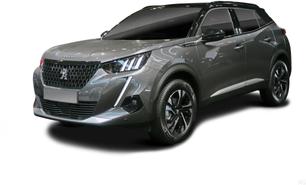
Looks are subjective but Peugeot’s updated 2008 small SUV is good looking from every angle.
The update brings a raft of design tweaks and some tech upgrades, but mechanically there isn’t anything new.
It’s not a cheap car and its diminutive size might scare off some buyers who can cross-shop cheaper and more value focused alternatives from mainstream Japanese and Korean brands.
We are driving the range-topping 2008 GT variant to find out if it’s more than just a pretty face.
It’s probably a bit much to place the future success or failure of MG as a brand solely on the shoulders of the MGS6. A lot more work behind-the-scenes and customer facing will need to happen to ensure the brand doesn’t repeat its 2025 sales performance.
However, the MGS6 is a step forward and something of a return to form for the brand. It’s a good value, well-equipped and spacious electric SUV, so if that’s what you’re looking for, it should be on your short list.
However, the challenge for MG is that there are several other very similar offerings that have emerged in recent times, namely the BYD Sealion 7, while hybrids like the Toyota RAV4 remain family favourites. Not to mention the other options from GAC, Geely, Hyundai, Kia, Subaru etc as the electric SUV segment continues to grow.
It won’t be easy for MG to recover lost ground but the MGS6 is a good start.
Note: CarsGuide attended this event as a guest of the manufacturer, with accommodation and meals provided.
The Peugeot 2008 is a handsome and accomplished little SUV that’s fun to drive and has a cabin that feels a little bit special.
In reality the 2008 is too expensive and isn’t as practical as most of the mainstream compact SUVs.
This is the car you buy with your heart, not with your head.
Historically MG has played it safe design-wise, opting for inoffensive but sometimes derivative looks. But with this latest generation the brand is starting to find its own unique style and the MGS6 is another example of that.
The company has hired more European designers, who have brought a more global look and feel to the brand and given it a more clearly defined sense of style. There is a clear visual link to the smaller MGS5, with both models clearly influenced by the brand’s halo model, the Cyberster.
There’s a Cyberster-inspired split grille at the front, plus new signature daytime running lights, while at the rear there are full-width lights, with a 3D light effect with integrated spoiler for better aerodynamics. The exterior look is then finished off with 20-inch aero-designed alloy wheels.
Inside the design is in keeping with previous MG models, which means a simplistic but very modern cabin.
There are two screens, one for the driver’s display and one for the multimedia system, that provide a clean and contemporary look.
MG is offering two interior options, a standard grey-colour cabin with carbon fibre-style inlays or an optional beige look complete with Scandinavian-inspired light wood-style inlays dubbed Nordic Ashwood.
Notably, there are more soft-touch materials used throughout, which adds to a more premium look and feel for the MGS6 compared to some of the brand’s earlier models.
The Peugeot 2008 is a smooth operator with head-turning French flair, but the devil is in the detail.
It’s not just the 2008’s well proportioned dimensions or the healthy dollop of exterior black highlights that catch your eye, but Peugeot has added a range of design cues to symbolise the Lion on its badge.
The tail-lights have a 3D effect that make them look like cat’s claws and the daytime running lights on the front resemble a scratch mark. These pair perfectly with the lion head crest on the grille.
Look deeper and you notice the attention to detail.
The 2008's redesigned front grille's slates are colour matched to the car's body colour.
Dual exhaust pipes are finished in chrome, giving the impression of performance even if the car doesn’t deliver on it.
The GT variant gets a two-tone paint job with a black roof contrasting with the body's colour.
Inside there are plenty of high quality finishes. The centre console is festooned in gloss black and there is a lovely carbon-effect textured insert on the dash and doors.
Some hard plastics below eye-level and on touch points such as where your knee might rub are less impressive. The rear seat loses some of the lustre of the front pew with tough plastics covering the back of the front seats and most of the doors.
While MG has opted for the clean, ‘tech’ look by running all the key functions through the two screens, thankfully the brand has also decided to include more physical buttons. These are for the key controls, specifically the air-conditioning and the audio system, and make it easier to adjust on the move.
MG has placed a big emphasis on user-friendliness, with a reported 38 storage spots scattered around the cabin to help make life easier for occupants. Certainly the cupholders, deep door pockets, large centre console shelf and large lidded console box do make storing your everyday small items convenient.
As for interior space, MG was keen to point out that its battery back is “ultra-thin” and measures just 110mm tall, which has allowed for a more spacious cabin with a flat floor. This translates to a very roomy interior, especially in the second row where there is enough space for two adults to sit comfortably with ample headroom and kneeroom.
In terms of storage, the MGS6 is the brand’s first model to feature under bonnet storage, or a 'frunk' as some people call it, which adds up to 86L of storage space (although that number is reduced to 67L in the AWD).
This is obviously in addition to the boot, which measures 581L with the seats up and 1607L with the second row folded.
Step inside and there is no hiding the 2008’s diminutive proportions.
It’s 4300mm long, 1815mm wide and 1550mm high, which puts it closer in size to the mini Mazda CX-3 than the larger CX-30 it is more aligned with price-wise.
This all adds up to a snug fit in whichever row you sit.
There are a couple of cupholders in the centre console - a smaller one for a standard takeaway coffee and a larger one for drink bottles.
Slight storage bins in the door can hold a regular drink bottle but there isn’t much room for much else.
The wireless device charger is hidden away behind a compartment below the central screen that opens with a push and there are two USB-C ports up front and the rear seats score a USB-C and A connection.
Rear seat passengers do without a dedicated aircon vent, unfortunately.
There is an issue with Peugeot’s i-Cockpit steering wheel and digital driver display, too.
If you like to sit low the chances are the steering wheel will cut off your view of the bottom part of the display. If you prefer to have the seat jacked up, you’ll have better vision of the readouts.
There are piano key-like physical controls for simple climate functions such as the de-mister and auto climate settings. More complex functions are done via the 10-inch central multimedia screen.
The boot is a decent size at 434L and can easily handle a weekly grocery shop or a few overnight bags.
There is only a space saver spare wheel, but this car is aimed at city driving where it is easier to source a replacement tyre.
MG has taken a ‘keep it simple’ approach, offering just two variants of the MGS6 - the RWD that starts at $49,990 and the AWD priced from $56,990 - on a single specification Essence grade.
Both those prices are drive-away, which means the MGS6 is very competitive, undercutting the likes of the Tesla Model Y by more than $10,000. However, that’s still not enough to make it the most affordable electric SUV, with cheaper options out there, most notably fellow Chinese brands GAC and Geely claiming that honour with their EX5 and Aion V starting in the low-$40K range, although those are arguably at least a half-size smaller than the roomy MGS6.
Standard equipment on both models includes 20-inch alloy wheels, wireless smartphone charging, wireless Android Auto and Apple CarPlay, an 11-speaker sound system and a combination of synthetic leather and synthetic suede trim. The only major specification difference between the RWD and AWD, aside from the powertrain, is a panoramic sunroof for the more expensive model.
The 2008 range kicks off at $39,990, before on-road costs, for the base Allure grade and rises to $44,490 for the fully loaded GT variant.
That’s a lot of money for a small SUV, especially considering the Skoda Kamiq range starts at $32,990, you can get Nissan’s Qashqai from $33,890 and a Mazda CX-30 for $33,140.
There is a lot to like about the 2008’s standard equipment list, though.
Flash looking 17-inch alloy wheels are complemented by adaptive LED headlights that control individual LEDs to brighten the road without dazzling oncoming vehicles. The headlights will automatically switch on in low light situations and stay on for a short period of time after you exit the vehicle to make it easier to find your way to the door at night.
A 10-inch multimedia screen is compatible with wireless Apple CarPlay and Android Auto, and a wireless device charger completes the cord-free ecosystem.
Peugeot’s 'i-Cockpit' brings a 10-inch driver display with 3D readouts paired with a small steering wheel.
GT buyers can expect eight colour ambient lighting, a six-speaker stereo, four USB charging ports, in-built sat nav and brushed aluminium foot pedals.
Well bolstered seats are heated up front and wrapped in synthetic suede and leather upholstery with contrast green stitching. The driver’s seat is power adjustable and has a massage function but the front seat passenger will need to move the seat themselves.
There are rain-sensing wipers, roof rails, power folding and heated side mirrors and a space saver spare wheel.
It’s a solid list of equipment but is missing some features you’ll find on similarly priced rivals such as a head-up display.
The MGS6 is based on MG’s ‘E2’ EV architecture, which is the same as the S5 and compact MG4 hatch - not to be mistaken with the front-wheel drive MG4 Urban, which is on a newer platform.
This particular platform is designed for rear- and all-wheel drive applications, while the 'E3' architecture will be used for front-wheel drive models.
The S6 RWD has a single electric motor which, as the name implies, is mounted on the rear axle and makes 180kW of power.
The AWD option unsurprisingly adds a front-mounted electric motor for all-wheel drive performance and 266kW of power.
Lurking beneath the bonnet is a little three-cylinder 1.2-litre turbo-petrol engine that makes 96kW and 230Nm. That’s a decent amount of grunt from the little unit, but again you can get more oomph for less from mainstream rivals.
It is paired to an eight-speed automatic transmission that drives the front wheels.
There is no hybrid help, either.
The motors are fed by a 77kWh NMC (Nickel Manganese Cobalt) battery, which is enough to provide the MGS6 RWD with 530km of range, while the AWD drops to a still reasonable 485km of claimed range.
According to the company, on a combined (urban/extra-urban) cycle the RWD uses 145Wh/km, while the AWD consumes 160Wh/km, but unfortunately our test drive was too short to verify the real-world use over an extended period of time.
MG claims with a 150kW DC charger, the battery can be recharged from 10 to 80 per cent in just 38 minutes - roughly the same time as its key rivals.
Using an 11kW AC charging it will take approximately seven hours to charge the battery from empty to 100 per cent capacity.
Stiff emissions regulations in Europe mean these little turbocharged petrol engines have a fair bit of self control on the drink.
Peugeot claims the 2008 uses 5.4L/100km on the combined cycle. We used slightly more than this but spent most of the time in the cut and thrust of city traffic where cars use more fuel.
You’ll need to budget for pricier premium unleaded petrol, too.
It’s easy with EVs to fall into the trap of thinking just because it isn’t ludicrously fast it’s a letdown. And certainly, despite having 266kW available, I wouldn’t call the MGS6 particularly fast.
But measure it against its SUV peers, electric, hybrid and petrol powered, and it performs admirably. The natural smoothness of the electric motors only adds to the relaxed driving nature.
The ride and handling is also improved over previous MG models we’ve reviewed. It’s still not class-leading, but in terms of what the brand has produced before it feels like a positive step forward.
Overall the driving experience is very quiet and relaxed, with good insulation from the outside world and the quiet efficiency of the electric powertrain.
On the road the 2008 is a bit temperamental.
Most European cars are fitted with stiffer suspension than the cosseting springs found in Japanese machines.
This means you’ll feel bumps and road imperfections through your seat more than other SUVs. It has particular problems ironing out consistent smaller bumps, which can unsettle it and lead the 2008 to skip across them.
The counterbalance to that is a more dynamic drive experience, with the 2008 exerting excellent body control through the bends as it is held in line by the stiffer set-up.
Pair this with sharp, direct and well-weighted steering and it's a fun little SUV to take on a twisting country back road.
Three cylinders might not sound like a lot, but in the real world this is all the 2008 needs.
Its 96kW and 230Nm won’t set the world on fire but the torque is accessed from just 1750rpm, which endows the 2008 with some punch off the mark and it feels zippy when navigating the daily commute.
Don’t confuse that for outright speed, though, the 2008 completes the benchmark 0-100km/h dash in 9.3 seconds.
The transmission is fine when you are accelerating or cruising at motorway speeds, where it uses its many ratios to keep the engine humming along in its sweet spot. There are paddle shifters if you want more control.
In stop-start traffic it isn’t as an accomplished performer. It can struggle to find the right ratio and this leads to a jerky movement reminiscent of dual-clutch autos.
The cabin is well insulated with the outside world kept mostly at bay, but you’ll hear the three cylinder’s charming little rumble when you put your foot down.
Parking is a cinch thanks to its petite proportions and the 2008 has no issues navigating tight city streets or underground car parks.
The MGS6 is well-equipped with all the usual passive and active safety features you’d expect in this day and age. These include autonomous emergency braking, lane departure warning, blind spot warning, adaptive cruise control and a 360-degree parking camera view.
Thankfully, MG has managed to tone down some of the sensitivity of these systems, which have been (to be blunt) unbearable in some of its other models. It could still be improved further, the speed limit warning remains a steady presence on every drive, but overall it is a clear improvement for the brand.
As for its safety rating, at the time of publication the MGS6 hadn’t been tested by ANCAP, but was awarded five-stars from Euro NCAP in a late 2025 assessment. That means it will likely carry a maximum five-star rating in Australia, even though it doesn’t adhere to the latest protocols spruiked by the safety agency.
The 2008 has a maximum five-star ANCAP safety rating, but that mark was given in 2020 and it might not get the same score if it was retested today.
It has six airbags, but misses out on a centre airbag that protects against head clashes in a side on collision.
It has a decent amount of safety equipment with auto emergency braking, lane keep assist, blind spot monitoring and adaptive cruise control.
Rear cross-traffic alert, which sounds an alarm if a car is approaching from the side as you reverse, is a notable absence.
In a bid to convince buyers of the brand’s reliability and longevity MG is still offering a standard seven-year/unlimited-kilometre warranty with the option to extend to 10-years/250,000km if you get all your servicing done at an MG dealer, which makes it the longest warranty available for a new car in Australia.
Servicing intervals are every 12-months or 25,000km, whichever comes first, and differ slightly depending on the model. For the RWD the five-year service plan totals $1321 and $1877 for the seven year plan, while for the AWD the costs are $1376 and $1987, respectively.
It was noticeable during the brand’s presentation of the new MGS6 to local media that customer experience, both in the new car showroom and service centres, is a top priority. That suggests the anecdotal evidence that MG has been behind key rivals in this department is an accurate reflection. But clearly the new management structure wants to change that.
There are currently around 100 MG dealers across the county.
Peugeot covers the 2008 with a five year/unlimited km warranty, which is the standard coverage today.
The French brand offers a range of prepaid servicing packs that’ll save you a handy amount compared to pay-as-you-go maintenance.
A five-year plan is the best value, costing $1700 for five scheduled visits every 12 months or 15,000km. That’s $638 cheaper than the pay-as-you-go servicing.