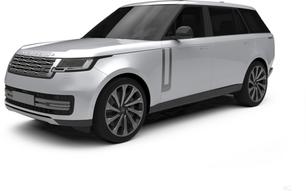
What's the difference?
Land Rover was making SUVs before they were even called SUVs.
Range Rovers were ferrying families around in prestigious four-wheel drive comfort decades before Audi, BMW or Mercedes-Benz even thought of doing it, too.
So, even with all its rivals these days, how well does a Range Rover do modern family duties?
Well the Range Rover Autobiography came to live with my little family of four for a week. We had the seven-seater long-wheelbase version with the twin-turbo petrol V8 engine, and this is what we discovered…
If you know the Mercedes-AMG C 63 S, you know it’s a hardcore V8 thumper with little in the way of bashfulness. It’s a brawler. A beast.
Now there’s an even more eye-catching AMG C 63 S Coupe, which we’re testing here. It’s the Aero Edition - a collector’s version of the current-generation C 63 S Coupe with a bit more visual bling that also helps it stick to the road better.
It is a local area special edition, with only 63 examples to be sold across Australia and New Zealand. And if the rumours are true, the next-generation will see the V8 engine in danger of being axed in favour of a hybrid, high-performance four-cylinder version. Say it ain’t so!
Well, if the CarsGuide crystal ball turns out to be right, maybe one of these C 63 S Aero Editions is worth getting in your garage quick-smart. Or is it? Let’s go through the criteria and see how it stacks up.
The Range Rover Autobiography long wheelbase is an outstanding SUV that is not just beautiful to drive but makes family practicality a priority, too,
The price is reasonable relative to the competition, the features list is long and complementary servicing offers peace of mind.
If you don’t need the third row, I’d consider the standard wheelbase Autobiography even if it does reduce legroom, there’s still plenty of space.
My son stopped short of giving the Range Rover Autobiography full marks "because there are no massaging seats in the second row".
The Mercedes-AMG C 63 S Aero Edition is an absolute beast of a car, but it comes at a pretty hefty price. Yes you get a lot of performance, and the fact there are only 63 examples being made for Australia and New Zealand could be enough to get you to sign on the line. For me, though, if I was after a C 63, it’d have to be a wagon. It doesn’t need an Aero pack to look better.
This fifth-generation Range Rover debuted in 2021 and despite its smooth, modern styling this SUV retains the familiar traditional Range Rover look with the short squared bonnet, flat roofline and tall windows.
Let’s talk about the wheelbase, because it has a huge impact on passenger space.
We had the long wheelbase which is 3197mm between the front and rear wheels - that’s 200mm more than the standard wheelbase.
Just look at those stretched rear doors in the photos - this is a go-anywhere limousine, or go-anywhere daycare centre in my case.
The overall length of the long wheelbase Range Rover is 5252mm. That’s big, but the design of this SUV doesn’t make it appear enormous.
What I don't like are the retractable door handles. They take a while to pop out and they look and feel cheap. Land Rover has used these on its other SUVs and if I had time I’d pen a letter asking the company to please stop. I’m sincerely hoping this review will do the same thing. I await your response JLR.
I think the tail-lights are pure genius. The pencil thin design is such a brave move away from the norm where brands are going over the top with LED lighting, and the simplicity is refreshing.
Inside, a traditional-looking Range Rover cabin awaits you with the flat dashboard, the low window sills contrasted by super modern touches like the displays and fully digital dials.
It’s sumptuous, luxurious, but not over the top. Again some people are looking for bling and gimmicks, but you won’t find them here - and I like that. This interior feels solid and substantial, but plush.
I’ve never been the biggest fan of the current C-Class Coupe’s styling. To me, it has always looked a little droopy, a little melted at the back.
I have to say, the Aero Edition has changed my opinion somewhat, as the new graphic elements help lift it up a bit, visually raising its rear up like a stretching cat, tail in the air. I’m still not 100 per cent on it, but to my eye it’s better.
The carbon-fibre trim elements that have been added to the exterior certainly add some menace to the look, too, and I simply can’t help but constantly notice out of the corner of my eye the AMG pressing in the staggered, dished rims. At a glimpse, from a distance, it looks like rim damage, but thankfully it’s not!
The staggered set-up does really add some width and mongrel to the look, as if it needed more, with its open maw lower bumper air dam, and the signature 'Panamericana' grille treatment which looks like an evil character out of a movie. If you know the one I’m talking about, let me know in the comments.
As much as the look matters when it’s parked in your driveway, it’s the cabin that arguably matters more, right? That’s where you spend your time, after all. Check out the interior images to see if you think it lives up to the exterior look.
Range Rovers have been a family favourite for decades and they’ve been doing school runs and trips away long before other brands even thought about producing SUVs for families.
So what you’re buying is Land Rover’s decades of knowing how to make a family SUV and you can tell by little things such as, how wide the doors open, how easy it is to get in and out of (even for little kids), the flat floor, the good visibility (thanks to low window sills), and then there’s the space and cabin storage. Stuff other brands seem to be still working out.
The second row seats in the Autobiography have electric sun shades, dual-zone climate control and the window seats are power adjustable and heated.
My eight-year old couldn’t resist playing with his electric sunshade and the seat adjustment, but fortunately the driver has an override switch which let me turn off his 'seat privileges’ as he called it.
Being the long wheelbase means the rear doors are long and heavy. So while the eight-year old could open them, he had trouble closing them.
The long wheelbase offers unrivalled legroom in the back and that meant my wife and I could put our own seats back further for our own comfort -even with a baby seat behind us.
Enormous door pockets, a giant centre console storage area, cupholders in all three rows, USB ports, wireless phone charging and in our case an optional domestic power outlet ($130) made this a comfortable, roomy, well equipped cabin.
Sure, the third row isn’t exactly spacious, but I’ve never met one that is.
The intelligent seat folding system is remarkable. From the boot or side doors you can electronically adjust the second and third rows - either to raise them or lower them so they are flat for storage.
With all seats in place there is 229 litres of cargo space still left in the boot, but with those back seats folded flat you have 713 litres of capacity - and that’s just up to the cargo cover.
The Range Rover Autobiography has air suspension and this means the SUV can lower itself to an 'Access' height to make it even easier to get in and out.
No two-door coupe is going to offer you the space and comfort of a sedan or wagon, that’s just a fact. But that only matters if you plan to actually use the rear seats. If you don’t, then the Coupe version of the C 63 S might be perfect for you.
Even so, I managed to (only just) squeeze myself between the seat and the door opening to slide into the rear row. This won’t be easily achieved by all attempters, especially on the driver’s side.
Let’s just say I probably looked like I was doing something very weird to the driver’s seat as I spider-manned my way in.
The rear space is tight for someone my height (182cm/6’0”) behind their own driving position, with knees hard-up against the seat in front and not much headroom (my noggin’ was brushing the ceiling) or toe space (size 12s don’t fit so well) to speak of.
It’s certainly a selfish car. Or maybe it’d be fine for smaller kids. There are two spaces in the back, both with ISOFIX child seat anchors and top-tether points.
But there is storage in the back - cupholders and storage caddies either side of the seats, though the storage situation improves in the front zone, with bottle holders in the doors, cupholders between the seats, loose item storage under the media screen and a covered centre armrest bin, too.
The front cabin is a special looking place, with carbon-fibre abounding across the dash and nice trim on the doors. The AMG steering wheel is a sight to behold - it’s a flat-bottomed unit with carbon-fibre and Dinamica (that’s Benz talk for microsuede) trim: perfect for sapping sweat as you manhandle the C63 through the bends.
The seats are AMG Performance sports units up front, and the trim used is reserved for this model specifically: Nappa leather with yellow stripes. There are yellow details elsewhere, including on the rear seats, centre console and dash, and it certainly adds some visual excitement.
Media is controlled by a 10.25-inch display and Mercedes-Benz’s touchpad control system, but there is no touchscreen - rendering the Apple CarPlay and Android Auto smartphone mirroring technology somewhat tedious.
I’ve always had a gripe with screens that don’t allow touch but feature the tech that’s designed to transfer your phone’s screen to the media unit, and I can tell you the longer you spend twiddling the dial to get where you want to go, the more annoying it becomes.
The Burmester sound system has 13 speakers and is rather good, but I prefer the sound from the standard fit variable sports exhaust. So maybe that quibble with CarPlay isn’t that big a deal.
And if you just want to charge your phone, and there’s a second USB port up front, as well. Note: in non-Aero Edition C 63 models without the carbon-fibre interior pack, you also get Qi wireless phone charging, but it’s deleted from this variant and any model with the carbon pack.
The driver has a 12.3-inch digital info display to show where you are and what the car is up to, and there’s a head-up display as well. Yep, there’s standard sat nav with live traffic updates (and even live fuel price updates) - it’s just a shame the maps still look early 2000s-spec in 2D layout.
Cargo space is okay. The claimed cargo capacity or boot volume is 355 litres (VDA) with the rear seats in place. That’s small for a coupe of this size, and the shape of the boot (with a hump behind the rear seat) isn’t great as things do move around quite a bit.
But, thankfully, Mercedes has included its clever foldable storage box system under the boot floor - it goes where you might usually expect a spare wheel, but there isn’t one in this car. Instead you get Mercedes’ 'Tirefit' repair kit with an electric pump.
The Autobiography sits high in the Range Rover line-up and only the SVO (Special Vehicle Operations) models command higher prices.
Our Range Rover Autobiography was the long-wheelbase with the twin-turbo petrol V8 engine and has a list price of $312,193.
The standard features include retractable door handles with a proximity key, the LED headlights and tail-lights, a power tailgate and the panoramic sunroof.
Inside, 'Caraway' perforated semi-aniline leather seats are standard, too. So is a 13.1-inch screen with wireless Apple CarPlay and Android Auto, plus sat nav. There’s a fully digital driver display, a head-up display, wireless phone charging, and a Meridian 'Signature' sound system.
Four-zone climate control is standard and will keep the kids comfortable in the back, while the sun shades will project them from that giant fireball in the sky.
Up front there are heated and cooled seats which also massage, while the outboard rear seats are heated and power adjustable.
Our Autobiography was the seven-seater and it’s only about $1600 more than the five-seat version.
Ours had a few options fitted - there are the 23-inch wheels, the standard alloys are 22-inch, there’s also the black contrasting roof and the privacy glass which is so dark it’s almost impossible to look in.
All up the total list price for ours came to $318,603.
Look, I’m not likely to ever be in the position to say that a car that costs $188,600 plus on-road costs is “good value”, but to be honest, if you’re in that position, you’ll be getting plenty of car for your cash.
The Carbon Edition of the C 63 S Coupe adds $17,200 over the standard version of the high-performance two-door, but it adds a bunch of extras to help justify its price. A car like this is always going to be seen by some as a profligate purchase, right? You need to be able to justify spending an extra MG3’s worth of cash on this Edition.
The noticeable exterior bits include an AMG Performance rear spoiler, a model specific front lip, rear diffuser, and side facings for the rear apron air vents. Carbon-fibre is used in the front apron A-wing, the side sill inserts, rear diffuser insert, rear spoiler and the side mirror casings.
There’s more carbon-fibre inside the cabin, which we’ll cover off in the interior section. Other additions over the standard C 63 S Coupe include ceramic composite front brakes (402mm six-piston) and 360mm single-piston rear brakes, and there are “ultra-lightweight” AMG forged 'Matt Black' alloy wheels with 19-inch rims at the front and 20s at the rear.
And in nice news, the car you see here has no optional extras fitted at all. The colour is 'Iridium Silver', one of only two options for this limited run model (the other available hue is Polar White, and both come at no extra cost).
Standard inclusions comprise leather interior trim, heated and electric adjustable front seats, dual-zone climate control, a 10.25-inch media screen with sat nav and smartphone mirroring, DAB radio, 13-speaker Burmester sound system, 12.3-inch digital driver info display, head-up display (HUD), ambient lighting, and performance items like active dynamic engine mounts, an adaptive AMG performance exhaust, a rear differential lock, and adaptive sports suspension.
Plus there’s a full-spec safety offering which we’ll cover in the section below.
Thinking about what cars compete with this one? There’s the Audi RS 5 Coupe (from $150,900), the Lexus RC F (from $136,636), and the BMW M4 Competition (from $167,829). So the C 63 S - which is already expensive comparatively - looks positively pricey in Aero Edition spec.
The 4.4-litre twin-turbo petrol V8 is a perfect match for the Range Rover Autobiography.
There’s enormous power at 390kW and a colossal 750Nm of torque, but it’s delivered so smoothly and without sounding like Armageddon is beginning.
You might here the engine referred to as the P530. That signifies it’s petrol and makes about 530 horsepower.
All that grunt means that despite weighing more than 2.7 tonnes, this SUV can hurl itself from a stand still to 100km/h in 4.8 seconds.
An eight-speed automatic sends the drive to all four wheels. And making this SUV incredibly capable off-road is an excellent four-wheel drive system with a low range gear, plus a maximum ground clearance (thanks to the adjustable air suspension) of 283mm and a wading depth of up to 900mm.
There is a six-cylinder diesel, but if you decide on that instead of the V8 then it's all over between you and me. That’s how good this V8 is.
Open the shapely bonnet of the C 63 S and you’ll find a hand-assembled horsepower-monster engine with a printed name plaque to prove it.
The 4.0-litre twin-turbo V8 produces 375kW of power at 6250rpm, and 700Nm of torque from 2000-4500rpm. It runs a standard-fit nine-speed 'Speedshift MCT' (multi-clutch transmission) automatic, and it’s rear-wheel drive. And yes, that means it likes to boogie.
The claimed 0-100km/h time is just 3.9 seconds, and top speed is apparently pegged at 250km/h. Yeesh.
The name on the “Handcrafted by” plaque on this particular engine? Hat tip to you, Julian Rembold. This is quite a piece of work.
Now, you’re going to use a lot of fuel. But that’s okay because this will probably be your last petrol car and the next one will be electric so let’s go out with a bang - last drinks at the petrol bar! Land Rover says you’ll use 11.8L/100km.
After a week of punishing my Range Rover with school drop offs, shopping centre car parks, hilly suburbs, motorways and rural roads the petrol pump told me we’d used 19.8L/100km.
I’m not shocked by that consumption. This is a 2.7 tonne all-wheel drive twin-turbo V8 SUV that was almost always ferrying around four people with a pram, garden supplies and shopping in bumper to bumper traffic. A real world fuel test.
There is that six-cylinder diesel and a hybrid version of the Range Rover, but this V8 engine suits the character of the SUV perfectly - anything else and it’s like eating reduced fat ice cream.
High numbers are what AMGs are about. Sadly that’s the case not only for performance outputs but also fuel consumption.
The official combined cycle fuel use claim for the C 63 S Coupe is 10.3 litres per 100 kilometres, and you need to fill it with 98RON premium unleaded fuel, too.
On test? Well, across a mix of different driving - urban, highway, back road and spirited stints - I saw an 'at the pump' return of 12.2L/100km, while the digital readout stated 12.0L/100km.
Given the performance on offer, and how much I took advantage of it during my week with the car, that’s not bad…
Fuel tank capacity is 66 litres. So go easy if you know there won’t be a fuel stop for a while.
Driving the V8-powered, long-wheelbase, 2.7-tonne, Range Rover Autobiography is a lot easier than it sounds. Really, it’s the Range Rover’s height above sea level which will strike you first.
You’ll lord it over other cars. The length doesn’t come into it - even for parking because the visibility is so good, the steering is so light and the engine is civilised and smooth.
This is truly an easy and enjoyable SUV to drive, with power and performance whenever you need it.
There are several drive modes from a 'Dynamic' sporty one, which makes the engine more responsive and suspension firmer, to off-road settings.
Most of the time I left the Range Rover in 'Comfort' mode for the softest ride, but with 530 horsepower lurking in the background ready to jump out and eat up hills and overtaking.
The front seats are wide, comfortable and supportive even after hours of driving.
Just one word sprang to my mind when it comes to accurately describing the performance on offer from this car. The word is ‘brutal’.
Smash the accelerator and the power and torque on offer is enough to make your eyes feel like they’re not doing the right thing anymore. You get pushed back in your seat with a surge, and your ears are also rewarded with one of the best soundtracks in the automotive world.
The engine builds pace with enormous intent, and the sound that comes from under the bonnet and out the back through the exhausts is addictive.
Yes, there is an active exhaust button which you have to press to make sure that you hear all that noise if you’re running around in 'Comfort' mode, and during my time with the car it was active the whole time.
I had some questions from neighbours over the week that I had this car about whether it was actually nice to live with on a day-to-day basis. And the answer is yes, if you put it in comfort mode it’s surprisingly amenable.
The ride is really well sorted at pace despite having a bit of that trademark low-speed wobble that seems to afflict Mercedes products from A-Class through to the GLE SUV. But it wasn’t bad enough to really bother me, as most of my time was on highways and backroads.
The steering is direct and accurate. The only thing you need to be aware of is that you will lose traction at the rear axle when you put your foot down hard. And for the enthusiast that’s exactly what you want.
I know I want to feel the thing squirm under throttle. It’s a rear-drive V8 coupe, after all. You want to feel like you’re a vein in its bicep muscle; you know, the one you see in a weightlifter’s arms – the one that wiggles around a lot. You want to have that. Right?
On the performance front it is exceptional. Twist the little dial on the wheel to 'Sport' or 'Sport+' (I didn’t sample 'Race' mode as I wasn’t at a racetrack), and everything feels like it’s had a protein shake.
Even so, in that mode it steers brilliantly, there's a nice feel through the wheel, and the ride, while stiff, controls the body brilliantly when you change directions.
The transmission is very good, too. In Comfort mode it can take just a second or two at first to become accustomed to the idea that you want to drive aggressively.
But in Sport mode, or when you select the manual transmission mode using the trigger button on the steering wheel, you will certainly get the most out of the engine. That’s what I did when I was driving it in a ‘spirited’ manner.
If you are just after that high-end Coupe cruiser experience, it’s a relatively quiet car (provided the surface below isn’t the coarsest of coarse-chip bitumen), with enough luxuriousness to make it feel premium as well as sporty. That’s an important thing to consider, especially at this price point.
The Range Rover was given the maximum five-star ANCAP rating when it was tested in 2022.
For second-row child occupant protection the Range Rover scored a high 86 per cent in frontal and side impacts.
Standard safety tech includes AEB (junction and forward) with cyclists and pedestrian detection, there’s blind-spot warning, lane keeping assistance and rear cross-traffic alert, but no rear AEB.
For child seats there are ISOFIX mounts in the second row, and top tether anchor points in the second row and third rows.
Along with an entire suite of airbags it’s good to see a centre airbag up front and also head-covering curtain airbags all three rows.
There is no applicable ANCAP crash test rating for the Mercedes C-Class Coupe, nor is there one for the C 63 specification. But when it was tested back 2014, the sedan scored five stars - as you’d expect.
It is comprehensively equipped in terms of safety technology, including auto emergency braking (AEB) with pedestrian and cyclist detection (from 7.0km/h to 70km/h) and it’s active for cars from 7.0km/h to 250km/h.
Plus there’s lane departure warning and active lane keeping assistance (from 60km/h to 200km/h), blind spot monitoring with 'Active Blind Spot Assist' that will stop you from veering into oncoming traffic, front and rear cross traffic alert, and adaptive cruise control (Distronic) with traffic jam assist.
The C 63 also features 'Route Based Speed Adaptation', which can adjust your speed based on where the car thinks you are on the map. Just note - if you’re driving through new tunnels that haven’t been flashed to your car’s nav (as happened to me in Sydney during my testing week) - then you could find the car dramatically braking for surface-level intersections. You can switch the system off, thankfully.
There are nine airbags fitted, and while you mightn’t use the rear seats much there are ISOFIX and top tether points for both positions (yes, only two).
The warranty is good with five-years and unlimited kilometre coverage.
There’s also five years roadside assistance and a complimentary five-year/130,000km service plan.
Yep, that's complimentary, as in free servicing for five years. I didn’t believe it myself and called Land Rover to check and was told that it does indeed mean free-of-charge.
Mercedes-Benz is among the minority of luxury brands now offering a five-year/unlimited kilometre warranty plan - most still have three-year cover. So that’s a tick.
And the service intervals are pegged at 12 months/20,000km. Another tick.
Plus you can either pre-pay your service plan in three-year ($3800), four-year ($6000) or five-year ($6550) plans - roll it into the finance package, and it won’t hurt quite as much.
According to Mercedes, the three-year coverage option makes for a $900 discount over pay-as-you-go servicing.
Roadside assistance covers the five-year new car warranty period, too. So Mercedes seemingly takes good care of its customers. But if you have any concerns or questions over reliability, problems, issues or complaints about the C 63, check out our AMG C 63 problems page.