What's the difference?
Land Rover was making SUVs before they were even called SUVs.
Range Rovers were ferrying families around in prestigious four-wheel drive comfort decades before Audi, BMW or Mercedes-Benz even thought of doing it, too.
So, even with all its rivals these days, how well does a Range Rover do modern family duties?
Well the Range Rover Autobiography came to live with my little family of four for a week. We had the seven-seater long-wheelbase version with the twin-turbo petrol V8 engine, and this is what we discovered…
Remember those extra-long Australian luxury sedans like the Ford Fairlane and Holden Statesman/Caprice?
The patriotic choice in an era where that mattered and further protected by tariffs on imports that made them barely any more expensive than a base mid-sized Euro like a BMW 318i, they dominated the top end of the market with their sheer size outside, vast space inside and big-six or V8 grunt.
Like they used to say, there is no substitute for cubic inches.
Well, the spirit of these beloved local social-climbing classics lives on in just one modern car in 2025, the Genesis G80. Over three generations since 2008, it has been Hyundai’s tilt at the premium establishment, in much the same way as the Fairlane and Caprice were, and Toyota’s Lexus luxury brand still is.
We take a dive into the latest petrol-powered range-topper version, the 3.5T All-Wheel Drive (AWD) Sport Luxury (SL), which gives off more than its fair share of vintage HSV Grange vibes.
The Range Rover Autobiography long wheelbase is an outstanding SUV that is not just beautiful to drive but makes family practicality a priority, too,
The price is reasonable relative to the competition, the features list is long and complementary servicing offers peace of mind.
If you don’t need the third row, I’d consider the standard wheelbase Autobiography even if it does reduce legroom, there’s still plenty of space.
My son stopped short of giving the Range Rover Autobiography full marks "because there are no massaging seats in the second row".
Overall, then, the flagship G80 tries to be docile Clark Kent and the amazing Superman in one. As such, it stretches itself trying to be both a luxury GT and high-functioning sports sedan.
But while it doesn’t quite achieve either perfectly the Genesis gets near enough for most – especially at its exceptional price point.
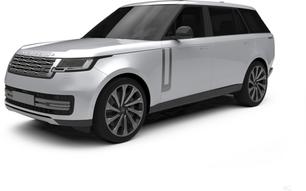
This fifth-generation Range Rover debuted in 2021 and despite its smooth, modern styling this SUV retains the familiar traditional Range Rover look with the short squared bonnet, flat roofline and tall windows.
Let’s talk about the wheelbase, because it has a huge impact on passenger space.
We had the long wheelbase which is 3197mm between the front and rear wheels - that’s 200mm more than the standard wheelbase.
Just look at those stretched rear doors in the photos - this is a go-anywhere limousine, or go-anywhere daycare centre in my case.
The overall length of the long wheelbase Range Rover is 5252mm. That’s big, but the design of this SUV doesn’t make it appear enormous.
What I don't like are the retractable door handles. They take a while to pop out and they look and feel cheap. Land Rover has used these on its other SUVs and if I had time I’d pen a letter asking the company to please stop. I’m sincerely hoping this review will do the same thing. I await your response JLR.
I think the tail-lights are pure genius. The pencil thin design is such a brave move away from the norm where brands are going over the top with LED lighting, and the simplicity is refreshing.
Inside, a traditional-looking Range Rover cabin awaits you with the flat dashboard, the low window sills contrasted by super modern touches like the displays and fully digital dials.
It’s sumptuous, luxurious, but not over the top. Again some people are looking for bling and gimmicks, but you won’t find them here - and I like that. This interior feels solid and substantial, but plush.
Australia never saw the original 'BH'-series Genesis, which was created primarily with US buyers in mind to be a 5 Series alternative at a 3 Series price, complete with rear-wheel drive and advanced chassis dynamics.
Hyundai spun the series off as a stand-alone brand in the mid-2010s within the second-gen 'DH' Genesis’ run (that did include Australia) from 2015, which is when the G80 badge arrived, while the 'RG3' redesign you see here launched in 2020.
What you’re seeing here, then, is a facelift of a half-decade-old design, and doesn’t it give off Bentley vibes? From that blocky nose with its latticed grille to the sleek profile, the five-metre long by two-metre wide G80 passes for a Continental GT wannabe. Particularly in SL guise. And a convincing one at that.
When it comes to the interior, look around. A 27-inch OLED touchscreen takes in the crisp digital instrumentation and slick multimedia displays.
We like the configurable widgets that come complete with pictures for instant recognition, and the fact that Genesis decided to put an equally-user-friendly climate-control screen below, so eyes never need to leave the road once you quickly learn where all the switchgear is.
Range Rovers have been a family favourite for decades and they’ve been doing school runs and trips away long before other brands even thought about producing SUVs for families.
So what you’re buying is Land Rover’s decades of knowing how to make a family SUV and you can tell by little things such as, how wide the doors open, how easy it is to get in and out of (even for little kids), the flat floor, the good visibility (thanks to low window sills), and then there’s the space and cabin storage. Stuff other brands seem to be still working out.
The second row seats in the Autobiography have electric sun shades, dual-zone climate control and the window seats are power adjustable and heated.
My eight-year old couldn’t resist playing with his electric sunshade and the seat adjustment, but fortunately the driver has an override switch which let me turn off his 'seat privileges’ as he called it.
Being the long wheelbase means the rear doors are long and heavy. So while the eight-year old could open them, he had trouble closing them.
The long wheelbase offers unrivalled legroom in the back and that meant my wife and I could put our own seats back further for our own comfort -even with a baby seat behind us.
Enormous door pockets, a giant centre console storage area, cupholders in all three rows, USB ports, wireless phone charging and in our case an optional domestic power outlet ($130) made this a comfortable, roomy, well equipped cabin.
Sure, the third row isn’t exactly spacious, but I’ve never met one that is.
The intelligent seat folding system is remarkable. From the boot or side doors you can electronically adjust the second and third rows - either to raise them or lower them so they are flat for storage.
With all seats in place there is 229 litres of cargo space still left in the boot, but with those back seats folded flat you have 713 litres of capacity - and that’s just up to the cargo cover.
The Range Rover Autobiography has air suspension and this means the SUV can lower itself to an 'Access' height to make it even easier to get in and out.
Size may not be everything, some say, but it sure says a lot when a medium-sized luxury sedan is long enough to swing it with some large Germans. And in this case, the impressive dimensions are enhanced by a three-metre-plus wheelbase.
Behind the soft-close doors, you’re met with a cabin defined by the luxury of space and isolation from the outside world – just what you’d expect from a full-sized flagship sedan. There’s room to stretch in all five seats.
Plus, in the SL, the seats and chunky steering wheel silently whirr out of the way for easier entry and egress, before sliding back to their previous-memory positions.
The front seats are among the best we’ve experienced in a long time, holding and caressing in all the right places. Switching drive modes increases bolstering and/or support, whilst longer thighs will appreciate the extendable ottoman feature. Hot/cold control and a prodding massage function further enhances the users’ pleasure.
As in all Hyundai products the digital instrumentation and media touchscreen are paragons of simplicity and clarity.
Actual knobs for audio, tuning, fan and temperature controls flank these, along with buttons for 'Home', 'Menu', 'Driving Modes', 'Cameras' and parking sensors.
So thoughtful, so easy. Even vision isn’t too bad, aided of course by the surround-views available. This is quite an unintimidating vehicle to judge when parking despite its length.
Issues? The gear selector is the circular variety Jaguar debuted with the original XF during the late 2000s and is a bit clumsy to use; sited in prime console real estate, the cupholder lid is set-up for left-hand drive, meaning it provides a (minor) obstacle for the driver when open; the test car’s carbon-fibre-look trim won’t be to everybody’s taste and there’s no walk-to/away automatic central locking.
Meanwhile, the rear seat is in the spirit of a true limo.
Wide doors allow for easy entry/egress, revealing impressive levels of space for shoulders, hips, knees and feet (though headroom might be a mite tight for taller dos due to the sunroof). The left-side rear occupant can re-position the seat in front automatically to boost legroom even more.
Airliner premium-economy class-style backrest reclination is included. And you can sink yourself or your loose digits into the tactile and aromatic bliss of the perforated Nappa leather, thick pile carpet, suede trimmed pillars and ceiling and quality textures, further upping the luxury ante.
The large folding armrest facilitates access to heating/ventilation, audio, a sunblind, cupholders, phone chargers, USB-C ports and hidden storage.
The fortunate rear-seat passengers also face air vents and a separate climate control panel from the front-seat riders. So decadent. This was clearly designed for chauffer opulence and it shows. Very difficult to fault.
But further back, it isn’t so bountiful. Literally.
The pleasingly plush boot measures in at a smallish 424 litres, and that’s almost 100L down on a 520i’s. And while it comes with a ski or 'Bunnings port', simple folding backrests would have been more practical, particularly for car reviewers who occasionally need to transport their bicycle.
Oh well, that’s what SUVs are for.
The space-saver spare, in lieu of the hated tyre repair kit, is welcome, though. Thank you.
The Autobiography sits high in the Range Rover line-up and only the SVO (Special Vehicle Operations) models command higher prices.
Our Range Rover Autobiography was the long-wheelbase with the twin-turbo petrol V8 engine and has a list price of $312,193.
The standard features include retractable door handles with a proximity key, the LED headlights and tail-lights, a power tailgate and the panoramic sunroof.
Inside, 'Caraway' perforated semi-aniline leather seats are standard, too. So is a 13.1-inch screen with wireless Apple CarPlay and Android Auto, plus sat nav. There’s a fully digital driver display, a head-up display, wireless phone charging, and a Meridian 'Signature' sound system.
Four-zone climate control is standard and will keep the kids comfortable in the back, while the sun shades will project them from that giant fireball in the sky.
Up front there are heated and cooled seats which also massage, while the outboard rear seats are heated and power adjustable.
Our Autobiography was the seven-seater and it’s only about $1600 more than the five-seat version.
Ours had a few options fitted - there are the 23-inch wheels, the standard alloys are 22-inch, there’s also the black contrasting roof and the privacy glass which is so dark it’s almost impossible to look in.
All up the total list price for ours came to $318,603.
That HSV Grange analogy is pretty close to what the G80 3.5T AWD SL from $121,200 (all prices are before on-road costs) represents, and not just in dimensions and performance.
Adjusted for inflation, a 2015 Grange from $86,990 would equate to about $115,300 today, which nestles in neatly between the ‘base’ G80 2.5T rear-driver from $104,200 and 3.5T AWD SL.
And, like the big Holdens and Fords of yesteryear, the Genesis annihilates the German luxury sedan triumvirate for value for money as well as bang for your buck, when you consider what the competition is at its price point: Audi A6 45 TFSI quattro S Line from $122,415, BMW 520i from $114,900 and Mercedes-Benz E200 from $117,900.
Nowadays, even the entry-level Euro grades are pretty well specified, but all have 2.0-litre, four-cylinder, turbo-petrol engines of between 150kW and 180kW outputs and two-wheel drive, against the Genesis’ 279kW 3.5-litre V6 twin-turbo and AWD.
And then there’s the SL equipment levels, that includes everything you’d expect from a machine that is built like a Lexus, behaves like a BMW and wants to be as bourgeois as an S-Class Benz, with powered, electric and wireless everything.
It’s easier to list what’s missing: namely, walk-away door locking.
Still, listing some of the standout features is editorially required, so the SL’s lucky occupants can indulge in a heated front console armrest complete with UV-C sanitisation, a real-time concierge service with a five-year subscription included, a fingerprint recognition system for extra security (freeing society from a key!), a powered rear-window shade and the quietness that active noise-cancellation brings. And all are new with the MY25 facelift.
More opulence comes in the form of Nappa quilted leather upholstery, surround-view monitors, 18-way powered/heated/vented/memory front seats with massaging and ottoman extenders, powered reclining/vented/heated rear outboard seats with (manual) sun-blinds, tri-zone climate functionality with rear-seat controls, front and rear wireless smartphone chargers, 18-speaker Bang & Olufsen audio (with epic sound), soft-close doors, suede headlining, a panoramic sunroof with powered blind, solar-controlled glass, a powered boot lid with valet mode and remote-control parking.
We are pretty sure you won’t find this combination of gear in your entry-level German sedans at the 3.5T’s price point.
Genesis has also crammed in as much active and passive safety as possible. More on that in detail later on.
Note that there is also an all-electric G80 Signature Electrified AWD version from $155,000, making it the series’ true flagship.
Successive federal governments in Australia with their Luxury Car Tax have made this sort of vehicle a questionable value proposition as it balloons their prices, but within the context of what else is available, the G80 makes for a brave and bold alternative to formidable yet predictable alternatives.
The 4.4-litre twin-turbo petrol V8 is a perfect match for the Range Rover Autobiography.
There’s enormous power at 390kW and a colossal 750Nm of torque, but it’s delivered so smoothly and without sounding like Armageddon is beginning.
You might here the engine referred to as the P530. That signifies it’s petrol and makes about 530 horsepower.
All that grunt means that despite weighing more than 2.7 tonnes, this SUV can hurl itself from a stand still to 100km/h in 4.8 seconds.
An eight-speed automatic sends the drive to all four wheels. And making this SUV incredibly capable off-road is an excellent four-wheel drive system with a low range gear, plus a maximum ground clearance (thanks to the adjustable air suspension) of 283mm and a wading depth of up to 900mm.
There is a six-cylinder diesel, but if you decide on that instead of the V8 then it's all over between you and me. That’s how good this V8 is.
As the alphanumerics suggest, the G80 3.5T AWD is powered by a 3.5-litre twin-turbo V6 petrol engine, producing a hefty 279kW of power at 5800rpm and 530Nm of torque between 1300-4500rpm.
Tipping the scales at 2095kg (kerb), the SL’s power-to-weight ratio is 133kW/tonne.
Drive is sent to all four wheels via an eight-speed torque-converter automatic transmission. 'Normal', 'Sport' and 'Eco' modes are fitted.
Now, you’re going to use a lot of fuel. But that’s okay because this will probably be your last petrol car and the next one will be electric so let’s go out with a bang - last drinks at the petrol bar! Land Rover says you’ll use 11.8L/100km.
After a week of punishing my Range Rover with school drop offs, shopping centre car parks, hilly suburbs, motorways and rural roads the petrol pump told me we’d used 19.8L/100km.
I’m not shocked by that consumption. This is a 2.7 tonne all-wheel drive twin-turbo V8 SUV that was almost always ferrying around four people with a pram, garden supplies and shopping in bumper to bumper traffic. A real world fuel test.
There is that six-cylinder diesel and a hybrid version of the Range Rover, but this V8 engine suits the character of the SUV perfectly - anything else and it’s like eating reduced fat ice cream.
Here is where the G80 has all four wheels rooted more in the past than in the future.
With no electrification of any variety (hybrid, in other words), high fuel consumption is always going to be the real price paid by going for a Euro-5 spec twin-turbo V6 weighing some 2100kg.
The official combined average figure is 11 litres per 100km, for a corresponding carbon-dioxide emissions rating of 250 grams/km. On the highway that drops to 7.9L/100km and soars to 16.3L/100km in the city cycle.
With a 73L fuel tank, that combined average number means a driver can expect around 660km of range between refills of 95 RON premium petrol, though Genesis says this G80 will also run on E10 ethanol blend.
Now, our trip computer said that we averaged less than the official figure, at just 9.7L/100km, but our pump-to-pump testing ended up being 11.4L/100km. Which isn’t that bad.
Driving the V8-powered, long-wheelbase, 2.7-tonne, Range Rover Autobiography is a lot easier than it sounds. Really, it’s the Range Rover’s height above sea level which will strike you first.
You’ll lord it over other cars. The length doesn’t come into it - even for parking because the visibility is so good, the steering is so light and the engine is civilised and smooth.
This is truly an easy and enjoyable SUV to drive, with power and performance whenever you need it.
There are several drive modes from a 'Dynamic' sporty one, which makes the engine more responsive and suspension firmer, to off-road settings.
Most of the time I left the Range Rover in 'Comfort' mode for the softest ride, but with 530 horsepower lurking in the background ready to jump out and eat up hills and overtaking.
The front seats are wide, comfortable and supportive even after hours of driving.
The Genesis G80 3.5T AWD SL drives in a similar way to the big brutish American-inspired Caprice and HSV Grange V8s, in that it delivers effortless, lazy performance with a sophisticated twist.
No slouch off the line even in Eco mode, the twin-turbo V6 leaps into action if you’re heavy on the throttle in Comfort mode, hunkering down as the speed piles on quickly.
With 'Launch Control', the claimed 0-100km/h sprint time is 4.9 seconds, though in regular mode it is rated at 5.1s on the way to a top speed of 250km/h.
And while the enhanced exhaust orchestrates a nice warble from behind, it remains a strong, smooth and silent performer.
The AWD system is RWD-biased and is continuously variable according to prevailing conditions, performance and grip.
The SL also features an electronic limited-slip differential for better traction and grip, as well as rear-wheel steering that either counter-steers the rear wheels in relation to the front ones for a tighter turning circle (11.8m) or parallel steers them for “enhanced steering responsiveness and stability at high speed.”
Selecting 'Sport' or 'Sport+' is met with distinctly more-urgent responses, with the transmission holding on to ratios as the revs approach the red line, which can be annoying around town.
It’s quite surprising – and probably a good thing – that the beautifully balanced and connected steering can be light and easy when you’re relaxed, and yet hefty to the point of feeling heavy when you’re really on it. Likewise, the brakes in 'Comfort' are pleasantly progressive. In 'Brake Sport' they’re fiercely responsive.
Note that, in Sport+ with the safeties off, the SL's tail can become very playful indeed, even in bone-dry conditions.
Suspension is via multi-links at both ends of the car, whilst the SL grade includes what Genesis calls “Road Preview Electronic Control Suspension (ECS)”, that scans the road ahead and then adjusts the adaptive dampers for better ride comfort.
That all said, the Genesis’ sheer size and weight keep it from feeling like an out-and-out sports sedan. The speed and AWD grip is there - tyres are Michelin Pilot Sport 4S (245/40 fr - 275/35 rr) - and the handling results in some pretty astounding agility for one so large, but the steering connection, balance and alacrity are more about confidence and competence than light-footed athleticism.
This is no cut-price BMW M5. But HSV Grange owners might recognise something in its muscular good manners.
And what of the SL’s four-wheel steering? It provides a degree of tuck-in at speed which can catch out the unaware driver, though of course, it is also a boon for round-town manoeuvrability. The tight turning circle that ensues is incredible for one so long.
Ultimately, though, it is a large and heavy sedan that never quite stops feeling that way. It won’t shrink around you despite being an easy and rewarding car to drive.
Out in the wet, the AWD contributes to the G80’s squatted-down attitude, feeling impervious to prevailing external conditions.
But it’s also not quite the sumptuous luxury liner that, say, a Mercedes S450 is.
Very civilised on smooth roads, with a decent level of absorption from the multi-link suspension, the G80 struggles a little with smaller-frequency bumps at times, but then does a great job smothering the larger ones. It is certainly within the luxury sedan expectations for refinement, isolation and ride comfort, but just not the best.
If you stick with freeways and highways, this thing will bring years of civilised pleasure and punchy performance. It is a rapid yet relaxed grand touring family cruiser.
The Range Rover was given the maximum five-star ANCAP rating when it was tested in 2022.
For second-row child occupant protection the Range Rover scored a high 86 per cent in frontal and side impacts.
Standard safety tech includes AEB (junction and forward) with cyclists and pedestrian detection, there’s blind-spot warning, lane keeping assistance and rear cross-traffic alert, but no rear AEB.
For child seats there are ISOFIX mounts in the second row, and top tether anchor points in the second row and third rows.
Along with an entire suite of airbags it’s good to see a centre airbag up front and also head-covering curtain airbags all three rows.
The Genesis G80 scored a maximum five-star ANCAP assessment all the way back in December 2020, though this figure does not cover the 3.5T model as tested by us.
Along with 10 airbags (including front-centre and driver’s knee protection), it is fitted with a wide variety of advanced driver assist systems (ADAS).
These include 'Autonomous Emergency Braking' (AEB) with forward-collision avoidance (taking in car/pedestrian/cyclist as well as junction turning/crossing detection), lane-keep assist, lane-change and evasive steering assist, rear cross-traffic alert, blind-spot warning/collision avoidance, traffic-sign recognition, adaptive cruise control, parking collision avoidance, safe-exit alert, surround-view monitors, driver-attention warning, traffic-sign recognition and auto high beams.
There are also two ISOFIX child-seat fixtures and a trio of child-seat anchorage points in the back seat.
The warranty is good with five-years and unlimited kilometre coverage.
There’s also five years roadside assistance and a complimentary five-year/130,000km service plan.
Yep, that's complimentary, as in free servicing for five years. I didn’t believe it myself and called Land Rover to check and was told that it does indeed mean free-of-charge.
The Genesis G80 comes with a five-year/unlimited kilometre warranty, five years of what it calls 'premium' roadside assistance (increased to 10 years if serviced at a Genesis dealer) and five years/75,000km of free servicing. Service intervals are every 12 months or 15,000km.
While these are about on-par with most brands, it is behind better mainstream warranty and aftersales services, which are seven, and in a few cases, 10 years in length.