What's the difference?
Land Rover was making SUVs before they were even called SUVs.
Range Rovers were ferrying families around in prestigious four-wheel drive comfort decades before Audi, BMW or Mercedes-Benz even thought of doing it, too.
So, even with all its rivals these days, how well does a Range Rover do modern family duties?
Well the Range Rover Autobiography came to live with my little family of four for a week. We had the seven-seater long-wheelbase version with the twin-turbo petrol V8 engine, and this is what we discovered…
The Toyota Tundra, made in America for Americans, was launched in 1999 and since then Toyota Australia has fielded a steady stream of enquiries from car buyers and automotive media about the possibility of its full-size US pickup being available in local showrooms.
Production of RHD Tundras at Toyota’s San Antonio plant in Texas never stacked up as a viable business case for Toyota until 2015, when the Walkinshaw Automotive Group (WAG) commenced OEM-certified right-hand-drive remanufacturing of Ram pick-up trucks (and later Chevrolet Silverados) in Melbourne.
This development finally opened the door to an ‘Australianised’ version of the Tundra, which went on sale late last year after a six-year joint development program with WAG that was a world-first for Toyota.
The Tundra’s local two-model range comprises the entry-level Limited and the new top-shelf Platinum grades, with more power and torque than local ‘1500 class’ US pickup rivals. So, we recently put the fresher Premium model to work for a week, to see how it measures up from a tradie’s perspective.
The Range Rover Autobiography long wheelbase is an outstanding SUV that is not just beautiful to drive but makes family practicality a priority, too,
The price is reasonable relative to the competition, the features list is long and complementary servicing offers peace of mind.
If you don’t need the third row, I’d consider the standard wheelbase Autobiography even if it does reduce legroom, there’s still plenty of space.
My son stopped short of giving the Range Rover Autobiography full marks "because there are no massaging seats in the second row".
The Tundra Platinum is a good-looking and well-engineered RHD full-size US pickup which stands apart from local competitors with its unique hybrid drivetrain and unmatched power/torque outputs. However, it also comes with a conspicuously high purchase price, which given the quality of local Ram, Chevrolet and Ford competition could be a deal-breaker for some.
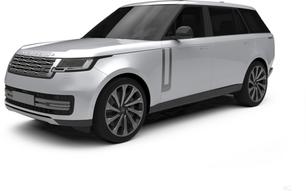
This fifth-generation Range Rover debuted in 2021 and despite its smooth, modern styling this SUV retains the familiar traditional Range Rover look with the short squared bonnet, flat roofline and tall windows.
Let’s talk about the wheelbase, because it has a huge impact on passenger space.
We had the long wheelbase which is 3197mm between the front and rear wheels - that’s 200mm more than the standard wheelbase.
Just look at those stretched rear doors in the photos - this is a go-anywhere limousine, or go-anywhere daycare centre in my case.
The overall length of the long wheelbase Range Rover is 5252mm. That’s big, but the design of this SUV doesn’t make it appear enormous.
What I don't like are the retractable door handles. They take a while to pop out and they look and feel cheap. Land Rover has used these on its other SUVs and if I had time I’d pen a letter asking the company to please stop. I’m sincerely hoping this review will do the same thing. I await your response JLR.
I think the tail-lights are pure genius. The pencil thin design is such a brave move away from the norm where brands are going over the top with LED lighting, and the simplicity is refreshing.
Inside, a traditional-looking Range Rover cabin awaits you with the flat dashboard, the low window sills contrasted by super modern touches like the displays and fully digital dials.
It’s sumptuous, luxurious, but not over the top. Again some people are looking for bling and gimmicks, but you won’t find them here - and I like that. This interior feels solid and substantial, but plush.
This is a substantial vehicle with bold, bluff-fronted styling characterised by an enormous grille that has an imposing presence wherever it roams.
Toyota's TNGA-F ladder-frame chassis platform is shared with the LandCruiser 300 Series and Prado models, but the big American has a much longer 3700mm wheelbase, spans almost six metres in length (5955mm) and is more than two metres wide (2040mm). However, it’s less than two metres tall (1985mm), so it can access underground and multi-storey carparks.
It rides on double-wishbone coil-spring front suspension and a multi-link coil-spring live rear axle, with electric power-assisted rack and pinion steering and big four-wheel disc brakes.
Off-road credentials include 216mm of ground clearance, 23 degrees approach and 21 degrees departure angles – which are ample for accessing rugged worksites – while the turning circle is an expansive 15 metres.
The interior, with its panoramic sunroof, has a spacious and airy ambience, enhanced by contrasting blue stitching on its leather-appointed upholstery.
Although the cabin has a high standard of fit and finish, as you’d expect from Toyota and WAG, it doesn't look and feel quite as lavish as the sumptuous interiors found in its top-shelf US rivals. The centre console lid in particular feels too light and plasticky for a vehicle in this price range.
Range Rovers have been a family favourite for decades and they’ve been doing school runs and trips away long before other brands even thought about producing SUVs for families.
So what you’re buying is Land Rover’s decades of knowing how to make a family SUV and you can tell by little things such as, how wide the doors open, how easy it is to get in and out of (even for little kids), the flat floor, the good visibility (thanks to low window sills), and then there’s the space and cabin storage. Stuff other brands seem to be still working out.
The second row seats in the Autobiography have electric sun shades, dual-zone climate control and the window seats are power adjustable and heated.
My eight-year old couldn’t resist playing with his electric sunshade and the seat adjustment, but fortunately the driver has an override switch which let me turn off his 'seat privileges’ as he called it.
Being the long wheelbase means the rear doors are long and heavy. So while the eight-year old could open them, he had trouble closing them.
The long wheelbase offers unrivalled legroom in the back and that meant my wife and I could put our own seats back further for our own comfort -even with a baby seat behind us.
Enormous door pockets, a giant centre console storage area, cupholders in all three rows, USB ports, wireless phone charging and in our case an optional domestic power outlet ($130) made this a comfortable, roomy, well equipped cabin.
Sure, the third row isn’t exactly spacious, but I’ve never met one that is.
The intelligent seat folding system is remarkable. From the boot or side doors you can electronically adjust the second and third rows - either to raise them or lower them so they are flat for storage.
With all seats in place there is 229 litres of cargo space still left in the boot, but with those back seats folded flat you have 713 litres of capacity - and that’s just up to the cargo cover.
The Range Rover Autobiography has air suspension and this means the SUV can lower itself to an 'Access' height to make it even easier to get in and out.
With its 2834kg kerb weight and 3536kg GVM, the Platinum has a 702kg payload limit which is modest compared to smaller 4x4 utes with genuine one-tonne-plus capabilities.
However, it’s rated to tow up to 4500kg of braked trailer on a 70mm ball and with its substantial 7980kg GCM (or how much weight it can legally carry and tow at the same time) that would require only a small drop in payload from 702kg to 646kg to avoid exceeding the GCM. So, that’s a practical set of numbers if you ever need to tow the maximum 4.5 tonnes.
The load tub is 1660mm long, 1491mm wide and 531mm deep, with 1237mm between its rear wheel-housings allowing either a standard Aussie or Euro pallet. It’s accessed through a power tailgate, which can be operated from the driver’s seat if required.
The tub’s internal surfaces are protected by a composite drop-in liner, with handy slots moulded into each side for vertically inserting planks of wood to serve as lateral load-dividers if required.
The Platinum's tub also has unique hooded LED lighting in each sidewall, plus there’s fixed load-anchorage points front and rear at mid-height (would be better if just above floor height) and rails with adjustable sliding anchorages along the top of the front and side walls for securing taller loads.
Cabin storage includes two 600mL bottle-holders and storage bins in each front door plus a decent-sized single glovebox, a 12V dash socket and an overhead glasses-holder.
The centre console offers open storage up front including a wireless phone-charging pad, plus a pair of small-bottle/cupholders in the centre and a large lidded box at the back containing USB ports.
The large rear doors, with pull-up privacy screens on their windows, provide wide entry to the rear bench seat. There’s enough shoulder room for three adults and even tall passengers enjoy ample legroom, although those seats in the centre must contend with a transmission hump, which is absent in its flat-floored rivals.
There’s two 600mL bottle-holders and a bin in each rear door, plus large pockets on each front seat backrest and two more bottle/cupholders at the rear of the centre console, which also has controls for rear seat heating/cooling, plus USB ports and adjustable air-vents.
If travelling with two, the centre seat backrest folds down to provide a comfortable armrest and two more bottle/cupholders (that's 14 in total), so drink storage is well catered for in this cabin.
The rear seat’s 60/40-split base cushions can also swing up and be stored vertically for more internal luggage space, but there’s no storage compartments underneath as this space is occupied by the hybrid drivetrain’s battery, with large vents on either side providing it with ample ventilation.
Our only criticism of the rear seating is limited headroom for tall people, caused by a deep contour in the roof-lining to accommodate the Platinum’s sunroof.
This contour sits very close to foreheads and limits head space. So, if you have tall passengers, they might get cranky on long drives, particularly those seated in the slightly higher centre position with (like me) the top of their head pressed firmly into the roof lining.
The Autobiography sits high in the Range Rover line-up and only the SVO (Special Vehicle Operations) models command higher prices.
Our Range Rover Autobiography was the long-wheelbase with the twin-turbo petrol V8 engine and has a list price of $312,193.
The standard features include retractable door handles with a proximity key, the LED headlights and tail-lights, a power tailgate and the panoramic sunroof.
Inside, 'Caraway' perforated semi-aniline leather seats are standard, too. So is a 13.1-inch screen with wireless Apple CarPlay and Android Auto, plus sat nav. There’s a fully digital driver display, a head-up display, wireless phone charging, and a Meridian 'Signature' sound system.
Four-zone climate control is standard and will keep the kids comfortable in the back, while the sun shades will project them from that giant fireball in the sky.
Up front there are heated and cooled seats which also massage, while the outboard rear seats are heated and power adjustable.
Our Autobiography was the seven-seater and it’s only about $1600 more than the five-seat version.
Ours had a few options fitted - there are the 23-inch wheels, the standard alloys are 22-inch, there’s also the black contrasting roof and the privacy glass which is so dark it’s almost impossible to look in.
All up the total list price for ours came to $318,603.
Our recently launched Platinum test vehicle is, like its Limited sibling, available only with Toyota’s ‘i-FORCE MAX’ hybrid powertrain, which combines a 3.5-litre twin-turbo V6 petrol engine, electric motor-generator, traction battery and 10-speed automatic transmission, for a list price of $172,990 plus on-road costs.
That pricing is $17,000 more than the Limited and considerably higher than Australian premium-grade RHD rivals including the Ford F-150 Lariat LWB ($140,945), Chevrolet Silverado 1500 ZR2 ($141,500) and Ram 1500 Limited ($159,950). Note the F-150 has temporarily been withdrawn from sale in Australia due to an ADR compliance issue.
The Tundra Platinum shares numerous standard features with the Limited, including 20-inch alloy wheels (although the Platinum’s wheel design is unique) with 265/60R20 tyres and a 245/75R18 ‘space saver’ spare (to optimise its underfloor-mounted ground clearance), LED lighting, heated door mirrors, an automatic ‘active’ front spoiler, side steps, a power tailgate, a tub liner, a 3500kg towing kit and front/rear parking sensors to name a few.
The cabin has smart entry/start, dual-zone climate, front seat heating/cooling, a leather-accented steering wheel and shifter, a 12.3-inch driver’s digital instrument cluster, a 12-speaker JBL audio system with a 14-inch multimedia touchscreen and multiple connectivity including Apple/Android devices, wireless phone charging, power sliding rear glass, five USB ports and more.
The Platinum adds not only its unique black-painted alloy wheels but also a bold mesh grille design with dark chrome surround, black body detailing, tailgate spoiler and rain-sensing wipers.
The cabin gets a full-length panoramic sunroof and leather-accented trim, with the front seats equipped with 10-way power adjustment including a massage function. There’s also heating/cooling for the outer rear seats, heated steering wheel with power tilt-reach adjustment and 10.9-inch colour head-up display.
The 4.4-litre twin-turbo petrol V8 is a perfect match for the Range Rover Autobiography.
There’s enormous power at 390kW and a colossal 750Nm of torque, but it’s delivered so smoothly and without sounding like Armageddon is beginning.
You might here the engine referred to as the P530. That signifies it’s petrol and makes about 530 horsepower.
All that grunt means that despite weighing more than 2.7 tonnes, this SUV can hurl itself from a stand still to 100km/h in 4.8 seconds.
An eight-speed automatic sends the drive to all four wheels. And making this SUV incredibly capable off-road is an excellent four-wheel drive system with a low range gear, plus a maximum ground clearance (thanks to the adjustable air suspension) of 283mm and a wading depth of up to 900mm.
There is a six-cylinder diesel, but if you decide on that instead of the V8 then it's all over between you and me. That’s how good this V8 is.
The Tundra’s powertrain consists of a 3.5-litre twin-turbocharged V6 petrol engine that produces 290kW of power at 5200rpm and 649Nm of torque between 2400-3600rpm.
This is paired with an electric motor mounted directly behind, which produces 36kW/250Nm and draws its electrons from a 6.5Ahr Ni-MH (nickel metal hydride) battery located beneath the rear seat.
Their combined output is 326kW and 790Nm, which is more power and torque than any of its local rivals and therefore appealing for those who need to haul and/or tow heavy loads.
Its refined 10-speed torque converter automatic offers the choice of sequential manual-shifting, a dedicated Tow/Haul setting and three drive modes comprising Normal (default), Sport and Eco.
The 4WD system is part-time, dual-range with 2H (2WD High Range), 4H (4WD High Range) and 4L (4WD Low Range). There’s also an automatic limited-slip rear differential, but unlike its competitors no full-time AWD mode is available.
Now, you’re going to use a lot of fuel. But that’s okay because this will probably be your last petrol car and the next one will be electric so let’s go out with a bang - last drinks at the petrol bar! Land Rover says you’ll use 11.8L/100km.
After a week of punishing my Range Rover with school drop offs, shopping centre car parks, hilly suburbs, motorways and rural roads the petrol pump told me we’d used 19.8L/100km.
I’m not shocked by that consumption. This is a 2.7 tonne all-wheel drive twin-turbo V8 SUV that was almost always ferrying around four people with a pram, garden supplies and shopping in bumper to bumper traffic. A real world fuel test.
There is that six-cylinder diesel and a hybrid version of the Range Rover, but this V8 engine suits the character of the SUV perfectly - anything else and it’s like eating reduced fat ice cream.
With the Tundra’s GVM rating exceeding 3.5 tonnes, Toyota is not required under current ADRs to publish fuel consumption figures. Even so, we covered a total distance of 298km, which comprised a mix of suburban, city and highway driving of which about one third was hauling a near-maximum payload.
When we stopped to refuel, the dash display was claiming average combined consumption of 14.1L/100km, but our own figure calculated from fuel bowser and tripmeter readings was 15.8, which is in the same ballpark as mid-teen figures we’ve achieved in its six and eight-cylinder rivals.
Therefore, based on our own figure, the Tundra Platinum has a real-world driving range nudging 800km from its big 122-litre tank, which according to Toyota requires minimum 95 RON petrol.
Driving the V8-powered, long-wheelbase, 2.7-tonne, Range Rover Autobiography is a lot easier than it sounds. Really, it’s the Range Rover’s height above sea level which will strike you first.
You’ll lord it over other cars. The length doesn’t come into it - even for parking because the visibility is so good, the steering is so light and the engine is civilised and smooth.
This is truly an easy and enjoyable SUV to drive, with power and performance whenever you need it.
There are several drive modes from a 'Dynamic' sporty one, which makes the engine more responsive and suspension firmer, to off-road settings.
Most of the time I left the Range Rover in 'Comfort' mode for the softest ride, but with 530 horsepower lurking in the background ready to jump out and eat up hills and overtaking.
The front seats are wide, comfortable and supportive even after hours of driving.
The side steps are set close to the sills and, therefore, a bit narrow for size 12 boots, but big handles on the A and B pillars assist climbing aboard, where you’re rewarded with a spacious driving position with multiple adjustments.
The analogue-flavoured RHD dash module has numerous physical dials, buttons and switches, which thankfully leaves minimal reliance on distracting touchscreen prompts. Some items, like the left-hand-side indicator stalk and HVAC controls, are biased towards LHD, but you soon get used to these idiosyncrasies.
Its excellent steering feel, braking response, supple but responsive four-coil ride quality and effective noise insulation are what we’ve come to expect from WAG’s extensive remanufacturing process. In the Tundra’s case, it uses many original equipment components from existing Toyota 4WD vehicles and OEM suppliers.
The V6 engine produces a meaty V8-style soundtrack, with a melodic throb at idle and a guttural roar at full throttle. From standing starts, the abundant torque gets more than 2.8 tonnes of pickup to triple-digit speeds in about six seconds, which is comparable to Ford's sporty Ranger Raptor.
The hybrid drivetrain displays excellent refinement, as it continuously and seamlessly switches between petrol and electric power to optimise performance and economy. The Tundra is also an effortless highway cruiser, with negligible tyre and wind noise at 110km/h allowing conversations at loungeroom levels.
To test its load-hauling ability we strapped just over 500kg into the load tub, which with our two-man crew equalled a total payload of 675kg that was nudging its GVM limit. The coil-spring rear suspension only compressed 50mm, leaving ample bump-stop clearance and no risk of bottoming-out on our test route.
It made light work of hauling this payload in city and suburban driving and didn’t seem to notice it had anything in the load tub on our 13 per cent gradient, 2.0km set-climb at 60km/h.
Engine-braking on the way down, in a manually-selected second gear, wasn’t as robust as expected given the assistance of regenerative braking, but the large four-wheel disc brakes were more than capable of keeping speeds under 60km/h when called upon during the descent.
The Range Rover was given the maximum five-star ANCAP rating when it was tested in 2022.
For second-row child occupant protection the Range Rover scored a high 86 per cent in frontal and side impacts.
Standard safety tech includes AEB (junction and forward) with cyclists and pedestrian detection, there’s blind-spot warning, lane keeping assistance and rear cross-traffic alert, but no rear AEB.
For child seats there are ISOFIX mounts in the second row, and top tether anchor points in the second row and third rows.
Along with an entire suite of airbags it’s good to see a centre airbag up front and also head-covering curtain airbags all three rows.
Like its local US competitors, the RHD Tundra does not have an ANCAP rating but comes with a suite of passive and active safety features. These include eight airbags, AEB with day cyclist detection and day/night pedestrian/oncoming vehicle detection, lane-keeping, trailer sway control, trailer back-up guide with straight path assist (makes reversing a trailer easy and safe), blind-spot monitoring, rear cross-traffic alert, front/rear parking sensors, panoramic view monitor and more. The rear seat has two ISOFIX and two top-tether child-seat anchorages.
The warranty is good with five-years and unlimited kilometre coverage.
There’s also five years roadside assistance and a complimentary five-year/130,000km service plan.
Yep, that's complimentary, as in free servicing for five years. I didn’t believe it myself and called Land Rover to check and was told that it does indeed mean free-of-charge.
The Tundra comes with Toyota’s five-year/unlimited-kilometre warranty, which is class-leading.
Scheduled servicing is six months/10,000km whichever occurs first, with capped-pricing of $450 per service for the first five years/100,000km. So, that’s $900 annually, if serviced twice a year as scheduled.
Toyota currently has 275 dealers across its vast network located in metro, rural and regional areas. Toyota dealerships are also service centres.