What's the difference?
What sets the most iconic Jaguars apart?
Here’s a theory. Consider history’s greatest: the 1948 XK, its 1961 E-Type replacement and the first XJ of 1968. We’re talking about a grand tourer, sports car and luxury sedan respectively that broke ground in each of their segments.
Despite being a sales disappointment, let’s add the 2018 I-Pace to this elite group.
Like the others, it was a pioneer, this time in the luxury electric vehicle (EV) SUV field, beating most competitors and seemingly influencing newer ones ever since, from the excellent Kia EV6 to the coming Mercedes-Benz EQE SUV.
Now, five years and a comprehensive update later, we revisit the 2023 I-Pace to see if it’s still a standout.
The sixth-generation of Subaru’s Forester has landed and while the new hybrid versions constitute the biggest news of this batch, the petrol-only variants should not be ignored.
The five-seat mid-size SUV has a 2.5-litre four-cylinder 'boxer' engine, Subaru’s well-regarded 'symmetrical all-wheel drive' system and some new changes inside and out.
So, does the top-spec Touring offer the best value-for-money in the petrol Forester line-up?
Read on.
In the 1960s Jaguar used to promote its range as providing “grace, space and pace”. Nowadays, the I-Pace may as well also be known as the I-Grace and I-Space, because all three terms still ring true.
Jaguars were never cheap but the greatest hits felt like exceptional value because they were special. The same applies here. Five years might seem like an eternity, but age has not yet wearied the British luxury EV SUV nearly as much as you might imagine. Especially when optioned up as per our test vehicle.
Bereft of any post-modern brand baggage, the I-Pace remains a modern great. If only more buyers would catch on to that.
The MY26 Subaru Forester packs plenty of punch in terms of standard features, a roomy and functional interior and overall driveability. Sure, it’s not the most exciting vehicle to drive on- or off-road but to get stuck on that is to miss the point entirely. This is a decent all-rounder with a solid background and an AWD system that long ago set the gold standard for vehicles of this type.
In a tough mid-size SUV market segment aimed more at those intent on driving through car parks rather than adventuring through national parks, the Forester offers greater versatility than most and should not be ignored.
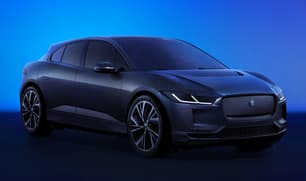
Five years on, from the bold cab-forward silhouette to the high-riding crossover proportions, the I-Pace is a distinctive and handsome machine, offering progressive, flowing aerodynamics that have as much to do with function as they do with form. This is an out and proud EV.
But there’s the rub. Perhaps the disappointing sales reception is down to it being too removed from what many consumers might expect a Jaguar to look like.
Grille-aside, there isn’t enough connection with stablemates like the woefully-underrated XE or F-Pace, while traditionalists – many of them Americans – wanting classic XJ or XK retro schtick are also plum out of luck. Cover the badge and the styling could be from any (forward-thinking) carmaker.
Or maybe it’s because the I-Pace, whose body is 94 per cent aluminium to help offset the weight of the batteries, looks compact in photos, like a crossover hatchback, when in reality it is surprisingly large, belying its sleek styling by packing in plenty of space inside.
Speaking of which, let’s take a closer look.
This Forester is 4655mm long (with a 2670mm wheelbase), 1830mm wide and 1730mm high.
The new generation retains more than enough of the previous Forester – blocky profile included – to remain clearly recognisable.
Traditionalists may chafe at the slicker, more citified appearance of this Forester over previous generations but the overall package is inoffensive enough to not elicit any howls of outrage from passers-by on the street.
The Forester’s interior maintains a similar cabin look and feel as before but with a 11.6-inch portrait-oriented multimedia touchscreen dominating up front, a mix of physical and on-screen buttons, as well as soft-touch surfaces and durable plastics.
Yes, compared to the vast mega screens invading most new models of today, the I-Pace’s dashboard layout is looking, well, off the pace. On first glance at least, this is definitely a product of the previous decade.
But as far as design elegance and functionality are concerned, Jaguar seems to have created a timeless piece of crafted automotive interior architecture that – consequently – holds up very well.
Or, in other words, the I-Pace provides a welcome sanctuary away from the infuriating folly of today’s faddish, fiddly and infuriatingly distracting touchscreen interiors. Maybe some old-school XJ smarts live on in this EV after all.
Look past the dated dashboard design, and the cabin’s overriding impression is of solidity and quality. No cheap plastics or rough surfaces here, just restrained luxury.
While electronic displays with very-analogue-style dial options amid digital driving data take care of the instrumentation ahead of the driver, a modestly-sized touchscreen is set at a lower plain so as to not dazzle and distract the job of vehicle controlling with data-overload, while under that is smaller display for climate control. More on that later.
Part of the Pivo Pro multimedia system, that central touchscreen is switched on and ready for use before the ignition button is even pressed, for immediate action.
No delaying-tactic welcome fanfare as the system boots up as per almost every other carmaker’s set-up, either. Just instant gratification, ironically. This dash is starting to feel like a resto-mod, with all the latest tech behind that Boris-era façade.
Plus, besides being fast, it is logically laid out and avoids confusing sub-menus. Nice swipey action, too. Some familiarisation is required at first, but the system makes sense. And if you need volume adjustability, you turn a physical knob. As the ergonomics lords intended. Easy.
Speaking of which, let’s get the sensible stuff out the way. Because it sits at near-SUV height, the I-Pace is easy to get in and out of as long as you’re aware of the swooping roofline out back. And you sit up high, affording excellent forward vision ahead.
Sinking yourself into the front seats, the Jaguar lives up to its old luxo-barge reputation in that they’re sumptuous yet firm in back-location and support, providing hours of comfort if required.
The driving position is superb, with ample adjustment and those thoughtfully-placed switchgear and controls coming into play.
Storage is ample, with deep door pockets, a sizeable centre console bin and even a secret cubby underneath the rear seat.
The Jaguar provides five USB outlets and two 12V sockets. And ventilation is as effective as you need it to be.
Problems? Pleasingly, our Graz-built Jaguar suffered from no breakages or squeaks. It is as well-screwed together as you’d expect from a luxury SUV, so there are no issues there to moan about.
However, rear vision is poor due to the tapering rear windows and shallow tailgate glass. In turn, the back-seat area can seem a bit dark and hemmed-in without the (optional) fixed glass roof.
The glove box is disappointingly shallow. And, though simple in execution, the climate control can be fiddly to figure out at first.
Of greater concern is the counter-intuitive transmission selection, since the ‘DNRP’ buttons are placed in descending order, putting ‘Drive’ up top and ‘Park’ down at the bottom.
On several occasions, ‘D’ was selected instead of ‘P’ or ‘R’, nearly leading to unintended forward acceleration into parked cars or walls directly ahead.
As mentioned earlier, our test HSE features the optional suede dash and pillar covers; along with the beautiful woven grey flannel-like trim on Alcantara-like seats, they add a distinctive classy ambience – and that’s something that translates out back, too.
While you wouldn’t call it a large wagon, it is more than sufficiently spacious for two adults, while middle-seat space is A-OK for smaller folk only as the ceiling tapers a bit too much for taller passengers. Legroom is exceptional, thanks in part to a stretchy near-3.0-metre wheelbase.
The bench seat itself does not slide or recline, but the 40/20/40-split backrest seems sufficiently angled for comfort and support, while the cushion is sprung enough not to lead to achy thighs, even for longer-legged occupants.
Amenities include rear-facing air vents, a centre armrest with two cupholders, two USB and a single 12V port, overhead grab-handles and reading lights, (quite shallow) door pockets, four coat hooks and some under-seat storage.
Further back, the Jaguar’s boot area is set up high, so requires some lifting to get heavier objects in, but the floor is long and flat, and the overall volume is quite practical. Capacity varies from 656 litres to 1453L with the backrests dropped. You can fit a 1797mm by 1244mm object in two-seater only mode.
There’s storage underneath for charging cables, as well as straps and hooks to secure loose items. And, as mentioned earlier, buyers can order a space-saver spare if the tyre-repair kit is undesirable. Note, too, that a sizeable ‘frunk’ front trunk is good for a couple of soft overnight bags.
Overall, then, equipped as our $180K HSE was, the I-Pace’s interior is likely to impress.
The Forester is quite roomy for a mid-size SUV and this is the top-spec variant so there’s leather everywhere.
The interior layout is neat and tidy and lands firmly on the correct side of being practical and familiar, with all controls easy to locate and operate.
The touchscreen offers mostly simple intuitive functionality with infrequent need to cycle through numerous menus and sub-menus to access what you want.
The aforementioned mix of physical and on-screen buttons, as well as soft-touch surfaces and durable plastic are welcome here because, you know... real life.
The front seats offer ample support and the driver is able to dial-in their preferred position via power controls on the eight-way power-adjustable seat (with dual memory). The front passenger has an eight-way power-adjustable seat. Both seats are heated and ventilated.
The 60/40 split folding second-row seats aren’t too shabby either, in terms of comfort and amenities, with a fold-down arm-rest with cupholders and directional air vents etc.
Cargo volume is 496 litres (with rear seat in use) and 1174 litres (with the rear seat down, 1667 litres to ceiling.
The tailgate is powered and hands-free with a kick sensor (apparently). But I never tried that, instead opting for the tailgate-mounted button to open and close it.
Unveiled for the 2021 model year elsewhere but finally released just this year in Australia, the updated I-Pace EV400 (denoting the maximum power output in braked horsepower) brings minor visual changes, but more important ones underneath, too.
Most noteworthy are a larger onboard charger (from 7.0kW to 11kW) to substantially increase charging times, an advanced new-from-the-ground-up multimedia system, improved climate control, better surround-view camera options including integration with the rear-view mirror (dubbed 'ClearSight') and wireless charging updates.
They help smother some of the Austrian-built Jaguar EV’s wrinkles against a growing army of fresher alternatives, including the EV6, Audi e-tron (soon to gain the Q8 prefix), BMW iX, Lexus RZ and Mercedes-Benz EQC.
Kicking off from $148,800 (all prices are before on-road costs), the ‘24MY’ (2024 model year) EV400 SE is the latest I-Pace’s opening gambit, though we’re testing the HSE flagship version from $165,600.
Both grades feature an electric motor on each axle for all-wheel drive, a 90kWh battery pack and Jaguar's R-Dynamic pack.
Standard features include LED automatic headlights, electric/heated door mirrors, flush exterior door handles, an acoustic and heat-deflecting windscreen, rain-sensing wipers, keyless entry/start, a rear-view camera, part-leather upholstery, front sports seats with electric adjustment and driver’s side memory plus adaptive cruise control with lane-assist.
There's also dual-zone climate control with remote cabin pre-conditioning, configurable ambient cabin lighting, electronic instrumentation, Bluetooth connectivity, Apple CarPlay/Android Auto compatibility, digital radio, wireless charging, over-the-air updates for the 'Pivo Pro' multimedia system, voice control, a public charging cable, perimeter alarm and three-year subscription to Secure Tracker car finder, a powered tailgate, a bicycle-carrier preparation kit, 20-inch alloy wheels and a tyre-repair kit.
There is no spare wheel fitted but a space-saver is available at extra cost.
Stumping up another $16,800 for the HSE nets you upgrades like leather trim, heated/cooled front seats, heated rear seats, suede headlining, fixed panoramic roof, animated indicators, approach lights in the exterior mirrors, a head-up display (HUD) and different wheels.
On the safety front, both grades feature six airbags and a decent level of driver-assist technologies including autonomous emergency braking (AEB) as expected at this price point. More on those in the Safety section below.
Now, the I-Pace EV400 HSE R-Dynamic we tested was a 23MY model, which differs from the above in that it started from over $5000 less at $160,217, but isn’t as well equipped as the 24MY.
It also included a number of options that bumped the price up to a tad under $180,000, starting with the $5008 'Premium Black Pack', ushering in air suspension, a rear spoiler, black exterior trim highlights and 22-inch glossy black alloys.
Other goodies included a fixed panoramic roof ($3580), adaptive dampers ($2405), four-zone climate control ($1820), carbon-fibre trim finish ($1521), that ClearSight rear-view mirror ($1131), full-colour HUD ($1040), Privacy Glass ($845) and no-cost 'premium textile' (non-animal derived) upholstery.
The point is, to specify your I-Pace to what you see in our images, you’ll need to add nearly $20K to an already hefty starting price.
This is par-for-the-course for most premium brands, though paying extra for cupholders, a HUD and rear-seat climate control when some carmakers include them seems mean at these prices.
The Forester AWD Touring (petrol) is priced at $50,990 MLP while its hybrid sibling is $55,990.
Standard features include an 11.6-inch multimedia touchscreen (with wireless Android Auto and Apple CarPlay), 18-inch alloy wheels, auto LED headlights, dual-zone climate, heated front seats and electric folding rear seats as well as a wireless phone charger.
Top-grade additions include a sunroof, low-profile roof rails, a digital driver display, leather-accented seats, a leather auto-shifter, ventilated front seats and a 10-speaker Harman Kardon audio system.
It also has power-adjustable front seats, sat-nav, auto-dipping and folding door mirrors and a hands-free tailgate.
Exterior paint choices include 'Crystal White Pearl', 'Ice Silver Metallic', 'Magnetite Grey Metallic', 'Crystal Black Silica', 'Crimson Red Pearl', 'Brilliant Bronze Metallic', 'Daybreak Blue Pearl', 'Sapphire Blue Pearl', 'Cashmere Gold Opal', 'Autumn Green Metallic' and 'River Rock Pearl'.
Built around a standalone architecture with no internal combustion engine versions, the I-Pace EV400 is fitted with two permanent magnet synchronous electric motors – one above the front axle and one located on the rear axle. Each produces 150kW of power and 348Nm of torque, for a system output total of 294kW and 696Nm.
Tipping the scales at 2226kg, this means the EV400 has a power-to-weight ratio of a very healthy 132kW/tonne, helping this electric crossover cross the 100km/h marker in 4.8 seconds, on the way to a top speed of 200km/h.
With a single-speed transmission sending torque to a motor on each axle, the I-Pace has permanent all-wheel drive.
The I-Pace’s standard suspension is double wishbones and coils up front and an integral link independent set-up out back.
Nowadays, the standard wheel size in the SE is 245/50R20, though ours was fitted with 255/40R22 – along with air suspension and adaptive dampers. These profoundly alter ride comfort. Towing capacity is 750kg braked or unbraked.
Ground clearance is usually 174mm, but with the air suspension, that increases to a handy 241mm in its maximum height setting. At speeds over 105km/h I-Paces with air suspension drop a further 10mm to aid efficiency. Which brings us to…
The Forester has the line-up’s 2.5-litre four-cylinder naturally aspirated boxer engine (producing 136kW at 5800rpm and 247Nm at 3700rpm) matched to a constantly variable transmission (CVT), which some people detest, and some people couldn’t give a rat’s whether it’s there or not.
Also onboard is Subaru’s all-wheel drive system, driving modes (including 'Normal', 'Deep snow/Mud', and 'Snow/Dirt') and 'X-Mode' “that constantly monitors the traction available to each wheel and centralises the control of key components including the engine, transmission, drivetrain and brakes to help manage slippery conditions”, according to Subaru.
With a 400V architecture, the I-Pace EV400 has the charging capability of most EVs, but not the Hyundai Ioniq 5 and 6, Kia EV5, EV6 and EV9, Genesis GV60 and Porsche Taycan/Audi e-tron GT fraternal twins, which have an 800V capability.
Under the floor is a 90kWh lithium-ion battery, with a useable capacity of 84.7kWh.
For AC charging, it uses a Type2 connector with 11kW capacity, or for DC fast charging, it has a maximum 104kW capacity via a CCS port. Both are located in the left-hand-side mudguard.
Jaguar says the official combined average consumption is 23kWh/100km. Our car’s trip computer showed we averaged 24.2kWh/100km.
The WLTP range is 408km, or 446km under the more-lenient NEDC regime. Fully charged, our vehicle indicated 407km of range in normal mode and 415km in 'Eco' mode.
After 345km, our distance-to-empty read 14km, meaning we averaged a very reasonable 359km under absolutely normal urban conditions, with some freeway driving thrown in.
Using a 150kW DC fast charger, we added 200km of range in exactly 30 minutes. It cost us around $31.
For the record, AC charging from empty to full using a regular household socket will take nearly 44 hours, or 13.5hr and just 9.25hr if you have access to a 7kW or 11kW Wallbox, respectively.
Meanwhile, a 50kW DC fast charger needs 75 minutes to go from 10-80 per cent full, or 45 minutes with anything above a 105kW charger, as that’s the Jaguar’s maximum capacity.
Official fuel consumption on the combined (urban/extra-urban) cycle for the Forester is 7.9L/100km and it uses 91RON 'standard' unleaded petrol at a minimum.
On this test, I recorded 8.1L/100km. But fuel consumption was as low as a dash-indicated 1.7L/100km while driving the Forester with adaptive cruise control engaged.
The Forester has a 63-litre fuel tank, so, going by our on-test fuel-use figures you could reasonably expect a driving range of almost 780km from a full tank. However, as with any vehicle, once you’ve loaded the Forester with any real-world burdens (e.g kids, dogs, camping gear, etc) you’ll soon see the fuel consumption increase.
One of the great EV questions is just how premium brands like Jaguar, BMW and Mercedes-Benz can justify their higher prices, when comparatively inexpensive alternatives from BYD, Hyundai and Kia rely on similar electric motor tech.
Indeed, a Tesla Model Y Performance offers the same acceleration and a higher top speed at nearly $100K under our EV400 HSE as tested.
But then you snuggle into that opulent cabin, buckle up, and realise that – just as the original XJ changed big luxury sedans forever back in ’68 with its sophistication and lush ride – the I-Pace still sets the tone for luxury EV SUVs.
Push the D button and – even in 'Comfort' mode – the Jaguar steps off the line briskly. A long-travel accelerator pedal tune disguises the fact that the EV400 is actually sensationally fast, as it swiftly yet silently streaks towards triple digits in no time at all, accompanied by a dull turbine-like drone.
Select 'Dynamic' mode, and the I-Pace’s performance lives up to both the make and model names, offering instant, pinned-back-in-your-seat thrust as well as ample muscle as it glides along.
Flex your right foot and you're already tailgating Mercedes AMG and BMW M-Sport SUVs in no time. Immediate, addictive speed.
A low centre of gravity; that double wishbone and multi-link suspension layout; near 50/50 weight distribution – we’re expecting something special here, and happily, the I-Pace as optioned up with air suspension, adaptive dampers and 22-inch wheels refuses to disappoint.
The sheer urgency from the twin electric motors is matched by reassuring grip and control, even over the rain-soaked hills we belted along.
Beautifully weighted steering, offering lots of road connection, adds to the sense of confidence and calm, as the Jaguar handles corners with a flat, contained composure.
It’s only when you’re really fanging it through tight and twisty turns that this EV SUV starts to feel its considerable mass.
Keep in mind that our HSE included the optional air suspension and adaptive dampers, because together they provide impressive suppleness and sweet isolation (in Comfort mode, obviously) to go with the I-Pace’s unassuming agility.
They allow for those oversized alloys to swell out the arches without resulting in a ruinous ride – something you’d get a taste of if you switch to Dynamic mode, where everything stiffens up noticeably.
Thus specified, we’d imagine the softness would be well off the scale on the standard 20-inch rubber.
As tested, our HSE is one of the most enjoyable luxury SUVs to drive and travel in at speed, regardless of what sort of fuel you’re using.
Downsides? Around town, the limited side and rear vision mixed with the Jaguar’s two-metre width makes manoeuvring a little daunting at times.
The turning circle is on the larger side. And the traffic sign recognition tech is far from reliable and doesn’t work in concert with the adaptive cruise control so can’t automatically alter speed to what’s signposted.
Yet our biggest gripe is the lack of greater single-pedal braking when lifting off the throttle.
A set of paddles to alter the regeneration braking force as per Hyundai’s set-up would be appreciated.
This is one of the single biggest giveaways to the Jaguar’s advancing years.
Still, as a hushed, refined, comfortable and forcefully quick luxury EV SUV experience, the I-Pace, with the choice options as fitted, remains a fierce opponent against newer alternatives. Especially from behind the wheel.
The Forester feels comfortable and composed on sealed surfaces and offers some degree of dynamism to the driving experience – so in line with previous generations.
It feels more refined, sharper to steer and more responsive than before. There’s ample visibility to the front but a substantial B pillar obscures the driver’s vision back over their right shoulder.
The Boxer engine and CVT work well together, power and torque outputs are more than adequate in this package, and that much-maligned transmission is not intrusive if the Forester is driven with care and common sense.
However, acceleration from a full stop is sluggish.
The suspension set-up – MacPherson struts up front and double wishbones at the rear – yields a firm but not jarring sense of ride and handling.
The 1662kg Forester proved nimble to manoeuvre around the Big Smoke, the suburbs and in the bush (more about that soon) with a neat 10.8m turning circle.
All-wheel drive vehicles are capable of tackling off-road adventures in their own right but, for safety’s sake, AWD drivers should avoid anything beyond well-maintained dirt tracks in dry weather. AWD cars are designed for use on bitumen roads with some dirt or light-duty off-road use.
And so it was with our test of this Forester. On-test off-road terrain equalled firm-packed sand and gravel/dirt bush tracks in dry weather, although we did drive through one shin-deep mudhole with no trouble.
The Forester has a listed 220mm of ground clearance, the suspension held up well over a brief stint on mild corrugations and Subaru AWD proved more than up to the task when things became a little trickier, providing improved grip and traction in slippery conditions that demanded to be driven at very low speeds.
If push comes to shove, it’s capable of more than light off-roading, but the Forester’s ground clearance and off-road angles ultimately limit its off-road capabilities.
The Forester’s 'all season' tyres – Falken Ziex Z001A A/S (225/55 R18 98V) – are fine for light to moderate off-roading but anything more difficult than that and you’ll need to get a set of more aggressive all-terrain tyres. It does have a full-sized spare onboard.
It has maximum towing capacities of 750kg (unbraked trailer), 1800kg (braked) and a maximum towball download of 180kg. GVM is 2223kg; GCM is 4023kg.
Some niggles: The driver awareness system is annoyingly over-reactive.
Tested in 2018, the I-Pace scored a maximum five-star ANCAP crash-test rating.
It managed to do well in all four of the independent body's disciplines, especially so for occupant protection at 91 and 81 per cent for adults and children, respectively, while vulnerable road users (cyclists and pedestrians) fared worst with a still-adequate 73 per cent rating.
Six airbags are fitted (dual front, head/side front and head/side rear outboard occupants), along with a raft of driver-assist systems, including AEB, lane-alert, lane-assist, blind-spot monitoring, rear-collision monitor, rear-traffic monitor, adaptive cruise control with steering assist, driver fatigue monitor, tyre pressure monitors, emergency call out and traffic sign recognition with adaptive speed limiter tech.
Note the AEB operates from 5.0km/h to 85km/h, and functions in day and night conditions in all cases including cyclists and pedestrians. The lane support systems operate from 50km/h to 180km/h.
Additionally, you’ll find anti-lock brakes with electronic brake-force distribution and brake-assist, as well as stability and traction controls.
Two outboard rear-seat ISOFIX latches are fitted, along with a trio of top-tether anchorage points for child seats.
No front occupant knee or centre-front airbags are fitted.
The Forester has the maximum five-star ANCAP safety rating from testing in 2024.
It has nine airbags (dual front, dual front side, dual curtain, driver’s knee, far side and front passenger seat cushion), adaptive cruise control, emergency lane-keep and centring (with departure warnings), pre-collision braking, auto emergency steering, a 360-degree view monitor system, and a driver monitoring system which includes a ‘safe stop’ feature that – if the vehicle detects that the driver is non-responsive – will bring the vehicle to a gradual, you guessed it, safe stop.
The I-Pace is covered by an industry-average five-year/unlimited kilometre warranty, along with five years of roadside assistance.
Additionally, owners will enjoy five years/130,000km of free scheduled servicing. These are at 12 months or 26,000km.
Jaguar says the EV traction battery is covered by an eight-year/160,000km warranty, with a minimum of 70 per cent state of health.
The MY26 Subaru range is covered by a five-year/unlimited kilometre warranty, five-year/75,000km capped price servicing, and 12 months roadside assistance.
A service is required every 12 months or 15,000km, whichever occurs soonest. After your free “1 Month Health Check and Chat”, cost per service is $347.95 (at the 15,000km/12 month mark), $520.45 (30,000km or 24 months), $393.10 (45,000km or 36 months), $679.30 (60,000km or 48 months) and $358.20 (75,000km or 60 months). Average over the five years is $459.80.
Subaru Australia has more than 140 dealerships across the country with a decent spread over metro and regional areas. Foresters may be serviced at those dealers or by approved mechanics.