What's the difference?
What sets the most iconic Jaguars apart?
Here’s a theory. Consider history’s greatest: the 1948 XK, its 1961 E-Type replacement and the first XJ of 1968. We’re talking about a grand tourer, sports car and luxury sedan respectively that broke ground in each of their segments.
Despite being a sales disappointment, let’s add the 2018 I-Pace to this elite group.
Like the others, it was a pioneer, this time in the luxury electric vehicle (EV) SUV field, beating most competitors and seemingly influencing newer ones ever since, from the excellent Kia EV6 to the coming Mercedes-Benz EQE SUV.
Now, five years and a comprehensive update later, we revisit the 2023 I-Pace to see if it’s still a standout.
Mazda has a tendency to have a lot of similar looking horses in the stable; blink and you'll miss the (very) subtle differences between the CX-8 and the CX-9 but if you're not super keen on the bulk of the CX-9 and you've outgrown the space of the CX-5... this one's for you.
Especially, if you've been considering its competition - the Hyundai Santa Fe Elite CRDi AWD and Toyota Kluger GXL AWD. Both of which have become known for their features and space.
So, how does it compare? The CX-8 GT SP diesel all-wheel drive seats seven, has a decent boot space (albeit, when the third row isn't in use) and handles like a dream.
Perfect combination? Maybe. I've been driving it for the last week with my family to find out for you.
In the 1960s Jaguar used to promote its range as providing “grace, space and pace”. Nowadays, the I-Pace may as well also be known as the I-Grace and I-Space, because all three terms still ring true.
Jaguars were never cheap but the greatest hits felt like exceptional value because they were special. The same applies here. Five years might seem like an eternity, but age has not yet wearied the British luxury EV SUV nearly as much as you might imagine. Especially when optioned up as per our test vehicle.
Bereft of any post-modern brand baggage, the I-Pace remains a modern great. If only more buyers would catch on to that.
So, what did my family think about the Mazda CX-8 GT SP diesel all-wheel drive? I love how it performs on the road - it's super easy to drive and you don't notice how large it is in a car park.
There are some great family-friendly features scattered throughout and I like how practical this is too with the extra seats and top-tether points. The multimedia system isn’t my favourite and I would have preferred to have seen a few extra airbags and a 360-degree view camera, but overall, it’s a good family car and gets an 8.0/10 from me.
My son loved the sun blinds and the cool colour of the seats. He also gives it an 8.0/10.
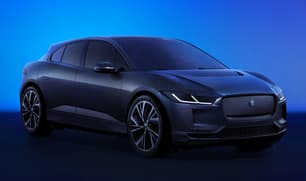
Five years on, from the bold cab-forward silhouette to the high-riding crossover proportions, the I-Pace is a distinctive and handsome machine, offering progressive, flowing aerodynamics that have as much to do with function as they do with form. This is an out and proud EV.
But there’s the rub. Perhaps the disappointing sales reception is down to it being too removed from what many consumers might expect a Jaguar to look like.
Grille-aside, there isn’t enough connection with stablemates like the woefully-underrated XE or F-Pace, while traditionalists – many of them Americans – wanting classic XJ or XK retro schtick are also plum out of luck. Cover the badge and the styling could be from any (forward-thinking) carmaker.
Or maybe it’s because the I-Pace, whose body is 94 per cent aluminium to help offset the weight of the batteries, looks compact in photos, like a crossover hatchback, when in reality it is surprisingly large, belying its sleek styling by packing in plenty of space inside.
Speaking of which, let’s take a closer look.
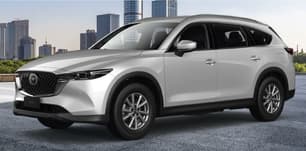
To be honest, I can't really tell the CX-8 and CX-9 apart on the road. They're both large SUVs that sport the classic Mazda bonnet - sharp and long. Up close, the CX-9 has a bulkier shape but otherwise they are remarkably similar.
The CX-8's darkened grille generates some interest with its lattice-work and there are enough shiny chrome accents scattered about the car that it looks pretty.
Yet, the sporty sharpness that Mazda is known for is still hinted at with its shaping and the 19-inch black alloy wheels.
Our model is finished in 'Platinum Quartz Metallic' and it is the highlight for the exterior styling for me. I think because it's such an interesting colour to look at - it varies a lot depending on lighting conditions. Sometimes, it almost has a sheen of pink to it and at others, it looks like pearly sand.
The interior looks polished and refined with its burgundy leather trim and soft-touchpoints. Again, there is a lot of chrome inside to make otherwise dull features, like air vents, pop out.
Yes, compared to the vast mega screens invading most new models of today, the I-Pace’s dashboard layout is looking, well, off the pace. On first glance at least, this is definitely a product of the previous decade.
But as far as design elegance and functionality are concerned, Jaguar seems to have created a timeless piece of crafted automotive interior architecture that – consequently – holds up very well.
Or, in other words, the I-Pace provides a welcome sanctuary away from the infuriating folly of today’s faddish, fiddly and infuriatingly distracting touchscreen interiors. Maybe some old-school XJ smarts live on in this EV after all.
Look past the dated dashboard design, and the cabin’s overriding impression is of solidity and quality. No cheap plastics or rough surfaces here, just restrained luxury.
While electronic displays with very-analogue-style dial options amid digital driving data take care of the instrumentation ahead of the driver, a modestly-sized touchscreen is set at a lower plain so as to not dazzle and distract the job of vehicle controlling with data-overload, while under that is smaller display for climate control. More on that later.
Part of the Pivo Pro multimedia system, that central touchscreen is switched on and ready for use before the ignition button is even pressed, for immediate action.
No delaying-tactic welcome fanfare as the system boots up as per almost every other carmaker’s set-up, either. Just instant gratification, ironically. This dash is starting to feel like a resto-mod, with all the latest tech behind that Boris-era façade.
Plus, besides being fast, it is logically laid out and avoids confusing sub-menus. Nice swipey action, too. Some familiarisation is required at first, but the system makes sense. And if you need volume adjustability, you turn a physical knob. As the ergonomics lords intended. Easy.
Speaking of which, let’s get the sensible stuff out the way. Because it sits at near-SUV height, the I-Pace is easy to get in and out of as long as you’re aware of the swooping roofline out back. And you sit up high, affording excellent forward vision ahead.
Sinking yourself into the front seats, the Jaguar lives up to its old luxo-barge reputation in that they’re sumptuous yet firm in back-location and support, providing hours of comfort if required.
The driving position is superb, with ample adjustment and those thoughtfully-placed switchgear and controls coming into play.
Storage is ample, with deep door pockets, a sizeable centre console bin and even a secret cubby underneath the rear seat.
The Jaguar provides five USB outlets and two 12V sockets. And ventilation is as effective as you need it to be.
Problems? Pleasingly, our Graz-built Jaguar suffered from no breakages or squeaks. It is as well-screwed together as you’d expect from a luxury SUV, so there are no issues there to moan about.
However, rear vision is poor due to the tapering rear windows and shallow tailgate glass. In turn, the back-seat area can seem a bit dark and hemmed-in without the (optional) fixed glass roof.
The glove box is disappointingly shallow. And, though simple in execution, the climate control can be fiddly to figure out at first.
Of greater concern is the counter-intuitive transmission selection, since the ‘DNRP’ buttons are placed in descending order, putting ‘Drive’ up top and ‘Park’ down at the bottom.
On several occasions, ‘D’ was selected instead of ‘P’ or ‘R’, nearly leading to unintended forward acceleration into parked cars or walls directly ahead.
As mentioned earlier, our test HSE features the optional suede dash and pillar covers; along with the beautiful woven grey flannel-like trim on Alcantara-like seats, they add a distinctive classy ambience – and that’s something that translates out back, too.
While you wouldn’t call it a large wagon, it is more than sufficiently spacious for two adults, while middle-seat space is A-OK for smaller folk only as the ceiling tapers a bit too much for taller passengers. Legroom is exceptional, thanks in part to a stretchy near-3.0-metre wheelbase.
The bench seat itself does not slide or recline, but the 40/20/40-split backrest seems sufficiently angled for comfort and support, while the cushion is sprung enough not to lead to achy thighs, even for longer-legged occupants.
Amenities include rear-facing air vents, a centre armrest with two cupholders, two USB and a single 12V port, overhead grab-handles and reading lights, (quite shallow) door pockets, four coat hooks and some under-seat storage.
Further back, the Jaguar’s boot area is set up high, so requires some lifting to get heavier objects in, but the floor is long and flat, and the overall volume is quite practical. Capacity varies from 656 litres to 1453L with the backrests dropped. You can fit a 1797mm by 1244mm object in two-seater only mode.
There’s storage underneath for charging cables, as well as straps and hooks to secure loose items. And, as mentioned earlier, buyers can order a space-saver spare if the tyre-repair kit is undesirable. Note, too, that a sizeable ‘frunk’ front trunk is good for a couple of soft overnight bags.
Overall, then, equipped as our $180K HSE was, the I-Pace’s interior is likely to impress.
The CX-8 is a very practical family hauler because there's ample room in all three rows. Yes, even adults will be able to squeeze into that third row without too many complaints!
All rows enjoy well-cushioned seats and up front they are electrically adjustable, but unfortunately, only the driver's side has lumbar support.
The middle row can slide forward manually or by using the electric button found on the side of the seats... but doing it yourself is way faster.
They do slide far enough forward that you won't embarrass yourself too much when you have to clamber into the third row. Where the seats have a 50/50 split-fold and manual adjustments (accessed via the boot).
In the first two rows there are lots of individual storage options but the front enjoys the most. The middle console is deep enough to be useful and I like the dual opening lid. Each row gets a couple of cupholders and drink bottle holders, too.
The charging options are great, with each row getting two USB-C ports and the front getting a wireless charging pad and 12-volt socket.
All of the controls and dials feel within easy reach and the 10.25-inch touchscreen multimedia system graphics are clear.
You can use it as a touchscreen or opt for the rotary dial but switching between the two was awkward for me. Especially, since the touchscreen function is disabled when you are using the wireless Apple CarPlay. This also has wired Android Auto, for those users.
The amenities are practical throughout with a dark headliner, three-zone climate control and heated outboard seats and retractable sun-blinds in the middle row.
Good news for families because there are five top-tether points across the back rows and ISOFIX child seat mounts on the outboard seats in middle row, in case you need them.
You can fit a 0-4 rearward facing child seat and it shouldn’t impact on front passenger comfort.
My six-year old found it super easy to get in and out of this car because of the 205mm ground clearance and wide door apertures. He enjoyed the high seating position, too, but was disappointed he couldn’t see out of the sunroof!
The boot space is a bit cramped with all three rows are in use at 209L but folding the third row opens up a more respectable 775L - perfect for the average family and its stuff!
The loading space is level, with the temporary spare tyre and clever storage compartments housed underneath. There is a retractable cargo blind and net, luggage anchor points and a 12-volt port, too.
And, as always, I love a powered tailgate, which this has!
Unveiled for the 2021 model year elsewhere but finally released just this year in Australia, the updated I-Pace EV400 (denoting the maximum power output in braked horsepower) brings minor visual changes, but more important ones underneath, too.
Most noteworthy are a larger onboard charger (from 7.0kW to 11kW) to substantially increase charging times, an advanced new-from-the-ground-up multimedia system, improved climate control, better surround-view camera options including integration with the rear-view mirror (dubbed 'ClearSight') and wireless charging updates.
They help smother some of the Austrian-built Jaguar EV’s wrinkles against a growing army of fresher alternatives, including the EV6, Audi e-tron (soon to gain the Q8 prefix), BMW iX, Lexus RZ and Mercedes-Benz EQC.
Kicking off from $148,800 (all prices are before on-road costs), the ‘24MY’ (2024 model year) EV400 SE is the latest I-Pace’s opening gambit, though we’re testing the HSE flagship version from $165,600.
Both grades feature an electric motor on each axle for all-wheel drive, a 90kWh battery pack and Jaguar's R-Dynamic pack.
Standard features include LED automatic headlights, electric/heated door mirrors, flush exterior door handles, an acoustic and heat-deflecting windscreen, rain-sensing wipers, keyless entry/start, a rear-view camera, part-leather upholstery, front sports seats with electric adjustment and driver’s side memory plus adaptive cruise control with lane-assist.
There's also dual-zone climate control with remote cabin pre-conditioning, configurable ambient cabin lighting, electronic instrumentation, Bluetooth connectivity, Apple CarPlay/Android Auto compatibility, digital radio, wireless charging, over-the-air updates for the 'Pivo Pro' multimedia system, voice control, a public charging cable, perimeter alarm and three-year subscription to Secure Tracker car finder, a powered tailgate, a bicycle-carrier preparation kit, 20-inch alloy wheels and a tyre-repair kit.
There is no spare wheel fitted but a space-saver is available at extra cost.
Stumping up another $16,800 for the HSE nets you upgrades like leather trim, heated/cooled front seats, heated rear seats, suede headlining, fixed panoramic roof, animated indicators, approach lights in the exterior mirrors, a head-up display (HUD) and different wheels.
On the safety front, both grades feature six airbags and a decent level of driver-assist technologies including autonomous emergency braking (AEB) as expected at this price point. More on those in the Safety section below.
Now, the I-Pace EV400 HSE R-Dynamic we tested was a 23MY model, which differs from the above in that it started from over $5000 less at $160,217, but isn’t as well equipped as the 24MY.
It also included a number of options that bumped the price up to a tad under $180,000, starting with the $5008 'Premium Black Pack', ushering in air suspension, a rear spoiler, black exterior trim highlights and 22-inch glossy black alloys.
Other goodies included a fixed panoramic roof ($3580), adaptive dampers ($2405), four-zone climate control ($1820), carbon-fibre trim finish ($1521), that ClearSight rear-view mirror ($1131), full-colour HUD ($1040), Privacy Glass ($845) and no-cost 'premium textile' (non-animal derived) upholstery.
The point is, to specify your I-Pace to what you see in our images, you’ll need to add nearly $20K to an already hefty starting price.
This is par-for-the-course for most premium brands, though paying extra for cupholders, a HUD and rear-seat climate control when some carmakers include them seems mean at these prices.
The GT SP diesel AWD is one of the premium models, sitting third from the top and will cost you $65,560, before on road costs.
However, its price tag positions it as the most expensive compared to its rivals. With the closest rival being the Kluger at $65,310 and the most affordable being the Santa Fe at $60,000.
You do get a stylish-looking package with lots of features for your cash, like heated front seats, heated rear outboard seats, a tilt and slide sunroof, and premium leather interior trim.
There's some great tech scattered throughout, too, like the 10.25-inch touchscreen multimedia system, wireless charging pad, USB-A ports in the third row, Bose Premium sound system with 10 speakers, wireless Apple CarPlay and wired Android Auto.