What's the difference?
The Hyundai Kona is the Korean car giant’s best-selling model in Australia, by a reasonably comfortable margin. And in 2025 it managed to battle its way to the top of the ludicrously competitive ‘Small SUV under $45K’ new-vehicle sales category.
Chery’s breakthrough Tiggo 4 Pro, GWM’s Haval Jolion, the MG ZS and close to 20 other well-credited segment rivals can all dream on because currently the Kona has their measure.
So, what’s all that about? Why are so many Aussie SUV buyers choosing to put a Kona in the driveway?
In an attempt to answer that question we slotted a Kona Hybrid into the CarsGuide garage, in this case a new mid-spec Elite version, to explore its relative strengths and weaknesses.
So, if you’re in the market for a compact SUV, with the Kona on your shortlist (and odds are it already is) stay with us for a detailed examination.
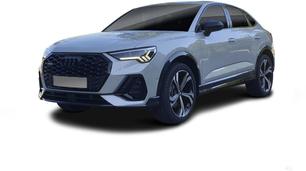
Is 10 years long enough for a special birthday celebration? When you're a kid, hitting 'double figures' is a pretty big deal, and Audi's obviously in the mood to make some noise because it has lit the candles on a limited 10th anniversary version of its compact SUV rocket ship, the RS Q3.
Only 555 examples of the 'RS Q3 Sportback edition 10 years' will be produced for worldwide consumption, with Audi Australia capturing a batch of them and sending one our way for a brief blast as the fiery five-cylinder starts filtering into dealerships.
It’s easy to see why the Hyundai Kona leads the Aussie small SUV category, with this hybrid version enhancing the car’s abilities in key areas. Sharply priced and well-specified, comfortable and practical with a hugely efficient powertrain as well as refined dynamic performance. It’s a compelling package.
The Audi RS Q3 Sportback edition 10 years is dynamically brilliant, beautifully finished and surprisingly civilised on day-to-day duty. A polished compact performance package that even in this special 'get-it-while-you-can' guise offers compelling value relative to its direct competitors.
The Kona’s exterior mixes smooth curves across its softly rounded nose and swollen haunches with sharp lines and geometric shapes in the lower grille, wheel arches and rear bumper.
And when the current, second-generation version arrived in mid-2023 it swapped out its predecessor’s already slimline LED daytime running lights for an even thinner strip running the width of the car, in similar fashion to the Hyundai Sonata sedan and Staria people mover.
The single line light signature is repeated with the tail-lights, a brake, reversing and indicator cluster confined to the outer rear edges.
Throw in a conspicuous diagonal character line across the doors, and bright metallic accents making a visual connection between the top of the tailgate and the lower edge of the side glass and there’s a lot going on.
Always a subjective call, but I don’t mind the Kona’s design, although our test car’s ‘Mirage Green’ paint finish leaves me (and my significant other) cold.
Inside, the colour palette is uniformly grey which contributes to a restrained, relatively low-key feel, although light trim for the headliner and pillar covers brightens the mood somewhat.
The dash treatment is cool and contemporary, comprising a wide wrap-around instrument and media screen panel next to a narrow tray on the passenger side.
Fit and finish is impressive and details like perforated centre panels on the leather-faced seats dial up the premium feel.
There's a lot going on with the RS Q3's exterior design; a mix of jagged lights, hard character lines, broad haunches and multiple vents surrounding the brand's signature, six-sided grille up front.
The big 21-inch rims fill the arches nicely and the rear features a deep diffuser with fat exhaust finishers poking out either side.
It's a purposeful, macho look and the Sportback edition 10 years is defined by a black package which adds gloss black to the side window trim, front spoiler blade, side blades, rear diffuser and exterior mirrors.
The limited edition is available in two colours, 'Chronos Grey metallic', which is unique to this model and 'Dew Silver matte' which will now be added to the broader RS Q3 colour palette.
Premium performance feels like the dominant theme inside with a typically Audi tech-focused approach including high-quality brushed metal elements, matt carbon inserts and quilted leather trim on the heavily bolstered front seats.
A meticulous attention to detail is obvious and the bottom line is it's all about the driver. A grippy, flat-bottom, leather-trimmed steering wheel looks as good as it feels, sleek screens enhance the racy vibe and the mix of physical and digital controls is sensible.
Even though the Kona measures a relatively modest 4350mm end-to-end, it offers up copious amounts of interior space. Dr Who would be proud.
Lots of breathing room up front, with the ‘shift-by-wire’ auto transmission shifter’s location on the steering column freeing up extra space in the centre console.
There’s a lidded bin between the seats (the padded top of which doubles as a centre armrest) with an open tray the size of a shoebox in front of it (which includes a pair of swivel-out bottle or cupholders) as well as a wireless phone charging bay ahead of that.
Generous bins in the doors include a recess for large bottles, plus there’s a decent glove box on the passenger side and a handy open tray above it. Plenty of room to keep the bits and pieces of everyday life under control.
Power and connectivity for the driver and passenger runs to two USB-C sockets and a (180W) 12-volt outlet.
Switching to the back is where the Tardis factor steps up a notch, the Kona offering space more in line with a next-size-up medium SUV.
Sitting behind the driver’s seat set to my 183cm position there’s loads of leg and headroom and even enough shoulder room for three adults to get to know one another on shorter journeys. A close to flat floor also helps with foot room in the centre position. Worth noting the rear seat backrests recline slightly for extra comfort options.
No door bins as such but, again, there are recesses for bottles. Netted map pockets on the front seat backs are helpful as is a fold-down centre armrest, which includes a pair of cupholders.
Individual air vents for back-seaters (in the rear of the front centre console) is always a welcome inclusion, and there’s a small oddments tray underneath them. Another pair of USB-C sockets will keep devices charged.
Boot capacity is healthy at a class-competitive 407 litres (VDA), expanding to 1241L with the 60/40 split-folding second row seat folded.
There are storage wells behind the rear wheel tubs, multiple bag hooks and four tie-down anchors to help keep loads secure.
There’s a temporary space-saver spare under the boot floor, which gets a tick over the increasingly common repair kit option and you’ll be able to tow a 1.3-tonne braked trailer (600kg unbraked).
Snug but spacious enough, the RS Q3 Sportback's driver and front passenger are provided with plenty of breathing room without upsetting the intimate, performance car feel. Just be prepared for a bit of head-ducking physical origami when folding yourself into either of the heavily bolstered front seats.
Storage includes door bins with room for bottles, two generous cupholders in the centre console, a lidded tray in front of the gearshift (which doubles as the wireless device charging bay), a storage compartment and owners manual holder under the front seats, a modest glove box and an adjustable front centre armrest with storage compartment.
Given this car measures just over 4.5m end-to-end, a close to 2.7m wheelbase is significant and rear room is generous given the Q3's overall footprint. Plenty of head and legroom (for me at 183cm) with enough width for three adults on short journeys. A trio of up to teenage kids will be fine.
The back seat is able to slide for extra legroom (and slightly less boot space), while backrest angle is also adjustable.
Storage runs to small bins in the doors, a fold-down centre armrest (with two pop-up cupholders) and storage nets on the back of the front seats. Directional and temperature control in the rear for the ventilation system is a big plus.
Power and connectivity options run to a 12V outlet and two USB sockets in the front (Type A and C), another two Type C sockets in the back and a second 12-volt jack in the boot.
Speaking of which, cargo volume with all seats up is a handy 530 litres, enough to swallow CarsGuide's three-piece luggage set or large pram (the latter with room to spare) and 1400 litres with the 40/20/40 split-folding rear seat lowered.
The loading lip is low, a stainless steel sill protector helps minimise scuffs and scratches and the hands-free power tailgate is welcome.
If you're keen to hook up the boat or horse float the RS Q3 is able to tow a braked trailer up to 1900kg (750kg unbraked), but don't bother looking for a spare of any description, a repair/inflator kit is your only option. Boo...
When you’re sitting on top of the sales pyramid, everyone wants a piece of you and it feels like Hyundai has priced and specified the Kona to match the market with some special touches thrown in here and there.
At $39,950, before on-road costs ($44,738, drive-away), the Hybrid Elite’s standard equipment list is generous.
Aside from the safety and performance tech covered further down, big ticket items include leather-appointed seats and steering wheel, heated and power-adjustable front seats (10-way driver / eight-way passenger), 18-inch alloy wheels, LED headlights, tail-lights and DRLs, keyless entry and start, adaptive cruise control and auto rain-sensing wipers.
There’s also dual-zone climate control, digital radio, wireless Android Auto and Apple CarPlay, six-speaker audio, a 12.3-inch multimedia screen and 4.2-inch instrument cluster, rear privacy glass and more.
A sneaky power tailgate and/or ventilated front seats would be nice at this price-point, but they’re by no means mandatory for the class.
Similarly priced hybrid rivals like the Haval Jolion Ultra Hybrid ($38,990, drive-away), Honda HR-V e:HEV L ($42,900, drive-away), Subaru Crosstrek Hybrid L ($39,590, before on-road costs) and Toyota Corolla Cross GXL Hybrid ($41,190, before on-road costs) are broadly aligned with the above features list but none of them put the Kona Hybrid Elite in the shade.
The Audi RS Q3 Sportback edition 10 years is priced at $102,900, before on-road costs, which is a $3800 premium over the standard issue version.
For those extra dollars the car is upgraded with specific 21-inch black alloy rims, black badging and brake calipers as well as (three-stage heated) 'RS' Nappa leather-trimmed sports front seats with contrast 'Copper Honeycomb' stitching.
The fancy stitching extends to the Alcantara-trimmed steering wheel and gear lever, the RS floor mats also feature copper highlights and the door downlighting projects a unique rhombus design.
At that money the RS Q3 lines up against BMW's firecracker X3 M40i ($126,800), the ferocious Mercedes-AMG GLA45 S ($121,900) with the Jaguar E-Pace 300 Sport AWD ($84,500) the only other similarly pitched compact performance SUV within $20K of the Audi.
And as well as the performance and safety tech covered later in the review, the RS Q3's standard features list includes, three-zone climate control, adaptive cruise control, keyless entry and start, Nappa leather trim, ambient lighting (with 30 colour choices), an RS sport contour leather-trimmed steering wheel, 12.3-inch digital instrument cluster, 10.1-inch multimedia display (with text and voice control), (wired) Android Auto and Apple CarPlay, sat nav and wireless device charging.
There's also a Bang & Olufsen '3D Sound System' (15-speaker with 680-watt, 16-channel amp), digital radio, 21-inch alloys, electronically-controlled adaptive dampers, auto Matrix LED headlights (with RS-specific darkened trim) and a hands-free power tailgate. And it's worth noting metallic and pearl effect paint finishes are offered at no extra cost.
Pretty impressive. Especially when you consider even this special edition RS Q3 is $20,000 cheaper than its primary BMW and Merc-AMG rivals.
The Kona Hybrid is powered by a naturally aspirated 1.6-litre, four-cylinder petrol engine working in concert with a single electric motor, both driving the front wheels through a six-speed dual-clutch automatic transmission.
The all-alloy engine features dual variable valve timing and direct-injection to produce 77kW at 5700rpm and 144Nm at 4000rpm, the permanent magnet synchronous motor chipping in with 32kW/170Nm for a total combined outputs of 104kW/265Nm.
That power output is in the middle of the small hybrid SUV pack and torque is at the higher end.
Kerb weight is a fraction over 1.5 tonnes and you can expect 0-100km/h acceleration in the high 10-second range with a top speed around 170km/h.
The RS Q3 Sportback is powered by a 2.5-litre in-line five-cylinder intercooled turbo-petrol engine sending drive to all four wheels via a seven-speed dual-clutch automatic transmission and Audi's quattro permanent all-wheel drive system based on an electronically-controlled multi-plate clutch pack.
Featuring a cast iron block, alloy head, direct-injection as well as variable intake and exhaust cam adjustment, the (EA855) engine features a special firing order (1-2-4-5-3), the odd number of cylinders producing a signature engine sound and exhaust note reminiscent of the 1980s 'Ur' Quattro.
Peak power is 294kW from 5850-7000rpm and maximum torque is 480Nm delivered across a broad plateau from 1950-5850rpm.
Hyundai’s official fuel consumption figure for the Kona Hybrid Elite, on the combined (urban/extra-urban) cycle is a miserly 3.9L/100km, the 1.6L engine emitting 89g/km of CO2 in the process.
Minimum fuel requirement is 91 RON ‘standard’ unleaded and with a 38-litre tank theoretical range is around 975km.
On test, over several hundred kays taking in city, suburban and freeway running, we saw an average of around 4.4L/100km, which is impressive and a big contributor to the car’s appeal.
Using our real-world test number, the range figure comes in at a still handy 860-plus km.
Audi's official fuel economy number for the RS Q3 on the combined cycle is 8.9L/100km, the 2.5-litre turbo-petrol five-cylinder engine emitting 204g/km of CO2 in the process. Stop-start is standard.
We covered city, suburban and some freeway running on test, returning an (indicated) average of 9.6L/100km. And that's pretty good, given we pushed on enthusiastically on a reasonably regular basis.
The fuel tank requires 63 litres of 98 RON premium unleaded to fill it which translates to a theoretical range of just over 700km, shrinking to around 650km based on our real-world number.
The first things that come to mind when it comes to driving the Kona Hybrid are comfort, quietness and lack of stress.
From an ergonomic point of view the dash and cabin layout make life easy. There are physical controls for key functions like heating and ventilation, as well as audio and drive modes. Not a fan of the hard driver’s door armrest, though.
The engine is quiet and the transition between combustion and electric power is seamless. It’s fun to watch the (available) graphic screen in the driver’s display illustrating where drive is coming from at any given moment. Without it you’d be hard-pressed to know.
Acceleration is more than adequate and the powertrain’s bias towards electric propulsion means take-offs are ultra-smooth.
Suspension is by MacPherson-type struts at the front with a multi-link rear set-up and ride quality is outstanding. Despite the Kona Hybrid’s relatively large 18-inch rims, bumps and ruts don’t cause major disruption and the Kumho Ecsta PS71 tyres (215/55) are exceptionally quiet.
Steering accuracy and road feel are both good and drive mode switches between ‘Normal’, ‘Eco’ and ‘Sport’ are noticeable, the latter dialling up urgency and dynamic response.
That said, we found ourselves in Eco most of the time, without any penalty in terms of throttle response or cruising ability.
Torque vectoring helps keep everything buttoned down if you decide to press on through your favourite set of corners, the front seats remain comfy on longer drives while keeping you securely located and the ‘shift-by-wire’ electronic gearshift is slick.
Physical brakes are ventilated discs at the front with solid rotors at the rear and they operate with reassuring smoothness. An active hydraulic booster controls regenerative braking, adjustable through three levels. Warning: the most aggressive setting makes the car annoyingly ‘shunty’ at slower speeds.
Driver-assist safety tech makes its presence felt occasionally, but never to a disturbing degree… with one exception.
Despite the ability to program a steering wheel button to short-cut directly to the appropriate screen, the need to cancel an incessant and sometimes inaccurate overspeed warning every time you start the car is a pain.
A tidy 10.6m turning circle helps in slow-speed manoeuvres as do front, side and rear parking distance warnings and a high-quality reversing camera.
The Kona Hybrid is as good or better than anything in the class when it comes to the drive experience.
It still seems counterintuitive when a high-riding SUV is tuned to perform and handle like a low-slung sports car but here we are. And Audi executes this mystifying transformation as expertly as any carmaker in the automotive world.
Audi says the RS Q3 Sportback will blast from 0-100km/h in 4.5 seconds. Anything under 5.0 seconds is properly fast, and there's nothing quite like the deep-throated bellow of a VW Group in-line five to raise the hairs on the back of your neck.
The RS Q3's sport exhaust system is a dual-branch set-up with exhaust flap control, and people of a certain age will instantly imagine themselves matching it with Ari Vatanen, Walter Röhrl and Michèle Mouton on a suburban special stage behind the wheel of a 1980s Group B Sport Quattro rally car (actually, the school drop off at an infinitely more sensible pace).
The car weighs in at a not insubstantial 1775kg, but 480Nm, available all the way from 1950rpm to 5850rpm, means a near instant surge of fierce acceleration is always lurking under your right foot.
And the VW Group is on the pace when it comes to dual-clutch auto transmissions, from Porsche's 'PDK' and VW's 'DSG' to Lambo's 'DCT' and Audi's 'S tronic'.
The RS Q3's seven-speed unit is quick and positive, the wheel-mounted paddles ramping up the engagement factor.
The variable ratio, electrically-assisted steering is capital G Great. Well weighted and precise with reassuring road feel and the Alcantara trimmed wheel is a nice way to access it all.
Suspension is by struts at the front and multi-links (four) at the rear with adaptive dampers on-board.
Despite running on 21-inch rims, shod with high-performance 255/35 Continental PremiumContact 6 rubber, ride comfort is surprisingly good.
Dial in 'Comfort' mode via the 'Drive Select' system and the impact of even substantial bumps is softened off appreciably.
An ideal set-up would be the first 'RS1' short-cut Drive Select button set for Comfort suspension, with throttle, steering and transmission set to maximum attack and the second 'RS2' mode tweaking the suspension to track-day level, too.
Push on through your favourite set of bends and you can feel the electronic wheel-selective torque control system keeping everything under control. This car puts its power down through sweeping sections with fuss-free authority.
The RS-specific menu in the digital instrument cluster provides extra instrumentation in the shape of a power/torque display, G meter and lap timer. Fun!
The brakes are professional grade with big ventilated rotors all around and aluminium fixed calipers at the front.
But beware, the flip side of the RS Q3's quick steering response is a sizeable 11.8m turning circle. Take your time when parking.
The Kona scored four from a possible five ANCAP stars in 2023, with particularly strong results in Adult Occupant Protection (80 per cent) and Child Occupant Protection (84 per cent).
It features a full portfolio of crash-avoidance tech, including AEB with forward collision warning as well as cyclist, pedestrian and motorcycle detection, plus car-to-car junction, crossing and head-on detection. Phew!
On top of that, there’s lane-keeping and lane-following assist, blind-spot monitoring, driver-attention warning, rear cross-traffic alert and collision avoidance, ‘Remote Smart Parking Assist’, ‘Safe Exit Warning’, driver fatigue detection, tyre pressure monitoring and more.
If, despite all that, a crash is unavoidable there are seven airbags fitted, including a front centre bag to minimise head clash injuries between driver and co-pilot in a side collision.
There’s also multi-collision brake (to reduce the chances of subsequent impacts after an initial crash), auto collision notification and an emergency call (SOS) function.
For baby capsules or child seats there are three top-tether points for child seats across the second row with ISOFIX anchors on the two outer positions.
All in all, a comprehensive safety offer that matches or betters the Kona’s class competitors.
Although the Audi Q3 received a maximum five-star ANCAP score in 2019, the RS Q3 was specifically excluded from the assessment, so it's officially untested.
But the car boasts an extensive active (crash-avoidance) safety suite including, auto emergency braking (AEB) (5.0km/h to 85km/h for pedestrians and cyclists and up to 250km/h for vehicles), adaptive cruise control (with stop-go function and active lane assist), lane change warning and lane departure warning (with lane keeping assist).
There's also 'Attention Assist' (warning tone and visual signal if the system determines the driver's attention may be lapsing), front and rear parking sensors, a reversing camera with 360-degree view, rear cross-traffic alert, tyre pressure monitoring, 'Hill hold assist' and hill descent control.
If, despite all that, a crash is unavoidable there are six airbags on-board (front and side for the driver and front passenger as well as full-length curtains). The RS Q3's showing its (10-year) age here because additional rear side and front centre bags are close to the norm now.
Nice to see a first aid kit and warning triangle included and there are three top tethers and two ISOFIX anchor points for securing baby capsules and child seats across the second row.
The Kona is covered by Hyundai’s seven-year/unlimited-km warranty (upgraded from five years mid-last year), which is ahead of the mainstream five-year warranty pack.
Roadside assistance is complimentary for the first year, with the deal extended for another 12 months every time the car is serviced at an authorised Hyundai dealer.
Speaking of which, scheduled servicing is recommended every 12 months/10,000km, which is a little lower than the (15,000km) norm for the category. After a complimentary check up at six weeks/1500km, the first seven services (in line with Hyundai’s ‘Lifetime Service Plan Pricing’) come in at $3782, for an average of $540 per workshop visit.
That’s on the high side considering an equivalent Toyota Corolla Cross (in line with ‘Toyota Service Advantage’ pricing) will set you back an average of $354 per service over the same period.
Hyundai has a network of 185 dealers covering every Australian capital, state and territory.
Audi Australia covers all the models it sells with a five-year/unlimited km warranty with 24-hour roadside assistance included for the duration. Pretty much cost-of-entry in this part of the market.
Paintwork defects are also covered for five years, and the body is warranted against corrosion (to the point of perforation) for no less than 12 years. Nice.
Service intervals are 12 months/15,000km and capped-price servicing is available, a five-year/75,000km plan for the RS Q3 costing $3580, an annual average of $770. Fairly steep.
An 'Audi Advantage' package is also available, adding an extra two years' worth of warranty, scheduled servicing and roadside assistance (to the end of any existing term) for $3800.