What's the difference?
If you think you know Nissan and haven’t driven one of its impressive e-Power models, you might be in for a surprise.
Be it the latest-generation X-Trail from Japan or the related smaller Qashqai out of the UK, this plugless petrol-electric hybrid powertrain is one of the best crossovers at any price point.
Now, barely a year after the facelift appeared in Australia, the Qashqai scores another round of changes.
We take a close look at the up-spec Ti-L to see if they make one of the best small SUVs even better (or worse).
BMW’s original X2 crossover from 2018 was not a massive sales success in Australia. The related X1, however, was and continues to be a very popular pick in the ultra competitive premium small SUV class.
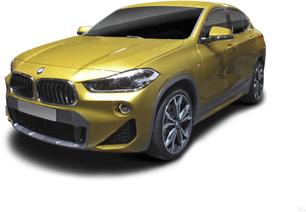
BMW has flipped the script for the second-generation X2, giving it a dramatic makeover that ushers in a bold design that’s now in keeping with its SUV strategy. That is to offer a ‘conventional’ SUV - X1, X3 and X5 - and then a coupe-style sibling - the X2, X4 and X6 - to sit alongside it.
Beyond the new look there are significant changes throughout the car, including the introduction of an all electric version - the iX2.
We drove the two flagship grades at the international launch in Lisbon, Portugal - the petrol-powered M35i xDrive, and the iX2 xDrive30. They might look the same, but they maintain their own distinct characters. Let’s dive in…
Now e-Power-only, the 2026 Qashqai Ti-L range walks a fine line between mainstream value-for-money and premium European class, providing an attractive, enjoyable and comfortable small SUV experience that also doubles up as a capable and practical family car.
We’d probably ditch this grade for either the Ti below and save a bit of money in the process, or stretch a little more for the flagship N-Design, as both provide the peace of mind of a spare wheel.
Otherwise, for its economy, agility, luxury and smarts, the latest Qashqai Ti-L e-Power is a wildly underrated Nissan that deserves more love.
There is little doubt the new X2 represents a vast improvement over the original model. The design alone gives it a lot more presence.
More interior and boot space also helps widen the SUV’s appeal and the significant tech updates are welcome.
It is on the pricey side and there are a few too many options that should be standard.
However, the M35i is hard to ignore as a sporty premium crossover, and the iX2 xDrive30 is the sort of electric SUV that should worry Volvo.
They both have their own distinct flavours, so there’s no dud in this line-up. Of course, we will hold final thoughts for the local launch when we can drive all four grades. But until then, it’s a welcome return to form for the X2.
The third Qashqai since the original took Europe by storm as the Pulsar hatch replacement in late 2006, the British-designed, engineered and built crossover uses a global Renault-Nissan-Mitsubishi Alliance transverse architecture.
As a result, achieving best-possible efficiency was a priority, with weight-saving, body-beefing aluminium deployed in the doors, bonnet and front guards.
Though an ageing design (launching in Europe back in 2021), a deft facelift in 2024 has kept the nicely proportioned and detailed design relatively fresh inside and out.
Size wise we’re in big small SUV territory, with the Qashqai measuring 4425mm, 1835mm, 1625mm and 2665mm in length, width, height and wheelbase respectively. This makes it quite a roomy little SUV inside.
In Australia, the expense of British sourcing places the Nissan in premium territory, so the series now kicks off from the mid-spec ST-L grade, bringing softer-touch materials, larger screens and more equipment as standard, raising the ambience somewhat.
The second-gen X2 looks very different to the original from 2018. That first X2 had a squat stance, looked more like a hatchback than an SUV, and the glasshouse appeared as though it had been squished into the body of the car.
The 2024 X2 adopts a similar design philosophy to the X4 and X6 - swoopy, coupe-like roofline and liftback, and bold styling elements at the front and rear.
It has a much more upright, flush front end, freshly designed large kidney grille and an edgy headlight design. There’s flared wheel arches and broad shoulders at the rear, as well as a cool new horizontal tail-light signature.
The X2 has grown in size in a big way. It’s 194mm longer, 21mm wider, and 64mm taller than the outgoing model. That naturally means more space inside, too.
Inside there are big changes. The X2 adopts elements introduced by the excellent iX SUV a couple of years ago. They include the curved display, and a floating arm rest with a control panel. Some of this is also familiar from the X1.
The materials mostly look and feel like they are high quality, and there is an appealing minimalism to the overall design and layout. The chunky sports steering wheel is visually appealing, but it’s a bit too thick in my hand.
Now Nissan’s smallest model in Australia if you discount the delightful Z sports car, the Qashqai feels like an SUV from the next-class up in terms of front-seat comfort and space, with true room to move.
Now while it may be getting on a bit now, lacking the dominating, screen-heavy displays of newer rivals (especially those from China and Germany), the current model’s interior design and layout remains a masterclass in style, functionality, refinement and quality. This is also quieter than before.
In fact, the Qashqai is very difficult to fault from the (supportively cushy) driver’s seat.
All controls are within easy reach, revealing the crossover’s excellent ergonomics, backed up by good vision all round, and ably aided by the helpful new surround-view camera set-up.
The multi-configurable crystal-clear instrumentation and the joy of actual switchgear and buttons are further bonuses.
This isn’t to say that that the touchscreen doesn’t play a major role here, as most of the vehicle and all multimedia functions are accessed quickly via the electronic displays. It’s just that the balance between analogue and digital is considered and balanced.
Plenty of thought has also gone into storage, with wide door bins, a deep centre console and big glove box, along with the presence of a smartphone charging shelf, nearby USB ports and handy cupholders. And the same applies for the natty little gear selector – once the driver masters it.
The only real bugbears are that the air conditioning seemed faulty in our test car, refusing to cool the vehicle down unless the coldest setting was selected. This has also inflicted the brand’s other recent SUVs. Is there an electrical issue going on, Nissan?
Plus, over-the-shoulder vision is pretty poor – a corollary of the sloping roofline and small back windows.
Moving to the rear seat area, both the non-reclinable backrests and non-slidable cushions are adequately supportive as well as spacious enough for most people, though taller folk will notice the limited knee room.
The expected array of amenities is present too, including air vents, USB-C ports, overhead grab handles, reading lights and a centre armrest with cupholders. Note the panoramic roof’s ability to flood the rear with light should not be underestimated, especially as it also comes with a blockout blind.
Moving into the boot area, the price to pay for all that e-Power efficiency is a shallower floor compared to the old turbo-petrol version. The Ti-L offers between 452 litres and 1376L of VDA capacity depending on whether the 60/40 backrest is up or not.
But, and this can be a deal breaker for some buyers, there is no spare wheel, just a tyre-repair kit, which is totally inadequate, shockingly costly to replenish and will completely destroy your expensive tyre.
Our advice is to consider the N-Design that comes with one, or get your friendly Nissan dealer to stump up for an aftermarket space-saver spare and jack combination kit.
Where the previous X2 was a very small crossover with niche appeal, the increase in size for the new model means more people will be interested in it. Possibly even people with a small family.
Those increased dimensions pay dividends inside, with ample headroom up front and more than enough space across the front row, although the raised armrest console is somewhat narrow.
The seats in both the iX2 xDrive30 and the M35i xDrive are very supportive thanks to ample bolstering, but both were also on the firm side. The iX2’s synthetic leather was slightly more comfortable than the M35i’s sports-focused front seats.
The power-adjustable seats and height- and reach-adjustable steering wheel means it’s not hard to find a decent driving position, but forward vision is impeded by a very thick A-pillar, and the letterbox-like rear windscreen in the X2 means rearward vision is limited. Good thing it has excellent parking cameras and sensors.
Storage is decent in the X2, with room for big bottles in the door cavity, and a few nooks and large open spaces in the console. Although secure storage is limited with the armrest housing a very shallow space. I do like BMW’s phone charger setup. Rather than lying on a pad, it slots into a vertical holder that has a latch to keep it in place when cornering. The only drawback is that you can see the screen which could potentially distract some drivers.
The X2 introduces operating system nine to iDrive, which is housed in the central part of the curved display and operated by touchscreen or the controller on the floating central console. After some familiarisation, the functionality isn’t that much different to the previous version of the operating system. The main menu looks cool and is mostly easy to navigate. The sub-menu icons - of which there are heaps - look a little Microsoft Windows.
The X2 has drive modes that also interact with the interior of the car and change lighting, EV noise and more. They include Personal Mode, Sport Mode and Efficient Mode as standard, but if you opt for (and pay extra for) BMW Digital Premium, the modes extend to Expressive Mode, Relax Mode and Digital Art Mode. Some of these are quite cool, especially some of the EV sounds, but would I use them everyday? Probably not.
The clearest indication of increased space is in the second row. There’s much more legroom than the old X2, and behind my six-foot frame I had enough space with a couple of centimetres between my knees and the front seat backs. Toe room was very limited, however.
The roof has been scalloped out to ensure more headroom, which is welcome given the extra sloping roofline.
There are a pair of USB-C ports back there, lower air vents, map pockets, decent door storage, and a centre armrest with cup holders.
The boot is sizeable, in both engine grades but you only get a tyre repair kit. There is underfloor storage for the charging cables in the iX2.
At 560 litres with all seats in place and 1470L with the second row stowed, the petrol grades have a bit more space than the iX2 at 525L (all seats in place) and 1400L (second row lowered).
How can a new model be both cheaper and more expensive than before?
When you add a $6725 less-expensive e-Power grade to make going hybrid cheaper, but then drop the old 1.3-litre turbo-petrol option across the range, that’s how.
Nissan says dropping the turbo was to help it dodge the Federal Government's New Vehicle Efficiency Standard (NVES) carbon pollution fines.
With the deletion of the old base ST petrol from $34,665 (all prices are before on-road costs), it’s now an $11,000 jump into Qashqai ST-L e-Power from $45,640. Which is new for 2026.
Other changes include a comprehensively improved hybrid powertrain offering more performance, less consumption and fewer emissions, a quieter interior, a better camera, extra advanced driver assist systems (ADAS) functionality and extended service intervals. More on those later on.
The ST-L includes dual-zone climate control, a 12.3-inch touchscreen, wireless Apple CarPlay and Android Auto, a 360-degree camera with under-bonnet view and better forward vision, a wireless charger, proximity key and a three-year connected app subscription, offering remote functionality, security alerts, location services and more.
On top of the $4000-extra Ti’s larger electronic instrumentation, powered driver’s seat, heated front seats, PVC/leather upholstery, ambient lighting, roof rails and 19-inch alloys, the more-luxurious Ti-L from $53,640 as tested gains quilted leather trim, massaging front seats, a head-up display, glass roof with sunshade, Bose audio upgrade and an inch-larger set of wheels. Another $500 adds the N-Design sports kit and blacked-out treatments, which really do look the part.
The Qashqai Ti-L delivers a lot of kit for the cash.
Small SUV alternatives swarm all over the Nissan, as it goes head-to-head with the Toyota C-HR, Subaru Crosstrek and Honda ZR-V hybrids, considered to be direct competitors.
There are also a litany of less-expensive rivals, including the Chery Tiggo 4, GWM Haval Jolion, Hyundai Kona, MG ZS and Toyota Corolla Cross hybrids.
It’s a good thing then that the Nissan has one or two unique traits that help make it stand out.
In Australia, there will be four X2 grades in total - the xDrive20i and M35i xDrive petrol models, and the iX2 eDrive20 and xDrive30 all-electric models.
The iX2 xDrive 30 and the two X2 petrol grades are expected late in quarter one, or early in quarter two. The iX2 eDrive20 will follow shortly after in the third quarter.
The model grades largely mirror that of the X2’s mechanical twin, the X1, although the X1 is also offered in base front-wheel-drive sDrive18i guise as a range-opener.
At the international launch event, the two grades available to drive were the iX2 xDrive30 and the X2 M35i, so I will focus on those two models when it comes to the driving and practicality sections of this review. But I will detail elements of the whole range in other sections.
That X2 xDrive20i kicks off the range from $75,900 before on-road costs. For that you get features like a leather sports steering wheel, dual-zone automatic climate control, satellite navigation, an automatic tailgate, 19-inch alloy wheels, four USB-C ports and more driver-assistance systems and digital services compared with the previous model.
The $92,900 X2 M35i xDrive adds an extra dollop of performance but also includes 20-inch alloy wheels, a 12-speaker Harman/Kardon sound system, leather upholstery, a panoramic glass roof, a BMW M body kit and more.
The most affordable iX2 is the eDrive20 that kicks off at $82,900, while the iX2 xDrive30 dual-motor all-wheel-drive is $85,700. Both of these currently fall under the luxury car tax threshold at the time of writing.
There are several individual options and options packages across the range that can quickly push these prices up.
The X2 is a bit more expensive than the equivalent grades of the X1. The X2 xDrive20i costs $5500 more than the same X1 grade, while the M35i is only $2000 dearer than the equivalent X1.
For the EV, the X2 price premium is $4000 for the eDrive20 and just $800 for the xDrive30.
When it comes to rivals, pricing is a little higher than similar swoopy small SUVs like the Audi Q3 Sportback when it comes to the petrol models.
For the EV, competitors include the Lexus UX300e ($79,990-$87,665), Mercedes-Benz EQA (from $82,300-$102,579), and the Volvo C40 Recharge ($78,990-$87,990).
The biggest news for the 2026 Qashqai lays under the bonnet.
Being an e-Power, it still combines a 116kW/250Nm 1.5-litre, three-cylinder petrol-turbo engine.
Its job is to solely charge a 2.1kWh lithium-ion battery, with a 140kW/311Nm electric motor that alone drives the front wheels via a single-speed reduction-drive transmission.
But this plugless powertrain now features a 'five-in-one' hybrid set-up that integrates the electric motor, generator, inverter, increaser and reducer into a single and compact unit, helping to save weight and boost efficiency between components. There’s also a revised combustion set-up, ditching the old variable compression tech.
Up to a 0.7 litre per 100km average fuel-consumption drop, along with a 10 per cent power boost in Sport mode, are the headline improvements.
Combined outputs are rated at 140kW of power from 4900rpm to 5900rpm, or 151kW in Sport, while torque tops out at 311Nm from 0-3600rpm.
The numbers are much the same as before, but Nissan says this is a redesigned, third-generation e-Power system, and it debuts for Australia in the 2026-model Qashqai first.
Braked towing capacity remains at just 750kg.
Each of the four grades come with a different powertrain, and the xDrive20i kicks it all off with its 2.0-litre four-cylinder turbocharged petrol unit, making 150kW of power and 300Nm of torque. It drives all four wheels via a seven-speed dual-clutch transmission and can hit 100km/h in 7.4 seconds.
The xDrive M35i ups the fun factor with a gruntier 2.0-litre four-cylinder turbo-petrol unit, driving all four wheels via the same transmission as the 20i, all while delivering power and torque of 233kW/400Nm This ensures a 0-100km/h dash of 5.4 seconds.
The iX2 eDrive20 is powered by a 150kW/247Nm electric motor on its front axle, and the iX2 xDrive 30 uses two motors - one on the front and one on the rear axle for all-wheel-drive traction. The total system output is 230kW and 494Nm and the xDrive30 gets to 100km/h in just 5.6 seconds.
Nissan claims the e-Power averages just 4.1L/100km, down from 4.8L/100km, for a carbon-dioxide emissions rating of 98 grams/km.
Around town that drops to 3.8L/100km and rises to 4.3L/100km out on the highway run.
Helping out economy is the one-pedal driving function, that acts as a dynamo to slow the car down (not to a full stop, mind) while providing some additional battery recharge via a press of a button.
Brimming the 55L fuel tank with the required 95 RON premium unleaded petrol, expect a range of up to 1340km (up from 1140km) between refills.
In practice, driving in heavy city traffic and on fast motorway roads alike, we averaged 6.7L/100km, though this did include some fast driving on challenging, rural roads. The trip meter indicated 5.0L/100km.
A fuel-use figure for the xDrive20i is yet to be confirmed, but the front-wheel-drive sDrive20i offered in Europe with a three-cylinder engine sips as little as six litres per 100 kilometres on the combined cycle. Expect the Australian version to be a little higher than that given it’s AWD and has a more potent engine.
The M35i consumes 7.7L/100km.
The high-voltage 64.8kWh lithium-ion battery in the iX2 ensures a driving range on the WLTP cycle of between up to 477 kilometres in the eDrive20 and between 417 and 449km for the xDrive30.
The latter has an energy efficiency range of 16.3 to 17.7kWh/100km, and BMW says you should be able to top up the battery from 10 to 80 per cent in 29 minutes at a fast charging station.
That driving range is not bad compared with the Lexus UX300e and Peugeot e-2008, but not quite as impressive as the Volvo C40 twin-motor.
I missed out on checking the energy efficiency figure of the iX2 xDrive30 following our drive, but after an 88km drive loop, the iX2’s range had dropped by 91km, which is just a 3km difference.
Jumping from the previous Qashqai e-Power to the latest version is telling, as the MY26 upgrades do seem to have altered the Nissan’s character a little.
Keeping in mind we are in the big-wheeled Ti-L at nearly $60K drive-away, we approached this test with higher expectations, as this is firmly into premium small SUV territory.
Yet, from the moment we pressed the start button, the Qashqai impressed us with its quietness and refinement.
Off-the-line acceleration is pure EV, meaning immediate response thanks to a wave of instant torque, at least initially, and followed by a silent yet lively performer, with plenty in store should the need arise for a speedy overtaking manoeuvre.
The e-Power is particularly rapid if you need to plug shrinking gaps in traffic.
After a while, the petrol-engine generator kicks in. At first, it’s noticeable, because the electric drivetrain is so hushed and the peace is thus breached, but you soon become used to it. And, yes, in the Ti-L at least, it’s much quieter than before.
Using the throttle when the e-Power is in hybrid mode doesn’t seem as disconnected as before, with the battery recharging at a fairly steady rev rate while the electric motor continues to do the driving. The whole transition between pure EV and range-extender EV is fairly seamless.
The e-Power offers three driving modes – Eco, Normal and Sport. Initially, the Qashqai’s performance did not feel as eager as before, but a solid prod of the throttle does prove otherwise, with plenty of power coursing through the front wheels in either of the first two settings.
Choosing Sport does liven things up noticeably, with clearly quicker speed as a result of that 10 per cent kilowatt hike.
While we would prefer a set of paddle shifters to do the job, the E-Pedal regenerative-braking system that helps provide some off-throttle slowing down works well enough around town, though a full stop in a timely manner isn’t possible.
Meanwhile, brandishing a MacPherson-style strut front and multi-link rear suspension set-up, the Qashqai’s steering is beautifully weighted and nicely balanced, meaning that it’s light enough for easy round-town manoeuvrability yet agile and planted for fun fast cornering handling. It isn’t a lightweight machine at 1705kg, but the chassis is fluid enough to entertain the keen driver. There’s definitely a European flair to this Japanese-branded British car’s dynamic attitude.
Even the ADAS tech works away quietly, nicely tuned for local conditions and barely bothering the Nissan’s occupants, though there is some intrusive lane-keep alert interference at times.
We’ve driven many Qashqais since 2022, and the 20-inch wheeled Ti-L (and N-Design) is probably the least comfortable of the available size options, lacking the suppleness of the smaller alternatives. It manages to smother the higher-frequency bumps, but feels a tad too firm over larger humps. Not bad, but for this reason alone we’d probably go Ti only and forsake some of the little luxuries.
Still, the Qashqai is a satisfying, well-resolved small SUV to drive, with the e-Power adding a veneer of smooth, slick sophistication that helps elevate the experience.
The M135i xDriveis undeniably quick off the mark. The lovely 2.0L turbo engine is well matched to the seven-speed dual-clutch and it’s responsive and willing from a standing start and when overtaking.
The engine sounds lovely too, although we suspect it’s amplified in the cabin, and steering is as sharp as it should be in a warmed-up performance SUV. We darted through some very twisty roads outside Lisbon and had quite a lot of fun in the process, so the M Performance badge is justified.
I drove the previous-generation X2 M35i a few years back and was disappointed with the ride quality. It was quite jiggly on uneven road surfaces and way too firm.
While the new version still has a firm tune to aid dynamic driving, it is much more compliant than the old car and overall ride comfort has improved.
The iX2 is also quick off the mark and in xDrive30 guise is only 0.2sec slower to 100km/h than the M35i.
That lively, smooth EV acceleration is present here, adding a sense of fun to the iX2.
It too has sharp steering, and the cabin is hushed. Not just because it’s an EV either. We were on coastal roads on a windy day and there was only a hint of wind noise in the cabin.
In some instances taking corners that had typical European walls or houses right up against the road, the iX2 would slow before I had a chance to tap the brakes. But it was hard to tell if that was a vehicle safety function, or the regenerative braking.
The ride in the iX2 was a bit of a mixed bag. It coped with some of the pockmarked roads exceptionally well, soaking up the imperfections. But then on other roads it was a little choppy.
It also bounces a little when you go over speed bumps, but that’s not exclusively an iX2 trait. I’ve felt it on many an EV, given the placement of the very heavy battery packs under the floor.
On the driving tech front, the X2 has a well executed head-up display projected directly onto the windscreen. It includes the speedo of course, nav guidance, a crystal clear display and more info.
Though the pre-MY26 Nissan Qashqai achieved a five-star ANCAP rating, more stringent crash-test protocols have seen a drop to four stars for the latest version.
Scoring a high 91 per cent rating for Child Occupant Protection, it slipped to 78 per cent for Adult Occupant Protection, 68 per cent for Vulnerable Road User Protection and just 62 per cent for Safety Assist.
The Qashqai Ti-L e-Power is fitted with autonomous emergency braking (AEB) offering pedestrian, cyclist and back-over detection, as well as lane support systems including lane-keep alert/assist, blind-spot monitoring, a driver fatigue monitor, auto high beams, traffic sign recognition, adaptive cruise control, parking sensors, seven airbags including full outboard side/head protection and a front-centre item, and a vehicle approach sound for pedestrians and cyclists.
The car-to-car AEB operates from 5-130km/h, pedestrian and cyclist AEB from 10-80km/h, and the lane support systems between 60-250km/h.
Finally, the Qashqai features ISOFIX child-seat latches fitted to the outboard rear seat positions, while a trio of top tethers for straps are included across the rear bench.
The X2 and iX2 are yet to be crash tested by ANCAP or Euro NCAP for that matter.
As mentioned, it gets a more generous list of standard safety features than its predecessor. Features include the latest version of BMW’s front collision warning system, auto emergency braking, speed limit detection, active pedestrian protection and a front centre airbag.
All X2s come standard with BMW’s Driving Assistant Professional which features ‘Steering and Lane Control System’, adaptive cruise control with stop and go braking function, and a blind-spot monitor, as well as Parking Assistant Plus with a surround-view camera, reversing assistant and ‘Drive Recorder’.
The Qashqai comes with a regular five-year/unlimited kilometre warranty with roadside assistance, but that can increase up to 10 years (and 300,000km) if the vehicle is serviced annually and on time at an authorised Nissan dealer.
Furthermore, the first five years cost $399 per service as part of Nissan’s capped-price servicing regime.
Service intervals are at every 15,000km or 12 months, whichever comes first.
Finally, there are about 180 dealers dotted around Australia.
The X2 range is covered by BMW’s five-year, unlimited kilometre warranty - something the German giant only increased from three years back in 2022. This is now the minimum standard.
The battery warranty for the iX2 is eight years or 160,000 kilometres.
BMW does not have scheduled servicing terms, instead, servicing is condition-based and the car’s computer will alert the driver when to book in for a service.
A five-year servicing package will cost you $3171 for the petrol X2s, while the iX2 is $2186 for six years.