What's the difference?
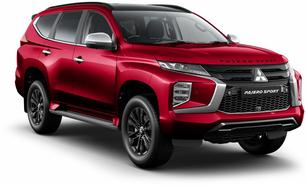
The Mitsubishi Pajero Sport GSR is the top-spec wagon in an updated line-up.
The next-gen performance-enhanced Pajero Sport is expected here in 2025 but, in the meantime, Mitsubishi looks determined to squeeze the last bit of sales juice out of the current line-up as the entire range has now undergone a notable refresh including the introduction of 18-inch alloys, design tweaks to the front and rear, as well as new styling inside and new exterior paint choices.
Is this upgraded Pajero Sport a noteworthy rival for the likes of the Ford Everest and Isuzu MU-X and, more importantly, does it represent a solid buy?
Read on.
There aren’t many cars like the new Cupra Terramar VZe as it’s a mid-size plug-in hybrid flagship that sits firmly at the premium end of the mainstream market. That’s either a huge advantage… or it’s not.
Because when you don’t have a clear set of rivals, you tend to stand out.
There are alternatives, of course. Things like the BYD Sealion 6 Premium, Chery Tiggo 7 Super Hybrid, GWM Haval H6 GT, Mitsubishi Outlander PHEV and Volkswagen Tiguan eHybrid - but they each approach this space a little differently, whether it’s in pricing, positioning or execution.
Which leaves the Terramar VZe carving out a niche for itself. So the question is, does this plug-in hybrid make a compelling case?
The Pajero Sport is reasonable on-road, more than satisfactory as a daily driver and it’s still a very effective 4WD.
This is a proven touring vehicle and while this update treatment doesn’t add a whole lot to the Pajero Sport package – and nothing in terms of power, torque or performance in general – it’s easily enough to tempt those who aren’t patient enough to wait for the next-generation version to arrive here.
The Cupra Terramar VZe looks fantastic on the road and confidently handles most things you throw at it. The plug-in hybrid set-up offers a nice blend of performance and efficiency. But… when you start digging into the price and ownership promise and what you do (and don’t) get for your money, it doesn’t always feel like the most compelling package. Sexy and sporty? Definitely. Value-for-money? Mmm.
Most of the Pajero Sport’s latest round of upgrades is focused on styling refreshes, inside and out.
The upgraded interior in the GSR includes quilted two-tone burgundy and black synthetic leather upholstery.
This adds a welcome touch of understated class to an interior which is otherwise looking and feeling old.
The Pajero Sport now also has a three-spoke leather steering wheel and revised digital instrument display graphics, which may be difficult to discern for those unfamiliar with the previous renderings.
Outside, the GSR retains the distinctive Pajero Sport shape, albeit now with updated upper and lower grilles, front and rear bumper enhancements and black headlamp extensions (those are range-wide inclusions), as well as black door mirrors, door handles and tailgate handle.
Design is one of the areas where the Terramar makes a strong first impression. It’s sharply styled, and very much aimed at buyers who aren’t quite ready to let go of their sportier tastes, even if their car choice suggests otherwise. The stance is wide, the proportions are tidy and those 20-inch copper alloy wheels do a lot of the heavy lifting visually.
Up front, the grille features a triangular LED lighting signature that, for anyone who grew up with it, looks a little like the Triforce (Zelda). Around the back, there’s a full-width light bar with a 3D illuminated logo which enhances the overall 'cool-edge' style the Terramar has.
Inside, that same theme carries through. The cabin is clean but still visually interesting, with plenty of soft-touch materials and leather throughout. Copper-coloured accents are used generously but not to the point where it feels overdone and give it a firm identity.
The optional panoramic roof lifts the space and the 12.9-inch central display sits front and centre, giving the cabin a properly high-end feel.
The Pajero Sport cabin is practical, but now, as a result of the upgrade, it has more of a premium look and feel. Sure, it’s still on the wrong side of aged and it’s cramped, but at least it has a layer of gloss to it.
From front to back, it’s a well set-up space. The driver and front passenger seats (both power-adjustable) are very supportive, with a nice wrap-around feel to them. The other seats are also fine.
The reach- and height-adjustable steering wheel has paddle shifters for energetic shifting if you get the urge.
The dash and touchscreen media unit are nicely integrated, but that 8.0-inch screen is too small – and thankfully the likely introduction of a 9.0-inch screen in the 2025 Pajero Sport will sort out that issue.
The cabin’s familiar feel includes the fact that all buttons and dials are easy to locate and operate, even when you're bouncing around off-road.
The second row is comfortable and roomy enough, though the entire cabin tends towards the squeezy end of the spacious spectrum. Having said that, I slotted in behind my driving position and I had plenty of head, knee and foot room.
There are three top tether points, two ISOFIX anchors and a fold-down armrest with cupholders in the second row. There are USB charge points and a power socket in the back of the centre console bin.
Third-row seating is a bit of a straight-up-and-down affair with a flat seat base, but passengers back there – god bless ’em – have access to cupholders and air vents.
In terms of packability, the Pajero Sport’s cabin, as mentioned, is quite narrow compared to most of its rivals and there are plenty of other SUVs and 4WD wagons around that offer more room inside for people, gear and dogs.
With the third-row seats in use, boot space is listed as 131L. There are power sockets and tie-down points in that rear cargo area.
With the third row stowed away, there’s a claimed 502L of cargo space, which is pretty handy. With the second and third rows stowed, there’s a claimed 1488L.
In terms of practicality, the Terramar feels a little mixed depending on where you’re sitting.
Space and comfort first. The front row is where it feels most at ease. The sport seats are supportive, with enough adjustment to stay comfortable on a longer drive and the added heating and driver’s memory function round things out nicely. That said, elbow room can feel a little tight if you’re sitting alongside someone broad-shouldered.
The rear row is more of a compromise. Legroom behind my driving position is on the tighter side, and for context, I’m 168cm, though headroom holds up reasonably well, even with the panoramic roof. The shape of the seat base and storage cut-outs also make the bench feel narrower, so it’s better suited to two adults than three.
Storage is about what you’d expect, without really exceeding it. Up front, the glove box is the largest cubby, supported by a centre console, a phone cradle and a pair of cupholders, although they’re different sizes, so only one emotional support bottle will fit.
In the rear, it’s a similar story. You get a couple of bottle holders and cupholders, but you miss out on map pockets.
On the tech and amenities front, most functions are housed within the 12.9-inch media display. The graphics are clear and the touchscreen is responsive, though the touch-based climate controls underneath it can be fiddly at times. That said, the overall layout becomes fairly intuitive after a short adjustment period, even if physical buttons would still be welcome.
Connectivity is well covered, with wireless Apple CarPlay and Android Auto, the former holding a steady connection during my time with it, along with built-in navigation. Charging options are solid, too, with four USB-C ports across the cabin, a 12-volt outlet and a wireless charging pad.
The rear gets its own climate control, though without fan speed control, and again, at this price point, it feels like there’s room for a little more in the way of convenience features - particularly things like heated outboard seats.
At the back, boot space comes in at 400L, which is the smallest in the Terramar range due to the battery placement. It’s broadly in line with key alternatives like the BYD Sealion 6 Premium, which offers slightly more capacity, but the difference isn’t dramatic in day-to-day use.
In practice, it’s been enough for a week of errands with a small family, and the flat loading floor and powered tailgate make it easy to live with. There’s no spare tyre, though, just a puncture repair kit, which won't suit everyone.
As mentioned, the test vehicle is a GSR spec Pajero Sport, a seven-seat 4WD wagon with a price-tag of $64,840, before on-road costs.
But this test example has a bunch of accessories onboard – including a towbar kit ($1546), snorkel ($1103), electric brake controller ($710), roof rack/cross bars ($604), carpet mats ($249) and a towball ($42), pushing its price-tag up to the $69,094 mark, excluding on-road costs.
Standard features include an 8.0-inch touchscreen multimedia system (with Apple CarPlay and Android Auto), digital radio, as well as three-zone climate-control, front and rear parking sensors and a power-operated tailgate.
The Pajero Sport packs a whole lot more, of course, and it compares evenly with most other similarly priced seven-seat 4WDs on the market.
Exterior paint choices include 'White Diamond', 'Terra Rossa', 'Graphite Grey' and 'Black Mica', but you can also choose from White Diamond with black roof, Terra Rossa with black roof, and the new Graphite Grey with black roof.
The new Cupra Terramar is available in four grades, and we’re in the flagship VZe, the only one to feature a plug-in hybrid powertrain, priced from $77,990, before on-road costs.
Given where it sits, there’s still not a lot that lines up neatly against it. The closest is probably the Volkswagen Tiguan eHybrid R-Line, expected to land at around $74,550, before on-roads, along with the Mitsubishi Outlander PHEV EV GSR from $73,990 MSRP.
Beyond that, you start to drift into more value-focused territory with options like the BYD Sealion 6 Premium ($52,990, MSRP), Chery Tiggo 7 Super Hybrid Ultimate ($43,990, drive-away), and GWM Haval H6 GT Ultra ($50,990, drive-away). So, significantly cheaper, while still offering a fairly generous level of equipment.
As for the Terramar VZe, it doesn’t arrive empty-handed. You get leather upholstery, electric front seats with heating, a heated steering wheel, wireless Apple CarPlay and Android Auto, 20-inch alloy wheels, a full LED light suite, a 12.9-inch media display, 10.25-inch digital instrument cluster and a 12-speaker Sennheiser sound system. There’s also built-in navigation, four USB-C ports, a 12-volt socket and a wireless charging pad.
It’s a solid list but at this price point a couple of omissions stand out. Front seat ventilation isn’t offered, there’s no heating for the rear outboard seats and the panoramic sunroof, which feels like it would round things out nicely, is still a $2000 option.
None of those are deal-breakers on their own, but in this part of the market, they’re the kind of details that you'll notice.
The Pajero Sport has a 2.4-litre, four-cylinder, turbo-diesel engine producing 133kW at 3500rpm and 430Nm at 2500rpm – and that’s matched to a eight-speed automatic transmission.
This is a solid but lacklustre combination – it’s agricultural, truck-like and it takes a heavy right foot to punch it off the mark. But overall, I don’t mind the driving experience.
This is a respectable and well-proven combination, more than a bit sluggish and far from dynamic, but it does the job.
The GSR has Mitsubishi’s 'Super Select II' 4WD (a full-time 4WD system), selectable off-road modes and a rear diff lock.
The Super Select dial is positioned at the rear of the shifter and enables the driver to switch from '2H' (two-wheel drive), '4H' (4WD high-range), '4HLc' (4WD High Range with locked centre diff) and '4LLc' (4WD Low Range with locked centre diff).
The driver is able to safely switch between 2WD (2H) and 4WD (4H, 4HLc) at speeds of up to 100km/h.
The GSR has a button-operated off-road mode system – with 'Gravel', 'Mud/Snow', 'Sand' or 'Rock' settings, each of which tweaks engine output, transmission settings and traction control to best suit the terrain. It also features hill descent control.
The 2025 Pajero Sport will have the new Triton’s twin-turbo four-cylinder diesel engine (producing 150kW and 470Nm) and it’ll be paired with an eight-speed auto.
Under the bonnet, the Terramar VZe pairs a 1.5-litre, four-cylinder, turbo-petrol engine with a single electric motor, for a combined output of 200kW and 400Nm.
On paper, those figures sit a little behind some of the more value-focused plug-in hybrid options, like the BYD Sealion 6 Premium and GWM Haval H6 GT, and it’s also front-wheel drive, where some rivals offer all-wheel drive.
In practice, though, it doesn’t feel underdone. The six-speed automatic shifts cleanly and the transition between electric and petrol power is smooth. As a whole, the set-up feels well calibrated.
The Pajero Sport has an official fuel consumption figure of 8.0L/100km on a combined (urban/extra-urban) cycle.
I recorded 9.8L/100km on this test. I did a lot of high- and low-range 4WDing and the Pajero Sport was never working hard.
The Pajero Sport has a 68L fuel tank, so, going by my on-test fuel-consumption figure, you could reasonably expect a driving range of about 694km from a full tank.
The VZe uses a 20kWh lithium-ion battery, which is on the smaller side compared to some alternatives but it still delivers a useful amount of electric driving range at 109km (WLTP).
With its Type 2 CCS charging port, you can access DC fast charging at up to 50kW, with a claimed 0-80 per cent top-up taking around 26 minutes. On AC, it’s more of an overnight affair, so it suits a home charging routine.
Officially, energy use is rated at 1.8L/100km on the combined (urban/extra-urban) cycle, and after a mix of highway and urban driving, I saw a trip computer figure of 1.5L/100km.
That’s an impressive result but it comes with a bit of context. I'm charging it daily to make the most of the claimed electric-only range, and that has a big influence on the numbers you’ll see in the real world.
There have been no power, torque or driver-assist tech changes to this upgraded Pajero Sport – you’ll have to wait for the next-gen version for those – so no surprises lay in wait when driving.
But that’s okay, because the Pajero Sport in its current guise is a solid daily driver – not spectacular, but far from atrocious.
The Pajero Sport is 4840mm long (with a 2800mm wheelbase), 1815mm wide, 1835mm high and has a kerb weight of 2130kg.
Compared to other similarly-sized 4WD wagons, the Pajero Sport is narrower and has a higher centre of gravity, so it’s nimble – the turning circle is a respectable 11.2m – but it also feels a bit floaty on roads and tracks, but not despicably so.
The Pajero Sport is reasonable on sealed surfaces, although it is sluggish, noisy and there’s quite a lot of body-roll through sharp turns, especially compared to some of its more refined rivals, such as the Ford Everest.
But it is a very capable off-roader, mostly because the driver has access to a raft of technical advantages engineered into the Pajero Sport aimed at making 4WDing a safer challenge.
One of the major points of difference it has with its rivals is Super Select II 4WD. You can switch, via a dial to the rear of the auto shifter, from 2H into 4H (four-wheel drive, high-range), if you're not already driving with 4H engaged, and that gives you the best traction possible in low-grip conditions, which you may face on rough back-roads and dirt tracks peppered with loose rocks and potholes.
There's no risk of transmission wind-up because the centre diff is open when 4H is engaged in the Pajero Sport, so Super Select II 4WD adds an extra element of safety and sure-footedness to your driving experience.
Then turn the dial to 4HLc (four-wheel drive, high-range, locked centre diff) and you're ready to take on more difficult terrain but at lower speeds, because the centre diff is no longer open.
If you want to tackle even harder stuff than high-range territory, turn the dial to 4LLc (four-wheel drive, low-range, locked centre diff) and the Pajero Sport has an opportunity to excel in low-speed, low-range four-wheel driving.
Turn the dial to 4HLc and you're ready to take on more difficult terrain but at lower speeds.
So, along with decent high- and low-range gearing and a centre diff-lock – activated when 4HLc (4WD high-range, locked centre diff) or 4LLc (4WD low-range, locked centre diff) is selected – the Pajero Sport has a rear diff lock, which is engaged/disengaged via a button in front of the shifter and this further help you to easily maintain safe forward momentum.
Hill descent control sustains a controlled low speed of 3.0-4.0km/h all the way down steeper, longer hills.
The GSR also has selectable off-road modes, including Gravel, Sand, Mud/Snow (when in high-range 4WD) and Rock (when in low-range 4WD).
Each of these modes adjusts engine output, transmission settings and braking, the aim being the acquisition of superior traction to suit specific conditions and terrains.
The Pajero Sport is riding on Toyo Open Country A32 all-terrains (265/60R18 110H), which are decent tyres, but it would perform even better with more aggressive rubber.
Wheel travel is adequate, ground clearance (218mm) is reasonable, although you still have to mind your driving line through rough terrain and be mindful of this 4WD’s approach (30 degrees), departure (24.2) and ramp-over (23.1) angles. Wading depth is listed as 700mm.
While it’s never been regarded as a tow rig in the same vein as something like the Toyota LandCruiser or the Nissan Patrol, the Pajero Sport offers sensible claimed towing capacities of 750kg (unbraked) and 3100kg (braked).
Payload is listed as 645kg (so about standard for this size 4WD wagon), gross vehicle mass (GVM) is 2775kg and gross combined mass (GCM) is 5565kg.
On the road, the Terramar VZe makes an immediate impression. Power delivery is prompt, and even with the battery depleted, it feels responsive off the mark. There’s enough in reserve that you don’t feel like you’re chasing performance, even when you lean on it.
The handling follows a sporty brief. Suspension tuning does a good job of smoothing out the bigger bumps, but it still lets a fair amount of road feedback in, particularly when you’re pushing through a corner. The steering is on the firmer side and the brakes are quite sensitive, which takes a moment to adjust to, but together they give the car a more engaged feel. That said, it won’t be to everyone’s taste.
Visibility is one area that takes a bit more effort. The lower window line and thicker pillars give it a more enclosed feel than a typical mid-size SUV, so you find yourself being a bit more deliberate with blind spot checks, particularly around the A-pillar.
Ride comfort holds up despite the firmer set-up, and the sports seats do a good job of keeping you settled. Around town and under electric power, the cabin is impressively quiet, though you notice more road and engine noise creeping in at highway speeds or under heavier acceleration.
Around tighter spaces, it feels smaller than it is. The 11.5-metre turning circle and quick steering make it easy enough to manoeuvre, and the 360-degree camera is a useful addition, although the image quality doesn’t quite match the expectations set by the price point.
The Pajero Sport range did have the maximum five-star ANCAP safety rating, but that expired in January 2023.
As standard it has dual front airbags, driver knee, front-side and curtain airbags, as well as two ISOFIX points and three top tether points for child seats/baby capsules in the second row.
Driver-assist tech includes AEB, blind spot warning, rear cross-traffic alert, lane-departure warning/intervention, hill descent control, trailer stability assist and more.
On the safety front, the Terramar holds a maximum five-star ANCAP rating from 2025 testing and comes equipped with seven airbags.
The standard active safety suite is comprehensive, covering the essentials like lane keeping aid, lane departure warning, lane centring, forward collision warning, blind-spot monitoring, rear cross-traffic alert, driver attention monitoring and a side-exit warning system.
In use, the adaptive cruise control is well calibrated, though the steering assist is a little overzealous. It requires quite a firm hold on the steering wheel to override warnings or prevent emergency intervention... like braking, as it did me going 80km/h in a tunnel.
It’s also worth noting a couple of omissions. There’s no emergency call functionality, and hill descent control (HDC) isn’t included.
The autonomous emergency braking has junction, car, cyclist, motorcyclist and pedestrian detection and is operational form 5.0-85km/h (up to 250km/h for car detection).
The Pajero Sport has a 10-year/200,000km manufacturer’s warranty as long as you get it serviced as per the schedule at an authorised Mitsubishi dealer.
Mitsubishi’s 10-year capped price servicing applies – with prices ranging from $399 to $999 – and servicing is scheduled for every 12 months or 15,000km whichever occurs first. Check with your dealership for up-to-date servicing costs.
All Pajero Sports come with 12-months roadside assistance, but that can be extended to four years if the vehicle is serviced at an authorised Mitsubishi dealer in line with the official service schedule.
In terms of ownership, the Terramar is covered by Cupra’s five-year, unlimited-kilometre warranty. That’s fairly standard for the segment, though it sits behind some rivals now offering longer seven-year plus programs. Inclusion of five years' roadside assistance is a welcome addition.
Servicing can be pre-purchased with either a three- or five-year plan, with the latter priced at $2590, which is in line with what you’d expect for this class. Intervals are set at every 12 months or 15,000 kilometres.
One thing to keep in mind is the size of the Cupra service network. It’s still relatively limited, with around 14 centres nationwide, so depending on where you’re based, that may take a bit more planning.