What's the difference?
Think of a Mercedes-AMG and the first words that spring to mind are probably not - understated, efficient and restrained. And yet those are probably the best words to describe the all-new C 43.
Of course, before we go any further it’s important to note that the C 43, even in its previous six-cylinder guise, was never meant to be as wild, raucous or powerful as the C63 flagship - that’s simply not its role in the AMG line-up.
But even so, this new model is a dive into fresh territory for the brand and puts a very different spin on the AMG sports sedan as we know it.
This is a four-cylinder model, complete with a Formula One-derived electric turbocharger, so it lacks the sound and fury you expect from something carrying the ‘AMG’ badge - but that doesn’t mean it’s a bad car, as we’ll explain.
Is there a place for the humble sedan in 2019?
Hyundai seems to think so. And so for 2019 it has overhauled its Elantra range, with a polarising new look and interesting new trim levels.
Is the price right to push the Elantra to the forefront, though? Or is the i30’s less-famous sedan sibling destined to be overlooked?
We’ve spent some time in each of the Elantra’s four variants over the past few months to find out. Read on to see what’s what, and which one is our pick of the range.
The new AMG C 43 may lack the drama and excitement we’ve come to expect from the German performance brand, but that doesn’t mean it’s a bad car. Yes, it could be more extroverted and the ride could be improved, but this is still a sharp-looking sports sedan with loads of punch.
This is a car that speaks to its times, with ever-stricter emissions regulations making it harder and harder for car companies to produce loud, wild and charismatic cars. So Mercedes-AMG has worked within those boundaries and come up with a car that retains at least some of those core elements that has made the brand so desirable over the years.
Note: CarsGuide attended this event as a guest of the manufacturer, with accommodation and meals provided.
The Elantra might be overlooked compared to its famous i30 stablemate, but it shouldn’t be. It’s every bit as entertaining to drive and just as well equipped.
It’s a shame active safety is on the option list for lower trim levels, and there’s no radar features on higher ones, and the unnecessary styling changes might polarise buyers. But the Elantra is otherwise a well-equipped and rewarding-to-drive package across the range.
Mercedes has created something of a problem for itself with its decision to introduce AMG styling packages for the majority of its range, including the C-Class.
It means the C 43 has to walk a fine line between looking like a unique AMG model, rather than just a C300 with a bodykit and not out-doing the C63.
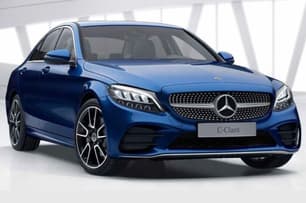
To that end it has AMG’s now familiar grille with vertical bars, the unique and complex-looking 20-inch alloy rims and a small lip spoiler on the boot. But otherwise it is surprisingly understated for an AMG, lacking the more obvious and muscular stance of previous AMG offerings.
Inside, there’s a similar theme, with the typical Mercedes-Benz luxury appointments but with a sportier, AMG twist. The steering wheel is chunky and comes with AMG branding, metallic shift paddles and a pair of rotary dials/buttons that allow you to alter the various drive modes and settings.
The one on the right allows you to switch between the pre-set Comfort, Sport, Sport+ and Individual modes, while the one on the left can scroll between the various individual aspects to tailor the settings to the conditions.
In typical modern fashion the design is tech-laden, with a digital display for the instrument panel (that can be switched between various graphics) and a large, tablet-style central multimedia touchscreen that controls the majority of the car’s non-driving functions.
Despite being a facelift of the rather good looking 2016 Elantra, the 2019 car has taken a hard turn into the domain of triangles and right-angles.
The new styling has proved controversial in the CarsGuide office. The Go and Active seem to have largely abandoned many of the styling points which Hyundai has invested in over the past few years, with their vertically lined grilles and abundance of triangle light fittings.
All the extra space on the big, flat rear is taken up by the big-font ‘Elantra’ text and Hyundai logo, which is '90s-style in design.
The Sport and identical-from-the-outside Sport Premium are angry looking cars, with frowning LED light fittings, giant alloys and an abundance of angular black highlights.
The side skirts, rear diffuser and spindle grille give the Sport variants an impressive amount of presence on the road. There’s no spoiler to be found, though.
Inside, the Go and Active are a fairly basic offering, with the Active scoring a leather wheel and some extra niceties. The dash is a sea of grey, however, and the nice touchscreen is humbled by its old-school in-dash positioning.
The Sport grades add some more sophisticated touches, with sporty leather-trimmed seats, a flat-bottomed steering wheel and a more subtle climate-control console rather than the clunky air-conditioning one used in lesser variants.
All cars have a sensible trip computer and simple gauges in the instrument cluster.
Missing from any variant is a digital dashboard as seen in the Honda Civic. There’s also the argument that the Elantra’s cousin, the Kia Cerato, has a more forward-thinking cabin design.
The new C-Class has grown slightly in size compared to the model it replaces, most notably with a 26mm increase in the wheelbase which you can feel in the cabin.
The front seat space is good, with excellent adjustability for the power-adjustable seats and steering column. I had no trouble finding my ideal seating position which makes for a more enjoyable and uncompromised driving experience.
Rear space is a bit tighter (which is typical for this segment/size of vehicle), but thankfully the standard seats do have very deep sculpting in the backs which allow for more knee space and foot room.
However, at approximately 180cm (six-foot), I wouldn’t like to sit behind my seating position for long periods as my knees were touching the seat back, and headroom is compromised with the panoramic glass roof.
In terms of small item storage there’s a lidded console box in between the front seats as well as a pair of cupholders and a small tray where you can place your mobile phone.
It’s worth noting, though, that early examples of the C 43 in Australia do not have a wireless smartphone charging pad, with that reportedly being introduced from February production.
While that’s good news, it’s not really competitive in this day and age to offer a car costing six-figures without such technology.
There’s also only a single USB-C power outlet in the front, which is another disappointment, but there is a pair in the back.
Mercedes does win some points back for a respectable 455-litre boot, which has a nice wide load opening that will make packing luggage easier.
Up front, the Elantra offers decent room. The Cabin feels a smidge more spacious than its i30 hatch sibling, and there’s plenty of leg and headroom on offer in every variant - except for the sport premium, which has a cropped roofline due to the sunroof. While there’s a decent centre console box, the door lacks a bit of padded trim for your elbow.
Like the rest of Hyundai’s range, the Elantra has a slew of generous cubbys and cupholders throughout the cabin. Underneath the air-con console is a deep trench which houses a 12v output, USB port and, in the Sport Premium variant, the Qi wireless phone charging pad.
Rear passengers are granted great legroom and decently sized cupholders in the doors, as well as a drop-down arm rest with two more cupholders.
The Active and Go lack rear air vents, whereas the Sport and Sport Premium offer two for back-seat passengers.
The available boot space should serve as a reminder why sedans shouldn’t be overlooked for practicality reasons, with 458 litres VDA on offer. Still, it is bested in this segment by the luggage capacity of the Cerato (520L), Civic (517L), and Impreza (460L). A rubber cargo liner and fabric bumper protector are available as genuine accessories.
In an annoying niggle, the Sport variants ride quite low around their midsections due to the flared bodykit bits. I found these would quite easily scrape if you weren’t careful over speedbumps or shopping centre ramps. Go and Active variants were fine in terms of clearance.
We’ll get to the major change under the bonnet shortly, but another significant alteration for this latest C 43 is the price.
It now starts at $134,900 (plus on-road costs), which pushes it well above its market rivals, the BMW M340i xDrive and Audi S4, which start at $104,900 and $106,200, respectively.
However, Mercedes has added more technology under the bonnet and loaded the C 43 up with standard equipment, including its '4Matic' all-wheel drive system, adaptive damping, rear-wheel steering and 20-inch alloy wheels.
In terms of creature comforts, the C 43 is well-appointed, with leather upholstery, a head-up display, augmented reality navigation, a panoramic sliding sunroof, and a Burmester 3D surround sound system.
There are two option packages for the C 43. The 'Digital Light Package' costs $2400 and adds Multibeam LED headlights with 'Ultra Range' highbeam, 'Adaptive Highbeam Assist Plus' as well as active light function and cornering light function.
The 'Performance Ergonomics Package' includes AMG Performance front seats, an AMG Performance steering wheel in Nappa leather and microfibre and the 'AMG Track Pace' system for an additional $5200.
The Elantra range is made up of four variants split into two price points. But there are also a few small catches to look out for.
Kicking off the range at $21,490 is the Elantra Go. That money buys you a six-speed manual gearbox. An automatic can be had for an extra $2300, and from there you can add the must-have ‘SmartSense’ safety pack for an additional $1700.
Standard features on the Go include 15-inch steel wheels, halogen headlamps, a 7.0-inch touchscreen with Apple CarPlay & Android Auto support, Bluetooth connectivity, a reversing camera, central locking, and a six-speaker audio system.
Next up is the Active. It starts from $25,990 and is offered exclusively as a six-speed automatic. Again, the must-have SafetySense is an extra $1700. The Active includes a larger 8.0-inch multimedia screen with built-in nav and DAB+ digital radio support, a premium audio system, 16-inch alloy wheels, body-coloured auto-folding wing-mirrors, as well as LED indicators and DRLs.
Then there’s a price-jump to $28,990 for the Elantra Sport manual. The Sport gets a significantly overhauled drivetrain and exterior treatment, with a full bodykit, bumper and grille. It also gets a leather interior with slightly sportier seats, aggressive 18-inch alloy wheels clad in Michelin Pilot Sport 4 tyres, ‘smart key’ keyless entry with push-button start, full LED front lighting with high-beam assist, and some (but not all) active safety items… More on that in the ‘Safety’ section.
The Sport can be had with a seven-speed dual-clutch automatic at a $2500 premium. The other optional extra is red leather interior ($295), which can be had only when the car is painted white, grey or black.
Speaking of which, all colours (including blue, orange, red and silver) are optional and will cost you $495. White is the only free shade.
At the top of the range is the Elantra Sport Premium ($31,490 manual/$33,990 auto), which adds a sunroof (not the panoramic kind), front parking sensors, a power-adjustable driver’s seat, Qi wireless charging pad, auto-dimming rear mirror and a luggage net in the boot. Not a lot extra for a premium package, but it’s not wildly priced either.
The spread of pricing pitches the Elantra against sedan versions of the Kia Cerato ($21,990 - $32,990), Honda Civic ($22,390 - $33,690) and Subaru Impreza ($22,690 - $29,540).
The biggest talking point about this new car is the engine, with AMG downsizing from the old C 43’s six-cylinder to a 2.0-litre four-cylinder turbocharged petrol engine.
But it’s not just any turbocharged four-pot, because it is fitted with technology that Mercedes claims has been inspired directly from its Formula One team.
While the F1 team engine facility is based in England, this engine was designed and developed by the Mercedes-AMG team at its Affalterbach headquarters, but the concept of the electric turbocharger reportedly comes from the engine that powered Lewis Hamilton to multiple world championships.
The electric exhaust gas turbocharger - to give it its official name - uses a small electric motor on the turbocharger shaft to spin up the blades without having to wait for any exhaust gases to pass through it first.
To power the electric turbo the C 43 is equipped with a mild-hybrid 48-volt electrical system.
Mercedes claims this means reduced lag and improved throttle response for a sportier driving experience.
It also helps make this small engine produce big amounts of performance, with AMG extracting 300kW of power and 500Nm of torque from this 2.0-litre, which is more power than the previous six-cylinder C 43 managed.
The engine is paired to a nine-speed multi-clutch transmission, which isn’t a dual-clutch with a pair of clutches operating on every second gear ratio, but instead uses a “wet start-off clutch” for better take-offs and smoother shifting on the move (at least in theory).
Power is sent to the road via all four wheels thanks to Mercedes’ 4Matic all-wheel drive system.
There are two engines in the Elantra range. A dated 2.0-litre non-turbo engine which has hung around for a long time in Hyundai’s stable, and a much newer 1.6-litre turbo engine in higher variants.
Unlike the i30, there’s no option for a 1.6-litre turbo-diesel. Any EV and plug-in hybrid versions are still beyond the horizon (perhaps pending the success of the Ioniq).
The Go and Active variants share the 2.0-litre engine which produces 112kW/192Nm. The Go is available as either a six-speed manual or a six-speed traditional torque converter automatic. The Active is six-speed auto only.
The Sport and Sport Premium are powered by the excellent 150kW/256Nm 1.6-litre turbo. Aside from the Kia Cerato GT, which shares the same engine, the next closest competitor at this price point is the outgoing Mazda3 SP25 (139kW/252Nm).
The Sport and Sport Premium can either be had with a six-speed manual gearbox or a seven-speed dual-clutch automatic, and can cycle between ‘normal’, ‘sport’ and ‘eco’ drive modes.
The Elantra range is a strictly front-wheel-drive affair, as there’s no option for all-wheel drive.
Despite the smaller engine you can hardly call the C 43 miserly, with a claimed combined urban/highway cycle rating of 9.1-litres per 100km. That’s only a 0.2L/100km improvement over the old six-cylinder.
On test, which included a return trip from Sydney to Bathurst via motorways and some dynamic back road driving, we saw a return of 11.8L/100km on the car's onboard computer.
While hardly hybrid-worrying, it’s impressive to think that driven modestly, such a potent engine can return a single-digit fuel figure.
All 2.0-litre Elantras have claimed/combined fuel usage figures of 7.4L/100km. Against this claim I scored a very reasonable 8.0L/100km in my road test of the Active.
The 1.6-litre variants have a marginally better claimed consumption figure of 7.0L/100km against which I scored 9.0L/100km in my test of the Sport. If you’re having fun, expect at least 9.0L or above. That’s a compliment.
All Elantra variants happily consume regular 91RON unleaded and have 50-litre tanks. Good stuff.
Let’s start with the good news. The new Mercedes-AMG C 43 is a quick car. The engine may be small in size but the electric turbocharger does its thing and provides plenty of punch.
You can get a performance boost, too, thanks to the belt-driven starter generator, which acts as a mild hybrid and gives you a surge of 10kW for a brief period if you need a sudden burst of extra speed.
The chassis is well-sorted, too, at least from a dynamic point-of-view. The rear-wheel steering can provide up to 2.5 degrees of turning, which improves handling at speed and manoeuvrability when parking.
However, there are some less-impressive elements to the C 43, too. The obvious one is the drama, or rather the lack thereof.
As I said at the beginning, the C 43 has never been as wild or raucous as the V8-powered C 63, but when you buy an AMG there’s a rightful expectation that it will provide some thrills.
The C 43 simply doesn’t have that character about it. Yes, it’s fast, but it produces that speed with efficiency rather than excitement.
And it’s not an engine size problem, because even the 2.0-litre four-cylinder A 35 and CLA 35 offer more ‘wow factor’ than the C 43.
Yes, the engine makes noise under acceleration (and it can be altered between discreet and sporty) but even at its best it sounds muted and lacks the evocative tone of a V8 or six-cylinder engine.
Another disappointment is the transmission calibration, with the gearbox awkwardly shifting out of first gear on multiple occasions during our test drive.
In the taller gears it felt smooth enough cruising along, but given its low speed shifts we’d like to spend more time in the urban environment before passing final judgement.
The other notable element of the driving experience we struggled with was the ride quality. While fine on the smoother motorways, our test drive included time on some patchy country back roads and the C 43, even in the ‘Comfort’ suspension setting, was simply too firm.
Riding on low profile tyres, the adaptive dampers struggled to isolate the cabin from the imperfections in the road, leading to a fussy ride at times.
Overall the C 43 is a good car, but it feels like there are still some areas where Mercedes could improve it to make it really live up to the AMG badge.
All Elantra variants are great to drive. They share excellent suspension and steering characteristics, lending them a rewarding experience in the corners while not being too stiff or too soft over bumps.
The 2.0 litre variants offer, well, acceptable power, even if they're a little on the thrashy side, and their ride comfort is boosted by sensibly sized alloy wheels and soft rubber.
Sport variants are genuinely a blast to drive. The 1.6-litre turbo has small amounts of lag, but is otherwise strong through 1500-4500rpm. Torque steer is present but manageable, and even adds a little to the excitement.
Thick (and pricey) Michelin Pilot Sport 4 tyres (225/40R18s) help keep the Elantra Sport planted and surprisingly grippy through the corners.
Road noise is acceptable but not stellar across the range. The same goes for the 10.6-meter turning circle.
Truly gone are the days where you should question whether Korean cars can be fun; the Sport and Sport premium do a better job of channeling the characteristics of Japanese sports sedans of the '90s and '00s better than most current Japanese nameplates.
On the downside, the silly flared body kit on the Sport variants limit ground clearance on ramps or speedbumps and can be prone to bottoming out. This combines with the easily scratched giant wheels to make for some nervous driving.
The C43 gets a comprehensive list of safety equipment that leaves little out. Obviously there are the usual passive safety items, like 10 airbags, including dual-front combined pelvic/thorax airbags and a front centre bag that drops between the front seat passengers to minimise the chances of a head clash.
Also included as standard is autonomous emergency braking front and rear (covering speeds between 7.0-200km/h), adaptive cruise control with active stop/go, a 360-degree parking camera, 'Active Parking Assist', 'Active Lane Keeping Assist', 'Blind Spot Assist' and, of course, anti-lock brakes with 'Brake Assist' and 'Adaptive Brakes' with Hold function and electronic stability control.
Also included are dusk-sensing LED lights, rain-sensing wipers and run-flat tyres with tyre pressure warning.
The C43 also comes equipped with Mercedes’ 'Driving Assistance Package Plus', which adds even more safety gear. This includes 'Active Blind Spot Assist', 'Active Brake Assist with Cross-Traffic Function', 'Active Emergency Stop Assist', 'Active Lane Change Assist', 'Active Lane Keeping Assist', 'Active Steering Assist', and 'Active Stop-and-Go Assist'.
While the C43 hasn’t been specifically crash-tested, the latest C-Class was rated by ANCAP with a five-star score for all models except the upcoming C 63 S E Performance.
Here’s where it gets a little tricky. Go and Active variants have no active safety features as standard, but can be equipped with the very worthwhile $1700 safety pack.
Included is auto emergency braking (AEB), which detects pedestrians and works up to freeway speeds, blind-spot monitoring (BSM), rear cross-traffic alert (RCTA), active cruise, lane departure warning (LDW) and lane-keep assist (LKAS).
Most of these features come standard on the Sport and Sport Premium grades, with the omission of active cruise control and pedestrian detection. This is because the Sport grades lack a radar system.
Standard safety includes six airbags and the regular suite of electronic stability and traction controls, as well as two ISOFIX and three top-tether child seat mounting points across the rear seats.
The Elantra carries a maximum five-star ANCAP safety rating as of 2016.
As a bonus, Go and Active variants have matching full-size spare wheels under the boot floor. Sport and Sport Premium cars have space savers.
The Elantra is built in South Korea.
The C 43 is covered by Mercedes’ five-year, unlimited kilometre warranty, which has become the new standard for the luxury car market.
Service intervals for the car are at 12 months/25,000km, which is on par with industry standard.
Mercedes-Benz Australia will offer a service plan for the C 43, prices were yet to be confirmed at the time of publication but the company has indicated it will be similar to the C300.
That means $550 for year one, $900 for year two, the third service costs $1000 and the fourth year service costs $2450 - for a total of $4900 for the first four years of ownership.
Hyundai covers its range with an on-par five-year, unlimited-kilometre warranty promise offered by most of the competition. It is outdone by its mechanical twin, the Kia Cerato,with its seven-year warranty.
Hyundai’s fixed service program is one of its strong suits, with service pricing on turbo Elantra models locked between reasonable $273 to $460 costs per visit, locked all the way out to 168 months/210,000 kilometres. And even beyond that there's the optional pre-paid ‘iCare’ packages. Costs are slightly less for 2.0-litre cars.