What's the difference?
Think of a Mercedes-AMG and the first words that spring to mind are probably not - understated, efficient and restrained. And yet those are probably the best words to describe the all-new C 43.
Of course, before we go any further it’s important to note that the C 43, even in its previous six-cylinder guise, was never meant to be as wild, raucous or powerful as the C63 flagship - that’s simply not its role in the AMG line-up.
But even so, this new model is a dive into fresh territory for the brand and puts a very different spin on the AMG sports sedan as we know it.
This is a four-cylinder model, complete with a Formula One-derived electric turbocharger, so it lacks the sound and fury you expect from something carrying the ‘AMG’ badge - but that doesn’t mean it’s a bad car, as we’ll explain.
I’m just going to cut to the chase here. This Honda Civic hybrid is a good car. A great one, even.
But for some reason, nobody is really buying it. And it’s not just because it’s not an SUV – it has been outsold in its segment this year by the the BMW 1 Series, the Mercedes A-Class, the MG4 EV, and the VW Golf. Premium and non-premium alike, they’ve all got the little Honda licked.
So, what’s going on? A CarsGuide investigation is required. Stick around and we’ll try to figure this out together.
The new AMG C 43 may lack the drama and excitement we’ve come to expect from the German performance brand, but that doesn’t mean it’s a bad car. Yes, it could be more extroverted and the ride could be improved, but this is still a sharp-looking sports sedan with loads of punch.
This is a car that speaks to its times, with ever-stricter emissions regulations making it harder and harder for car companies to produce loud, wild and charismatic cars. So Mercedes-AMG has worked within those boundaries and come up with a car that retains at least some of those core elements that has made the brand so desirable over the years.
Note: CarsGuide attended this event as a guest of the manufacturer, with accommodation and meals provided.
Talk about your new-car unsung heroes – I can't believe Honda's not selling more of these. So, if you can get over the price, and you worry it might be too small for you, I encourage you to check the Civic out. The back seat and boot are both bigger than you might expect, and the drive experience leaves most SUVs in the rear view mirror.
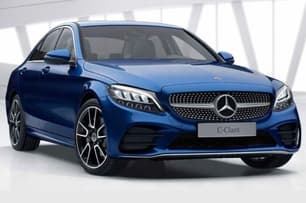
Mercedes has created something of a problem for itself with its decision to introduce AMG styling packages for the majority of its range, including the C-Class.
It means the C 43 has to walk a fine line between looking like a unique AMG model, rather than just a C300 with a bodykit and not out-doing the C63.
To that end it has AMG’s now familiar grille with vertical bars, the unique and complex-looking 20-inch alloy rims and a small lip spoiler on the boot. But otherwise it is surprisingly understated for an AMG, lacking the more obvious and muscular stance of previous AMG offerings.
Inside, there’s a similar theme, with the typical Mercedes-Benz luxury appointments but with a sportier, AMG twist. The steering wheel is chunky and comes with AMG branding, metallic shift paddles and a pair of rotary dials/buttons that allow you to alter the various drive modes and settings.
The one on the right allows you to switch between the pre-set Comfort, Sport, Sport+ and Individual modes, while the one on the left can scroll between the various individual aspects to tailor the settings to the conditions.
In typical modern fashion the design is tech-laden, with a digital display for the instrument panel (that can be switched between various graphics) and a large, tablet-style central multimedia touchscreen that controls the majority of the car’s non-driving functions.
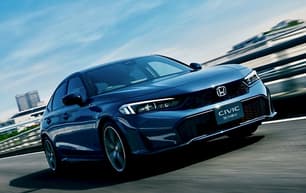
Beauty. Eye. Beholder. All that. But I reckon this Civic looks fantastic. Low-slung and sporty. The perfect antidote to all those bland, beige SUVs currently doing the rounds.
New as part of the most recent refresh is the front-end treatment, a new front bumper, more body-coloured flourishes and new designs for the 18-inch alloys.
I think it looks sleek, premium and purposeful, and not at all boring.
Inside, though, it’s a little less adventurous, though I do adore some of the little design touches, like the perforated metal effect that spans the dash.
The central screen is pretty small by modern standards, and you don't want to push too hard on some of the touch points, like the gloss-black highlights on the doors, which feel flimsy, flexible and pretty cheap.
Now, the screen. Does UX design count in the overall design section? Let's say that it does. I haven’t really experienced less intuitive and user friendly cabin tech lately.
For example, I couldn't figure out (though I must admit I didn't resort to owner's manual) how to get Apple CarPlay to load automatically, if you can.
Instead I had to select my phone, cycle through several screens of approval, and then select my phone again, every single time I got in the car. I had a similar issue using Google maps, which simply wouldn't connect at all for me.
Good tech is easy and intuitive. This wasn't.
The new C-Class has grown slightly in size compared to the model it replaces, most notably with a 26mm increase in the wheelbase which you can feel in the cabin.
The front seat space is good, with excellent adjustability for the power-adjustable seats and steering column. I had no trouble finding my ideal seating position which makes for a more enjoyable and uncompromised driving experience.
Rear space is a bit tighter (which is typical for this segment/size of vehicle), but thankfully the standard seats do have very deep sculpting in the backs which allow for more knee space and foot room.
However, at approximately 180cm (six-foot), I wouldn’t like to sit behind my seating position for long periods as my knees were touching the seat back, and headroom is compromised with the panoramic glass roof.
In terms of small item storage there’s a lidded console box in between the front seats as well as a pair of cupholders and a small tray where you can place your mobile phone.
It’s worth noting, though, that early examples of the C 43 in Australia do not have a wireless smartphone charging pad, with that reportedly being introduced from February production.
While that’s good news, it’s not really competitive in this day and age to offer a car costing six-figures without such technology.
There’s also only a single USB-C power outlet in the front, which is another disappointment, but there is a pair in the back.
Mercedes does win some points back for a respectable 455-litre boot, which has a nice wide load opening that will make packing luggage easier.
The Honda Civic measures 4569mm in length, 1802mm in width and 1415mm in height, and as you've no doubt already noticed, it's not an SUV, rather a liftback-style sedan.
But if you feel like you need an SUV to move a family, I beg to differ. While the middle seat in the second row is too tight for adults (owing largely to the intrusive raised tunnel that runs through the middle of the cabin), the two window seats can absolutely fit adult humans. I'm 175cm, and had absolutely no issue sitting behind my own driving position.
But the biggest surprise is the boot, which opens to reveal a flat and wide storage space that can swallow 409 litres (VDA) of luggage. In real terms, that's more than enough for our pram and the assorted knick-knacks that go with it on a baby day out.
Unfortunately, though, there’s no spare. Instead you’ll find yourself wrestling with a hateful repair kit should you get a puncture, and you don't want to wait for roadside assist.
There's also twin USB ports in the back, as well as air vents, along with twin cupholders in the pulldown divider.
We’ll get to the major change under the bonnet shortly, but another significant alteration for this latest C 43 is the price.
It now starts at $134,900 (plus on-road costs), which pushes it well above its market rivals, the BMW M340i xDrive and Audi S4, which start at $104,900 and $106,200, respectively.
However, Mercedes has added more technology under the bonnet and loaded the C 43 up with standard equipment, including its '4Matic' all-wheel drive system, adaptive damping, rear-wheel steering and 20-inch alloy wheels.
In terms of creature comforts, the C 43 is well-appointed, with leather upholstery, a head-up display, augmented reality navigation, a panoramic sliding sunroof, and a Burmester 3D surround sound system.
There are two option packages for the C 43. The 'Digital Light Package' costs $2400 and adds Multibeam LED headlights with 'Ultra Range' highbeam, 'Adaptive Highbeam Assist Plus' as well as active light function and cornering light function.
The 'Performance Ergonomics Package' includes AMG Performance front seats, an AMG Performance steering wheel in Nappa leather and microfibre and the 'AMG Track Pace' system for an additional $5200.
Ah, so we may have hit the first Honda hurdle. Ours is the entry-level e:HEV L, and it’s a cool $49,900, drive-away. The top-spec LX is $55,900, on the road.
To put that into perspective, Toyota's two Corolla sedan hybrid grades are about $36K and $39K, drive-away, at the moment. The admittedly non-hybrid Golf starts at $39,990, on the road.
The German premium brands are still more expensive, but I think that might be at least part of the Honda’s problem. It now occupies a space between mainstream and premium, which might also be something of a no-man’s land.
Still, the entry-level L is decently equipped, with 18-inch alloy wheels wrapped in quality Michelin Pilot Sport rubber, all-LED lighting all around and key-less entry.
Inside, there’s synthetic leather and fabric seats, dual-zone climate, a 9.0-inch central touchscreen with Apple CarPlay and Android Auto, but also with Google built-in that provides mapping and updates and a 12-speaker Bose stereo.
Both Civic variants also arrive with a three-year subscription to 'Honda Connect', which gives you remote access to your car to lock or unlock it, pre-heat or cool the cabin, or set a geofence alert if your teenagers are borrowing it, that sort of stuff.
But… there are no full-leather seats, there's no sunroof, no wireless charging and you have to open the boot yourself.
The lack of all that doesn’t feel overly premium.
The biggest talking point about this new car is the engine, with AMG downsizing from the old C 43’s six-cylinder to a 2.0-litre four-cylinder turbocharged petrol engine.
But it’s not just any turbocharged four-pot, because it is fitted with technology that Mercedes claims has been inspired directly from its Formula One team.
While the F1 team engine facility is based in England, this engine was designed and developed by the Mercedes-AMG team at its Affalterbach headquarters, but the concept of the electric turbocharger reportedly comes from the engine that powered Lewis Hamilton to multiple world championships.
The electric exhaust gas turbocharger - to give it its official name - uses a small electric motor on the turbocharger shaft to spin up the blades without having to wait for any exhaust gases to pass through it first.
To power the electric turbo the C 43 is equipped with a mild-hybrid 48-volt electrical system.
Mercedes claims this means reduced lag and improved throttle response for a sportier driving experience.
It also helps make this small engine produce big amounts of performance, with AMG extracting 300kW of power and 500Nm of torque from this 2.0-litre, which is more power than the previous six-cylinder C 43 managed.
The engine is paired to a nine-speed multi-clutch transmission, which isn’t a dual-clutch with a pair of clutches operating on every second gear ratio, but instead uses a “wet start-off clutch” for better take-offs and smoother shifting on the move (at least in theory).
Power is sent to the road via all four wheels thanks to Mercedes’ 4Matic all-wheel drive system.
The Civic range is an all-hybrid affair, which in this case is what Honda calls its 'two-motor hybrid', which pairs a 2.0-litre petrol engine with two electric motors, one being an electric generator, and the other being the actual propulsion motor which sends power to the wheels. Expect a total 135kW and 315Nm, which is sent to the front wheels via a CVT auto.
Despite the smaller engine you can hardly call the C 43 miserly, with a claimed combined urban/highway cycle rating of 9.1-litres per 100km. That’s only a 0.2L/100km improvement over the old six-cylinder.
On test, which included a return trip from Sydney to Bathurst via motorways and some dynamic back road driving, we saw a return of 11.8L/100km on the car's onboard computer.
While hardly hybrid-worrying, it’s impressive to think that driven modestly, such a potent engine can return a single-digit fuel figure.
Honda says you can expect 4.2L/100km on the combined (urban/extra-urban) cycle, but we found the fuel use was a still impressive 5.5L or so, admittedly mostly in the city.
The 40-litre tank drinks 91 RON 'standard' fuel, meaning its cheapish to fill up, and — using Honda’s numbers at least — should deliver a 950km driving range.
Yesterday, 91 RON was about $1.80 per litre meaning you can theoretically get from Melbourne to Sydney for around $75.
Let’s start with the good news. The new Mercedes-AMG C 43 is a quick car. The engine may be small in size but the electric turbocharger does its thing and provides plenty of punch.
You can get a performance boost, too, thanks to the belt-driven starter generator, which acts as a mild hybrid and gives you a surge of 10kW for a brief period if you need a sudden burst of extra speed.
The chassis is well-sorted, too, at least from a dynamic point-of-view. The rear-wheel steering can provide up to 2.5 degrees of turning, which improves handling at speed and manoeuvrability when parking.
However, there are some less-impressive elements to the C 43, too. The obvious one is the drama, or rather the lack thereof.
As I said at the beginning, the C 43 has never been as wild or raucous as the V8-powered C 63, but when you buy an AMG there’s a rightful expectation that it will provide some thrills.
The C 43 simply doesn’t have that character about it. Yes, it’s fast, but it produces that speed with efficiency rather than excitement.
And it’s not an engine size problem, because even the 2.0-litre four-cylinder A 35 and CLA 35 offer more ‘wow factor’ than the C 43.
Yes, the engine makes noise under acceleration (and it can be altered between discreet and sporty) but even at its best it sounds muted and lacks the evocative tone of a V8 or six-cylinder engine.
Another disappointment is the transmission calibration, with the gearbox awkwardly shifting out of first gear on multiple occasions during our test drive.
In the taller gears it felt smooth enough cruising along, but given its low speed shifts we’d like to spend more time in the urban environment before passing final judgement.
The other notable element of the driving experience we struggled with was the ride quality. While fine on the smoother motorways, our test drive included time on some patchy country back roads and the C 43, even in the ‘Comfort’ suspension setting, was simply too firm.
Riding on low profile tyres, the adaptive dampers struggled to isolate the cabin from the imperfections in the road, leading to a fussy ride at times.
Overall the C 43 is a good car, but it feels like there are still some areas where Mercedes could improve it to make it really live up to the AMG badge.
First things first – I really, really like the way this Honda drives. There's a finesse, a confidence, in the drive experience that's sometimes missing from the new brands when they first arrive in Australia.
In short, it feels like it was engineered by people who really know what they're doing. That's the easiest way to describe it.
If you're used to driving older-fashioned hybrid systems you might be used to a bit of shuddering harshness when the engine kicks in, but that's simply not the case here.
Instead, the transition is seamless, with the Honda Civic making the choice for you and largely leaving you out of the process entirely.
Where the powertrain does let itself be more known is under heavier acceleration, with engine thrum seriously invading the cabin, without much in the way of flat-footed performance to accompany it.
But the magic of the Civic drive experience is in its balance. It's not a performance car, but there's real driver engagement to be found in the way it rides and handles. Equally, though, it's never uncomfortable, striking the balance between road-holding confidence and comfort really well.
Happy in the city, happy on a twisting road - this is not one of those smaller cars that leaves the drive experience as a secondary factor. It feels like it really has the driver at heart.
The C43 gets a comprehensive list of safety equipment that leaves little out. Obviously there are the usual passive safety items, like 10 airbags, including dual-front combined pelvic/thorax airbags and a front centre bag that drops between the front seat passengers to minimise the chances of a head clash.
Also included as standard is autonomous emergency braking front and rear (covering speeds between 7.0-200km/h), adaptive cruise control with active stop/go, a 360-degree parking camera, 'Active Parking Assist', 'Active Lane Keeping Assist', 'Blind Spot Assist' and, of course, anti-lock brakes with 'Brake Assist' and 'Adaptive Brakes' with Hold function and electronic stability control.
Also included are dusk-sensing LED lights, rain-sensing wipers and run-flat tyres with tyre pressure warning.
The C43 also comes equipped with Mercedes’ 'Driving Assistance Package Plus', which adds even more safety gear. This includes 'Active Blind Spot Assist', 'Active Brake Assist with Cross-Traffic Function', 'Active Emergency Stop Assist', 'Active Lane Change Assist', 'Active Lane Keeping Assist', 'Active Steering Assist', and 'Active Stop-and-Go Assist'.
While the C43 hasn’t been specifically crash-tested, the latest C-Class was rated by ANCAP with a five-star score for all models except the upcoming C 63 S E Performance.
The big safety news surrounding the Civic is that its eight airbags are joined by 'Honda Sensing', which packages up every safety system you can possibly imagine — forward collision warning, lane keeping, adaptive cruise, AEB – and delivers them as standard across the range.
But the bigger news is that, refreshingly, none of it is overly intrusive. Even the speed limit warning, which – as in most cars – always gets the speed wrong, just flashes gently on the driver display, rather than binging and bonging through the cabin.
The Civic Hybrid scored a full five-star ANCAP safety rating, with the score based on crash testing in Europe through Euro NCAP.
The C 43 is covered by Mercedes’ five-year, unlimited kilometre warranty, which has become the new standard for the luxury car market.
Service intervals for the car are at 12 months/25,000km, which is on par with industry standard.
Mercedes-Benz Australia will offer a service plan for the C 43, prices were yet to be confirmed at the time of publication but the company has indicated it will be similar to the C300.
That means $550 for year one, $900 for year two, the third service costs $1000 and the fourth year service costs $2450 - for a total of $4900 for the first four years of ownership.
The Honda is covered by a five-year/unlimited-kilometre warranty, and servicing is every 12 months or 10,000km.
There is a capped-price servicing program, called 'Low Price Servicing', which means your first five services are $199, but don't cover things like brake pads and tyres.