What's the difference?
One question frequently discussed in the skunkworks of the CarsGuide office is: What exactly does Lexus stand for?
When the brand debuted its original export-market IS sedan in 1999 the messaging was more or less clear: Toyota’s premium sub-brand was here to be a Japanese BMW.
The brand even employed Nobuaki Katayama – chief engineer on the iconic Corolla AE86 program – to again take the reins of its small rear-wheel drive sedan program.
As the years went on though, Lexus changed. Fundamentally geared toward the US market, the second-generation (wild IS F aside) became a bit more sedate and softer around the edges, while the third generation strayed even further from the sedan’s performance-inspired roots, leaning into a plush interior, hybrid drive, and even CVT transmissions.
This brings us to today’s Lexus IS. Essentially a heavy facelift of the third generation (which arrived back in 2013), the brand has “reimagined” its core sedan with a tweaked design and updated technology for 2021.
Is it enough to keep it relevant against its ever-present European rivals and the newly arrived threat from Hyundai’s Genesis G70? I took a signature IS300h hybrid for a week to find out.
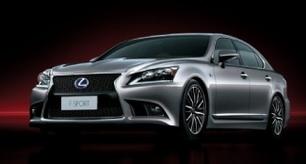
Almost 30 years after Lexus launched its original LS flagship sedan, the fifth generation of the car has arrived in Australia in what appears to be the brand’s never-ending battle to hunt down and beat Mercedes-Benz, BMW and Audi at their own game.
In some markets it looks as though Lexus is making headway. In the United States last year Mercedes-Benz was the best-selling luxury brand, followed by BMW and then Lexus. To give you even more insight, 50 per cent of all Lexus sales globally are in the US.
The story is different in Australia, with Lexus hardly a threat to the big three Germans, selling about a third less each month.
The Lexus LS is the Japanese prestige brand’s flagship and comes with a price that nudges up against formidable rivals. There’s the Mercedes-Benz S-Class, BMW 7 Series and Audi’s A8. Only the best cars from a few of the best brands in the world – no pressure, Lexus.
This may even be a reason to buy one – in that it’s not one of the traditional three. You could see Lexus as the popular underdog that in some ways does a better job than the usual suspects. A people’s favourite perhaps?
Just look at how often it’s mentioned in songs. According to lyrics.com.au the word Lexus has been used in 873 songs. Meanwhile Mercedes Benz appears in 500, Audi in 402 and BMW in 307.
With all this in mind we headed to the Australian launch to drive the LS 500 and its hybrid twin the 500h.
Smooth, cosy, quiet, the IS looks and feels better than ever, but without a doubt this hybrid version is a car best suited to cruising the dense metropolis of Chiba at midnight more than it is carving up a bunch of S-bends in the Australian countryside on the weekend.
While that might still limit its appeal for fans of German sports luxury sedans and place it further from the original IS’s ambitions, it does offer an intriguing efficiency and luxury focused alternative, without the compromises brought by rivals with more sporting intent. In a way then, the IS 300h perhaps inadvertently best embodies what Lexus is as a brand.
The Lexus LS 500 and 500h are both exceptional cars. The ‘obnoxious’ styling especially to the grille makes the offerings from BMW, Benz and Audi look bland and overly corporate inside and out. It’s really in the dynamics department that the LS falls short of its rivals and only the LS 500 is enjoyable if you like to drive with a degree of conviction.
Both the LS500 and 500h, though, have wonderfully comfortable rides and this together with those sumptuous interiors makes these the perfect place to be if you’re in the back being swiftly and quietly taken to you next meeting.
For me the sweet-spot pick would be the LS 500 F Sport for its value and dynamic ability.