What's the difference?
One question frequently discussed in the skunkworks of the CarsGuide office is: What exactly does Lexus stand for?
When the brand debuted its original export-market IS sedan in 1999 the messaging was more or less clear: Toyota’s premium sub-brand was here to be a Japanese BMW.
The brand even employed Nobuaki Katayama – chief engineer on the iconic Corolla AE86 program – to again take the reins of its small rear-wheel drive sedan program.
As the years went on though, Lexus changed. Fundamentally geared toward the US market, the second-generation (wild IS F aside) became a bit more sedate and softer around the edges, while the third generation strayed even further from the sedan’s performance-inspired roots, leaning into a plush interior, hybrid drive, and even CVT transmissions.
This brings us to today’s Lexus IS. Essentially a heavy facelift of the third generation (which arrived back in 2013), the brand has “reimagined” its core sedan with a tweaked design and updated technology for 2021.
Is it enough to keep it relevant against its ever-present European rivals and the newly arrived threat from Hyundai’s Genesis G70? I took a signature IS300h hybrid for a week to find out.
What’s the closest thing we have to a modern-day Holden Statesman/Caprice?
If, like General Motors, you obliterate Australia’s Own from existence altogether, you’re left with time-honoured rivals also made in this country, like the Ford Fairlane, Chrysler by Chrysler and Toyota’s Crown and Avalon.
But they’re also all in history’s dustbin (well, the American ones, anyway), leaving the humble Camry as the sole living nameplate with any connection to Australian manufacturing.
And since the Lexus ES is a close relative, we’re going to take a fresh look at the latest version, with a view of it as a bit of a survivor of a bygone era – where aspirational vehicles were created from normal family sedans.
Just like the Fairlane, Crown and of course, the Caprice.
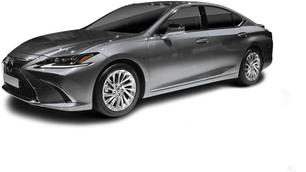
Launched in mid 2018 but facelifted in 2021, we test the ultimate version of the seventh-generation ES, the 300h Sports Luxury – or SL, if we’re to make yet another tenuous connection to long-gone Holdens.
Let’s go!
Smooth, cosy, quiet, the IS looks and feels better than ever, but without a doubt this hybrid version is a car best suited to cruising the dense metropolis of Chiba at midnight more than it is carving up a bunch of S-bends in the Australian countryside on the weekend.
While that might still limit its appeal for fans of German sports luxury sedans and place it further from the original IS’s ambitions, it does offer an intriguing efficiency and luxury focused alternative, without the compromises brought by rivals with more sporting intent. In a way then, the IS 300h perhaps inadvertently best embodies what Lexus is as a brand.
There’s no denying the Sport Luxury is imposing, spacious, plush, chock-full of kit, efficient, speedy and pleasingly relaxing up to a point.
But its interior is also dated and true ride comfort can be elusive beyond smooth roads for this top-of-the-line version to make the grade as a proper luxury sedan.
The ES 300h feels more like an aspirational Toyota than a Lexus for the (wealthier) masses, especially after recent triumphs like the latest NX and RX SUVs. The Camry DNA is difficult to disguise, as the amused strangers who sat in our test car uninvited thinking it was their Camry highlights.
Sure, the hybrid is no Chevy V8, but in many other ways, the Sport Luxury seems like the modern successor to the Holden Caprice experience.