What's the difference?
There’s a school of thought that says you should always use the biggest hammer available. That’s the view of more than one van and truck manufacturer, who will point at the dual-cab utes Aussies are currently consuming at a frightening rate, and politely suggest a light truck or full-sized van might just be more appropriate.
It’s a hard argument to ignore, and for those who use their commercial vehicles to the max, perhaps a committed truck or van might make sense. After all, having the ability to tow 3.5 tonnes AND still have some payload left over for passengers and fuel is a hard argument to ignore. It’s also a line European maker Iveco is keen to push, along the lines of never taking a knife to a gunfight.
Iveco’s volume-selling light van offerings are the 42S and 50C models; vans that cross from recreational to professional user thanks to their overall size, capacity and the fact they can be driven on a normal car license in Australia.
Now revised for greater buyer reach, the 42S gains a 350kg payload boost over the 35S model it replaces, as well as more power and torque from its engine. It also boasts improved safety credentials with the addition of a range of driver aids which we take for granted in passenger cars, but are increasingly important in the commercial vehicle world thanks to a renewed focus on OH&S.
So, what else is new? Starting in the cabin, there’s now a 10-inch digital driver display unit, improved wireless and wired charging rates, changes to the chassis rails for better crash performance, an improved warranty and a pair of feature packages designed to target the end user market.
In Europe, the Daily van has plenty of competition, while in Australia, the major opponents are the Mercedes-Benz Sprinter, VW Crafter, Fiat Ducato and the emerging Chinese van threat, the LDV Deliver 9.
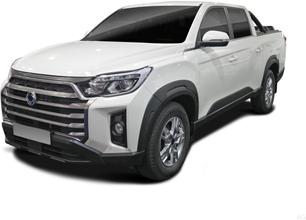
The SsangYong Musso XLV Ultimate is one of, if not the, most affordable part-time 4x4 ute on the market at the moment a recent facelift sees some improvements to its design, features and ride comfort.
I'm in the top-grade model with my family of three to see how those tweaks translate to real-world family life and how it competes against rivals like the GWM Ute Cannon and the LDV T60.
The Iveco Daily van’s light-truck genetics mean it’s not as immediately familiar to the end-user as some of the competition. It’s a fair climb to get inside, for instance, and once you’re there, the cabin lacks the ambience of a more passenger-oriented machine. Its wheelbase and external dimensions, too, mean it requires plenty of parking skill and real estate, and the dynamics are surefooted but hardly athletic.
Of course, fleet managers won’t care too much about any of that, and the flip-side is those truck underpinnings point to a low maintenance, high-mileage lifespan with good warranty as a promise of less time lost in the service bay when the van could be on the road earning its keep.
Right at the moment, the Daily van appears to be forming some kind of bridge between the car and truck world in terms of safety equipment and driver assistance gear, too. And that’s got to be a good thing.
But equally, it remains a pretty specialised piece of equipment that won’t work for everybody, nor does it have a lot of cross-over appeal between the car and truck worlds. None of which, of course, will prevent it being a valuable tool of the trade in the right hands.
Note: CarsGuide attended this event as a guest of the manufacturer, with travel, accommodation and meals provided.
The SsangYong Musso XLV Ultimate is an affordable workhorse that has good comfort, features and drives well. It suited my little family and our gear just fine this week with its space. If you need the practicality of a ute and are on a budget, you get a lot for your money here.
One thing Iveco is very up front about is that its vans are truck-based. To some sectors of the market this is no problem whatsoever, but it means that stylistically, the end product is not likely to be as fashionable looking as some of the competition. That big, bluff front, for instance, while maybe looking a bit heavy-handed to some, will conjure up just the right amount of brute force for others.
There is also evidence Iveco doesn’t mind if the exterior appearance fails to hide how the machine works. That perhaps why the wheel arch flares are obvious and the track for the sliding door is proudly on display rather than hidden.
Even inside, the bare cargo-bay walls tell their own utilitarian story, but when you get down to actually lashing down heavy loads, that truck heritage is very much in evidence with a non-nonsense layout and presentation.
The Musso looks the part of a 4x4 dual cab ute. It’s big even without the XLV pack at 5095mm in length. And with it, that jumps up to 5395mm. Enough to well and truly fill out a car space.
To put it in perspective, it's longer than the Kia Carnival, so I'd check to see if it will fit in your garage!
The finish isn’t the best, with wide spaces between door jams and the tray (I can fit my hand in that one) and a painted foam-like joinery in the tailgate which is already showing a lot of wear and tear for a brand-new workhorse. Stuff like this could make it look worn quickly.
Once you move into the cabin, it becomes obvious where a lot of the facelift has been focused.
The black leather upholstery, headliner and accents all make it feel premium in the cabin.
The dashboard has been redesigned to be more horizontally-themed and to sit lower than the previous dash. It showcases the new upgraded tech screens, large integrated air vents and digital climate control panel.
The cabin looks way more expensive than the price tag might suggest and it's most welcome.
Even within the framework of vans that are agile enough to park relatively simply, can be driven on a normal car license and are priced within reach of even recreational users, there’s still a lot going on. Think optional payloads, wheelbases and cargo volumes, just for starters.
So let’s start with the Daily 42S. Available with either a 3520mm or 4100mm wheelbase, the 42S can cope with a payload of 1872kg or 1741kg, respectively. Towing capacity is 3500kg. It stands more than 2.7 metres tall and seats three.
The 50C is the next step up the size ladder and, like the 42S, can be had with either a 3520mm or 4100mm wheelbase. But from there, the 50C just gets bigger with a choice of three overall lengths (up to almost 7.7 metres) and two distinct roof heights. Payload varies from a high of 1942kg to 1752kg and, like the 42S it also seats three and can tow 3500kg.
Iveco has stuck with single rear wheels (rather than a dual-wheel rear axle) for the 42S variant as this minimises the internal space taken up by the rear wheel arches and ensures that the van in any configuration will still swallow a standard pallet between those arches. The 50C, meanwhile, with its greater payload potential, features dual rear wheels. The other reason for the dual wheels is that the 50C can be ordered with an upscaled GVM of 5.2 tonnes, versus the standard vehicle’s 4.5 tonnes. At that point, though, the driver requires an endorsed license to stay legal.
The cabin is a master-class in finding a storage space for everything, with no less than three cubbies per door, storage bins on the dash-top and above the sun-visors, half a dozen cubbies in the dash fascia, a single glove box and a huge storage area under the flip-up cushions of the passenger’s bench seat. In standard trim, the Iveco vans seat three with a two-person bench and a single driver’s seat. That, however, doesn’t mean the vehicle has a walk-through function, and the solid cargo barrier keeps the cabin permanently separate from the cargo bay.
Access to the cargo area is via twin barn doors at the rear which open back on to the sides of the vehicle for easier fork-lift loading. There’s a single sliding side door as standard on the kerb-side, but you can option a second sliding door on the other side. There are also no less than 10 tie-down points (five per side) and they’re solid and mounted on the floor for maximum usefulness. Three LED lights illuminate the cargo area.
The cabin of the XLV Ultimate is big on space and all occupants enjoy fantastic head- and legroom.
Individual storage is good for a ute with the front enjoying two cupholders, a good-sized middle console and glove box plus a drink bottle holder in each door.
Rear occupants get map pockets, a fold-down armrest with two cupholders and storage bins in each door.
Amenities on the whole are good with the heated and ventilated front seats that feature lumbar support. But the upgrade to electric control for the fronts and heat function for the rear outboard positions clinch the luxury factor Both rows are well-cushioned and comfortable for long journeys.
Charging options are limited to the front with two USB-C ports, which is an upgrade from the old USB-A ports, and two 12-volt sockets.
But one of them is an old-school cigarette lighter which I haven’t seen in years! Now that was a teachable moment when I was a kid.
It's a shame there are no charging options in the rear as it could be inconvenient if you travel a lot and your kidlets have devices.
Fitting a child seat in the rear row is a little awkward due to the backrest folding down in one piece and it misses out on any clever hacks like some other utes have, like the zippered accessed points to the top-tether anchor points found on the HiLux and D-Max or the 60/40 split-fold on the Cannon.
Because of this, you'll want to fit your child seats at the same time and probably want it to be a 'set and forget' scenario.
On to the upgraded technology – the touchscreen of the multimedia system is responsive but the info is limited to the radio and a small settings menu.
Think of it as more of a mirror-screening device for the wired Apple CarPlay and Android Auto. It’s easy to connect to the CarPlay and the graphics are nice and bright.
The instrument cluster is semi-customisable but it’s here you can access/customise more information like the safety features, which I appreciate.
Our test vehicle has that XLV Pack fitted which adds 300mm to the tray length and boosts the overall capacity by 251L.
The max payload is 880kg, which should be sufficient for a lot of weekend pursuits.
You get a full-sized spare wheel and with our optioned tonneau accessory, you don’t have to worry about your gear getting wet, either.
The tailgate is large and feels very light to operate, thanks to the assist function but this ute lacks any sort of step to access the tray, which won’t be an issue for you giants out there but for me it was a bit of comedy to climb in to the back to retrieve stuff.
When you start to dig into the Iveco Daily range, it soon becomes apparent there’s huge depth to the line-up. In fact, there’s everything from a four-wheel drive dual cab-chassis, a bare-bones cab-chassis and even van versions with enough GVM (Gross Vehicle Mass) to require a truck license to be driven legally.
But for most users, and certainly those that might otherwise resort to an American pick-up or some other form of dual-cab utility for their work and play requirements, the Daily variants that offer the broadest appeal are the 42S and 50C vans.
That pair gives you a choice of capacities (see Practicality section) as well as some new safety tech and some structural changes aimed at making the vehicle safer.
You also get climate-control air-conditioning, cruise-control and a tilt and height adjustable steering column. Seat trim is still cloth, the floor coverings remain vinyl and the wheels are stamped from steel. This is, after all, a truck-based vehicle and it shows in some respects.
A pair of option-packs start with the 'Business Pack' which takes fuel capacity from 70 litres to 100 litres, a new 10-inch multi-media unit, a passenger’s bench seat with table, a heated driver’s seat with suspension function, climate-control, keyless entry and go, fog-lights and an electronic park-brake.
The 'Premium Pack' adds auto headlights and wipers, LED lighting, a leather steering wheel, wireless charging, adaptive cruise-control and lane-centring.
Right at the moment, we don’t have pricing for those packs, nor do we, in fact, have confirmation of pricing for the new van range. But word on the street is that pricing – thanks to a strong exchange rate at the moment – may not be very different from the superseded range, meaning the entry-level 42S van could enter the market around the $60,000 mark plus on-road costs, while the 50C variant could top out at closer to $100,000. That’s a pretty sketchy prediction, we know, but it’s all we can offer at the moment.
The facelift sees the Musso gain a mid-spec variant in the form of the Adventure which creates a line-up of three grades overall.
Our test vehicle is the flagship Ultimate, which is priced from $45,000, drive-away, making it one of the most affordable 4x4 dual-cab utes on the market at the moment.
In comparison, the GWM Ute Cannon Vanta is the closest competitor at $46,490, before on-road costs, with the LDV T60 Max Luxe coming in at $47,884, before on-roads.
The Ultimate grade gets some great premium features, like heated and ventilated front seats, a heated leather steering wheel, as well as, updated technology with the 12.3-inch touchscreen multimedia screen (up from the previous 8.0-inch system), and the new 12.3-inch instrument cluster, up from the previous 10.25-inch unit. The climate controls have been integrated into a new touchscreen panel, which is easy to use.
Other standard features include an assisted tailgate function, full-size spare wheel,18-inch alloy wheels, LED DRLs and fog lights, HID headlights, a 360-degree camera system and wired Apple CarPlay and Android Auto.
Off-roading enthusiasts will be pleased with the part-time 4x4 drivetrain that includes low- and high- range and the auto-locking rear differential feature.
For its price point, the Ultimate is well-specified but our test vehicle has a couple of option packs and a few accessories that boost the overall costs.
The test vehicle features the 'Luxury Pack' for $3000, which adds dual-zone air-conditioning, a sunroof, leather upholstery, electric front seats and heated rear outboard seats.
It’s also fitted with the 'XLV Pack' for $1500 which adds 300mm to the tray length and an extra 20Nm of torque.
But we’re not done. With the red metallic paintwork and accessories like a tow bar, rubber mat set, tonneau cover and electronic brake controller our test vehicle actually slides in at $53,598.
Which is still great given the market but not as jaw-dropping as the first price might suggest because most of those added extras would be needs rather than wants for some buyers. Especially the extra torque and tow bar if you plan on using the 3.5-tonne braked towing capacity.
While vans might be getting ever closer to passenger cars in the way they drive (stay with us) in engineering terms, there’s still a bit of 'us and them' going on. That means you kind of have to throw away a fair bit of what you thought you knew about how motor vehicles work, but it also means the Iveco is fit for purpose in a world where big loads and lots of kilometres are the norm.
Power in either the 42S or the 50C comes from a 3.0-litre, four-cylinder, turbo-diesel engine. It doesn’t sound too different from what you’d find in a dual-cab ute, but the engine uses some pretty heavy-duty tech, making it closer to a truck engine than a typical light commercial’s, including an impressive service regime. Although capacity remains the same, the Iveco’s unit is available in two tunes, both erring on the side of torque over outright power.
The 42S gets a 132kW and 430Nm version of the engine, while the 50C can be optioned up to the second-tier tune with 155kW and 470Nm. It’s not just an electronic tweak, either, and while the engine’s fundamentals remain, there are changes to the turbocharger and camshaft as well as the engine management.
Standard transmission is a ZF-made eight-speed conventional automatic and there’s electric power-steering as a nod to the chase for maximum efficiency which is perhaps even more important in the Daily’s European home market than it might sometimes be here.
However, it’s when you get to the suspension that the Daily reveals its brawny design ethos. Front suspension on the 42S is by double wishbones and torsion bars which sounds odd, but is pretty familiar in the trucking world. The 50C uses the same arrangement.
At the rear, the 42S gets a simple twin-leaf parabolic spring at each outer end of the axle, while the 50C has the same with optional air suspension and an optional driver-controlled locking differential.
All versions of the Daily also use the time-honoured (in the trucking industry) body-on-ladder-chassis construction method.
The upgrade hasn’t seen any changes to the Musso's powertrain and it is still powered by a 2.2-litre, four-cylinder turbo-diesel engine with a maximum power output of 133kW and 420Nm of torque (400Nm without the XLV Pack).
It’s got plenty of grunt and despite having only a six-speed auto transmission, the gear changes are mostly smooth.
Adventure enthusiasts should be happy because the Musso is a proper part-time 4x4 with low- and high-range, which is easy as pie to change over to when the need arises.
Fuel consumption of commercial vehicles can vary enormously depending on where they’re driven and how they’re used and loaded. As a commercial vehicle, there are no official fuel consumption claims made by Iveco according to any standard test procedure.
Our experience with this vehicle in the past, however, suggests that between nine and 10 litres per 100km is a good indication of overall consumption. Obviously, hitching a 3.5-tonne trailer to the vehicle and loading it fully will have a big effect on that number.
With the standard 70-litre tank, the Daily should be able to cover near enough to 700km between fills, while the optional 100 tank should take it closer to 1000km.
Don’t forget, either, that the new Daily requires AdBlue which is carried in a 20-litre reservoir on the vehicle, and that the cost of filling this needs to be added to overall running costs.
Despite its size, the Musso's official combined cycle fuel economy figure is only 9.0L/100km.
My real-world average came in at 10.2L/100km after a good mix of open-road and urban driving. Not too surprising, but that's without any loads. Expect it to be thirstier if you plan on towing.
Based on the combined fuel figure and 75L fuel tank, you should be able to get a driving range in excess of 800km.
The first impression – once you’ve managed to climb inside the cabin (a manoeuvre that requires the in-built step) is of a magnificent view ahead and to the sides. You sit high and mighty and the vast glass area means you always feel like the king of the road. The steering wheel is relatively flat compared with a passenger vehicle, but the column features tilt and reach adjustment, so you can soon get comfortable.
The engine feels a bit grumbly and coarse compared with the dual-cab utes with which many of us are more familiar. It’s not harsh, though, and soon has the Iveco accelerating, if not swiftly, then certainly with some authority and a feeling it would take something pretty solid to slow it down.
The eight-speed transmission is calibrated – perhaps deliberately – to feel a little like the robotised manuals of some bigger trucks, and as such, can feel a little stilted in the way it ever so slightly hesitates between shifts.
The brake pedal is also placed too far to the right for comfortable left-foot braking and there’s no driver’s dead-pedal or foot-rest, suggesting that overseas crash testing may have dictated its deletion and the location of the brake pedal. That said, the Daily was originally designed as left-hand-drive, so perhaps the switch from left to right has imposed some of those compromises.
The other complaint is in the form of the new-for-2026 gear selector. It uses the now common separate Park button, but until Park is engaged, the button is not illuminated or identified in any way and simply looks like another piece of black plastic on the shifter. Once you know where it is, you’re fine, but until then…
The electric power-steering poses no challenges and, in fact, is kind of a metaphor for the whole experience. It’s easy and tactile to operate and takes no time at all to feel comfortable. That’s assuming that you can learn to trust your exterior mirrors and the rear-view camera, because with the standard cargo barrier installed and the lack of an interior mirror, there’s more or less zero rear vision.
The Musso has won me over with how it drives. The update has seen the suspension retuned and it’s well-cushioned without feeling spongy.
The ride comfort is very good but you occasionally get some shudders through the frame when gear changes happen on a steep hill. The cabin sounds refined with how quiet it is, even at higher speeds and you’ll enjoy that on longer trips.
Hitting the open-road isn’t an issue with power being delivered smoothly when you accelerate. Despite being a tall car, the Musso handles cornering much better than I thought it would without heaps of roll.
You don’t feel any of the weight of the car when you steer, though, and that’s a bit too light for my liking. But it gives the Musso more of a car-like feel rather than a ute/truck feel which some people might enjoy.
Massive windows mean the Musso has crazy-good visibility for a ute and I feel confident about checking the blind-spot because of it. That's great for such a big vehicle.
Despite being almost 5.5m long, the Musso isn't too difficult to park because of the 360-degree view camera system, and front and rear parking sensors, a must have on large cars like this. The camera system is a smidge low quality for the image, though.
Improvements to the Daily’s safety are one of the big headlines here. Well, in Europe, perhaps, because in Australia, the upgrades kind of amount to playing catch-up. But the new driver assistance packages are the real news here and, as such, the Iveco vans now get functions such as active cruise-control, traffic-jam assist, lane centring, autonomous emergency braking (that also identifies pedestrians and cyclists), blind-spot warning and rear-cross traffic alert and assist.
The three-seat cabin features four airbags; a driver and passenger front airbag and two side-curtain bags. The Daily has been crashed tested in Europe according to NCAP protocols and scored a maximum five stars.
A new, deformable crush-box in the front structure of the Daily is designed to give the vehicle improved passenger-protection in a frontal crash.
Top tethers and ISOFIX anchors for child seats are provided with configuration varying by body type.
On the top-grade model, you get most of the important safety features you expect to see on new cars but only at this level. The lower grades miss out on some big-ticket items and it annoys me when you have to pay extra for safety.
Standard features include biggies like rear cross-traffic alert, blind-spot monitoring, as well as AEB with forward collision warning and lane-change collision warning.
Other features include lane departure alert, safe exit assist, driver attention warning, tyre pressure monitoring, hill descent control, hill start assist, a 360-degree camera system, plus front and rear parking sensors.
It features six airbags, which is good for this class, but is currently unrated with ANCAP while its rivals all sport a maximum five-star rating.
There are ISOFIX child seat mounts on the outboard rear seats and three top-tethers but you can’t legally fit a child-seat in the middle seat as it only features a lap belt. Not having the sash does lower the safety aspect for any middle rowers and I’d think of the middle seat as an emergency spot for an adult only.
Because they’re truck-based, the Iveco vans have meaningful service intervals as a way of keeping down-time to a minimum. In the case of the 42S and 50C models, that translates to a whopping two years or 50,000km between services, whichever comes first. We understand that relies on a particular type of engine oil being used, but even so, it’s a mighty long way between drinks.
Iveco has traditionally offered service plans of up to five years, and that will continue, but we haven’t been given pricing for that at this stage.
The standard Iveco warranty applies to these models, and that gets you six years and 250,000km worth of cover. An extended driveline warranty of up to six years and 600,000km is also offered. Again, pricing for that has not been announced.
It’s also worth noting that the Iveco van engines have been Euro 6 compliant since 2015. The facelift ushers in further changes based on regulations. That means they now need AdBlue which needs to be factored in as a running cost. But because they’re designed for a European audience where emissions are arguably a much bigger issue than here, the AdBlue technology is very advanced and rules out the need for a Diesel Particulate Filter in the exhaust system; something that will appeal to a lot of would-be owners.
The on-going costs are great on the Musso, with it coming with a seven-year/unlimited km warranty, which is above average for this class.
It also comes with a seven year/105,000km servicing program where services average $375, which is competitive for the class.
Servicing intervals are average at every 12 months or 15,000km, whichever occurs first.