What's the difference?
There’s a school of thought that says you should always use the biggest hammer available. That’s the view of more than one van and truck manufacturer, who will point at the dual-cab utes Aussies are currently consuming at a frightening rate, and politely suggest a light truck or full-sized van might just be more appropriate.
It’s a hard argument to ignore, and for those who use their commercial vehicles to the max, perhaps a committed truck or van might make sense. After all, having the ability to tow 3.5 tonnes AND still have some payload left over for passengers and fuel is a hard argument to ignore. It’s also a line European maker Iveco is keen to push, along the lines of never taking a knife to a gunfight.
Iveco’s volume-selling light van offerings are the 42S and 50C models; vans that cross from recreational to professional user thanks to their overall size, capacity and the fact they can be driven on a normal car license in Australia.
Now revised for greater buyer reach, the 42S gains a 350kg payload boost over the 35S model it replaces, as well as more power and torque from its engine. It also boasts improved safety credentials with the addition of a range of driver aids which we take for granted in passenger cars, but are increasingly important in the commercial vehicle world thanks to a renewed focus on OH&S.
So, what else is new? Starting in the cabin, there’s now a 10-inch digital driver display unit, improved wireless and wired charging rates, changes to the chassis rails for better crash performance, an improved warranty and a pair of feature packages designed to target the end user market.
In Europe, the Daily van has plenty of competition, while in Australia, the major opponents are the Mercedes-Benz Sprinter, VW Crafter, Fiat Ducato and the emerging Chinese van threat, the LDV Deliver 9.
The small van segment (Under 2.5-tonne GVM) is one of the smallest in Australia’s light commercial vehicle market, as it currently caters for only three contenders, the Volkswagen Caddy Cargo, Peugeot Partner and Renault Kangoo.
Although total sales in this category are a fraction of those achieved in the mid-size (2.5-3.5-tonne GVM) van division, these compact commercials are ideal for buyers not requiring the big one-tonne payload ratings and cavernous load volumes of their larger siblings.
Petrol and diesel-powered models are typically equipped with small displacement engines offering excellent fuel efficiency, combined with cabin ergonomics and driving dynamics which are the most car-like of any LCV offering.
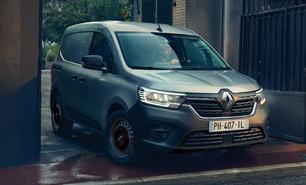
French manufacturer Renault released its third generation Kangoo range in Australia in 2024, comprising a mix of petrol and full-electric variants. We were recently handed the keys to one of the petrol models to see if it has what it takes to win costumers in this three-way fight.
The Iveco Daily van’s light-truck genetics mean it’s not as immediately familiar to the end-user as some of the competition. It’s a fair climb to get inside, for instance, and once you’re there, the cabin lacks the ambience of a more passenger-oriented machine. Its wheelbase and external dimensions, too, mean it requires plenty of parking skill and real estate, and the dynamics are surefooted but hardly athletic.
Of course, fleet managers won’t care too much about any of that, and the flip-side is those truck underpinnings point to a low maintenance, high-mileage lifespan with good warranty as a promise of less time lost in the service bay when the van could be on the road earning its keep.
Right at the moment, the Daily van appears to be forming some kind of bridge between the car and truck world in terms of safety equipment and driver assistance gear, too. And that’s got to be a good thing.
But equally, it remains a pretty specialised piece of equipment that won’t work for everybody, nor does it have a lot of cross-over appeal between the car and truck worlds. None of which, of course, will prevent it being a valuable tool of the trade in the right hands.
Note: CarsGuide attended this event as a guest of the manufacturer, with travel, accommodation and meals provided.
The latest petrol-powered Kangoo has the pricing, practicality and performance to win friends in Australia’s small commercial van class. If you can afford an option pack or two, like those fitted to our test vehicle, it's even better.