What's the difference?
If there ever was a modern BMW that captured the essence of the classic 1602-2002 and pre-Bangle-era 3 Series, it's the 2 Series coupe.
From the lowly 118d diesel to the sublime M2, this model line is the reincarnation of everything that the old 'The Ultimate Driving Machine' company tagline stood for.
Now there's a third-generation 2 Series (if you also count the crisp E82 1 Series of 2007), and right now the M240i is giving off the sort of exciting vibes you might have felt as a teenager looking at a bedroom poster of a 2002ti or 323i.
Does the G42 2 Series deserve to sit alongside such esteemed ancestry? Let's take a deep dive into this most intriguing of BMWs to find out.
Chinese newcomer GAC couldn’t have timed the arrival of its Aion UT in Australia any better.
At the time of writing, we were in the midst of another Middle East-related fuel crisis, and more buyers than ever before were considering switching to their first electric car.
It’s a good thing there hasn’t ever been a better time to buy one, especially with price tags getting lower and lower thanks to keen new players like GAC.
The Aion UT, which is a vaguely Corolla-sized hatchback is now one of the most affordable new EVs on the market, and aims to outfox its primary rivals, like the BYD Dolphin and GWM Ora.
But, as you may have figured out by now, newcomer brands can come with their fair share of quirks. So, is the Aion UT the affordable hatchback it needs to be? We went to its Australian launch to find out.
When BMW is on a roll, the world needs to watch out.
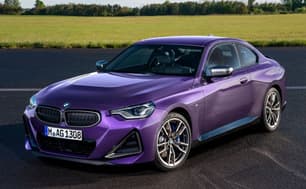
And, as our Thundernight metallic-hued M240i so literally demonstrates, its purple patch continues after a string of modern marvels like the latest 4 Series and iX, distilling the essence of compact sports coupe and luxury cruiser with dizzying confidence.
Joining the pantheon of back-catalogue greats like the 2002ti and 330Ci, we're missing it already now that the keys have been returned. Isn't that the true sign of the quintessential BMW experience?
The Aion UT is a cleverly-specified little hatchback and a great entry-point into electric motoring. The software needs a bit of work from a usability perspective, plus the spongy ride and cutesy styling might not be for everyone.
However, with strong points including driving range, cabin space and value, there’s even a pitch for it in some cases to be an only car compared to most of its price rivals, which are more likely to be thought of as a second car runabout in a two-car garage.
The pick of the range is definitely the entry-level Premium. It comes in at a headline-grabbing price with specs to blow rivals out of the water, while only missing out on a few luxuries.
Note: CarsGuide attended this event as a guest of the manufacturer, with accommodation and meals provided.
What is happening with BMW design? It's as if the Germans have run out of ideas.
Though we're eternally grateful it exists, the G42 is the least pretty of the three 1 and 2 Series coupe generations, as well as the most aggressively styled. All the usual macho tropes are present – cab-backward long-bonnet/short boot silhouette with an exaggerated dash-to-axle ratio, huge front air intakes, bulging bonnet and diffuser-heavy rear end.
There's also a beady eyed look to this M240i, with its squinty headlights and angry tail-light shapes further piling on the attitude. It's a far cry from the simple elegance of the E82 original, let alone the classic E30 of the Eighties. We wonder how much extra the M2 version will be when it surfaces later on.
That said, the G42's design is in keeping with something wearing an M-something-something prefix. In the optional purple of our press car, it certainly turns heads. That said, in the Bangle era, BMWs didn't have to rely on paint to do that.
Bangle, by the way, refers to BMW's late '90s/early '00s head designer Chris Bangle, an American with a bold aesthetic, scant regard for tradition and a taste for the controversial. His effect on vehicle styling, starting with the 2001 7 Series, is still felt today.
Dimensionally speaking, comparing the length/width/height/wheelbase measurements of the M240i (4548mm/1838mm/1404mm/2741mm) with a 2000 E46 330Ci (4488mm/1757mm/1369mm/2725mm) shows how today's coupe is palpably larger.
Over the previous (F22) 2 Series, the newcomer is 105mm longer, 64mm wider and 28mm lower; the wheelbase has been stretched by 51mm, while the front and rear tracks are 63mm and 35mm further out, respectively. Result? More space inside for today's lucky occupants.
GAC tells us the UT hatch was designed in Milan, Italy, but it also isn’t ashamed of the Chinese influence on its overall appearance, like the ultra-short bonnet and Chinese city-car style face.
Along the side it has a modern, aerodynamic profile, and the ultra-short overhangs and long wheelbase maximise the amount of room for batteries under the floor and interior space.
The rear feels a lot like a modern Mini, with its bulbous tailgate and protruding light clusters, spiced up with a sporty spoiler piece jutting out.
It’s not a bad looking thing and it’s available in an array of fun colours.
On the inside it seems to follow the established rule-book of Chinese automakers, with plush trims, big screens with minimal physical buttons as well as a contemporary two-spoke steering wheel.
There’s a trendy floating console which hosts the cupholders and wireless charger on the Luxury grade, and an array of interesting patterns and textures through the doors and dash which you wouldn’t have once seen on a car at this price-point.
However, it is worth noting that while the seats are quite nice, and the steering wheel is a stand-out touchpoint, the trims on the doors and across the dash-top are hard plastics, more so than some of this car’s rivals.
Interior dimensions may not be paramount to most coupe purchasers, but a stylish one with quality fittings and generous equipment levels certainly is, and here the M240i is bang-on brand.
For a compact two door, the M240i is pleasingly accessible. Long doors and a tallish roof help entry/egress, into a 2+2 cabin that obviously prioritises front-seat occupants. And it does that exceedingly well.
There's space to stretch – even if you're two metres tall – up front, as long as the rear seats aren't occupied, as a result of generous leg and shoulder room, while headroom should also be sufficient, even with the sunroof fitted. We're talking about a small coupe, remember, so that's impressive.
Vision out isn't as bad as you might imagine, either, due to the airiness that the elongated side windows provide. There are blind spots, though, with the B-pillar being the worst, but at least the extensive camera and sensor network surrounding the car provide reassuring back-up.
The handsome M Sport front seat option ($2000 extra) look like they mean business, providing all the comfort, support and adjustment most occupants will ever need. They're firm enough when you need them yet restfully supple all the time. Backed up by a multitude of electronics, both buckets will brace people of pretty much all sizes, while the driver has the luxury of two memory settings that also take in mirror positions.
Remember how the new 2 Series comes via Mexico? You'd never know it wasn't built in Germany, from the solid build quality and expensive materials to the extremely welcome absence of squeaks and rattles. No area exposed to the occupants looks or feels cheap.
Also meeting expectations is the dashboard itself, which is essentially a scaled-down replica of every recently released BMW – futuristic and fabulous iX aside – since the current (G20) 3 Series in 2018 broke the Bangle-era curse of disappointing new-millennial models.
If you're hoping for a return to classic analogue instrument dials, forget it. The M240i's instruments are modish electronic items, providing plenty of vehicle and driving data, and supported by an excellent head-up display. Like the switches and buttons, they're easy to fathom, with little familiarisation required.
As we've said repeatedly in other BMW reviews, the iDrive multimedia controller is amongst the best in the business, responding instantly to inputs. The other basics – ventilation, storage, driving position – are also first class. Nothing to complain about here. The company is on a good thing and it's sticking with it.
Accessing the rear seats is aided by electrified front seats that slowly whir forward, to provide a big-enough aperture for your medium-build 178cm tall tester to squeeze in.
Once sat, with legs splayed apart, there's just enough space for another person of similar height and proportions, as well as surprisingly decent levels of vision thanks to the narrow front bucket seats and extended rear glass area, to offset any feelings of claustrophobia.
BMW has also provided several welcome amenities, including face-pointed rear vents with full single-zone temperature control to serve two occupants back there, armrests (with the centre fold-down item also packing in a pair of cupholders), reading lights and coat hooks.
Sadly, however, the rear windows do not retract, and the thick door pillars are fixed, so you cannot enjoy a pillarless hardtop experience. That's what the M4 coupe (and convertible too) is for.
While rear-seat space is adequate, with enough room for shoulders, thighs and feet if the front-seat occupants don't mind raising the cushion a little, the backrest is too upright to be considered comfortable on longer journeys. At least the low cushion is scalloped enough to provide some support, though, again, not over extended periods.
That rear backrest folds, by the way, to a 40/20/40 split, providing access into the 390-litre boot while still able to accommodate a single passenger. The lid opens up and wide, offering up a long, flat and wide space for storage. Along with a 12V outlet and tie-down hooks, you'll find a tyre-repair kit, since no spare wheel is carried.
In terms of interior space, the Aion UT stands out with its spacious cabin. At 182cm tall, I am easily able to find a comfortable seating position, and visibility out the front sides and rear, while not as good as some small SUVs, isn’t bad.
There’s lots of headroom, and while I mentioned the hard plastic door cards before, there’s enough padding everywhere your elbows are going to touch to make it feel a bit nicer than perhaps it is.
The main drawback of this car for me is the lack of tactile buttons and the frustrating software.
The main screen isn’t particularly well utilised, being taken up by either a background or the navigation map, with an array of typically small shortcuts across the bottom for important features like the climate control or settings menus.
You can pre-set a few information panels which sit above the shortcut bar as in many rival cars and there’s also a shortcut tray which can be hosted on the driver’s side and configured with a variety of shortcuts and settings.
It’s just a bit clumsy to use, and the array of poorly-labelled settings menus for things like active safety equipment feel needlessly complicated.
I’d love to see this car with physical controls for climate and multimedia to make it easier to live with.
Up front the storage is decent. There are big pockets in the doors and a large storage tray between the driver and front passenger thanks to a flat floor. There’s also a slightly weird storage box under the touchscreen which has a net inside, good for more delicate objects you don’t want flying around the cabin.
On the floating console there are two cupholders which are a bit too shallow for my liking, and the wireless charger feels almost pointless because its made of a hard plastic, so your phone just slides right off in the corners. The cabled outlets are hidden beneath which allows for tidy cable management and the centre armrest console box is a healthy size.
The rear seat is comparatively basic, although touches on the key points. Its main advantage is how generous the space is. My frame was able to fit behind my own driving position with heaps of room for my knees, and just enough room for my head despite the dip in the roof for the sunroof shade in the Luxury-grade car we tested. There may be even more headroom in the base car.
The flat floor makes the space useful even for three across in a pinch and there’s a drop-down armrest with (again, shallow) cupholders. There are pockets on the back of both front seats and smallish pockets in each door. The array of soft trims continues, too, and the back of the centre console features a partially adjustable air vent. Luxury spec cars get a single USB rear power outlet.
As with many Chinese cars in this segment, the generous rear seat space comes at a cost to the boot. It measures just 321 litres, which is slightly smaller than its main opponents in this category, although larger than some hatchbacks like the Toyota Corolla, for example.
It has its advantages, though. The floor is two-tiered, and can offer a flat load area with the rear seats folded down, or a deeper boot in its lower position. Underneath there’s a cutaway good for charging equipment and the tyre repair kit (sorry, no spare wheel in here).
Unlike some EVs, the Aion UT doesn’t get a frunk (front boot) for additional storage.
Don't worry. Even though the latest, third-gen 1 Series hatch as well as five-door versions of the 2 Series have sacrilegiously gone all transverse-engined and front-wheel drive on us, BMW knows not to cook the golden goose or poke the bear by retaining the traditional longitudinal/rear-drive set-up for the G42.
For car enthusiasts, that was one of the few pleasant surprises of last year.
Hailing from a new BMW plant in Mexico, the 2 Series coupe comes in two flavours for now: the 220i from $61,900 before on-road costs, and the M240i from $89,900 before ORC. Other grades like a 230i are likely to follow soon.
Both models are decently specified, sharing LED headlights and tail-lights, auto start/stop, paddle shifters, an M Sport Package (including a multifunction steering wheel, selectable driving modes, sports seats and anthracite headliner), M Sport suspension, variable sport steering, 'Hey, BMW' driving assistant, head-up display, auto parking assistance with a surround-view camera, a 12.3-inch instrument display, a 10.2-inch control display, digital radio, wireless smartphone integration, Apple CarPlay/Android Auto connectivity, emergency services access, three-zone climate control, rain-sensing wipers, electric heated/folding exterior mirrors, through loading into boot with remote-release backrests, ambient lighting and tyre-repair kit in lieu of a spare wheel.
However, the differences between the two already on sale here are extensive, starting with the M240i gaining a 3.0-litre inline six-cylinder (I6) turbocharged petrol engine in lieu of the 220i's 2.0-litre four-cylinder turbo petrol unit.
There's also all-wheel drive (AWD) for the first time in a 2 Series in Australia, as well as M Sport suspension with adaptive dampers, an M differential, M Sport brakes, body kit, adaptive cruise control with full stop/go functionality, keyless entry/go via BMW Digital Key, electric sunroof, leather instead of Alcantara/artificial leather upholstery, electric front seats with driver's side memory and heaters, adaptive LED headlights with auto high beams, 14-speaker Harman/Kardon surround-sound audio system and 19-inch alloy wheels, among other items, to help justify the extra $28,000.
Standard safety features include six airbags, forward collision warning, Autonomous Emergency Braking (AEB) front and rear, with front/rear cross traffic alert, lane departure warning with passive steer assist, lane keep with active assist, blind spot monitor, 360-degree view cameras, parking assist, parking sensors and road-sign recognition, among other features. More details in the safety section below.
With two-door coupes falling out of favour, four-seater performance rivals to the M240i Coupe include the Ford Mustang GT V8 (from $64,190) and Audi TT S quattro (from $104,500), while there are various two-seater options like the coming Nissan Z (pricing TBC, but the outgoing 370Z kicks off from just $50,490), Toyota Supra (from $87,803) and Porsche 718 Cayman (from $115,900).
Thinking more laterally, the $92,900 Audi RS3 and $99,895 Mercedes-AMG A45 S hyper-hatches are quicker while the Tesla Model 3 Performance Dual Motor sedan from $88,900 will blow the BMW away for performance, so if you don't strictly need coupe style, then the M240i does cop some unexpectedly stiff competition at its price point.
Still, few rivals balance the pricing, packaging, performance and AWD capability with the swagger of our purple coupe, which makes this 2 Series quite a unique value proposition in its own right.
The GAC Aion UT starts from $31,990, before on-road costs, for the entry-level Premium grade, which makes it the third-most affordable EV you can buy in Australia after the city-sized BYD Atto 1 and the entry-level version of the BYD Dolphin.
It sits closer to price-parity with the GWM Ora, but is significantly more affordable than the rear-drive MG4 and more spec-competitive top-grade BYD Dolphin.
The bigger threat to the Aion UT is that a lot of buyers will be willing to spend slightly more to get into one of the most affordable electric small SUVs, like the BYD Atto 2 or Jaecoo J5.
Still, GAC makes a solid pitch for its hatch, which offers a higher spec level than its most direct price rivals.
For example, the Aion UT is more powerful than the entry-level Dolphin and Ora while offering a higher level of interior equipment.
Even the just-arrived front-drive MG4 Urban also starts at $31,990, but that’s for a version with significantly less driving range.
In fact, I’d go so far as to say the entry-level version of the Aion UT (the confusingly-named Premium) is probably the pick of the two variant range.
Standard equipment levels on this car include 17-inch alloy wheels, LED lighting all around, synthetic leather interior trim with heated and power adjust front seats, a 14.6-inch multimedia touchscreen with online connectivity and built-in nav as well as wireless Apple CarPlay and Android Auto.
There’s also an 8.88-inch digital instrument cluster, heated steering wheel and the full array of safety kit.
With the same power and battery size, this leaves only arguably unnecessary luxuries for the Luxury grade, like a wireless phone charger, ventilated driver’s seat, auto dimming rear vision mirror with auto power folding wing mirrors, a powered tailgate and of course, a panoramic sunroof (with shade!).
As with all of our current favourite BMWs that aren't electric on full-fledged M cars, the M240i is fitted with a variation of the divine B58 engine – a 2998cc 3.0-litre double overhead cam direct-injection turbo I6. It delivers 285kW at a heady 6500rpm, and 500Nm of torque between a low 1900rpm and 5000rpm.
A kerb weight of 1690kg (200kg more than the 220i equivalent) means the M240i's power to weight ratio is about 169kW/tonne, which may explain why it can manage the 0-100km/h time in 4.3 seconds. V-max is 250km/h.
Power is channelled to all four wheels continuously via an eight-speed M Steptronic transmission, while the AWD system features a differential to help transmit torque to all four wheels more cleanly.
Controlling all those outputs, the M240i's suspension consists of a two-joint spring strut front and a five‑link rear axle arrangement, with M Sport suspension including variable sport steering, additional front axle struts, M Sport brakes, M Sport differential at the rear axle and adaptive M suspension with electronically controlled dampers.
The Aion UT has a front-mounted electric motor producing 150kW/210Nm. That’s plenty punchy for any hatchback at this price, and I like the way the brand hasn’t messed around with a sub-100kW motor in the base variant to push prospects towards the top-spec car.
It’s more powerful than all of its closest rivals and at the time of writing you’ll have to spend four to six thousand dollars more to get into something equivalent from BYD, Chery, Jaecoo, Leapmotor or MG.
It even has a claimed 0-100km/h sprint time as low as 7.3 seconds.
Over exactly 503km of city, suburban, freeway and performance testing, we managed a credible 9.6 litres per 100km – and that was with the air-con on constantly and regular visits to the 7000rpm rev limiter. No horses were spared in our quest to properly assess this vehicle.
BMW's official combined-average claim for the Euro 6d-rated M240 is 8.0L/100km flat – and 6.6L and 10.3L in the Extra Urban and Urban runs – for a carbon dioxide emissions average of 185 grams/km.
The small fuel tank swallows just 52 litres of E10, 95 or 98 RON (as tested) premium unleaded petrol, meaning an average of 650km between refills is possible.
The Aion UT has a 60kWh lithium-iron phosphate (LFP) battery pack, which grants it a WLTP-certified 430km of driving range.
That’s more than its closest rivals, like the entry-level Ora Standard Range (310km), BYD Dolphin Essential (410km) or BYD Atto 2 (345km).
Claimed efficiency is 16.4kWh/100km and the car I tested returned a consumption of 14.0kWh/100km over a 130km route of mixed conditions, which isn’t bad at all.
Charging speeds are less impressive, but realistically appropriate for the relatively small battery. The peak DC charging capacity of 87kW means a charge time which the brand quotes at 24 minutes, but this is from 30-80 per cent. Expect closer to 40 minutes for a 10-80 per cent charge.
AC charging is decent, at 11kW. This should have you charging from 10-80 per cent between four and five hours.
In a word, invigorating.
Stuffing a big old engine in a little-ish car is always an exciting recipe for thrills, and the M240i Coupe does not disappoint.
Press the start button, and the sublime B58 3.0-litre turbo I6 growls into life, setting a rich tone for the level of performance as well as sophistication that's coming.
Even in Eco mode, off-the-line acceleration is stirring, with a hefty shove if you're in a hurry, or a brisk pace if you just long to just take it easy, defined by smooth upshifts from what remains one of the world's greatest-ever automatic transmissions.
That said, Normal is the default operating setting, and here the M240i can take on a Jekyll and Hyde split-personality, that goes well beyond simply possessing a strong throttle response accompanied by a soaring exhaust note. The engine sings sweetly even right up to 7000rpm, while the gearbox is uncanny in its ability to always be in the correct gear, yet will simultaneously hold each ratio in manual mode (via the shifter or paddles) if the driver needs to go hell-for-leather.
Speaking of which, in Sport mode, the 3.0-litre turbo goes into red alert, taking on a louder and more muscular mood, as it roars along with frenetic yet effortless speed. What seems like 90km/h can, in fact, be very much more, and with plenty of extra oomph in reserve.
It's so typical BMW that purists affronted by some of the brand's other niche offerings of late will cry with joy that the art of making a sports coupe has not been lost in Bavaria after all.
And that's before the first turn of that fat little steering wheel. Here the 2 Series Coupe's 3 Series-derived CLAR architecture's DNA is immediately obvious, providing subtle balance and an immersive connection to go with all that bolshy brawn.
The M240i will glide along precisely where pointed, sticking steadfast to the tarmac while cornering at speed without breaking a sweat. That mechanical rear diff helps provide both alacrity and reassuring control. Yes, it remains weighty and planted when punted relentlessly through tight corners, but it's also not as heavy-feeling as before.
Being AWD, there's grip galore to rely on for security, yet the M240i still seems deliberately rear-drive biased in its set-up, so the driver can hang the tail out if wanted with gradual ease in Normal, or with a little more of a sideways flick in Sport. The modes are configurable so the level of engine, steering and suspension responses can be tailored as desired, meaning that in the racy Sport Plus setting, with stability and traction controls on hold, the full oversteer experience is possible if you're game/brave/silly enough.
This car's brilliant performance is also down to incredibly dependable and nuanced braking, adding another layer of driver enjoyment, since it can pull up hard and fast if need be without drama or fuss.
So, it's no surprise to learn that an M-Sport-enhanced BMW can be a deliciously fast and limber along a mountain road.
But the real progress over the old F22 is just how suave and polished the G42 is if you're tired and stressed, isolating its occupants from the rigours of rubbish road surfaces. Kudos to the 'Adaptive M Suspension' and its adaptive dampers for this, for they're standard M240i fare. The resulting cushy ride completely broadens the dynamic bandwidth of this compact sports coupe, making it an everyday commuting proposition.
Ultimately, it's a bit of a struggle to find fault in the 2 Series' drivability and dynamic make-up. The usual Euro luxury car bugbear of too much coarse-chip tyre noise applies, but as this is a sports coupe, that's not such a big deal here. Even wind noise levels are subdued – all the better to drink in that glorious turbo engine wail.
BMW, you got the M240i delightfully right.
The drive experience can be where a lot of Chinese cars fall down but I walked away less frustrated by the Aion UT.
That’s not to say it will behave as you might expect a low-slung hatchback to. The suspension, for example, is extremely soft as it maintains its original Chinese-market state-of-tune.
This makes the car waft over imperfections on city roads. And in that sense it offers supreme ride comfort in the scenarios it was designed for. However, at the extremes, like some speed bumps, or particularly deep pot holes there can be a surprisingly violent re-bound sending a thud through the cabin.
The other trade-off for soft suspension is less body control. I was surprised to find that the Aion UT holds it together mostly well on a flat country B-road, but when undulations and big dips introduce themselves, the soft suspension can be too slow to react, making the car lose confidence in higher-speed open road scenarios we’re more used to in Australia.
The steering, like many electric cars in this category, is relatively heavily electrically assisted. This makes it light and easy to adjust at low speeds for easy park and maneuverability in the confines of a city. It loses a little bit of road-feel at higher speeds but the Aion UT’s steering is far from the least connected I’ve experienced recently.
One thing it can’t be criticised for is a lack of power. With 150kW instantaneously available the Aion UT has some serious poke and while the ChaoYang tyre package is tuned more for efficiency than grip, it’s again not one of the worst I’ve driven with.
One thing which helps the whole experience along is this car’s hatchback layout. With the weight of the battery low and squat and the wheels all the way out to the edges of the frame, the Aion UT inherently handles decently compared to an electric crossover or small SUV.
Like all Chinese cars, the UT has a host of occasionally frustrating driver aids, which you can read about in the Safety section below. While I was inclined to turn some of the features off after testing them, the alerts are relatively quiet and non-invasive.
Is the UT any good to drive? It’s not bad for the segment, I was largely pleased with how it handled and the power on offer, and while it still has its annoyances, they’re not big deal-breakers.
The MG4 rear-drive is a better allrounder, while the GWM Ora isn’t as good. I’d say it’s on par with the BYD Dolphin, but they excel in different areas. The Dolphin's a bit sharper in terms of handling but the Aion UT is more comfortable.
There is no ANCAP rating for the BMW G42 M240i Coupe, but over at EuroNCAP, a 2022 220d coupe scored just four out of five stars.
Areas singled out needing improvement include better pedestrians/vulnerable road user protection (especially for cyclists) and a 'marginal' rating for the emergency lane keeping's effectiveness.
Standard safety features includes six airbags (dual frontal, side chest and head-protecting airbags for the first row and side chest protecting airbags for the second row), forward collision warning, Autonomous Emergency Braking (AEB, operational from 5km/h to at least 210km/h and with cyclist and night-time operation), front/rear cross traffic alert, lane departure warning with passive steer assist (operational from 70km/h), lane keep with active assist, blind spot monitor, driver attention monitor, 360-degree view cameras, parking assist, parking sensors, anti-lock brakes with electronic brake-force distribution and brake assist, stability control, traction control, corner braking and rain-sensing wipers.
There are also two ISOFIX points as well as two top tethers for straps in the rear seats.
As with many Chinese cars the list of active safety equipment is long but that doesn’t mean it’s particularly well calibrated.
Standard gear includes the key stuff like auto emergency braking (AEB), lane keep assist, blind-spot monitoring, rear cross-traffic alert and adaptive cruise control. There are also rarer features for an affordable car like this including traffic sign recognition, door open warning, auto high beams and front cross-traffic alert.
On the parking front you get a 360-degree parking camera view as well as front and rear proximity sensors.
There's also an annoying driver monitoring system and one I haven’t seen much in the form of an occupant warning system, which seems to imagine you’re not wearing a seatbelt when you are.
It’s not the only safety system I found myself reaching to turn off. The lane keep assist could occasionally be a bit heavy-handed and the traffic sign alert was typically frustrating. This, sadly, is what we’ve come to expect from these types of systems from many Chinese automakers.
It’s not the most annoying system I’ve used, though, and the alerts are quiet enough and far enough apart that they aren't as intrusive as they can be in some rivals. You can also adjust the tolerance of some of the systems in the (needlessly complicated) menus to make them less annoying.
At the launch, the Aion UT was yet to be rated by ANCAP.
Trailing all of its main luxury car rivals (except Porsche) by two years, BMW only offers a three-year/unlimited kilometre warranty, as well as three years of roadside assistance.
BMW says its vehicles' servicing is condition-based, depending on how they're driven and other factors, with a dash warning appearing to let the driver/owner know when it's time. We advise servicing your M4 annually or at every 10,000km
No capped-price servicing system is offered. However, as long as the first one is paid for before the first service on a new vehicle, the 'BMW Service Inclusive Basic packages' is available at extra cost, covering scheduled servicing for three years/40,000km or five years/80,000km. A 2 Series should cost from $1700 for the five-year/80.000km package.
GAC covers this electric hatch with an eight-year and unlimited kilometre warranty, while the brand’s “magazine battery 2.0” is covered by a separate eight-year and 200,000km warranty. Five years of roadside assistance is included.
The Aion UT needs to be serviced once a year or 15,000km. The service price schedule extends all the way out to 240,000km with yearly visits costing between $199 and $640 but for the life of the warranty the average yearly cost comes in at $352.
There are currently 19 GAC dealers in Australia, confined mainly to Melbourne, Sydney and Brisbane with a single store in Perth and an outlier in Cairns. No representation yet in Tassie, Canberra, the Northern Territory or SA.