What's the difference?
Eco-friendly vehicles are the leather pants of the new-car world; it takes a lot of money to make them look good (but people who own them think they look fantastic regardless). If you don't have a gazillion dollars to drop on a Tesla, then it's a one-way ticket to Prius town. And really, who wants that?
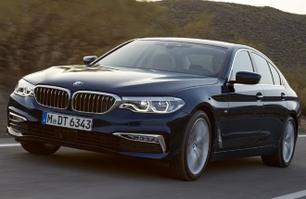
But what if it didn't have to be that way? Behold the BMW 530e iPerformance.
Seemingly tired of waiting for the Australian Government to introduce any sort of meaningful subsidy for green cars, BMW has made the choice simple: you can have a petrol-powered 530i for $108,900, or opt for the plug-in hybrid 530e for... $108,900. This is truly revelatory thinking.
There's no specification penalty, either, and the hybrid will power to 100km/h in an identical 6.2 seconds, so you're not even any slower. But you are sipping less fuel, emitting less C02 and basking in the general smugness, and sweet silence, that comes with feeling like you're saving the world.
So what's the catch?
Australian EV buyers seem to be missing the point of the Mustang Mach-E.
Yes, Ford’s exorbitant early pricing did not help – which the mid-sized EV has yet to recover from. And the V8-muscle-car image – and baggage – that the Mustang prefix brings no doubt confuses and even repels some people. Especially eco-conscious ones.
But it’s not that complicated. The Mach-E is merely meant to be a sporty, stylish and attainable family car, albeit with electric power.
Five years on from its US launch, does the 2026 Series II facelift keep up with newer and fresher electric SUV alternatives? And is it worth the premium that the Mustang badge commands?
Not all superheroes wear capes, and we're proud to report the 530e does its bit for green motoring without feeling the need to shout about it. And with no price or specification penalty, it's easier being green than ever before, and the pricing of this BMW really puts the cat amongst the canaries.
EV buyers who don’t or won’t see the point of the Mustang Mach-E are missing out.
This is a sporty and fun-to-drive electric SUV in the same way that the Ranger is the sporty and fun-to-drive ute. In other words, a lot of what makes Fords brilliant is alive and well here, without compromising functionality. The opposite of so many Chinese electric SUVs that shine brightest on the showroom floor, then.
Yes, a base Select that is around $10K cheaper to start with might help punters see the light even more clearly (and that's our choice), and it is starting to look dated inside and out, but overall, the Mach-E is an enjoyable, fulfilling and practical family proposition.
Crucially, there's nothing weird about the way the 530e looks. While some green cars look like they've been designed by one of the kids from 3rd Rock from the Sun, the 530e looks much the same as the rest of the range, save a few tiny but telltale giveaways - like the e-drive badging outside, and what looks like a bonus fuel flap tucked in behind a front wheel that houses the whole plug-in bit.
And we really, really like it. It's elegant and statesman-like from every angle, and looked especially important in the deep-blue colour of our test vehicle. It's not over-designed, with body creases used sparingly, and the occasional glint of polished silver that rings the windows and the grille adds a final sense of shininess to an understated design.
Inside, there's more going on than you might normally find in a BMW. The hugely complicated digital display screen now includes everything from battery charge, power usage to the usual assortment of speedometers and petrol readouts.
It doesn't feel overdone or crazily festooned, but there's more at play here than in your usual BMW.
The dash is busy, too, with a wide screen emerging from a centre stack that also houses a CD player and a digital aircon setup, which in turn sits above a complex centre console from which you can alter driving settings, control the multimedia or cycle through electric modes. It doesn't feel overdone or crazily festooned, but there's more at play here than in your usual BMW.
Elsewhere inside, the seats are beautifully designed, with a quilted leather highlight through the middle, while the gloss-black strip that lines the dash hides a dual strip of ambient interior lights that also runs across all four doors.
So, what's changed with the facelift? Not much, meaning that the Mach-E – unveiled all the way back in late 2019 is beginning to look dated. Maybe that’s another classic Mustang trait.
The base Select gains the upper-series’ trick LED headlights. The Premium adopts some plastic body cladding. The grille treatments vary between the grades, with the GT boasting a unique look. Genuinely fresh new colours abound. And the alloys have been restyled.
Otherwise, it's still the same, Porsche Macan-esque small to medium-sized SUV crossover on the outside, down to the Hyundai Tucson-like vertical tail-light motif that barely seems like the regular Mustang muscle car’s, despite Ford’s intentions.
Inside, changes are largely limited to a repositioning of the gear selector from a rotary dial to a column shifter, Mercedes-style. That big portrait touchscreen could be straight out of a Ranger ute.
As the world's motoring tastes shrink faster than a lap-banded Clive Palmer, it's easy to forget the joys of the full-size sedan, but the space for passengers and luggage in the 5 Series will have you questioning your downsizing ways.
Upfront, there's plenty of room between front-seat riders, who will also share two smallish cup holders, along with room in each front door for bottles. There's also a dedicated wireless charge pad (which, because of its tight design, is crazy difficult to actually remove your phone from), but you'll also get two USB points and a power outlet that's hidden in the sizeable centre storage bin as standard fit.
Backseat riders get heaps of space, both in width and in leg room behind the front seats. And there's twin air-con temp controls and twin power outlets, too. But middle-seat passengers will be forced to sit with their legs on either side of the raised tunnel, which will definitely impact on comfort.
The boot's still sizeable, despite shrinking slightly to house the battery/fuel tank setup
Best to ditch the fifth passenger, then, and deploy the pull-down seat divider, which also houses two cup holders. Finally, there are three ISOFIX attachment points, one for each seat in the back.
The boot's still sizeable, despite shrinking slightly to house the battery/fuel tank setup (the tank has been moved further back to accomodate the batteries), and can be adjusted to be a flat load area if you'd like, offering up to 410 litres with the rear seats in place.
As we’ve said before, the Mach-E is closer to something like, say, a BMW X4 than the boxier X3 from a proportions perspective, making it a classic coupe SUV.
Once you get over using the endlessly-annoying push-button door release, in lieu of a handle (why redesign the wheel?), that’s particularly noticeable entering/egressing the rear seat for larger people, though the front is fine.
While the interior is also clearly from an earlier era (and embarrassingly reminiscent of a Tesla), at least Ford finished engineering it for easy, seamless use.
The front seats are really comfy, ahead of a super-clear instrument pod, helping make for a great driving position, while the 15.5-inch display in the centre with Ford’s friendly SYNC4A operating system is simple to navigate once time is taken to familiarise. Current Ranger and Everest owners will feel right at home. The audio sound is superb too.
There’s a thoughtful amount of storage options, including for devices that require access to the handy USB outlets, ventilation is ample and the fit and finish in these Mexican-made Mustangs appears to be first class.
A big thumbs up, too, for the new column shifter and integrated central volume knob in the touchscreen that also allows adjustment of the climate control.
On the other hand, eyes must leave the road to dig into sub menus to change driving modes, side and rear vision is tight (those standard surround-view cameras sure come in handy), there are no paddle shifters to control regenerative braking, the glass roof neither opens nor completely blocks out sunlight due to there being no shade screen, and the overall ambience is more Ranger XLT than Ford LTD.
The back seat is surprisingly spacious given the coupe SUV dimensions, though the roofline may ruffle a few loose wigs. The backrests and cushions provides decent support, and most expected amenities are present, including air vents, USB outlets, overhead lighting/grab handles, coat hooks, cup/small bottle holders and centre armrest. And that glass ceiling does shower the cabin with light on a cloudy day.
Further back, the Mach-E offers 402 litres of cargo capacity that balloons out to 1420L with the split-fold back seats dropped, and there’s some hidden storage under the floor for smaller items. As mentioned earlier, the spare wheel is AWOL.
Existing owners will also notice a noticeably smaller ‘frunk’ area under the bonnet, where storage has plummeted from 134L to just 49L. That’s due to the newly-fitted heat pump that, at least helps boost efficiency in what is a spacious and practical family SUV.
The 530e commands a 530i-equalling $108,900 price tag, which is genuinely impressive when you consider all the extra bits and pieces that go into make a plug-in hybrid. That money buys you a well-equipped car, and only those allergic to money need reach for the options list.
As standard, you'll find leather-wrapped - and heated in the front - sports seats, 19-inch alloy wheels and a 10.25-inch touchscreen that pairs with a really very good 16-speaker Haman Kardon stereo. Wireless Apple CarPlay is available, but it'll cost you an extra $500. To be honest, though, we didn't miss it.
You'll also find adaptive LED headlights, a huge head-up display (so big, in fact, that it impedes vision when climbing steep hills), dynamic dampers, an auto opening/closing boot and a self-parking system, along with BMW's suite of self-driving tech - but we'll come back to that under the Safety sub-heading.
Here's a worrying fact. The Mustang Mach-E is the cheapest new Ford passenger car you can buy in Australia that isn't based on a diesel-powered ute. And it still ain’t cheap!
When launched in Australia back in mid-2023, prices started north of $80,000 – all prices are before on-road costs – and then were swiftly slashed twice since then, as buyers basically stayed away.
Today, the well-equipped Select Single Motor RWD kicks off from $65,990. A grand more than before, but it does gain a heat pump to boost efficiency (though WLTP range remains steady at 470km), while also scoring more muscle, faster charging and – at last – softer suspension.
This is no stripped-back edition, with adaptive cruise control, dual-zone climate control, a 15.5-inch touchscreen, 360-degree-view camera, a glass roof, wireless Apple CarPlay/Android Auto, 10-speaker premium audio, a wireless charger, synthetic leather upholstery, powered and heated front seats, a powered tailgate and 19-inch alloys. Note that there is no spare wheel. Just a tyre-repair kit.
Meanwhile, the Premium Extended Range jumps $500 from $80,490 and continues with a bigger battery with an unchanged 600km of range, while it’s a near-$20K stretch from there for the flagship GT from $98,490.
Justifying a $1100-plus price hike is a more-powerful dual-motor set-up as well as a five-per cent range improvement at 515km, while retaining all-wheel drive (AWD), adaptive dampers, bolstered sports seats, 20-inch alloys and more.
Every grade includes advanced driver-assist systems (ADAS) tech from automatic braking and lane-support systems to 10 airbags – except in the GT, which only has nine. More on that in the safety section later on.
Against the stunning Polestar 4, swanky Kia EV6 and timeless Hyundai Ioniq 5, the Mach-E’s pricing is ballpark competitive, but is largely undercut by the sporty Cupra Tavascan, Skoda Enyaq, VW ID.4 and ID.5 cousins from Europe, as well as ubiquitous Tesla Model Y from China.
Speaking of which, the Ford seems downright unaffordable compared to the striking BYD Sealion 7, Deepal S07, Zeekr 7X, XPeng G6 and IM6 by MG. Game over then, you might think.
But, with names that sound like Cold War missile codes, none of these cheaper Chinese alternatives can match the rock-and-roll attitude that the evocative Mustang connection does.
And, damn it, the Mach-E’s calculated emotional play only heightens with exposure, which partly explains why it’s one of America’s best-selling EVs. Love it or hate it, even the comically contrived styling works.
Drift around in pure EV mode and you'll be relying on the 530e's 83kW and 250Nm electric motor, which will provide what BMW refers to as "between 28 and 32 real-world kilometres".
Run out of range, or simply use too much throttle, and the 2.0-litre petrol engine comes into play, adding 135kW and 320Nm to the mix. All up, that's 185kW and 420Nm - respectable numbers by any measure, and enough to match the petrol-powered 530i's zero to 100km/h sprint of 6.2 seconds.
That power is fed through an eight-speed automatic transmission before being sent exclusively to the rear wheels, where it belongs.
Though employing Ford’s Global Electrified One (GE1) platform that is a variation of the tragically discontinued Focus small car and Escape mid-sized SUV’s modular C2 platform, the Mach-E is basically a rear-motor, rear-wheel-drive EV, with the main traction unit now an in-house design. Previously that was outsourced.
A permanent magnet synchronous electric motor, it delivers 212kW of power and 525Nm of torque to the rear wheels via a single-speed reduction gear transmission.
Tipping the scales at 2086kg in the (albeit bigger-battery) Premium and 2100kg in the Select, its power-to-weight ratio is nearly 102kW per tonne and 101kW/tonne respectively. The latter needs 6.2s to streak from 0-100km/h, which is just 0.1s shy of the former. Top speed for both is 180km/h.
Meanwhile, with an electric motor added on to the front axle, the 2276kg, 434kW/955Nm GT’s 190kW/tonne slices acceleration down to just 3.8s, on the way to 200km/h, and relies on AWD, adaptive dampers and performance tyres to help keep things under control. Suspension consists of MacPherson struts up front and a multi-link rear end arrangement.
Like a Facebook relationship status, it's complicated. The 530e will sip a claimed combined 2.3 litres per hundred kilometres on the claimed/combined cycle, which is amazing for a car this size. Better still, it seems genuinely achievable - at the vehicle's launch, our own Richard Berry recorded a stunning 2.0 litres per hundred kilometres on a short test route.
But that's with a full load of battery charge on board. For our week with the 530e we were unable to actually plug it in (living in Sydney, I can't afford a garage), so once the initial battery charge had been used we were back to mostly petrol power. Unlike some other plug-in hybrids we've driven, we found it very difficult to recharge the battery to any meaningful level using regenerative braking, so once we were flat we stayed flat. If we had plugged it in, it would have been a two-hour recharge using a specialised wall unit, or about four hours using a normal plug.
As a result, though, our fuel use was closer to 7.0 litres per hundred kilometres after some considerable real-world testing.
Ford says the Select averages 18.5kWh/100km on the European cycle, while the Premium and GT are at 17.7kWh/100km and 21.0kWh/100km, respectively. These figures are in line with most rivals given the Mach-E’s performance capabilities.
Two distinct battery packs are offered, depending on grade.
The Select features a (useable) 73kWh Lithium Ferro phosphate (LFP) battery, for 470km of WLTP driving range. Premium and GT models switch to an 88kWh and 91kWh Nickel Manganese Cobalt (NMC) unit, bumping range up to 600km and 515km respectively.
The GE1’s 400V architecture has a CCS Type 2 port with 11kW AC charging capacity, or 150kW for DC charging. Many rivals offer faster charging capabilities.
According to the European data, AC charging from empty to full using a regular household socket needs up to 47 hours, or 10 hours with a 7kW Wallbox, while, a 50kW DC charger requires up to 90 minutes for a 10-80 per cent top-up, or under 40 minutes with a 150kW DC charger.
There's so much to like about the way the 530e sets about saving the world, and that's mostly because it doesn't shout about it, either to the driver or the outside world.
It's very much an underpants inside its pants superhero, which makes us like it even more. Set off in EV mode, and the 530e will drift silently away from the curb, burning battery power over fuel for as many as 30(ish) kilometres. But equally important, the shift from green to gas is largely imperceptible, with the petrol engine joining in willingly when you ask it to - usual via a prod of your right foot.
It is so effortlessly smooth that you need to really pay attention to notice the eight-speed 'box changing gears at city speeds, and it's commendably quiet, whichever drive mode you're in.
Downsides? Well, it doesn't feel quite as sharp as it's conventional-engined siblings. The batteries add around 230kg in weight, which never helps, and it all feels a little softer and a little less dynamic, even with Sport mode engaged. BMW assures us the adaptive suspension setup and tune is identical, but the 530e feels noticeably softer when you tackle a twisting back road. And that encourages you to use your right foot a little more, which in turn negates the whole electric thing in the first place.
One of the great joys of BMWs has always been their ability to transform from cosseting comfort to rear-drive rocket when you want them to, and you can't help but notice the 530e isn't quite up to that challenge. But if your intentions are mostly city- and freeway-based, then this plug-in BMW is almost indiscernible from its petrol-powered sibling.
If your idea of a Mustang is a big, heavy and rousing grand touring machine, then the Mach-E certainly lives up to the image.
And, in some ways, exceeds it, because – among the electric SUV fraternity – this one’s the driver’s choice, with a level of control and finesse that the muscle machines of yesteryear could only dream about.
Let's start with the performance. The 212kW Select and Premium are certainly fast enough. Sprightly off the mark, their acceleration is very smooth yet very determined, packing plenty of instantaneous punch when some extra squirt is required. Really, this is all the speed you’ll ever need.
Ford’s dynamic DNA force is very strong in these EVs, with steering that feels light yet precise, and naturally connected to the road, providing comparatively agile, flowing handling and decent body control. This is backed up by nicely nuanced traction intervention that – in true rear-drive Pony car tradition – allows for some playful rear-end breakaway.
After years of testing dreary, remote EVs – especially from but not just limited to China, the Mach-E’s willingness to interact with the driver is like enjoying a long, cold drink after hours in the hot sun.
With twin electric motors making 434kW and nearly 1000Nm, the GT turns the amp – if not quite the volume – up to 11, with tremendous response and terrific thrust right from the get-go. It’s actually quite astounding how contained and controlled the AWD flagship’s performance is delivered, given how brazenly fast it is down a straight road.
Jumping out of one of the other Mach-E models, the GT’s extra heft is immediately obvious around the bends, since it doesn’t quite have their lightness of touch. Grip is phenomenal, yet the driver can break traction even momentarily if desired, and there’s a sense that, in the right hands, few rivals with similar performance could keep up with the Ford in full flight. It’s fast everywhere all the time. But it’s just not quite as athletic or fun as the Select and Premium.
Note that, since we were on busy public roads, most of this assessment was carried out using the normal and not sport driving mode.
The driver assist safety systems are also really well tuned, sparing the driver the distraction and frustration of needless intervention, even when piloted enthusiastically.
The previous Mach-E was widely criticised for delivering a hard ride, even with the GT’s adaptive dampers. While you’d never call the suspension supple, the 2026 model’s ability to better absorb bumps is a welcome development, allowing the driver to better enjoy all the other benefits on offer. There are softer and more isolated alternatives, but few rivals are as rewarding dynamically.
Downsides include too much road noise intrusion over certain surfaces, the lack of paddles for the regenerative braking, and the fact that to switch that on or off requires the driver to resort to diving into a touchscreen menu. The same goes for switching between the cringy Whisper (eco), Active (normal) and Untame (sport) modes. How difficult would it be to fit a simple button to activate these?
Finally, thick pillars and small side/rear windows can make vision out difficult in tight spaces.
The Mach-E may be getting on to its sixth year in production, but there’s a welcome, non-EV analogue connection to the way this otherwise electrifying SUV goes, steers, handles and grips the road. Like many of the best Fords, the engineers have gone to the very real effort of prioritising driver enjoyment, without sacrificing everyday functionality.
Like we said earlier, the more time you spend in the Mach-E, the more enjoyable it gets.
You'll want for little here, with front, front-side and full curtain airbags joining parking sensors, a surround-view camera and a self-parking system.
You can also expect active cruise control, lane control assist with lane keep assist (so it will stay between the lane markings for you), AEB and cross-traffic warning. And all of that means that, technically, the 530e can drive for you. That is, of course, if you don't mind driving like a dick - in full-autonomous mode it will swerve from lane marking to lane marking like it's playing bumper bowling.
Tested by ANCAP back in 2021, the Mach-E Select and Premium models managed a five-star ANCAP crash-test rating. The GT version remains unrated.
There’s a fairly comprehensive list of ADAS tech, including autonomous emergency braking (AEB) with intersection assist, reverse brake-assist, post-impact braking, lane-keep aid, lane-departure warning, evasive-steer assist, blind-spot monitoring, cross-traffic alert, adaptive cruise control with full stop/go functionality, traffic-sign recognition and tyre pressure monitors.
Select and Premium have 10 airbags (dual front, front-centre, a driver’s knee, front-side, rear-side and full-length curtain/head), but the GT misses out on the others’ front-centre airbag due its space-impeding bolstered sports seats, dropping the airbag count to nine.
The AEB tech operates between 5km/h to 80km/h in pedestrian, cyclist and back-over scenarios day or night, and between 5-187km/h car-to-car. The lane support systems work between 65km/h to 187km/h.
A pair of ISOFIX latches are fitted to the outboard rear seats, along with a three top-tether anchorage points.
Speaking of kids, while unnecessarily fiddly, the hidden door ‘buttons’ do have an anti-snag function that stops an opening door from slamming shut on venerable fingers.
Like the rest of the 5 Series range, the 530e falls under BMW's three-year, unlimited-kilometre warranty. There are no set service intervals, either, with BMW using what it calls 'condition-based' servicing. In other words, the car will tell you when it requires a trip to the service centre.
The batteries are covered by a separate warranty covering six years or 100,000km.
A five-year/unlimited kilometre warranty applies to the Mach-E, along with seven years of roadside assistance, activated annually if serviced at a Ford dealer.
Service intervals are every 12 months or 15,000km, whichever occurs first.
Prices for the 2026 facelift weren’t available at the time of publishing, but last year’s model alternated between costing $140 and $185 per service for the first 10 years. And the Mach-E can be maintained at any one of the 180-or-so Ford dealers network Australia-wide.
Ford says the EV Traction Battery is covered by an eight-year/160,000km warranty.