What's the difference?
Audi’s flagship is the A8, a long, luxurious sedan where being driven is often as important as doing the driving.
To put this ultra-premium machine in context, it competes with other German heavyweights like BMW’s 7 Series and, of course, the Mercedes-Benz S-Class as well as Porsche’s Panamera. Not to mention the Lexus LS or Maserati’s Quattroporte.
What’s life like at the top of the Audi pyramid? Stay with us to find out.
What’s the closest thing we have to a modern-day Holden Statesman/Caprice?
If, like General Motors, you obliterate Australia’s Own from existence altogether, you’re left with time-honoured rivals also made in this country, like the Ford Fairlane, Chrysler by Chrysler and Toyota’s Crown and Avalon.
But they’re also all in history’s dustbin (well, the American ones, anyway), leaving the humble Camry as the sole living nameplate with any connection to Australian manufacturing.
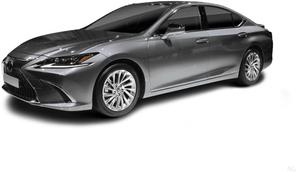
And since the Lexus ES is a close relative, we’re going to take a fresh look at the latest version, with a view of it as a bit of a survivor of a bygone era – where aspirational vehicles were created from normal family sedans.
Just like the Fairlane, Crown and of course, the Caprice.
Launched in mid 2018 but facelifted in 2021, we test the ultimate version of the seventh-generation ES, the 300h Sports Luxury – or SL, if we’re to make yet another tenuous connection to long-gone Holdens.
Let’s go!
The Audi A8 swims in a luxury car shark tank where those paying the big dollars expect top-shelf everything. It delivers a serene driving experience whether you’re in the front or the back, in a superbly engineered and executed luxury sedan package. Not perfect, but very, very impressive.
There’s no denying the Sport Luxury is imposing, spacious, plush, chock-full of kit, efficient, speedy and pleasingly relaxing up to a point.
But its interior is also dated and true ride comfort can be elusive beyond smooth roads for this top-of-the-line version to make the grade as a proper luxury sedan.
The ES 300h feels more like an aspirational Toyota than a Lexus for the (wealthier) masses, especially after recent triumphs like the latest NX and RX SUVs. The Camry DNA is difficult to disguise, as the amused strangers who sat in our test car uninvited thinking it was their Camry highlights.
Sure, the hybrid is no Chevy V8, but in many other ways, the Sport Luxury seems like the modern successor to the Holden Caprice experience.
The A8 is close to 5.2 metres long, yet instantly recognisable as an Audi thanks mainly to its evenly weighted proportions, gently curved roofline and overall high-waisted design. Worth noting its drag coefficient (Cd) is an impressively slippery 0.25.
The characteristic look is accentuated by the brand’s signature, six-sided grille, in this instance highlighted by a matrix of high-relief chrome accents. And typically angular LED Matrix headlights sit either side.
Check out our video review for the carefully orchestrated animation they run through when the car is unlocked.
The car looks equally svelte and contemporary from the rear, with just the right amount of chrome lifting the tone and multi-spoke 20-inch rims filling the wheel arches nicely.
As you’d expect, the top-shelf look and feel continues inside with the seats trimmed in aniline leather, perforated on the front and outer rear positions, with genuine hide also covering the centre console, door rails and armrests, steering wheel and upper dashboard.
Fine grain ash wood inserts sit alongside brushed metal elements and a meticulous attention to detail is obvious… everywhere.
For example, the interior door handle design has been thoroughly thought through, requiring a simple underhand tap to open the door, rather than the more conventional, and ergonomically convoluted, ‘over the top’ movement.
Three sleek screens dial up the tech - a 10.1-inch multimedia interface at the top of the centre stack, an 8.6-inch display below it for heating and ventilation, and a 12.3-inch version of Audi’s ‘Virtual Cockpit’ in the instrument binnacle.
And the spacious rear is the epitome of cool, calm Teutonic form and function. You feel relaxed the moment you get in, and isn’t that the primary aim of a car like this?
Historically, cars like the ES appeal to an older and more conservative demographic, who value imposing, conspicuously-expensive looking sedans offering the luxury of space. This is the Cadillac model and our Lexus embodies it.
Which is why hire company operators snap such vehicles up. Great for airport-hotel-airport runs.
But it’s weird, given how much of Lexus’ design language is in the ES’ elaborate nose and tail treatments, how generically Toyota this looks. Certainly, our test car’s 'Sonic Quartz' white paint job does not help.
Just to reinforce this perception, two strangers were fully sat inside our unlocked test Lexus before they realised it wasn't their actual car parked nearby – a white Camry of course.
How they laughed. But if I had paid over $80K for my ES, I certainly wouldn't be amused.
Space is luxury, be it a large house, a first class seat or a spacious car, and at nearly 5.2 metres long with a close to 3.0m wheelbase the Audi A8 measures up.
Even before you get in, the doors have an amazing sense of solidity and quality. It’s like opening and closing a bank vault… if that huge circular door had a power-assisted soft-close function.
There’s copious amounts of space for the driver and front passenger with lots of storage including a lidded box between the front seats, complete with a two-piece longitudinally split top design, so you can sneak your half’s open without displacing your neighbour’s elbow.
The door bins are decent but there isn’t a specific cut-out for bottles, so it’s more a case of laying them down than standing them up. There’s also a handy covered cubby at the end of the door armrests.
The glove box is a good size and there are two cupholders under a pop-up cover in the centre console.
Of course, the back is where space really counts, and there’s as much room as you’d find in, well… a limo.
Sitting behind the driver’s seat, set for my 183cm position, I enjoyed copious amounts of head, shoulder and legroom.
There are electric sunblinds for the rear and rear side windows, controlled by buttons in the door as well as the rear seat remote, a 5.7 inch OLED display housed in the beautifully trimmed fold-down centre armrest (which also has a soft close function!). The remote also allows adjustment of the lighting and climate control. Classy.
There’s a shallow storage box and twin cupholders in the armrest, medium size door bins and hard shell pockets on the front seat backs. The rear armrests also feature a small lidded cubby.
In terms of connectivity and power options there’s wireless Android Auto and Apple CarPlay, a USB-A and USB-C in the front, and an identical pair in the rear, as well as a 12-volt socket in the front and two in the back.
Boot volume is a useful 505 litres (VDA) and the lid is electric, with gesture control. It’s able to easily swallow our three-piece luggage set or the bulky CarsGuide pram. And while the rear seats don’t fold there’s a ski port door to accommodate long items. Just make sure you use the tie-down anchors in the boot to ensure they’re properly secured. There’s a handy netted section behind the left wheel well and a cargo net is included.
Maximum towing capacity, for a braked trailer, is 2.3 tonnes (750kg unbraked) and in more good news, the spare is a space-saver rather than the increasingly prevalent inflator/repair kit.
The ES 300h may look like a gussied-up Camry on the outside, but there’s very little evidence of the Toyota inside the stretched cabin, with Lexus-specific seating, trim and dashboard.
However, if you’re familiar with the latest LS, NX or RX models, much of what you see is now dated, previous-gen tech, and that’s an issue in some key ways.
Let’s start with the SL positives, though.
Quiet and free from rattles, the interior is defined by its first-class fit and finish, and then closely followed by the vast length inside, with ample room up front to stretch out and relax in. The ES’ substantial width adds to the sense of spaciousness.
Ventilation is excellent, exemplary even, with strong and effective climate control all around the car. Great for very hot days.
The front seats provide practically infinite adjustment in most directions, and include a handy thigh-support extender that – like everything else inside – moves electrically.
Comfy and supportive, they do a fine job. Effective heated and vented cushions and backrests are further bonuses.
But let's call out the hard front headrests. They feel cheap. And the ES’ age now shows in other, eyebrow-raising ways for an $80K-plus machine.
The dash is a messy mix of now-dated Lexus styling cues – from the ugly asymmetrical centre console to the single circular instrumentation dial for speed and tachometer.
The original IS 200's analogue watch face theme was cool in '99. Today's iteration looks basic.
Storage seems poorly judged given the vastness of this sedan, provided for by cavities in the sub-sized centre armrest, glove box and door bins. Note that the latter cannot hold bottles.
Then, there’s the ill-conceived touchpad that requires brain-surgery precision when fingered to navigate the main display screen when driving (though now it's also a touchscreen, and not before time); after years of various iterations of this, it remains alien and confounding in the extreme to operate. Rest assured, it's been banished in newer-gen Lexuses.
Also annoying is the infernal ‘please obey all traffic regulations’ voice warning, just like you find in a Yaris; the limited and easily-flummoxed voice-control tech and the dated and low-fi graphics for the needlessly complicated sat-nav system.
We relied on CarPlay because the in-built item endlessly let us down. Chuck them all out.
However, there are upsides to a dated interior, because even though this is a confusing and at-times intimidating button-fest, it’s still preferable to the today's everything-behind-a-touchscreen mania.
Give us physical switches and buttons every time, like the ES. Yes, the Lexus also has them replicated within the central display, but the point is, the driver has a choice.
You shouldn't be shocked to learn that the Sports Luxury impresses most as a sumptuously comfortable back-seat experience.
Rear access is easy, the passengers can adjust the front seat, climate control and audio systems via handily-sited switches (meaning they're replicated thrice in some instances).
Limo luxury amenities include individually-reclinable and heated outboard seats that are downright sumptuous, blinds for all glass (electric for the rear window), a lined centre bin, face-level air vents, two USB ports, a 12V outlet, generously-sized elbow rests on the doors, overhead lighting and door pockets are also included.
This is tailored as an airport/hotel shuttle and very comfortable doing so.
No folding backrest, though, meaning the boot – though not small at 454 litres – lacks the load-through facilities now common in most other sedans, including the Camry.
Under the flat floor is a space-saver spare with the words ‘SPACE MISER MKIII’ emblazoned across it. Classy.
In summary, the ES’ interior is one of two parts – comfortable but dated up front, invitingly lush out back. Perfect for its intended station in life then.
With an entry price of $202,700, before on-road costs, the A8 is in the thick of it amongst its full-size primo sedan competitors from Europe and Japan. Specifically, BMW’s 740i MHEV ($272,900), the Lexus LS500h ($195,920), Maserati Quattroporte GT ($210,990), Mercedes-Benz S450 ($244,700) and Porsche’s Panamera ($207,800).
By definition, a luxury car should be loaded to the gunwales with features that make life on the road that little bit easier. And aside from the performance and safety tech we’ll cover shortly, the highlights from a very lengthy standard equipment list are - 20-inch alloy rims, metallic paint, adaptive cruise control, digital matrix LED headlights, digital OLED tail-lights, full keyless entry and start, power-assisted door closing, power boot lid (with gesture control), a panoramic sunroof, heated, ventilated and massaging electrically adjustable front seats, heated front armrests and extended leather trim (centre console, door rails and armrests, steering wheel and upper dashboard).
Also included are ambient interior lighting (with 30 colours and six colour profiles), four-zone climate control, electric sunblinds for the rear and rear side windows, ‘Audi Connect’ navigation and multimedia (with voice and handwriting recognition), wireless Android Auto and Apple CarPlay, 17-speaker 730-watt Bang & Olufsen audio (with digital radio) and a colour head-up display.
There’s a lot more, and the A8 can hold its head high in terms of pricing and features relative to its $200K price tag and the competition.
The second-oldest Lexus nameplate after the LS flagship, Australia skipped the fifth-gen version from 2006 to 2012 altogether because it was ousted by the smaller, sportier and more-popular IS series.
However, the latter’s 2021 demise saw the situation flipped, with the ES retaking the mantle as the affordable Lexus sedan torchbearer, while also belatedly replacing the larger GS.
This all coincided more-or-less with a facelift later that year, which brought revised front-end styling, uprated safety, updated multimedia, extra kit and a beefier body, among other changes.
Plus, a (slightly) cheaper non-hybrid ES version returned, dubbed 250. Starting from $61,620 (all prices are before on-road costs), it uses the Camry’s 2.5-litre four-cylinder atmo petrol engine.
However, the 300h hybrid from about $2K more is the better seller, with its electric motor and battery pack assistance. Our test SL flagship kicks off from $78,180, and heaves with standard equipment.
On the safety front, the usual array of driver-assist tech is present, starting with Lexus’ pre-collision system that includes Autonomous Emergency Braking (AEB), blind-spot monitor, adaptive cruise control and lane-keep warning/assist. See the safety section for more.
The biggest change inside is the now-touchscreen-enabled 12.3-inch display, boasting a 360-degree view camera, Apple CarPlay, Android Auto, digital radio, a 17-speaker Mark Levinson audio system, CD player (!) and shockingly sub-par satellite navigation.
Beyond that, Sports Luxury buyers also score tri-beam LED headlights with adaptive high beams, an informative 8.0-inch driver display, a heated steering wheel, sunroof, powered heated/vented front seats (with memory setting for the driver), a wireless charger, head-up display, keyless entry/start, powered steering column (including retraction for easier access), active noise-control tech, rear privacy glass with sunshades, a powered boot lid with kick sensor, semi-aniline leather with a choice of walnut trims, tri-zone climate control, powered/reclining/heated outboard rear seats with centre armrest climate and audio controls, 18-inch alloys and performance (but not adaptive, crucially) dampers. More on that later.
All Lexus models also include an ‘Encore’ aftersales subscription program offering myriad offers and services including 'free' car rental.
Everything but the cliché sink, then, but is the 300h SL actually good value for money?
No rival can match the Lexus’ mix of sheer size, hybrid efficiency, spec generosity and aftersales support.
But around that $80K mark, the cheaper yet roomier Skoda Superb and smaller Volvo S60/V60 and VW Arteon 206TSI all feature all-wheel drive, as do the classy Audi A4/A5 quattros, while the rear-drive-biased BMW 3/4 Series, Genesis G70 and Alfa Romeo Giulia are far more focused on character and athleticism. Serious competition all.
And, as we found out, none can be mistaken for a Camry. Image is important at this level.
The Audi A8 50TDI is powered by a 3.0-litre turbo-diesel V6 engine sending 210kW (from 3500-4000rpm) and 600Nm (from 1750-3250rpm) to all four wheels via an eight-speed automatic transmission (with ‘Tiptronic’ sequential manual shift function) and Audi’s quattro constant all-wheel drive system using a self-locking centre differential.
It also features a 48-volt electrical set-up for mild hybrid functionality built around a belt connected starter/generator, AC to DC converter and a 48-volt lithium-ion battery.
With energy recovery of up to 12kW from regenerative braking, it enables the A8 to regularly coast with the engine switched off and helps the extended stop-start system to operate smoothly.
Doing duty in a cornucopia of Toyota products, the ES 300h’s A25A-FXS engine remains the same as the pre-facelift model, meaning it is a 2487cc (2.5-litre), double overhead cam, 16-valve Atkinson Cycle in-line four-cylinder petrol unit with variable valve timing.
In this application, it makes 131kW of power at 5700rpm and 221Nm of torque between 3600rpm and 5200rpm, and sends that through to the front wheels via an e-Continuously Variable Transmission (CVT) with a sequential shift facility offering artificially stepped 'ratios' for a more-conventional automatic transmission sensation.
A series/parallel full hybrid system, the engine is backed up by a permanent magnet synchronous electric motor, delivering 88kW and 202Nm, and is fed by a tiny 1.6kWh Nickel-metal hydride battery pack.
With only a couple of kilometres of pure-EV driving availability, and only under light throttle or when coasting along, the latter is recharged via the petrol engine as well as recaptured energy from the regenerative braking system. Combined power output is 160kW. No combined torque maximum is stated.
With an impressive power-to-weight ratio of 92kW/tonne, the 1740kg 300h needs 8.9 seconds to reach 100km/h, and maxes out at 180km/h.
To handle all that movement and mass, the steering is an electrically powered rack and pinion set-up, the front suspension consists of MacPherson-style struts and the rear suspension is made up of a multi-link arrangement.
Audi’s official fuel economy number for the combined (ADR 81/02 - urban, extra-urban) cycle is 6.6L/100km, the 3.0-litre turbo-diesel V6 emitting 175g/km of CO2 in the process.
Over a week of city, suburban, and some freeway running we averaged 11.1L/100km, which is acceptable for a 2.1-tonne luxury sedan.
Also worth noting the standard stop-start system works beautifully thanks to the 48-volt starter/generator.
You’ll need 82 litres of diesel to fill the tank and using the official number, that translates to a range of just over 1240km, which drops to around 740km using our real-world figure.
Rated as Euro 6, the ES 300h requires a minimum brew of 95 RON premium unleaded petrol.
But that’s where the bad news stops, because over 626km of all sorts of driving in hot weather with the tri-zone climate control in full workout mode, we averaged an extremely commendable 5.6 litres per 100km. Well done, Lexus.
That’s against the official combined average of 4.8L/100km, which equates to just 109 grams per kilometre of carbon dioxide emissions. Not bad.
With the 50L tank brimmed, expect a real-world range of about 890km – or 1041km using the official average fuel consumption figure.
Either way, the 300h is mighty frugal for a 5.0-metre long and 1.8-tonne luxury machine. But cab and hire companies already knew that from their Camry hybrids, right?
Despite extensive use of aluminium in the ‘ASF’ platform and body panels, the A8 tips the scales at a sturdy 2095kg, yet Audi says the A8 will accelerate from 0-100km/h in just 5.9 seconds. And with 600Nm of peak torque available across a flat plateau from 1750-3250rpm this big four-door gets up and goes hard when asked to.
At more sedate speeds you’re occasionally reminded there’s a diesel engine under the bonnet, with that characteristic engine and exhaust noise only making their presence felt under pressure.
In fact, under normal circumstances, noise, be it the engine, tyres or wind is minimal, thanks to a combination of the car’s aero-efficient shape, thick acoustic glass and other sound-deadening measures throughout the car.
The eight-speed auto transmission is suitably smooth, with the central shifter or wheel-mounted paddles able to make snappy sequential ‘manual’ shifts.
There are four drive modes in the ‘Drive Select’ system - ‘Comfort’, ‘Auto’, ‘Dynamic’ and ‘Individual’ - enabling tweaks to the steering, transmission, throttle and suspension. Comfort felt most appropriate most of the time, although dialling up the throttle and transmission to more aggressive modes in Individual adds an enjoyable edge.
The suspension is five-link front and rear with an adaptive air system smoothing even high-frequency bumps and ruts amazingly well.
Push into a corner and the A8 feels nicely balanced, its wide track, sophisticated suspension, plus the quattro AWD system seamlessly distributing drive between the front and rear axles, keeping the big body under control. In fact, you feel the ‘big car shrinking around you’ syndrome from the get-go.
The steering is precise without being overly sharp and road feel is good. Again, with that 2.1-tonne kerb weight in mind, braking is appropriately powerful with big ventilated discs front (350mm) and rear (330mm).
It pays to remember the turning circle is 12.5m, and it’s worth picking your spot for a U- or three-point turn.
Although there’s a lot going on for the driver in terms of screens, buttons and switches it all makes sense ergonomically. The head-up display is helpful and there’s a common sense mix of digital and physical controls, the latter including an audio volume knob. Yes.
In the right conditions, the ES 300h is a big, squishy, comfy drive. At low speeds, for instance, thanks to an airtight cabin that does a great job isolating its pampered occupants from the outside world.
You cannot hear the car on start-up because the electric motor whirrs this Lexus off the line instantly, silently and effortlessly. And aided by all the surround-view cameras, the steering is light and direct enough to make parking a breeze. Automotive Valium to soothe your weary head after a long day.
Likewise, get the ES out on a smooth motorway and that relaxed feeling remains, with the 300h being right at home as it lopes along quietly and steadily. Cocooned in sumptuous leather and walnut, the adaptive cruise control gently rolling with the ebb and flow of traffic, it’s easy to zone out in here.
Find an empty stretch of road and you might also be impressed at how instantaneous the 300h’s throttle response is, leaping into action and piling on the speed without even breaking a sweat. This thing ain't slow!
Likewise, if you must hurry through a tight set of corners, the Lexus will remain composed and in control, without skipping a beat. Even the brakes seem well tuned and nicely modulated – something that many electrified vehicles struggle to achieve. It’s all so nice and easy.
So, what’s the catch?
First of all, while hushed when pussyfooting around, the illusion of posh sophistication is shattered once the accelerator pedal is prodded down hard, with the accompanying engine noise seeming incongruous.
Perhaps it’s because we’ve been lulled into an electric peace, but once the revs are up, no amount of sound-deadening will quell the mechanical roar.
And it's that same Camry hybrid symphony you've probably heard hundreds of times before, in the back of a taxi hurrying to the airport.
Except in the Lexus, it's far-more muffled. Like you're wearing headphones.
Then there’s the question of bonding. While the ES 300h will do what’s asked of it capably and without complaint, there is nothing to connect car with driver.
By this, we mean that the steering is remote and feels numb at all times, with little to no feedback. Enthusiasts will search for the short way home. This is the anti-Alfa Giulia - technically a rival.
Most people will not care about that, but on the Sport Luxury’s 18-inch wheel and 235/45R18 tyre package – while modest by today’s standards – the ride quality is less than ideal on anything but smooth roads.
The ES can easily cope with small-frequency surface irritations, but seems to lack sufficient suppleness dealing with larger bumps and pot holes.
There’s an underlying and often unyielding firmness that undermines this car’s luxury aspirations. We’d dial back the taut handling for more cushiness if we could. Or fit a decent set of adaptive dampers.
Plus, the Dunlop Sport Maxx tyres aren’t as quiet as we’d expect on some of our coarser bitumen surfaces.
Comfy on smooth roads, fast when you need it to be, fit enough to go exactly where you point it to without losing composure, and wonderfully economical even when driven like it’s been stolen, the 300h has much to offer from a driving point of view.
But you won’t be aching to drive it just for fun’s sake. And you’ll quickly learn which roads are less than perfect in your neck of the woods.
Even though the A8 hasn't been assessed by ANCAP, as you might expect, it goes to town when it comes to active safety tech, the car’s standard crash-avoidance features including auto emergency braking (AEB) (pedestrians/cyclists - 5.0-85km/h, vehicles - to 250km/h), ‘Active Lane Assist’, blind-spot monitoring, a reversing camera and 360-degree view (including kerb view function), front and rear parking sensors, ‘Collision Avoidance Assist’ (steering assistance in critical situations), ‘Turn Assist’ (monitors incoming traffic when turning right), and rear cross-traffic alert.
There’s also ‘Intersection Crossing Assist’, ‘Attention Assist’, tyre-pressure monitoring and an ‘Exit Warning System’ (detects cars and cyclists when opening doors).
If all that isn’t enough to avoid a crash the airbag count runs to nine, including front and side bags for the driver and front passenger, side airbags covering the outer rear passengers, full length curtains and a front centre airbag to minimise head clash injuries in a side impact. A first aid kit, warning triangle and high visibility vests are also on-board.
There are three top tethers for baby capsules/child seats across the back seat with ISOFIX anchors on the outer positions.
Tested in 2018 under a less-strict regime, the ES delivers a maximum five-star ANCAP crash-test rating result. Back then, it scored especially strongly in Adult, Child and Vulnerable Road User categories, and quite well for Safety Assist tech.
There are 10 airbags in total (offering dual frontal, side chest, side head and front-occupant knee protection). The AEB system works between 10km/h and 180km/h, while the lane-tracing, lane-keep and emergency steering assist systems are operational from 50km/h to 200km/h.
Other driver-assist tech includes rear cross-traffic alert, blind-spot monitoring, adaptive cruise control with full stop/go and road-sign recognition and 'Intersection Assist' with 'Turning Assist'. The latter warns and brakes the car if the driver attempts to turn into oncoming traffic.
These are backed up by adaptive LED headlights with auto high beams, 360-degree view cameras, tyre pressure monitors and 'Lexus Connected Services' that can notify emergency services in an accident and track a stolen ES. An alarm with intrusion sensor is also fitted.
You’ll also find anti-lock brakes with brake-assist and electronic brake-force distribution, stability and traction control systems, three rear-seat child-seat tether anchorages and two ISOFIX latches, fitted to the outboard positions of the back bench.
The A8 is covered by Audi Australia’s five-year/unlimited km warranty, which is now par for the luxury market course, and 24-hour roadside assistance is included for the duration.
Paint defects are also covered for five years, with rust (to the point of perforation) covered for 12. Nice.
Service is required every 12 months or 15,000km with a five-year capped-price plan for the A8 coming in at $3830, or $766 per year. That’s a fair wedge but not outrageous for the category.
Here is where Lexus really excels nowadays.
Since the beginning of 2021, it caught up with most other manufacturers by offering a five-year, unlimited kilometre warranty with roadside assistance – up from four-years and 100,000km previously. Free towing and loan vehicles are provided for that period, too.
Service intervals are at 12 months or 15,000km, whichever comes first.
The ES offers three years and 45,000km of capped-price servicing, with each one costing $495 – as well as a free loan vehicle and car wash.
Plus, there’s also Lexus’ ‘Encore’ aftersales subscription program offering myriad offers and services.