What's the difference?
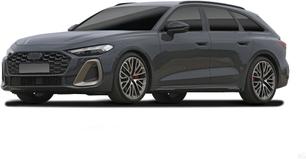
The Audi A5 has done something naughty. It’s replaced the Audi A4.
Or at least that’s the case for now after the Ingolstadt brand made a bit of a mess of its naming strategy.
Essentially, the Audi A5 is now available as a sedan or a wagon, and the next A4 coming soon will be electric. The previous A5 was a swoopier two-door coupe or four-door gran coupe style model. So the A5 is now effectively Audi’s main BMW 3 Series or Mercedes C-Class and CLA rival.
Plus, the Audi S5 is also here to cater to performance car fans.
Can a new platform, a sleek, fresh look and a techy interior do the job?
We’ve been pedalling around the Victorian countryside in the hopes of finding out.
Stick with me, and I reckon we’ll get to the bottom of it. The question about the car, that is, not the bottom of Victoria.
Few cars have had the sheer staying power of the Suzuki Swift.
Except for a four-year hiatus as the original Ignis from 2001, the Japanese supermini has been a segment mainstay since 1983, winning over consumers worldwide as an inexpensive, economical and reliable yet fun option in the Toyota Yaris class.
In Australia, its impact has been even more profound, providing Holden with its famous “beep-beep” Barina for two early iterations from 1985, while also introducing us to the pocket rocket decades before the Volkswagen Polo GTI, with the Swift GTi of 1986.
Now there’s this – the sixth-gen model in 41 years if you exclude that Ignis – doing what the little Suzuki has always done: offering buyers a great budget alternative. But this time, in this new-electrification era, where precious few attainable choices remain.
Is it any good? Let’s dive straight in.
The Audi A5 remains a convincing option in the premium mid-size sedan category, even with the near-$10K price increase over its equivalent grade A4 predecessor.
Even in its base spec, it’s a lovely thing to drive and adds enough new kit to be a reasonable option when it comes to value. In terms of tech usability, it stands out from rivals. Practicality is still king for Audi.
But for the heart-over-head types, the S5 is fast and fun while remaining a comfortable cruiser and the price is decent. On a personal note, a six-cylinder wagon? That's a big yes from me.
For the time it’s available, it’s hard to go past the value on offer in the S5 Edition One. Getting an AWD V6 with that kind of capability for under $100K is something that's sure to tempt buyers. If it doesn’t, we need to take a good look at ourselves.
Note: CarsGuide attended this event as a guest of the manufacturer, with meals provided.
So, there you have it. A brief look at the new, sixth-gen Swift.
Better where it needs to be, the supermini survivor still remains competitively priced, with loads of new efficiency and safety tech that buyers will appreciate.
But, most of all, the Suzuki still feels, drives and rewards like the old model used to. It just does so with more sophistication.
As inexpensive city cars continue to fade, the new Swift continues 41 years of providing a fun, affordable and dependable solution, in a vibrant and desirable package.
The A5 incorporates Audi’s new design language in a way that makes the 2026 model stand out from Audi’s older offerings, but we won’t know how well it works in the family until more new-gen Audi cars arrive.
For now, the A5 is a generally handsome car. It very much looks like an Audi from the front, even a recent A4 if you only very quickly glanced.
The aforementioned S line styling does plenty in making even the base Audi A5 look like a properly luxe thing. There were a few double-checks at the launch to make sure drivers were getting into the right cars.
Fortunately the new car’s designers refrained from busying up the car with trim, the only big features being the side vents at the front.
But even in Avant form the S5 looks athletic, quad-exhausts in the lower bar and the angular rear bodywork moving away from the previously softer, more rounded look Audi had gone with before.
Inside, the changes are arguably more obvious. The A5 is now much more ‘screeny’ than before, especially if optioned with the passenger-side touchscreen.
It’s still decidedly Audi in its layout and design, with geometric shapes on the steering wheel, screen housing, door cards and even on the gear shifter, which is no longer the more traditional handle-type.
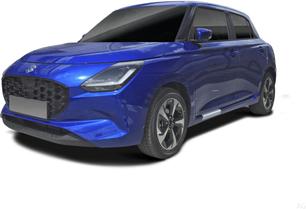
At first glance, the new one looks a lot like the old one. Short overhangs, long wheelbase, upright A-pillars, that signature 'floating' roof. This could be nothing else but a Swift.
Obviously, though, every single panel has changed, resulting in a stronger, quieter and more aerodynamic body.
Helping communicate this is a new and very definite crease line added to create a more-pronounced shoulder. The bonnet seems to be more clamshell-like and the nose is squarer, too. Indeed, everything about the overall styling seems to be more upright.
Debate is already raging in some circles. Is the new Swift too fussy? Too conservative? Has it lost the playful boldness of the proceeding version's gently-sculptured sides and hidden rear-door handles? Are the proportions slightly out now? Has the previous design integrity and oneness of vision been diluted? Does the 2017 predecessor look better?
Underneath, the platform is essentially the same, while overall dimensions are largely identical except for a 20mm stretch and 25mm roof lift. Length, width, height and wheelbase numbers 3860mm, 1735mm, 1520mm and 2450mm, respectively.
Happily, the aesthetic changes inside are likely to please rather than perplex, and even delight rather than divide opinion.
…and that gear selector is a bit indicative of the new A5’s interior. It’s now more of a switch that requires a little more attention than the traditional shifter, just like the way the more screen-focused interior requires a little more of your eyeball time than physical buttons.
Don’t get me wrong, as far as screens in modern cars go, Audi seems to have made it as easy as possible to use the new-gen software in the A5. The menus are clear, there are good shortcuts and there’s no lag… but buttons are always better when your focus needs to be on the road.
Fortunately the driver display is nice and clear, it’s a good update on Audi’s ‘Virtual Cockpit’ and you can set it to display important information without looking too busy.
Ergonomically, the way the central screen is angled towards the driver, the centre console layout and the small control panel on the door for lights, mirrors and the like all seem to be well considered and mean you don’t have to awkwardly reach for anything.
There are a few quirks specific to the A5 and S5, one being that if you opt for the panoramic sunroof, it comes with a transparency switch rather than a physical cover, so it doesn’t do much to keep the light out.
It’s also good to note that the passenger screen - again, if optioned - turns to privacy mode when playing media so as to not distract the driver. Pretty handy!
Behind the front row, a regular-sized adult should have enough room to sit comfortably for a decent amount of time without feeling cramped. The light through the sunroof comes in handy here.
Behind that is a 445L boot in Sedan form, or 1299L with the rear seats folded down. As an Avant, the space increases to 448L and 1396L respectively.
From a packaging perspective, the latest Swift carries on from before, and that’s no bad thing. It remains exceptionally roomy as well as practical.
To that end, entry and egress are easy, there’s a sense of spaciousness thanks to deep windows, a high ceiling and lofty seating, while the latter also helps provide an agreeable driving position. Storage and ventilation are provided in abundance.
For many people, the dash redesign reflects a big change in attitude, having finally grown up and away from the previous cheap and cheerful look. Highlights include pleasing seat fabrics, interesting textures and a sense of quality craftspersonship, within a stylish and sweeping design. After 41 years, the Swift has matured gracefully.
It’s also worth pointing out the super-clear analogue instrumentation dials, supported by a digital speedo and configurable trip computer data; actual buttons for the heating and air-conditioning system and – joy of joys – a handbrake lever.
Plus, if you want to turn off the various beeps from the driver-assist systems, physical buttons are but a simple press away. No distracting sub-menu searches within fiddly touchscreens here, thanks.
Except if you want to change the volume because you’ll need to prod the screen after all. The knob is always the better option, Suzuki.
What else? The rear bench area is a little plain but surprisingly roomy for this class of light car. Probably more so than a Corolla provided back in the early 2000s, with a decent level of cushy support for two people or three at a squeeze.
Given the extra specification, even the cheapest grade is all the Swift you’ll need. A sign of a democratic car.
But keep in mind the base variant no longer comes with a driver’s seat adjuster, passenger vanity mirror and multiple USB ports found in the Plus and GLX versions, while it is alone with a clammy plastic rather than leather-sheathed steering wheel rim.
At least cargo capacity edges up, by 23 litres to 265L (VDA), and that’s just under the luggage cover, thanks to some clever repackaging of a now-lower boot floor and internal tailgate panels. Drop the rear backrests and that expands to 569L.
Note, however, that for the Swift to achieve its sensationally low kerb weight that starts from just 919kg (up around 50kg), it now uses a fiddly and frankly-inadequate tyre repair kit. Thankfully, Suzuki offers that space-saver spare, at extra cost (and mass) of course.
Still, keeping those kilos low pays high dividends when it comes to performance and economy.
The new Audi A5 range starts from $79,900 before on-road costs for the standard A5 Sedan, though the rest of the models available at launch are all S5 variants. A more powerful A5 with 200kW and quattro all-wheel drive will come later, as well as a 270kW plug-in hybrid A5 quattro variant.
For now, the sole A5 in the line-up is well equipped for the price, coming with standard 19-inch alloy wheels, matrix LED headlights with adjustable lighting signatures, keyless entry and digital key via Audi’s app, electric bootlid (or tailgate, given its liftback style) and S line styling as standard.
Interior features include sports seats in real and synthetic leather, heated and electrically adjustable up front, leather steering wheel, tri-zone climate control, a 14.5-inch OLED multimedia touchscreen and 11.9-inch driver display, wireless phone charging as well as wireless Android Auto and Apple CarPlay.
The A5 can be optioned with a Style pack for $3000 which adds 20-inch wheels, tinted glass and black exterior trim. There’s also a Premium pack for $3769 which adds a head-up display, high-power USB ports, a Bang & Olufsen sound system, ambient lighting and front door acoustic window glazing.
The other key variants in the line-up from launch are the S5 Sedan and S5 Avant, coming in at $114,900 and $117,900 respectively. Aside from the more advanced drivetrains, the S5s also gain plenty more features over the A5 including 20-inch Audi Sport alloy wheels, selectable OLED rear lights, tinted windows and more paint colour options.
Inside, Nappa leather-upholstered seats gain cooling and massage functions up front, the steering wheel is heated, and there’s ambient lighting with a ‘dynamic interaction light strip’ that changes colour based on vehicle functions like indicating or changing temperatures.
There’s also a head-up display, high-power USB outlets, a Bang & Olufsen sound system and, perhaps most notably, a 10.9-inch touchscreen for the front passenger as standard. It’s a $1500 option in the A5.
Audi also has a launch variant of the S5, the Edition One, which comes at a lower price and a trim spec closer to the A5, but with the S5’s performance. It has non-adjustable sport suspension, for example, and to score much of the main S5’s kit requires cost-options or option packs.
But the prices are tempting, just $99,900 for the S5 Edition One Sedan or $102,900 for the Avant, $15,000 less than their same-power siblings. For an extra $6000, you can add a head-up display, high-power USB ports and the Bang & Olufsen sound system to the Edition One.
Comparing the entry A5 to the recent entry-level A4, the new A5 wears a price increase of $8000 (the ageing A4 is $71,900), but has more power and a much more modern interior. On price alone it seems a steep jump, but the value is still there compared to rivals. A Mercedes C200 currently starts from $89,900, while a BMW 330i is $92,900.
So. Why are there so few affordable city-sized superminis like the Swift?
Just 10 years ago, the Swift had at least 25 rivals under $25,000. Today that’s phonetically as well as literally down "t(w)o" "three" – namely, the ageing but still-surprisingly-spry Mazda2 and intriguing all-new MG 3, as well as Australia’s sole sub-$20K new car, Kia's darling Picanto.
Many of the Class of 2014 have since morphed into pint-sized crossover hatchbacks like Suzuki’s soon-to-be-discontinued Ignis, the Hyundai Venue and Kia Stonic. And if you must, there are also the cheerless MG ZS and ancient Mitsubishi ASX biggish-small SUVs – but they’re cheapo for a reason.
Unlike the latest Swift... which, from $24,490 drive-away, is more than reasonably cheap, since it introduces some electrification tech across the whole range, while still being around the same price as the old base GL.
This now makes the new Swift Australia’s cheapest 'hybrid'.
Granted, despite wearing the Hybrid badge on every grade, it’s just a mild hybrid system, but one that provides extra electrification to usefully boost performance and economy for the all-new powertrain and revised transmissions. More on all that later.
What else? The base Swift at last gains LED lights, telescopic as well as tilt steering adjustment and important driver-assist safety like Autonomous Emergency Braking (AEB), along with lane-support systems, adaptive cruise control and rear parking sensors.
Also included now are keyless entry/start, a 9.0-inch touchscreen as part of a new multimedia set-up, wireless for Apple CarPlay (but not for the Android Auto), a digital radio, heated mirrors, traffic sign recognition, auto high beams and an alarm.
And there's more. The entry-level Swift Hybrid is also class unique in offering a manual gearbox. Good on you, Suzuki.
Not for you? Don't worry, because the Hybrid auto that is expected to be the bestseller starts from $26,990, drive-away. For the record, that’s only about $1000 more than the equivalent old version but with all that extra gear to boot.
But, beware, the base-model Hybrid alone lacks a few items that may or may not have been standard in the outgoing Swift, such as a driver’s seat-height adjuster, leather-wrapped steering wheel, privacy glass, alloy wheels, front passenger vanity mirror, front-seat map pockets, multiple USB charging outlets and a spare wheel (though you can pay extra for one as the wheel-well remains).
All of the above, except the missing spare, are included in the new Hybrid Plus auto grade, from $28,490 drive-away, along with heated front seats and additional driver-assist tech like a blind-spot monitor. We’ll get into more detail in the Safety section below.
Finally, there’s the Hybrid GLX auto, with its wireless phone charger, folding exterior mirrors, steering wheel paddle shifters, climate control, glossy alloys and more from $29,490, drive-away.
Sadly, the terrific old GLX 'BoosterJet' three-cylinder turbo is no more, and there might not even be a new Swift Sport to continue the GTi hot-hatch legacy.
Still, Suzuki’s managed to keep the entire range under $30K drive-away, despite big changes inside and out. Let’s check those out.
The Audi A5 is powered by a four-cylinder turbo-petrol engine which powers the front wheels via a seven-speed dual-clutch automatic transmission. It makes 150kW of power and 340Nm of torque, and should, Audi says, propel the A5 to 100km/h in 7.8 seconds before (eventually) reaching a top speed of 248km/h.
The S5, in all its variants, is powered by a 3.0-litre turbo-petrol V6 which is assisted by a mild hybrid system. It produces 270kW and 550Nm, sending that to all four wheels via a similar seven-speed dual-clutch.
The S5 is much quicker as a result - 100km/h comes along in just 4.5 seconds according to Audi, before reaching a 250km/h top speed.
If there’s one area where Suzuki shines, that’s in making sweet little engines, and the new, chain-driven, 1197cc 1.2-litre mild hybrid three-cylinder petrol unit is no exception.
Now, on paper, 61kW at 5700rpm and 112Nm at 4500rpm may seem slightly lacking. A Mazda2 manages to make nearly 35 and 30 per cent more power and torque, respectively.
But the Swift's new 'ISG' integrated starter/generator/electric motor unit delivers an additional 2.3kW and 60Nm.
Combined with the hatchback's comparative lightness, it makes for a sufficient power-to-weight ratio of between 63 and 66kW per tonne.
Or, in other words, it provides some welcome extra low-down muscle.
Drive is naturally sent to the front wheels, via either a light-yet-positive shifting five-speed manual gearbox, or new CVT auto. Both have been heavily revised in their new roles serving the mild-hybrid powertrain.
Audi claims the A5 uses 6.9 litres of fuel per 100km, which should theoretically deplete the 56-litre fuel tank after 811km of driving. We couldn’t test this on the launch, but reaching claimed fuel efficiency figures remains an elusive challenge.
The S5, according to Audi, comes with an impressive 7.1L/100km figure in Sedan form, or 7.2L/100km as an Avant. That’s 788km and 777km of theoretical driving range if you’re up for a challenge.
The latest Swift’s maturity does not end with its suave cabin presentation.
Prioritising high economy and subsequently low pollution, this Euro 6d-rated three-pot hybrid powertrain promises an astonishing combined fuel-consumption average of just 3.8 litres per 100km for the manual, and slightly more for the CVT at 4.0L/100km.
The results are 78 and 80 grams per kilometre of carbon dioxide emissions, respectively, along with around 970km between refills of the meagre 37L fuel tank.
These facts somewhat ease the pain of the need for more-expensive 95 RON premium unleaded petrol instead of the regular brew. High-tech solutions do require superior fuel, after all.
With just 70km on our ultra-tight test car’s odometer, the trip computer’s 6.7L readout is likely no indicator of the frugality we’re expecting to come.
So, how are such low consumption figures attainable? Along with better aerodynamics and a low kerb weight, the latest Swift Hybrid’s ISG hybrid unit generates supplementary electricity under acceleration, to ease the engine’s reliance on petrol.
It also recharges the 12-volt lithium-ion battery that lives beneath the front passenger-seat floor off-throttle via regenerative braking.
Note that the Suzuki never drives purely on electricity.
One of the first press cars I ever drove as an even younger lad than I am now was the circa-2017 Audi S4.
Without the perspective of all the many, many cars I've since driven, that S4 blew my mind a little bit with its combination of capability and refinement.
Now, with the context of most of the cars available to the Australian buyer in mind, it’s reassuring to get into this new generation and find that the mid-size Audi torch has been gracefully passed on.
Audi says the new generation, sitting on its new platform, has more focus on balanced driving dynamics, steering precision and steering feel. Without sacrificing comfort, Audi wants the A5 to be a sharper driver’s car.
It might not gel with the Euro tradition of a rear-drive executive sedan given the base A5 is front-wheel drive - the brand of course focusing on its quattro all-wheel drive system - but the A5 is decidedly agile for its size.
Compared to the S5 especially, as the A5’S 1770kg plays the S5’s 2025kg in Sedan form (2040kg as an Avant). It’s a noticeable weight difference, and it makes the A5 more playful without getting properly ragged.
It also rides on smaller 19-inch wheels and would overall probably make for the better daily driver. Even without the all-wheel-drive traction and extra power the S5 offers, the A5 makes a good case for properly plush commuting. Its 150kW isn’t lacking by any means, and that 340Nm does plenty to help when overtaking.
Its suspension feels well damped, keeping the road’s imperfections out of the cabin without numbing the ride and leaving you without feedback. The steering is similarly direct without being too heavy, making the A5 feel athletic for its size.
But for all the A5’s strengths, there is something undeniable about a six-cylinder European sedan (or wagon). The S5 is heavier, sure, and therefore not as naturally nimble, but it makes up for it. And it’s not just the extra power and mild-hybrid assistance.
It’s a great highway cruiser for a start, but it also adds the confidence of all-wheel drive to a trip, which proved extremely useful on the very rainy winter day we tested it. It holds up well on rough surfaces despite the bigger wheels and extra heft, plus it doesn’t feel out of hand when cornering fast, rolling into a predictable understeer rather than quickly losing traction.
But if you’re in any way conscious of your budget, consider the Edition One. It doesn’t lack any of the key things that make the S5 great, and you get to pocket enough money to buy a second used car.
No Swift since 2004’s new-millennium redesign has been anything less than fun to punt around. A focus on driving pleasure and superior dynamics has helped make each version a cut-above most rivals.
Losing the smooth old 1.2-litre four-cylinder engine in the name of low consumption and emissions is a noble move. But how does this translate out in the real world, especially with a Swift fan behind the wheel?
It's mostly great, actually.
Losing a cylinder results in a slightly less creamy power delivery, especially as it’s accompanied by a distinctive three-cylinder exhaust-note thrum. But that’s still in keeping with the Swift’s endearingly sporty character.
Better still, even with all the examples we tested showing barely more than delivery mileage on the odometer, there seems to be more than enough grunt to please driving enthusiasts.
While not wanting to tax engines that weren’t even run-in yet, the charming revvy eagerness and instant throttle response remains, along with a discernible extra kick when accelerating away from standstill.
Even being so new, our Swifts proved to be lively, lusty and surprisingly rapid performers. We can’t wait to test run-in examples!
The five-speed manual is deliciously well-oiled and precise, immersing the driver into the Swift experience on another level compared to the CVT auto, which still manages to impress by responding quickly and effortlessly, without feeling laggy or droney. A lot like the old version.
Suzuki is making a lot of noise over how agile yet comfortable the newcomer’s handling and ride qualities are, as a result of improved rigidity and noise-dampening measures.
The Swift’s MacPherson-style front struts and torsion beam rear suspension systems have been revised with stronger and quieter mounts for better performance, while the electric steering has been retuned for greater feel and linearity.
The result? Even our limited time behind the wheel revealed tactile and precise steering, composed handling and extraordinary isolation from the road below for a car barely weighing 950kg (at most).
Combined with the nuanced driver-assist safety tech that rarely interrupted the fun, the latest Swift is a cheerfully animated, nimble and rewarding experience... and one that stands out all the more for evolving while so many other like-minded rivals like the Ford Fiesta have sadly fallen away.
Bravo, Suzuki. Generation Number Six remains the enthusiast driver’s choice, and a hybrid bargain to boot.
The A5 and its S5 variants share the same safety features, with the full suite of Audi’s more-than 30 safety and driver assistance systems standard across the line-up.
Physically, the A5 has nine airbags and has been crash-tested by Euro NCAP, the firm awarding it five stars. There's no local ANCAP score as yet.
Some of the key safety features in the A5 and S5 models include a driver attention alert, seatbelt reminders, tyre pressure indicator, adaptive cruise control, lane departure warnings and lane assist, front braking assist, front and rear cross-traffic alert, speed limit sign recognition, surround view cameras and park assist with front and rear parking sensors.
There are also ISOFIX points for fitting child seats to the rear outboard seats.
The latest, sixth-generation Swift has yet to be crash-tested by ANCAP.
Even the base Hybrid now includes driver-assist safety like AEB that includes night and day pedestrian and cyclist detection as standard, along with lane-departure warning, lane-keep assist, 'Weaving Alert' (a driver-drowsiness warning prompt), rear parking sensors, traffic-sign recognition, a reverse camera, automatic high beams and adaptive cruise control.
You’ll need to go Hybrid Plus for rear-cross traffic alert and blind-spot warning tech, though.
Note that Suzuki does not supply information about the AEB and other driver-assist tech’s operating parameters.
Also fitted are six airbags (dual front, dual front side and curtain), electronic stability control, anti-lock brakes with electronic brake-force distribution and brake-assist.
The rear seats also contain a trio of child-seat tether anchorages, as well as an outboard pair of ISOFIX attachments.
Audi’s five-year/unlimited kilometre warranty is starting to fall behind the industry standard, though is about normal for a premium brand. On top of this, customers can opt to purchase extra years of warranty up to a maximum nine years which costs $3590.
Audi does also offer 12 years of bodywork manufacturing warranty against corrosion or perforation. There’s also five years of Audi roadside assistance.
Servicing intervals for the A5 come in at every 15,000km or 12 months, with customers able to purchase fixed-price servicing plans at a discount compared to paying per service.
A five-year servicing pack for the A5 Sedan is $3360, and for the S5 it’s priced at $3540.
Suzuki offers an industry-average five-year/unlimited kilometre warranty and roadside assistance.
Service intervals are every 12 months or 15,000km, while basic capped-price servicing is available, with the website showing pricing for the first five years and 100,000km averaging $391 per workshop visit.