What's the difference?
The Audi A5 has done something naughty. It’s replaced the Audi A4.
Or at least that’s the case for now after the Ingolstadt brand made a bit of a mess of its naming strategy.
Essentially, the Audi A5 is now available as a sedan or a wagon, and the next A4 coming soon will be electric. The previous A5 was a swoopier two-door coupe or four-door gran coupe style model. So the A5 is now effectively Audi’s main BMW 3 Series or Mercedes C-Class and CLA rival.
Plus, the Audi S5 is also here to cater to performance car fans.
Can a new platform, a sleek, fresh look and a techy interior do the job?
We’ve been pedalling around the Victorian countryside in the hopes of finding out.
Stick with me, and I reckon we’ll get to the bottom of it. The question about the car, that is, not the bottom of Victoria.
With Ferrari leaving the Fiat-Chrysler family and becoming an independent entity in 2016, Maserati was left without a technology partner.
Suddenly, the Trident brand had to go it alone and come up with its own engines for the first time in more than 20 years. The MC20 sports-car is the result of that rebirth.
While there’s no doubt the Maserati brand has the currency to pull this off, the MC20 is also a big step outside the company’s usual grand-tourer box.
The new coupe is aimed at McLaren, Porsche and even Ferrari buyers, so can the first true Maserati sports car since the MC12 of 2004 walk the walk? And let’s not forget that the MC12 was Ferrari Enzo-based…
No-compromise cars are often the ones that impose the most compromises, and in that sense, the MC20’s shattering on-paper performance means its greatest attributes can’t be enjoyed on a public road.
That’s why this review was conducted entirely on Philip Island’s 4.4km Grand Prix layout. As a result, we can’t tell you much about parking ease or highway fuel consumption. But as for the things that give a super-sports car its identity, read on.
The Audi A5 remains a convincing option in the premium mid-size sedan category, even with the near-$10K price increase over its equivalent grade A4 predecessor.
Even in its base spec, it’s a lovely thing to drive and adds enough new kit to be a reasonable option when it comes to value. In terms of tech usability, it stands out from rivals. Practicality is still king for Audi.
But for the heart-over-head types, the S5 is fast and fun while remaining a comfortable cruiser and the price is decent. On a personal note, a six-cylinder wagon? That's a big yes from me.
For the time it’s available, it’s hard to go past the value on offer in the S5 Edition One. Getting an AWD V6 with that kind of capability for under $100K is something that's sure to tempt buyers. If it doesn’t, we need to take a good look at ourselves.
Note: CarsGuide attended this event as a guest of the manufacturer, with meals provided.
With a 320km/h-plus top speed and the ability to get from rest to 100km/h in under three seconds, there’s no doubting the MC20 meets or exceeds its performance brief. But when you’re paying these prices, there must be more than just the measurable stuff going on.
And there is. The MC20 brings a big dollop of purity to the ranks of current supercars, doing away with all-wheel drive and hybrid tech and relying instead on and old-school approach in terms of handling and overall feel.
Anybody who wants to argue that call has plenty of alternatives to the MC20 from other manufacturers, and for some of us, that less-is-more thing will ring true.
Note: CarsGuide attended this event as a guest of the manufacturer, with meals provided.
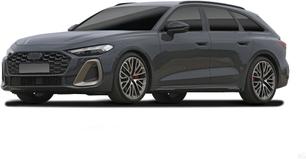
The A5 incorporates Audi’s new design language in a way that makes the 2026 model stand out from Audi’s older offerings, but we won’t know how well it works in the family until more new-gen Audi cars arrive.
For now, the A5 is a generally handsome car. It very much looks like an Audi from the front, even a recent A4 if you only very quickly glanced.
The aforementioned S line styling does plenty in making even the base Audi A5 look like a properly luxe thing. There were a few double-checks at the launch to make sure drivers were getting into the right cars.
Fortunately the new car’s designers refrained from busying up the car with trim, the only big features being the side vents at the front.
But even in Avant form the S5 looks athletic, quad-exhausts in the lower bar and the angular rear bodywork moving away from the previously softer, more rounded look Audi had gone with before.
Inside, the changes are arguably more obvious. The A5 is now much more ‘screeny’ than before, especially if optioned with the passenger-side touchscreen.
It’s still decidedly Audi in its layout and design, with geometric shapes on the steering wheel, screen housing, door cards and even on the gear shifter, which is no longer the more traditional handle-type.
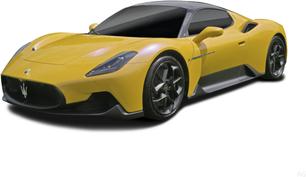
Perhaps the most striking thing about the MC20’s design is that it’s so restrained. You won’t find wings, vents, fins and diffusers all over the car, but rather an overall shape that creates downforce, rather than that job falling to tacked on additions.
And, like any modern supercar worth its salt, the MC20 is based around a carbon-fibre tub for rigidity and low weight. From that tub structure are hung aluminium front and rear subframes which, in turn, mount the suspension and other mechanical bits.
The wind tunnel still got a huge workout in the car’s development, of course, but the aim was to integrate the downforce-inducing elements rather than having them demanding your optical attention.
As a result, the whole car is an upside-down wing, if you want to simplify it. But a very pretty upside-down wing.
This gives the MC20 a smooth, sleek look that stands it apart from the rent-a-racer crowd and supports the theory that sometimes, less is, indeed, more.
Some of the detailing is lovely, too. The vents cut into the Perspex rear windscreen form Maserati’s trademark trident shape, there’s lots of visible carbon-fibre inside the door jambs, there’s lashings of Alcantara inside and the two-tone body kit breaks up the shape perfectly.
Elements we’re not so sure about include the 'Park' button mounted way down low under the dashboard, and the swing-up, scissor-type doors, which, if your more than about 180cm tall, still require you to duck under them.
On the upside, the carbon-and-leather steering wheel with its integrated controls is gorgeous to hold and gaze at.
…and that gear selector is a bit indicative of the new A5’s interior. It’s now more of a switch that requires a little more attention than the traditional shifter, just like the way the more screen-focused interior requires a little more of your eyeball time than physical buttons.
Don’t get me wrong, as far as screens in modern cars go, Audi seems to have made it as easy as possible to use the new-gen software in the A5. The menus are clear, there are good shortcuts and there’s no lag… but buttons are always better when your focus needs to be on the road.
Fortunately the driver display is nice and clear, it’s a good update on Audi’s ‘Virtual Cockpit’ and you can set it to display important information without looking too busy.
Ergonomically, the way the central screen is angled towards the driver, the centre console layout and the small control panel on the door for lights, mirrors and the like all seem to be well considered and mean you don’t have to awkwardly reach for anything.
There are a few quirks specific to the A5 and S5, one being that if you opt for the panoramic sunroof, it comes with a transparency switch rather than a physical cover, so it doesn’t do much to keep the light out.
It’s also good to note that the passenger screen - again, if optioned - turns to privacy mode when playing media so as to not distract the driver. Pretty handy!
Behind the front row, a regular-sized adult should have enough room to sit comfortably for a decent amount of time without feeling cramped. The light through the sunroof comes in handy here.
Behind that is a 445L boot in Sedan form, or 1299L with the rear seats folded down. As an Avant, the space increases to 448L and 1396L respectively.
Although the MC20 has a front and rear luggage compartment, they’re both small enough to be pretty much useless. This is a shame, because as a long-weekend getaway car, the Maserati otherwise makes a strong case for itself.
The other area that suffers for the car’s art is the interior practicality. While the driving position is great and the pedals and wheel relationship is spot on, when it comes to storing anything, you’re on your own. Best the MC20 can offer is a single cupholder at the rear of the central tunnel.
The mid-engined layout also means there’s precious little vision through the back window. To counter that, Maserati has fitted the MC20 with an interior rear-view mirror that can act as a conventional mirror (you can still see only the engine) or as a screen for the rear-mounted camera.
The catch is the image projected to the 'mirror' lacks depth of field and forces the driver to refocus on the image rather than simply glance at it.
The new Audi A5 range starts from $79,900 before on-road costs for the standard A5 Sedan, though the rest of the models available at launch are all S5 variants. A more powerful A5 with 200kW and quattro all-wheel drive will come later, as well as a 270kW plug-in hybrid A5 quattro variant.
For now, the sole A5 in the line-up is well equipped for the price, coming with standard 19-inch alloy wheels, matrix LED headlights with adjustable lighting signatures, keyless entry and digital key via Audi’s app, electric bootlid (or tailgate, given its liftback style) and S line styling as standard.
Interior features include sports seats in real and synthetic leather, heated and electrically adjustable up front, leather steering wheel, tri-zone climate control, a 14.5-inch OLED multimedia touchscreen and 11.9-inch driver display, wireless phone charging as well as wireless Android Auto and Apple CarPlay.
The A5 can be optioned with a Style pack for $3000 which adds 20-inch wheels, tinted glass and black exterior trim. There’s also a Premium pack for $3769 which adds a head-up display, high-power USB ports, a Bang & Olufsen sound system, ambient lighting and front door acoustic window glazing.
The other key variants in the line-up from launch are the S5 Sedan and S5 Avant, coming in at $114,900 and $117,900 respectively. Aside from the more advanced drivetrains, the S5s also gain plenty more features over the A5 including 20-inch Audi Sport alloy wheels, selectable OLED rear lights, tinted windows and more paint colour options.
Inside, Nappa leather-upholstered seats gain cooling and massage functions up front, the steering wheel is heated, and there’s ambient lighting with a ‘dynamic interaction light strip’ that changes colour based on vehicle functions like indicating or changing temperatures.
There’s also a head-up display, high-power USB outlets, a Bang & Olufsen sound system and, perhaps most notably, a 10.9-inch touchscreen for the front passenger as standard. It’s a $1500 option in the A5.
Audi also has a launch variant of the S5, the Edition One, which comes at a lower price and a trim spec closer to the A5, but with the S5’s performance. It has non-adjustable sport suspension, for example, and to score much of the main S5’s kit requires cost-options or option packs.
But the prices are tempting, just $99,900 for the S5 Edition One Sedan or $102,900 for the Avant, $15,000 less than their same-power siblings. For an extra $6000, you can add a head-up display, high-power USB ports and the Bang & Olufsen sound system to the Edition One.
Comparing the entry A5 to the recent entry-level A4, the new A5 wears a price increase of $8000 (the ageing A4 is $71,900), but has more power and a much more modern interior. On price alone it seems a steep jump, but the value is still there compared to rivals. A Mercedes C200 currently starts from $89,900, while a BMW 330i is $92,900.
Maserati has followed the lead of many a high-end carmaker by using the options list to ramp up the profitability of the MC20. Of course, that’s after the MSRP of $438,000 has been dealt with by your accountant.
The point is that you kind of need to suspend disbelief when it comes to supercars and their value-for-money credentials. By any sane, conventional measure, they’re seriously over-priced, but within its peer group, the Maserati is neither the cheapest nor the most expensive way to go this fast.
But back to those options: Again, it’s all a case of throwing away what you think you know, because there are several options for the Maserati that cost more than a good, brand-new hatchback.
The carbon-fibre engine cover alone will cost you a staggering $13,164, and according to Maserati management, it’s a popular option.
Then, there are the carbon-fibre brakes which not only cost $28,961, but if you want the yellow-painted calipers, that’ll be another $2962.
The hydraulic front-lifter which allows you to deal with driveways and speed humps is a monstrous $8721, but at least there’s some engineering in that. Unlike the black-roof option which is, er, a black roof at $10,202. And the external carbon-fibre kit? A cool $92,806!
The Audi A5 is powered by a four-cylinder turbo-petrol engine which powers the front wheels via a seven-speed dual-clutch automatic transmission. It makes 150kW of power and 340Nm of torque, and should, Audi says, propel the A5 to 100km/h in 7.8 seconds before (eventually) reaching a top speed of 248km/h.
The S5, in all its variants, is powered by a 3.0-litre turbo-petrol V6 which is assisted by a mild hybrid system. It produces 270kW and 550Nm, sending that to all four wheels via a similar seven-speed dual-clutch.
The S5 is much quicker as a result - 100km/h comes along in just 4.5 seconds according to Audi, before reaching a 250km/h top speed.
Previous generations of Maseratis borrowed Ferrari (both brands were once part of the extended Fiat Chrysler family) technology for their drivelines in a deal that allowed both brands to share the cost of development.
And since having a Ferrari-built engine in your car was never seen as a sale hindrance, it was a sweet deal for Maserati. But when Ferrari was spun off and became a publicly-owned company in 2016, Maserati’s supply of engines dried up.
The solution was to take engine design in-house and the twin-turbocharged 3.0-litre V6 in the MC20 is one of the first fruits of that.
While it’s undoubtedly a high-tech powerplant, in other respects it’s fairly conventional. Maserati, for instance, has a long history with the V6 layout, and there’s no hybrid element to the driveline. Nor is there a hybrid option.
Maserati claims the V6 is the world’s most powerful six-cylinder production-car engine and, with no less than 463kW at 7500rpm and 730Nm between 3000 and 5500rpm, that’s a credible statement.
Technical details that you won’t see on most road cars include a dry-sump lubrication system (where the engine oil lives in a remote tank rather than the hot sump of the engine itself) and a sophisticated fuel injection system with two injectors per cylinder.
The real trick, however, is an ignition system with two spark plugs per cylinder. There are also effectively two combustion chambers, the first ensuring multiple flame fronts to achieve a more complete burn of the fuel in the main combustion chamber.
The rest of the driveline is similarly aimed at the purists out there; the transmission is an eight-speed dual-clutch, driving not all four wheels, but only the rears through a mechanical limited-slip differential.
Selectable drive modes from GT (the default setting) through to 'Wet', 'Sport', 'Corsa' (Track) and 'ESC Off' tailor the shift points, throttle sensitivity and suspension behaviour, but still allow for full engine power.
Audi claims the A5 uses 6.9 litres of fuel per 100km, which should theoretically deplete the 56-litre fuel tank after 811km of driving. We couldn’t test this on the launch, but reaching claimed fuel efficiency figures remains an elusive challenge.
The S5, according to Audi, comes with an impressive 7.1L/100km figure in Sedan form, or 7.2L/100km as an Avant. That’s 788km and 777km of theoretical driving range if you’re up for a challenge.
Fuel economy is probably not going to be top of mind for most MC20 buyers, but the official combined figure of 11.6 litres per 100km is still pretty greedy by 2022 standards.
Balanced against the available performance, however, and an engine making more than 600 old-fashioned horsepower with that combined fuel-economy number is still cause to reflect on modern technology and efficiency.
The MC20 has a 60-litre fuel tank, making it a handy cross-country car for weekends away.
One of the first press cars I ever drove as an even younger lad than I am now was the circa-2017 Audi S4.
Without the perspective of all the many, many cars I've since driven, that S4 blew my mind a little bit with its combination of capability and refinement.
Now, with the context of most of the cars available to the Australian buyer in mind, it’s reassuring to get into this new generation and find that the mid-size Audi torch has been gracefully passed on.
Audi says the new generation, sitting on its new platform, has more focus on balanced driving dynamics, steering precision and steering feel. Without sacrificing comfort, Audi wants the A5 to be a sharper driver’s car.
It might not gel with the Euro tradition of a rear-drive executive sedan given the base A5 is front-wheel drive - the brand of course focusing on its quattro all-wheel drive system - but the A5 is decidedly agile for its size.
Compared to the S5 especially, as the A5’S 1770kg plays the S5’s 2025kg in Sedan form (2040kg as an Avant). It’s a noticeable weight difference, and it makes the A5 more playful without getting properly ragged.
It also rides on smaller 19-inch wheels and would overall probably make for the better daily driver. Even without the all-wheel-drive traction and extra power the S5 offers, the A5 makes a good case for properly plush commuting. Its 150kW isn’t lacking by any means, and that 340Nm does plenty to help when overtaking.
Its suspension feels well damped, keeping the road’s imperfections out of the cabin without numbing the ride and leaving you without feedback. The steering is similarly direct without being too heavy, making the A5 feel athletic for its size.
But for all the A5’s strengths, there is something undeniable about a six-cylinder European sedan (or wagon). The S5 is heavier, sure, and therefore not as naturally nimble, but it makes up for it. And it’s not just the extra power and mild-hybrid assistance.
It’s a great highway cruiser for a start, but it also adds the confidence of all-wheel drive to a trip, which proved extremely useful on the very rainy winter day we tested it. It holds up well on rough surfaces despite the bigger wheels and extra heft, plus it doesn’t feel out of hand when cornering fast, rolling into a predictable understeer rather than quickly losing traction.
But if you’re in any way conscious of your budget, consider the Edition One. It doesn’t lack any of the key things that make the S5 great, and you get to pocket enough money to buy a second used car.
Here’s where your half-a-million bucks has gone.
The MC20’s acceleration is absolutely shattering and is all the more amazing for the fact the car uses neither all-wheel drive grip nor hybrid torque to achieve its sprinting abilities.
While the V6 is not the most sonorous of powerplants, it does manage to sound high-end and pretty sophisticated and it’s never as shouty as some of its opposition which seem to confuse decibels with kiloWatts.
While the sheer thrust confirms the existence of two turbochargers, the lack of lag (or throttle delay) and the ability to charge into the rev limiter in the lower gears does not.
Even though power peaks at 6500rpm (as with many a modern turbo motor) the MC20 will happily smash on to the redline at 8000rpm; sometimes too happily if you don’t have your finger over the upshift paddle. As with other good modern turbocharged units, this one doesn’t actually feel overtly turbocharged.
The transmission shifts relatively smoothly in GT mode, but as you crank up the mode selector to Sport, the shifts become very fast with an accompanying jolt through the backrest as each gear clicks home. The shifting process is fairly foolproof, although you do get full over-ride, so you need to pay attention.
Both the cars we were able to sample at Philip Island were sporting the optional carbon-ceramic braking package, and one was also fitted with the optional 'birdcage' alloy wheels which are lighter.
Each of them needed a firm shove on the pedal to slow things down, but it’s true the lighter wheels seem to be worth their almost-$3000 ask as that car required less leg-pressure for the same result.
The lack of a hybrid element to the driveline, as well as the rear-drive layout, suggests a degree of purity of purpose in the car’s design. And that’s backed up by its behaviour in the first corner.
Fundamentally, instead of just hurling it at an apex and allowing the electronics to sort it all out for you, the Maserati requires a more 'classical' technique if it’s to really shine.
It doesn’t, for instance, reward trail-braking (where you continue to brake once you’ve turned into a corner) and would much prefer you get your braking over and done with before applying any meaningful steering lock.
Ignore this, and the rear weight bias of the mid-engined layout can see the car try to yaw, with the rear end becoming light and the vehicle over-rotating (which is a spin, to you and I).
Similarly, getting on the power before you’ve actually got the MC20 turned, can unload the front end and send the front wheels ploughing (ploughing is an exaggeration, but at the speeds we’re dealing with here, even a small degree is a big deal) towards the outside of the turn.
Ultimately, then, the technique becomes a text-book case of brake, turn and then power out, at which point the MC20 reveals itself to be huge fun and incredibly fast. The only thing to deal with then is the knowledge that whatever happens next is going to happen extremely quickly.
The A5 and its S5 variants share the same safety features, with the full suite of Audi’s more-than 30 safety and driver assistance systems standard across the line-up.
Physically, the A5 has nine airbags and has been crash-tested by Euro NCAP, the firm awarding it five stars. There's no local ANCAP score as yet.
Some of the key safety features in the A5 and S5 models include a driver attention alert, seatbelt reminders, tyre pressure indicator, adaptive cruise control, lane departure warnings and lane assist, front braking assist, front and rear cross-traffic alert, speed limit sign recognition, surround view cameras and park assist with front and rear parking sensors.
There are also ISOFIX points for fitting child seats to the rear outboard seats.
Neither ANCAP nor Euro NCAP have tested the MC20 for crash safety, so we can’t give it a star rating.
But the lack of standard safety gear such as rear-cross traffic alert and blind-spot monitoring (it’s optional at $2797) can’t go unmentioned. That’s especially concerning when you consider the mid-engined layout makes for very poor rear visibility.
Audi’s five-year/unlimited kilometre warranty is starting to fall behind the industry standard, though is about normal for a premium brand. On top of this, customers can opt to purchase extra years of warranty up to a maximum nine years which costs $3590.
Audi does also offer 12 years of bodywork manufacturing warranty against corrosion or perforation. There’s also five years of Audi roadside assistance.
Servicing intervals for the A5 come in at every 15,000km or 12 months, with customers able to purchase fixed-price servicing plans at a discount compared to paying per service.
A five-year servicing pack for the A5 Sedan is $3360, and for the S5 it’s priced at $3540.
High-end cars often disappoint on the details, and the Maserati is no different here, offering just a three-year factory warranty (albeit with unlimited kilometres).
That trails even the most humble commuter cars these days, and suggests there’s still a degree of indifference from some carmakers. And, possibly, their customers.
There is, however, the option of fixed-price servicing for the MC20 with the first three years’ worth of servicing costing $4000.
Scheduled services are every 15,000km or 12 months, whichever comes first.