What's the difference?
The Audi A5 has done something naughty. It’s replaced the Audi A4.
Or at least that’s the case for now after the Ingolstadt brand made a bit of a mess of its naming strategy.
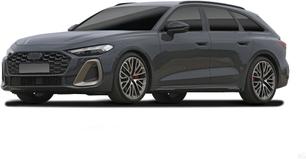
Essentially, the Audi A5 is now available as a sedan or a wagon, and the next A4 coming soon will be electric. The previous A5 was a swoopier two-door coupe or four-door gran coupe style model. So the A5 is now effectively Audi’s main BMW 3 Series or Mercedes C-Class and CLA rival.
Plus, the Audi S5 is also here to cater to performance car fans.
Can a new platform, a sleek, fresh look and a techy interior do the job?
We’ve been pedalling around the Victorian countryside in the hopes of finding out.
Stick with me, and I reckon we’ll get to the bottom of it. The question about the car, that is, not the bottom of Victoria.
There are two ways to look at the Lexus CT200h; as either the cheapest model in the Japanese company’s range, or as a planet-saving hybrid.
Either way, the four-door, five-seat CT200h hatch – which has been updated for 2018 – differs from the rest of the Japanese luxury brand’s lineup for a number of different reasons.
The Audi A5 remains a convincing option in the premium mid-size sedan category, even with the near-$10K price increase over its equivalent grade A4 predecessor.
Even in its base spec, it’s a lovely thing to drive and adds enough new kit to be a reasonable option when it comes to value. In terms of tech usability, it stands out from rivals. Practicality is still king for Audi.
But for the heart-over-head types, the S5 is fast and fun while remaining a comfortable cruiser and the price is decent. On a personal note, a six-cylinder wagon? That's a big yes from me.
For the time it’s available, it’s hard to go past the value on offer in the S5 Edition One. Getting an AWD V6 with that kind of capability for under $100K is something that's sure to tempt buyers. If it doesn’t, we need to take a good look at ourselves.
Note: CarsGuide attended this event as a guest of the manufacturer, with meals provided.
The cheapest Lexus of them all isn’t chasing badge snobs with the CT200h as blatantly as Mercedes-Benz, BMW and Audi do with their entry level cars… but it’s perhaps not quite the Lexus you’d expect it to be.
It has a lovely front-of-cabin, for example, but there’s a lot of last-gen Prius in plain sight in the rear of the cabin.
The hybrid powertrain, too, is noble in concept, but the day-to-day reality is that it’s not as nice to drive, especially town to town, as a regular petrol-powered car of similar size.
The foot brake, silly multimedia joystick and odd gearshifter also spoilt the party a bit.
Empty nesters who are looking for a nice city runaround with a tinge of greenwash about it will love it… and if the current Prius is anything to go by, the next CT will be a very good thing indeed.
The A5 incorporates Audi’s new design language in a way that makes the 2026 model stand out from Audi’s older offerings, but we won’t know how well it works in the family until more new-gen Audi cars arrive.
For now, the A5 is a generally handsome car. It very much looks like an Audi from the front, even a recent A4 if you only very quickly glanced.
The aforementioned S line styling does plenty in making even the base Audi A5 look like a properly luxe thing. There were a few double-checks at the launch to make sure drivers were getting into the right cars.
Fortunately the new car’s designers refrained from busying up the car with trim, the only big features being the side vents at the front.
But even in Avant form the S5 looks athletic, quad-exhausts in the lower bar and the angular rear bodywork moving away from the previously softer, more rounded look Audi had gone with before.
Inside, the changes are arguably more obvious. The A5 is now much more ‘screeny’ than before, especially if optioned with the passenger-side touchscreen.
It’s still decidedly Audi in its layout and design, with geometric shapes on the steering wheel, screen housing, door cards and even on the gear shifter, which is no longer the more traditional handle-type.
There are some light external revisions for the latest update of the compact Lexus CT200h. New grey 17-inch alloys are unique to the Sport Luxury, along with a black roof treatment, new L-shaped LED driving lamps that match new-design LED tail-lamps, while Lexus designers have also added its new spindle grille to the brand’s smallest model.
It manages to be inoffensive, but it doesn't really reflect the brand's latest design language of 'real world concept cars' like the NX and the LC ranges.
Inside, a couple of new leather colour options are available for the CT200h, while the addition of the wide-format 10.3-inch screen to the top of the centre console is the single largest change. Interestingly, the steering wheel controls appear to have regressed a little from the previous model, no doubt brought about by the addition of the new driver aids.
…and that gear selector is a bit indicative of the new A5’s interior. It’s now more of a switch that requires a little more attention than the traditional shifter, just like the way the more screen-focused interior requires a little more of your eyeball time than physical buttons.
Don’t get me wrong, as far as screens in modern cars go, Audi seems to have made it as easy as possible to use the new-gen software in the A5. The menus are clear, there are good shortcuts and there’s no lag… but buttons are always better when your focus needs to be on the road.
Fortunately the driver display is nice and clear, it’s a good update on Audi’s ‘Virtual Cockpit’ and you can set it to display important information without looking too busy.
Ergonomically, the way the central screen is angled towards the driver, the centre console layout and the small control panel on the door for lights, mirrors and the like all seem to be well considered and mean you don’t have to awkwardly reach for anything.
There are a few quirks specific to the A5 and S5, one being that if you opt for the panoramic sunroof, it comes with a transparency switch rather than a physical cover, so it doesn’t do much to keep the light out.
It’s also good to note that the passenger screen - again, if optioned - turns to privacy mode when playing media so as to not distract the driver. Pretty handy!
Behind the front row, a regular-sized adult should have enough room to sit comfortably for a decent amount of time without feeling cramped. The light through the sunroof comes in handy here.
Behind that is a 445L boot in Sedan form, or 1299L with the rear seats folded down. As an Avant, the space increases to 448L and 1396L respectively.
The CT200h basically replicates a small hatchback in terms of interior size. It'll seat five, but if you try to put three adults across the back, they won't be particularly happy about it.
The roofline is quite low and the car’s waistline is high, which makes the glasshouse feel small. Room in the front is adequate, but only just for taller drivers; the sunroof, as fitted to our test example, takes away a good chunk of headroom, despite the CT200h standing just 5mm lower than a Corolla overall.
The seats themselves, too, are mounted just a touch high to be comfortable for taller drivers, while rear seaters will complain bitterly about being stuck behind my (184cm) driving position. However, my more diminutive wife pronounced herself very comfortable behind the wheel and in the passenger seat.
A nice, small steering wheel sits in front of a single-dial dash that sports two digital screens either side. The left-hand screen changes when you change the drive mode dial between Eco, Normal, and Sport. And there's also a full EV mode button in handy reach.
Two cupholders are line astern between driver and passenger, although storage is at a premium thanks to the size of the car. Climate and multimedia controls - and even an old-school CD player – flow right through underneath the centre console, which steals away valuable space. There are no extras like wireless charging bays, nor is there Apple CarPlay or Android Auto.
There are bottle holders in the door, but don't try and stash anything that's over one litre in size because it just won't fit.
It's quite an austere proposition for rear-seat passengers, with no bottle holders in the doors, no cup-holders and no charging points. There are fixed vents under the front seats and on the right side of the rear area, so it's not a complete desert, and there are ISOFIX mounts for two child seats in the rear.
Another practicality issue that's unique to the CT200h is the gear shifter. It operates as a spring-loaded joystick, and unless you're watching the dash indicator, it can be tricky to know which gear you're in. Other car makers have actually recalled cars with this style of transmission stick, and it's certainly something that you have to get used to.
Likewise, the old-school foot brake is certainly an anachronism in something like a Lexus.
Based on the previous generation Prius, the nickel-metal hydride battery for the CT is hidden underneath the rear seat, so it doesn't steal away too much boot room. However, the boot floor is still quite high, and the area is rather small at 375 litres with the seats up. There is 985 litres available when you drop the seats, but the aperture is short and narrow, so larger items will be a squeeze. There is a space-saver spare nestled away underneath the boot floor, too.
Another practicality note in the negative column is Lexus's insistence on the odd joystick control for its multimedia system. It's simply not very good. It’s imprecise when compared to a touchscreen, the action and feel of our test unit was very much less than premium, and it’s just awkward and clumsy to use. The CT is not the only Lexus to use it, but we wish the company would just see the light and ditch it all together.
The new Audi A5 range starts from $79,900 before on-road costs for the standard A5 Sedan, though the rest of the models available at launch are all S5 variants. A more powerful A5 with 200kW and quattro all-wheel drive will come later, as well as a 270kW plug-in hybrid A5 quattro variant.
For now, the sole A5 in the line-up is well equipped for the price, coming with standard 19-inch alloy wheels, matrix LED headlights with adjustable lighting signatures, keyless entry and digital key via Audi’s app, electric bootlid (or tailgate, given its liftback style) and S line styling as standard.
Interior features include sports seats in real and synthetic leather, heated and electrically adjustable up front, leather steering wheel, tri-zone climate control, a 14.5-inch OLED multimedia touchscreen and 11.9-inch driver display, wireless phone charging as well as wireless Android Auto and Apple CarPlay.
The A5 can be optioned with a Style pack for $3000 which adds 20-inch wheels, tinted glass and black exterior trim. There’s also a Premium pack for $3769 which adds a head-up display, high-power USB ports, a Bang & Olufsen sound system, ambient lighting and front door acoustic window glazing.
The other key variants in the line-up from launch are the S5 Sedan and S5 Avant, coming in at $114,900 and $117,900 respectively. Aside from the more advanced drivetrains, the S5s also gain plenty more features over the A5 including 20-inch Audi Sport alloy wheels, selectable OLED rear lights, tinted windows and more paint colour options.
Inside, Nappa leather-upholstered seats gain cooling and massage functions up front, the steering wheel is heated, and there’s ambient lighting with a ‘dynamic interaction light strip’ that changes colour based on vehicle functions like indicating or changing temperatures.
There’s also a head-up display, high-power USB outlets, a Bang & Olufsen sound system and, perhaps most notably, a 10.9-inch touchscreen for the front passenger as standard. It’s a $1500 option in the A5.
Audi also has a launch variant of the S5, the Edition One, which comes at a lower price and a trim spec closer to the A5, but with the S5’s performance. It has non-adjustable sport suspension, for example, and to score much of the main S5’s kit requires cost-options or option packs.
But the prices are tempting, just $99,900 for the S5 Edition One Sedan or $102,900 for the Avant, $15,000 less than their same-power siblings. For an extra $6000, you can add a head-up display, high-power USB ports and the Bang & Olufsen sound system to the Edition One.
Comparing the entry A5 to the recent entry-level A4, the new A5 wears a price increase of $8000 (the ageing A4 is $71,900), but has more power and a much more modern interior. On price alone it seems a steep jump, but the value is still there compared to rivals. A Mercedes C200 currently starts from $89,900, while a BMW 330i is $92,900.
The 1.8-litre petrol-electric CT200h comes in three different flavours – the Luxury, the F-Sport as tested here, and the Sport Luxury. The range now kicks off at $40,900 (up $2150) and peaks at $56,900 with the Sport Luxury (up $810).
The F-Sport may be a little lacking in the actual ‘sport’ department, but it’s is pretty flush with flash kit, including not one but three motors (one petrol and two electric), auto lights and wipers, a wide 10.3-inch multimedia system, leather seats, dual-zone climate control and new 17-inch alloys.
At $50,400 plus on-roads, the F-Sport has jumped in price by $1960, but it’s gained a host of new gear, including a new driver aid system that adds auto emergency braking (AEB), pedestrian-detecting pre-collision warning system, lane departure warning with steering assistance and adaptive cruise control.
There are also LED headlights and taillights, as well as revised styling for the front and rear bumpers.
The CT will be cross-shopped against other premium tiddlers like the Mercedes-Benz A-Class, Audi’s A3 and the BMW 1 series. Comparing it like-for-like in the hybrid category, there’s the top spec Toyota Prius i-Tech, while Nissan’s Leaf could theoretically be lumped in both on price and on environmental grounds.
The Audi A5 is powered by a four-cylinder turbo-petrol engine which powers the front wheels via a seven-speed dual-clutch automatic transmission. It makes 150kW of power and 340Nm of torque, and should, Audi says, propel the A5 to 100km/h in 7.8 seconds before (eventually) reaching a top speed of 248km/h.
The S5, in all its variants, is powered by a 3.0-litre turbo-petrol V6 which is assisted by a mild hybrid system. It produces 270kW and 550Nm, sending that to all four wheels via a similar seven-speed dual-clutch.
The S5 is much quicker as a result - 100km/h comes along in just 4.5 seconds according to Audi, before reaching a 250km/h top speed.
The 1.8-litre twin-cam petrol engine makes a relatively low 73kW and 142Nm, while a 60kW, 207Nm electric motor that’s also connected to the front wheels chips in its share.
Combined, the system produces 100kW, while the torque figure translates to around the 150Nm mark. That juicy 207Nm doesn’t come into play, sadly, given that the petrol engine – which is built to run cooler than a traditional Otto cycle engine, and therefore more efficiently – does most of the work.
Throw in a transaxle for the electric motor and a power inverter, and things are getting complex. However, if the Prius is any indication, the CT200h’s drivetrain is durable and relatively serviceable, with batteries estimated to last ten years or longer.
Audi claims the A5 uses 6.9 litres of fuel per 100km, which should theoretically deplete the 56-litre fuel tank after 811km of driving. We couldn’t test this on the launch, but reaching claimed fuel efficiency figures remains an elusive challenge.
The S5, according to Audi, comes with an impressive 7.1L/100km figure in Sedan form, or 7.2L/100km as an Avant. That’s 788km and 777km of theoretical driving range if you’re up for a challenge.
Here’s the odd thing – over 220km of largely highway driving, I couldn’t get the CT200h under a dash-indicated 10.4 litres/100km, against a claimed combined fuel economy figure of 4.4L/100km.
I topped the tank off with 18 litres of fuel, which works out at a closer 8.8L/100km… but it still ain’t anything like 4.4.
Another owner I spoke to, though, said he regularly records high fives with his CT200h in mixed conditions.
It runs a 45-litre tank that’ll happily take 95 RON fuel.
One of the first press cars I ever drove as an even younger lad than I am now was the circa-2017 Audi S4.
Without the perspective of all the many, many cars I've since driven, that S4 blew my mind a little bit with its combination of capability and refinement.
Now, with the context of most of the cars available to the Australian buyer in mind, it’s reassuring to get into this new generation and find that the mid-size Audi torch has been gracefully passed on.
Audi says the new generation, sitting on its new platform, has more focus on balanced driving dynamics, steering precision and steering feel. Without sacrificing comfort, Audi wants the A5 to be a sharper driver’s car.
It might not gel with the Euro tradition of a rear-drive executive sedan given the base A5 is front-wheel drive - the brand of course focusing on its quattro all-wheel drive system - but the A5 is decidedly agile for its size.
Compared to the S5 especially, as the A5’S 1770kg plays the S5’s 2025kg in Sedan form (2040kg as an Avant). It’s a noticeable weight difference, and it makes the A5 more playful without getting properly ragged.
It also rides on smaller 19-inch wheels and would overall probably make for the better daily driver. Even without the all-wheel-drive traction and extra power the S5 offers, the A5 makes a good case for properly plush commuting. Its 150kW isn’t lacking by any means, and that 340Nm does plenty to help when overtaking.
Its suspension feels well damped, keeping the road’s imperfections out of the cabin without numbing the ride and leaving you without feedback. The steering is similarly direct without being too heavy, making the A5 feel athletic for its size.
But for all the A5’s strengths, there is something undeniable about a six-cylinder European sedan (or wagon). The S5 is heavier, sure, and therefore not as naturally nimble, but it makes up for it. And it’s not just the extra power and mild-hybrid assistance.
It’s a great highway cruiser for a start, but it also adds the confidence of all-wheel drive to a trip, which proved extremely useful on the very rainy winter day we tested it. It holds up well on rough surfaces despite the bigger wheels and extra heft, plus it doesn’t feel out of hand when cornering fast, rolling into a predictable understeer rather than quickly losing traction.
But if you’re in any way conscious of your budget, consider the Edition One. It doesn’t lack any of the key things that make the S5 great, and you get to pocket enough money to buy a second used car.
If you've ever driven a Prius, then you'll be very familiar with the way that the CT drives. Based around a 73kW Atkinson cycle petrol engine which focuses on fuel efficiency rather than outright power, a 60kW electric motor (the pair combine to produce 100kW in total), a nickel-metal hydride battery array and a CVT gearbox, the CT200h – like the Prius – is a bit different to a regular hatch.
Under light throttle, the CT is quiet and moves along quite well, and you can even use full Electric Vehicle mode at speeds under 45km/h for a brief amount of time, (slightly less than two kilometres), and with a very gentle right foot.
The battery array is recharged via the petrol motor as well as regenerative braking (where heat energy is captured and directed back to the electric system) – but unlike a petrol-electric plug-in hybrid, there’s no way to stick a 240v cable into the CT to top up the battery.
It has the unusual whines and odd noises that you would associate with a partly electric car, but the petrol motor sounds just like a regular old four-pot petrol unit, and it’s running most of the time.
One issue with the drive of a hybrid is its ability, or the lack thereof, to get off the line in any sort of hurry. You really have to mash the throttle to get going, which takes some getting used to. There’s also some hesitation and un-Lexus like thumps from the drivetrain if you confuse it by almost stopping then taking off again.
The CT200h’s biggest bugbear is that the fourth generation Prius exists. Built on a more sophisticated newer-generation platform and with a more refined drivetrain, the new Prius is a great insight into how good the next CT will be – and what the shortcomings of the current one currently are.
The CT works well in high-traffic city environs, where a light throttle foot helps get the best out of the unusual drivetrain. Lots of lag from rest is an annoyance, as is an excess of CVT whine under hard efforts, but the CT200h pootles around town very well.
Its small size does play against it when it comes to keeping out road noise at freeway speeds, though the CT is superior to most other similarly sized cars in this regard. As an aside, its build quality is nothing short of amazing, with minimalist panel gaps, a tight interior and lashings of paint on every surface.
The A5 and its S5 variants share the same safety features, with the full suite of Audi’s more-than 30 safety and driver assistance systems standard across the line-up.
Physically, the A5 has nine airbags and has been crash-tested by Euro NCAP, the firm awarding it five stars. There's no local ANCAP score as yet.
Some of the key safety features in the A5 and S5 models include a driver attention alert, seatbelt reminders, tyre pressure indicator, adaptive cruise control, lane departure warnings and lane assist, front braking assist, front and rear cross-traffic alert, speed limit sign recognition, surround view cameras and park assist with front and rear parking sensors.
There are also ISOFIX points for fitting child seats to the rear outboard seats.
Part of the update for 2018 is the addition of several driver aid systems, including AEB across the range, lane departure control with steering and adaptive cruise control.
The F-Sport also has reversing camera and eight airbags as standard, ensuring the maximum five-star ANCAP safety score it managed in 2017.
Audi’s five-year/unlimited kilometre warranty is starting to fall behind the industry standard, though is about normal for a premium brand. On top of this, customers can opt to purchase extra years of warranty up to a maximum nine years which costs $3590.
Audi does also offer 12 years of bodywork manufacturing warranty against corrosion or perforation. There’s also five years of Audi roadside assistance.
Servicing intervals for the A5 come in at every 15,000km or 12 months, with customers able to purchase fixed-price servicing plans at a discount compared to paying per service.
A five-year servicing pack for the A5 Sedan is $3360, and for the S5 it’s priced at $3540.
Lexus sells the CT with an unusual four-year/100,000km warranty, which includes roadside service coverage. The battery pack has an eight-year/160,000km warranty, while Lexus would like to see you back for a service every 12,500km or 12 months.
It’s not just about a warranty or a service interval with Lexus, though. For decades now, its customer service record has topped all industry measures, and everyone we know who has bought a Lexus with their own money has raved about the quality of the service received.
As well, it’s a level of service that’s provided across the range. It’s a tangible benefit of buying a CT200h.