What's the difference?
The Audi A5 has done something naughty. It’s replaced the Audi A4.
Or at least that’s the case for now after the Ingolstadt brand made a bit of a mess of its naming strategy.
Essentially, the Audi A5 is now available as a sedan or a wagon, and the next A4 coming soon will be electric. The previous A5 was a swoopier two-door coupe or four-door gran coupe style model. So the A5 is now effectively Audi’s main BMW 3 Series or Mercedes C-Class and CLA rival.
Plus, the Audi S5 is also here to cater to performance car fans.
Can a new platform, a sleek, fresh look and a techy interior do the job?
We’ve been pedalling around the Victorian countryside in the hopes of finding out.
Stick with me, and I reckon we’ll get to the bottom of it. The question about the car, that is, not the bottom of Victoria.
I miss my old phone. Sure, my new phone has a bigger screen and it’s smarter and faster, but my previous phone was smaller and easier to use, and now when I go to do a screen shot I accidentally hit the volume button every time.
What I really want in a phone is a new version of the old one – and I have a feeling people may feel the same way about the 2018 Volvo V40.
Some time next year the completely new generation V40 is expected to arrive and there will be some things I’ll miss about the old one. So, this really is your last chance to buy a new ‘old’ Volvo V40.
In a last-hurrah review, I road tested the V40 in the Inscription grade with the T4 petrol engine. What’s so 'missable' about it? Read on to find out.
The Audi A5 remains a convincing option in the premium mid-size sedan category, even with the near-$10K price increase over its equivalent grade A4 predecessor.
Even in its base spec, it’s a lovely thing to drive and adds enough new kit to be a reasonable option when it comes to value. In terms of tech usability, it stands out from rivals. Practicality is still king for Audi.
But for the heart-over-head types, the S5 is fast and fun while remaining a comfortable cruiser and the price is decent. On a personal note, a six-cylinder wagon? That's a big yes from me.
For the time it’s available, it’s hard to go past the value on offer in the S5 Edition One. Getting an AWD V6 with that kind of capability for under $100K is something that's sure to tempt buyers. If it doesn’t, we need to take a good look at ourselves.
Note: CarsGuide attended this event as a guest of the manufacturer, with meals provided.
I’m going to miss this V40 like I do my old phone, and for many people this hatch really could really be close to perfect: excellent safety equipment, enjoyable to drive, cool prestige styling and some lo-fi buttons and dials that are far easier to use than swiping a screen. This is your last chance to own an old, new V40.
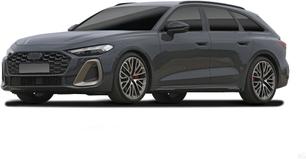
The A5 incorporates Audi’s new design language in a way that makes the 2026 model stand out from Audi’s older offerings, but we won’t know how well it works in the family until more new-gen Audi cars arrive.
For now, the A5 is a generally handsome car. It very much looks like an Audi from the front, even a recent A4 if you only very quickly glanced.
The aforementioned S line styling does plenty in making even the base Audi A5 look like a properly luxe thing. There were a few double-checks at the launch to make sure drivers were getting into the right cars.
Fortunately the new car’s designers refrained from busying up the car with trim, the only big features being the side vents at the front.
But even in Avant form the S5 looks athletic, quad-exhausts in the lower bar and the angular rear bodywork moving away from the previously softer, more rounded look Audi had gone with before.
Inside, the changes are arguably more obvious. The A5 is now much more ‘screeny’ than before, especially if optioned with the passenger-side touchscreen.
It’s still decidedly Audi in its layout and design, with geometric shapes on the steering wheel, screen housing, door cards and even on the gear shifter, which is no longer the more traditional handle-type.
The V40 has been around forever (well, since 2012) but somehow it still looks great – it’s the Nicole Kidman/Rob Lowe of cars.
The thing is Volvo’s new-generation vehicles now have a different look, which will be worn by the next V40, and that seriously dates the current car.
Sure, in 2016 this V40 was updated and given 'Thor’s Hammer' LED running lights like the new-gen cars, but it’s clear the V40 has the old look.
The question is: are you the type of person who would be annoyed if this time next year somebody in the latest ‘new-look’ V40 pulled up beside you at the lights. If yes, then stop reading now… we’ll just wait a moment for you to leave.
Okay, it’s just us now. We don’t need those shallow people anyway, right? They don’t know what they’re missing out on – like an interior with lots of buttons. I’m serious the centre console actually has a numerical key pad for making phone calls. There are also lots of dials for the climate control and seat warmers and for the auto parking system.
All of these buttons will be replaced by a sexy, large touchscreen in the new V40, which will make the screen in the current one look like the slot in Ned Kelly’s helmet. Wait, don’t leave. See, I’ve road tested the new X60 and I missed just flinging a dial to make the cabin’s temperature cooler, instead I had to go into the screen’s menu, find the climate functions, and then slide my finger down a little digital ladder until I found 21 degrees. It’s a frustrating design and potentially distracting in that it takes your eyes off the road longer than twisting a dial does.
I’ll stop the rant. So, yes, the interior of the new V40 will look so sleek and minimalist, decluttered of its buttons and sporting a large vertical screen, but there are functional advantages to keeping it simple.
That said the current V40’s cabin is still special and elegant. The Inscription grade brings milled aluminium trim to the centre console and that leather steering wheel. Volvo owners would be aware of that solid, well-built feeling with a high-quality fit and finish.
What are the V40’s dimensions? Compared to the Audi A3 Sportback the V40 is 59mm longer at 4369mm end-to-end, 72mm wider at 1857mm across, and 5mm shorter in height at 1420mm.
…and that gear selector is a bit indicative of the new A5’s interior. It’s now more of a switch that requires a little more attention than the traditional shifter, just like the way the more screen-focused interior requires a little more of your eyeball time than physical buttons.
Don’t get me wrong, as far as screens in modern cars go, Audi seems to have made it as easy as possible to use the new-gen software in the A5. The menus are clear, there are good shortcuts and there’s no lag… but buttons are always better when your focus needs to be on the road.
Fortunately the driver display is nice and clear, it’s a good update on Audi’s ‘Virtual Cockpit’ and you can set it to display important information without looking too busy.
Ergonomically, the way the central screen is angled towards the driver, the centre console layout and the small control panel on the door for lights, mirrors and the like all seem to be well considered and mean you don’t have to awkwardly reach for anything.
There are a few quirks specific to the A5 and S5, one being that if you opt for the panoramic sunroof, it comes with a transparency switch rather than a physical cover, so it doesn’t do much to keep the light out.
It’s also good to note that the passenger screen - again, if optioned - turns to privacy mode when playing media so as to not distract the driver. Pretty handy!
Behind the front row, a regular-sized adult should have enough room to sit comfortably for a decent amount of time without feeling cramped. The light through the sunroof comes in handy here.
Behind that is a 445L boot in Sedan form, or 1299L with the rear seats folded down. As an Avant, the space increases to 448L and 1396L respectively.
Umm, next question. Okay, the V40 is not very practical. Those small rear doors don’t open wide, making entry and exit potentially difficult for older or less limber folks.
Legroom in the back is limited – although at 191cm I can just sit behind my driving position and headroom is getting tight, too – but still there’s just enough room for me.
The V40’s cargo capacity is 335 litres and that’s smaller than the A3 Sportback’s boot space (380 litres) and the BMW 1 Series’s luggage capacity (360 litres). The aperture of the boot itself is also small.
There’s even a practicality issue with the driver’s doorway – that windscreen is so slanted that the A-pillars either side of it are hard to dodge for taller people when trying to get in, but especially when climbing out.
The new Audi A5 range starts from $79,900 before on-road costs for the standard A5 Sedan, though the rest of the models available at launch are all S5 variants. A more powerful A5 with 200kW and quattro all-wheel drive will come later, as well as a 270kW plug-in hybrid A5 quattro variant.
For now, the sole A5 in the line-up is well equipped for the price, coming with standard 19-inch alloy wheels, matrix LED headlights with adjustable lighting signatures, keyless entry and digital key via Audi’s app, electric bootlid (or tailgate, given its liftback style) and S line styling as standard.
Interior features include sports seats in real and synthetic leather, heated and electrically adjustable up front, leather steering wheel, tri-zone climate control, a 14.5-inch OLED multimedia touchscreen and 11.9-inch driver display, wireless phone charging as well as wireless Android Auto and Apple CarPlay.
The A5 can be optioned with a Style pack for $3000 which adds 20-inch wheels, tinted glass and black exterior trim. There’s also a Premium pack for $3769 which adds a head-up display, high-power USB ports, a Bang & Olufsen sound system, ambient lighting and front door acoustic window glazing.
The other key variants in the line-up from launch are the S5 Sedan and S5 Avant, coming in at $114,900 and $117,900 respectively. Aside from the more advanced drivetrains, the S5s also gain plenty more features over the A5 including 20-inch Audi Sport alloy wheels, selectable OLED rear lights, tinted windows and more paint colour options.
Inside, Nappa leather-upholstered seats gain cooling and massage functions up front, the steering wheel is heated, and there’s ambient lighting with a ‘dynamic interaction light strip’ that changes colour based on vehicle functions like indicating or changing temperatures.
There’s also a head-up display, high-power USB outlets, a Bang & Olufsen sound system and, perhaps most notably, a 10.9-inch touchscreen for the front passenger as standard. It’s a $1500 option in the A5.
Audi also has a launch variant of the S5, the Edition One, which comes at a lower price and a trim spec closer to the A5, but with the S5’s performance. It has non-adjustable sport suspension, for example, and to score much of the main S5’s kit requires cost-options or option packs.
But the prices are tempting, just $99,900 for the S5 Edition One Sedan or $102,900 for the Avant, $15,000 less than their same-power siblings. For an extra $6000, you can add a head-up display, high-power USB ports and the Bang & Olufsen sound system to the Edition One.
Comparing the entry A5 to the recent entry-level A4, the new A5 wears a price increase of $8000 (the ageing A4 is $71,900), but has more power and a much more modern interior. On price alone it seems a steep jump, but the value is still there compared to rivals. A Mercedes C200 currently starts from $89,900, while a BMW 330i is $92,900.
The Volvo V40 in the mid-range Inscription grade with the T4 engine lists for $43,990. When I road tested it for the first time five years ago (in 2013) it was $45,990, and it’s a better car now than it was then, with more standard features.
The list includes a 7.0-inch touchscreen with reversing camera, sat nav, eight-speaker sound system with CD/DVD player, digital radio, and internet connectivity – but no Apple CarPlay or Android Auto.
Also standard are front and rear parking sensors, an auto parking system, plus power adjustable driver and front passenger seats. There’s also leather upholstery, leather-trimmed steering wheel, dual-zone climate control, 17-inch 'Sarpas' alloy wheels and proximity key entry.
The safety equipment list is impressive, too – you can read all about what’s looking after you in the safety section below.
If you wanted a model comparison, then also look at the BMW 1 Series 18i M-Sport for $43,890 or the Audi A3 Sportback 2.0TFSI for $46,400 or Mercedes-Benz A200 for $44,300.
Also, don’t forget that because the current V40 is due to be replaced, dealers will be keen to move their stock to make way for the new one and that means you should be able to get yourself a bargain.
The Audi A5 is powered by a four-cylinder turbo-petrol engine which powers the front wheels via a seven-speed dual-clutch automatic transmission. It makes 150kW of power and 340Nm of torque, and should, Audi says, propel the A5 to 100km/h in 7.8 seconds before (eventually) reaching a top speed of 248km/h.
The S5, in all its variants, is powered by a 3.0-litre turbo-petrol V6 which is assisted by a mild hybrid system. It produces 270kW and 550Nm, sending that to all four wheels via a similar seven-speed dual-clutch.
The S5 is much quicker as a result - 100km/h comes along in just 4.5 seconds according to Audi, before reaching a 250km/h top speed.
The V40 line-up has three petrol engines to pick from and the T4 sits right in the middle between the most powerful T5 and the least grunty T3. A 2.0-litre four-cylinder turbo-petrol engine the T4 makes 140kW/300Nm and delivers it through a smooth six-speed automatic.
That engine is up there with my favourite things about the V40 Inscription. The power figure isn’t huge but 300Nm of torque provides decent shove. A 0-100km/h time of 6.9 seconds isn’t at all slow.
Audi claims the A5 uses 6.9 litres of fuel per 100km, which should theoretically deplete the 56-litre fuel tank after 811km of driving. We couldn’t test this on the launch, but reaching claimed fuel efficiency figures remains an elusive challenge.
The S5, according to Audi, comes with an impressive 7.1L/100km figure in Sedan form, or 7.2L/100km as an Avant. That’s 788km and 777km of theoretical driving range if you’re up for a challenge.
Volvo says the V40 should use 5.6L/100km of premium unleaded fuel over a combination of open and urban roads.
If you’re only going to stick to urban areas you’ll see higher usage – our trip computer was reporting an average of 14.9L/100km on a regular peak hour commute, but motorways drop the figure to about 8.0L/100km.
One of the first press cars I ever drove as an even younger lad than I am now was the circa-2017 Audi S4.
Without the perspective of all the many, many cars I've since driven, that S4 blew my mind a little bit with its combination of capability and refinement.
Now, with the context of most of the cars available to the Australian buyer in mind, it’s reassuring to get into this new generation and find that the mid-size Audi torch has been gracefully passed on.
Audi says the new generation, sitting on its new platform, has more focus on balanced driving dynamics, steering precision and steering feel. Without sacrificing comfort, Audi wants the A5 to be a sharper driver’s car.
It might not gel with the Euro tradition of a rear-drive executive sedan given the base A5 is front-wheel drive - the brand of course focusing on its quattro all-wheel drive system - but the A5 is decidedly agile for its size.
Compared to the S5 especially, as the A5’S 1770kg plays the S5’s 2025kg in Sedan form (2040kg as an Avant). It’s a noticeable weight difference, and it makes the A5 more playful without getting properly ragged.
It also rides on smaller 19-inch wheels and would overall probably make for the better daily driver. Even without the all-wheel-drive traction and extra power the S5 offers, the A5 makes a good case for properly plush commuting. Its 150kW isn’t lacking by any means, and that 340Nm does plenty to help when overtaking.
Its suspension feels well damped, keeping the road’s imperfections out of the cabin without numbing the ride and leaving you without feedback. The steering is similarly direct without being too heavy, making the A5 feel athletic for its size.
But for all the A5’s strengths, there is something undeniable about a six-cylinder European sedan (or wagon). The S5 is heavier, sure, and therefore not as naturally nimble, but it makes up for it. And it’s not just the extra power and mild-hybrid assistance.
It’s a great highway cruiser for a start, but it also adds the confidence of all-wheel drive to a trip, which proved extremely useful on the very rainy winter day we tested it. It holds up well on rough surfaces despite the bigger wheels and extra heft, plus it doesn’t feel out of hand when cornering fast, rolling into a predictable understeer rather than quickly losing traction.
But if you’re in any way conscious of your budget, consider the Edition One. It doesn’t lack any of the key things that make the S5 great, and you get to pocket enough money to buy a second used car.
That grunty 2.0-litre engine teamed with that smooth six-speed transmission goes a long way to making the V40 Inscription T4 an enjoyable car to drive.
Good handling and a fairly comfortable ride complete a prestige and easy-to-drive package that’s only really let down by heavy steering and slightly noisy suspension. That heavily sloped windscreen does present some visibility issues, but it’s not a deal breaker.
The A5 and its S5 variants share the same safety features, with the full suite of Audi’s more-than 30 safety and driver assistance systems standard across the line-up.
Physically, the A5 has nine airbags and has been crash-tested by Euro NCAP, the firm awarding it five stars. There's no local ANCAP score as yet.
Some of the key safety features in the A5 and S5 models include a driver attention alert, seatbelt reminders, tyre pressure indicator, adaptive cruise control, lane departure warnings and lane assist, front braking assist, front and rear cross-traffic alert, speed limit sign recognition, surround view cameras and park assist with front and rear parking sensors.
There are also ISOFIX points for fitting child seats to the rear outboard seats.
First tested in 2012, the V40 the achieved one of the highest-ever scores awarded by EuroNCAP and saw ANCAP give it the maximum five-star rating in Australia. Back then the V40 came standard with advanced safety equipment only making it onto cars these days such as AEB, it also had the world’s first pedestrian airbag, which inflates to protect people from hitting the A-pillars and windscreen.
The 2017 update added blind-spot warning as standard on the Inscription grade. A $1300 option package brings Lane Departure Warning, Lane Keeping Aid, Active High Beam Control, Forward Collision Warning and Road Sign Information. A $3000 package brings adaptive cruise control, collision warning with full auto braking, plus pedestrian and cyclist detection.
ABS, EBD, traction and stability control are of course there to step in should you need it, too. You’ll find three top tether and two ISOFIX points in the second row for child seats. A space-saver spare is under the boot floor.
Audi’s five-year/unlimited kilometre warranty is starting to fall behind the industry standard, though is about normal for a premium brand. On top of this, customers can opt to purchase extra years of warranty up to a maximum nine years which costs $3590.
Audi does also offer 12 years of bodywork manufacturing warranty against corrosion or perforation. There’s also five years of Audi roadside assistance.
Servicing intervals for the A5 come in at every 15,000km or 12 months, with customers able to purchase fixed-price servicing plans at a discount compared to paying per service.
A five-year servicing pack for the A5 Sedan is $3360, and for the S5 it’s priced at $3540.
The V40 Inscription is covered by Volvo’s three-year/unlimited kilometre warranty. Volvo has two capped-price servicing programs – the $1600 Smartcare for three years and the $2950 Smartcare Plus for five years.