What's the difference?
Things are going well for Subaru. In the first half of 2023, all of its models in Australia are outselling their figures for the same time last year by hundreds, some even by thousands.
Except for one model, the XV. In fact, sales have plummeted! So what happened to it? It was one of the brand’s top sellers, right?
Well, it’s still here, but now it’s called Crosstrek in Australia as it already is in the rest of the world. And maybe we lied a little - it’s selling very well. In June 2023 it outsold the Forester and Outback, both well established models in Subaru’s local history.
But the name isn’t all that’s new, because this Impreza-spinoff SUV now comes as a hybrid - available here as the Crosstrek Hybrid S.
Traditionally, Subaru has been pretty… traditional. So, will a step towards the future - electrification, that is - help or hinder the Crosstrek’s rise to mass popularity?
The Duster is finally in Australia! Anyway, moving on…
Dated Top Gear reference aside, Renault has just launched its version of the boxy Duster small SUV in Australia.
Badged as a Dacia in Europe, the Renault Duster features different badging, as well as more noise insulation to create a quieter interior.
This is the first new Renault passenger model to launch in Australia for a while now, following the Megane E-Tech electric SUV and updated Arkana ‘coupe’ SUV in 2024.
Balancing a fine line between the bland-looking Subaru Crosstrek and the hardcore Suzuki Jimny, is the Renault Duster worth considering? Read along to find out.
It’s not perfect, in fact, the Crosstrek has a few factors that would probably turn off groups of buyers at a time, but Subaru knows its audience isn’t ‘everyone’.
Subaru customers aren’t trying to get their fuel efficiency below 4.5L/100km, nor find the car with the most luxurious interior. They’re looking for a practical Jack or Jill of all trades, which the Crosstrek does rather well for its segment.
Few small SUVs are as agreeable on rough and unsealed roads without sacrificing suburban comfort, while its features list is practical and provides plenty for the money.
Unfortunately, the hybrid system is a little underwhelming, and if it’s the main draw of the Crosstrek for you, it could be worth considering the less expensive ($38,590) Hybrid L or even a hybrid rival like the Toyota Corolla Cross or Mitsubishi Eclipse Cross.
If the all-round ability of the Crosstrek is the draw, however, the non-hybrid L is still an excellent offering and doesn’t use a lot more fuel than the Hybrid - plus it’s several grand cheaper at $41,490.
The Crosstrek is great for active people who need a bit of flexibility in one car but for the vast majority, the hybrid probably isn’t the sweet spot in the range. However, that won’t hinder the Crosstrek as an overall model, its popularity is already proven, and the option of a Hybrid puts Subaru a little closer to the eventual necessity of electrification.
The Renault Duster looks set to put the French carmaker back on the map here in Australia.
While there will likely be general appeal thanks to its cool looks, it holds special appeal for us off-road enthusiasts as a new, cost-affective option that’s filled to the brim with character and charisma.
While it may not be perfect, it also doesn’t matter. In fact, this makes me like the Duster even more.
The manual AWD feels like the purest and most correct way to experience the Duster as it’s so smile-inducing. However, this isn’t to discredit the automatic FWD version as it’s arguably more liveable day-to-day.
Pick your poison. You’re bound to love it no matter which way you go.
Note: CarsGuide attended this event as a guest of the manufacturer, with accommodation and meals provided.
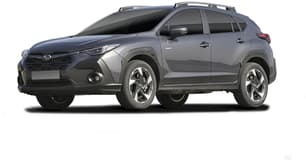
Perhaps unsurprisingly, the new Crosstrek looks an awful lot like its a development of the Subaru XV.
Which, given the latter’s popularity, is a very good thing.
While there are a lot of similarities, especially when it comes to some of the more rugged elements, the Crosstrek still manages to look quite new.
It’s rugged without having too many ‘busy’ design elements and it even looks at home in inner-city suburbs.
Of course, its raised body and cladding are mostly for practical reasons, but it gives the small SUV an adventurous aesthetic that separates it from city-focused rivals.
As essentially a high-riding development of the Impreza hatch, its size and proportions also make it look more like a ‘big car’ than a small SUV.
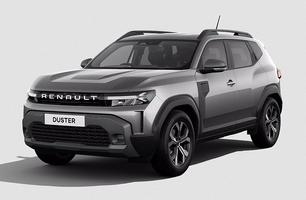
When you see a Renault Duster parked up or on the road, you’ll instantly be able to tell what it is.
This small SUV is essentially a rebadged Dacia for international markets and the design changes are minimal.
The most noticeable departure is the front grille has ‘Renault’ badging written out instead of a Dacia badge. It’s a departure from any other current Renault model on offer locally and gives the car a tough, unique presence.
There are also Y-shaped LED daytime running lights that look cool and modern.
Depending on the Duster version you opt for, the lower section of the front bumper looks different. All-wheel drive (AWD) versions sit higher to improve the approach angle and ground clearance.
Around the side there’s plenty of plastic cladding to drive home that this is a tough all-terrain machine and not your everyday crossover. I prefer it to the glossy and chrome accents on rival SUVs as it's no-nonsense.
The black body cladding around the wheel arches and along the door sills is recycled and has a fleck throughout it. There’s also a recycled icon near the side mirrors which is a touch too on the nose for my liking.
Towards the rear there are angular haunches that make the Duster look tough, as well as hidden rear door handles on the C-pillar.
At the back there are even more angles that make the Duster stand out. The most obvious is the triangular tail-lights which look funky and cool.
There’s little else to note about the rear design besides a subtle Renault badge and Duster written out on the bottom of the tailgate. I appreciate how clean the rear is because some carmakers can go over the top with badging.
Inside, the Duster defies its budget roots with a high-tech and modern-presenting design. The Y-shaped air vents continue the motif from the headlights, while the 10.1-inch touchscreen multimedia system is mounted prominently on the dash and is smartly tilted towards the driver.
After spending some time behind the wheel, however, you start to notice a lot of the Duster’s finishes inside are hard, scratchy plastics. It’s most noticeable on the dashboard.
Depending on which version you opt for, the door armrests are also finished in hard plastic. The top-spec Techno gets a softer padding on top, however.
While there is a lot of hard plastics, it’s nowhere near as noticeable as a Suzuki Jimny.
Practicality is pretty much a staple of Subaru as a brand, so it should be a huge surprise that it feels that way from the driver’s seat.
The interior doesn’t look futuristic, but it does look functional.
For example, even though the centre of the dash is all screen - and we love buttons for climate controls around here - the controls for air conditioning and temperature are at least always present on the screen, no sub-menus needed.
The phone charger is large enough for even very tall phones (looking at you, Samsung Galaxy S20 Ultra, pictured), and it’s out of the way to minimise extra digital distraction.
The steering wheel’s buttons, while many, are all clear and simple, as is the iPad-like icon layout on the multimedia screen.
Storage in the front is miles ahead of the rear seats, a large central bin with two cupholders, a big glove box, and decent space for water bottles in the door cards. In the rear, two central cupholders in the armrest and a small space in the door.
But there is a decent amount of space for an adult to sit in the rear, even if the sides of the roof are a little close to the head. It’s a little like the front, where the seats are supportive and easy to adjust to a comfortable position.
Further back, the boot space is a relatively small 315 litres, though its slightly larger than the 291L the petrol versions come with - that extra space likely swallowed by a spare tyre in the petrol versions, as opposed to the smaller batteries taking up some space in the hybrids.
In terms of practicality, this is one small SUV that punches above its weight.
Up front both the seats are manually adjustable, which is expected at this price point. There’s nothing wrong with this as they still allow you to find your desired seating position.
The entry-level Evolution comes with cloth upholstery which feels nice to touch and allows for decent breathability, whereas the top-spec Techno has a premium textile that almost feels like neoprene (wetsuit material). I’m thankful there’s no leather upholstery option in this car because it wouldn’t suit its character.
Ahead of the driver is a leather-wrapped steering wheel which feels more premium than you’d expect. It feels lovely in the hand and is complimented by the squared-off shape.
Another reason why I like this steering wheel is it offers a generous amount of tilt and reach adjustment. This means people of all different sizes and statures will be able to find a comfortable driving position.
There’s a nice smattering of physical buttons on the steering wheel for critical things like the cruise control and changing the content on the digital instrument cluster, though if you want to change the volume or track, you need to interact with the stubby stalk behind the steering wheel.
This is a classic Renault quirk that’s been in a number of its cars for years. It takes a bit to get your head around, but once you do it’s second nature.
Behind the steering wheel is a 7.0-inch digital instrument cluster which looks a little small in its housing. Clear analogue dials for the rev counter and speedometer would have been better and likely more timeless.
As standard, however, there’s a big digital speedometer readout that’s easy to read, as well as a few layout styles and informative pages to cycle through.
I wish the digital rev counter was featured on more of the page layouts and it also had more numbers denoting the rev counter markings, rather than simple lines. This is particularly annoying in the manual.
Moving across, the 10.1-inch touchscreen multimedia system is clear and bright. It also helps that the native interface is simple and easy to navigate.
There’s wireless Apple CarPlay and Android Auto across the line-up which is fantastic to see and almost expected now. Complimenting this is a standard wireless phone charger at the base of the centre tunnel.
Additionally, if you opt for the Techno, you get a phone mount on the dashboard. I still haven’t decided whether this is helpful or not given there’s already wireless phone mirroring and the phone mount doesn’t provide charge as standard.
Unlike many newer cars, the Duster retains plenty of physical switchgear up front so key functions like the dual-zone climate control and drive modes.
In terms of storage up front there are two cupholders, a handy shelf for stowing things above the wireless charger, a big centre console box, as well as a deep glove box.
Moving to the second row there’s plenty of headroom, though legroom is minimal for adults above (183cm) six feet. You have to remember this is a small SUV so it’s actually not too bad.
The second-row bench seat is laid back, allowing you to get comfortable on longer drives. Two adults can easily fit back there, though pushing it to three would make it squishy.
Second-row amenities include air vents and two USB-C ports. There’s also a special connector on the back of the centre console which allows you to fit a wide range of optional 'YouClip' accessories. These include a cupholder, light or hook.
In the same vein, you can also add a phone or tablet holder to the back of the front-seat headrest. The configurability is to your heart’s content.
A downside of the second row, however, is there’s no fold-down centre armrest. This also means there are no rear cupholders as standard, which is disappointing.
At the back the entire Duster line-up has a manual tailgate, which is fine for the price point.
The boot space itself is decent as there’s no load lip, but if you’re wanting a larger space overall, it’s best to opt for the front-wheel drive (FWD) versions as they have 472L with the rear seats upright. AWD versions, on the other hand, have 358L with the rear seats up.
The Techno 4x2 in particular has a two-tier floor which allows you to stow things underneath the main boot floor, or you can create a partition to stop things moving around.
Boot-related amenities include a light, hooks and a 12V socket. There are also extra YouClip points, including one on the tailgate. This allows you to add extra lights or hooks.
As standard, all Duster variants get a full-size spare wheel, which is fantastic given this type of vehicle may be spending a lot of time out on the open road.
When you’re wearing a hybrid badge and you’re up against veterans in the field like Toyota with the Corolla Cross, you want to make sure you’re offering up something substantial.
At $45,090, before on-road costs, the Hybrid S tops the range and comes with a features list that screams it from the rooftops. Or the mountaintops. Or at least as far as the gravel tracks will take you towards the mountaintop.
From the outside, 18-inch wheels are the first indicator for the ‘S’ grade - note that hybrids don’t come with spare wheels, just repair kits - as well as body coloured door handles and black plastic trim and cladding, aside from the gloss mirror caps.
The door mirrors are heated and fold away when parked, while up top there’s a sunroof flanked by roof rails, with a styled spoiler at the rear.
Interestingly, there’s no power tailgate.
LED DRLs and headlights are automatic and are aided by steering responsive active cornering lamps, while the wipers are auto rain-sensing.
Inside, dual-zone climate control and heated front seats (the driver’s is eight-way power adjustable) for the cold - all seats are leather accented - while the steering wheel and shifter are also leather-wrapped.
Tech is covered off by the usual 11.6-inch portrait touchscreen centrepiece, with sat-nav, AM/FM and digital radio, wireless Android Auto and Apple CarPlay, USB-A and USB-C plugs (in the rear, too), a wireless phone charger, and a 10-speaker Harman Kardon sound system over the usual six-speaker set-up. There’s even an auxiliary audio input.
The driver display is a small 4.2-inch unit flanked by physical dials.
In Australia the 2026 Renault Duster is being offered in two trim levels with two powertrain options.
Pricing starts at $31,990, before on-road costs, for the Duster Evolution 4x2 automatic and extends to $37,990, before on-roads, for the Duster Techno 4x4 manual.
This is competitive pricing for the small SUV segment, especially when you consider the rugged and considerably smaller Suzuki Jimny costs similar.
As standard the Duster Evolution comes with 17-inch alloy wheels, a 7.0-inch digital instrument cluster, a 10.1-inch touchscreen multimedia system with wireless Apple CarPlay and Android Auto, a wireless charger, dual-zone climate control, an electric park brake, as well as black and grey cloth upholstery.
Stepping up to the Techno gets you larger 18-inch alloy wheels, front fog lights, privacy glass, modular roof rails, keyless entry and walk-away locking, push-button start, a smartphone holder, as well as black and grey premium textile upholstery.
While the entire Duster line-up has LED low-beam headlights, the high-beams are only halogen, which is a disappointing cost-cutting move.
Despite this, there’s still plenty of standard equipment, even from the base Evolution trim.
If that’s not enough, however, you can further personalise your Duster with a wide range of optional accessories. There are clip-on cupholders, lights, hooks and tablet holders inside, as well as Rhino Rack and Thule accessories outside.
This is perhaps the part of the review you’re most interested in - as well as the following sections on efficiency and maybe driving - if the ‘Hybrid’ part of the Crosstrek Hybrid S’ name brought you here.
Like its design and interior, the engine will be familiar to anyone who has owned or driven a relatively recent Subaru - a 2.0-litre flat-four petrol engine good for 110kW/196Nm - which means it makes a little less than the standard petrol variant’s 115kW.
However, the electric motor is capable of its own 12kW/66Nm outputs, though Subaru doesn’t supply a claimed total maximum for the whole powertrain.
Drive is transferred to all four wheels - it is a Subaru after all - via a seven-step continuously variable transmission (CVT).
As noted earlier, the Renault Duster is offered with two different powertrains.
The most affordable option is a 1.3-litre four-cylinder turbo-petrol engine which produces 113kW of power and 270Nm of torque.
This is mated to a seven-speed dual-clutch automatic transmission with drive sent to the front wheels only. It’s worth noting this is the same powertrain that propels the Renault Arkana and Captur, as well as certain entry-level Mercedes-Benz models.
Renault claims this version of the Duster can do the 0-100km/h sprint in 9.2 seconds.
The second powertrain option is a 1.2-litre three-cylinder turbo-petrol with 48V mild-hybrid assistance which produces 96kW and 230Nm.
This is less powerful than the four-cylinder petrol but it’s mated to a six-speed manual gearbox with drive sent through an all-wheel drive system.
Renault claims the AWD Duster can do the 0-100km/h sprint in 11 seconds. That’s not very fast at all…
Claimed top speed for the entire Duster line-up in Australia is 200km/h.
Unfortunately there’s no automatic AWD Duster available globally yet so if you want to maximise your all-terrain capability, you’ll need to opt for this mild-hybrid manual powertrain option.
All versions of the Renault Duster have a braked towing capacity of 1500kg, though it’s worth noting the towball download limit is only 75kg. This could prove to be a hassle if you’ve got a towball-mounted bike rack and you put a hefty e-bike on it as this could easily send it over this threshold.
Subaru claims the Crosstrek Hybrid will sip 6.5L/100km on the combined cycle, which isn’t enough to blow anyone away, even when you take into account the extra fuel needed for permanent all-wheel drive. The AWD Corolla Cross Hybrid comes with a claimed 4.4L/100km.
Compare this to the 8.5L/100km reading the Crosstrek returned after our time with the car, mostly with a (somewhat unkind) mix of inner-city and semi-rural backroad driving, and it’s clear the Crosstrek isn’t one of the most frugal cars in its class.
More highway driving would certainly have lowered the figure - we’ve achieved 8.0-litres on previous testing with a non-hybrid Crosstrek - but perhaps being top of the charts for efficiency isn’t necessarily what Subaru buyers are looking for.
Of course, the Crosstrek Hybrid S employs a couple of features to avoid using fuel where it can be avoided, such as auto stop-start and its (relatively mild) electric system taking over when mostly coasting or the engine isn’t required.
Renault claims the four-cylinder, FWD Duster consumes 6.5L/100km, whereas the three-cylinder, AWD is claimed to consume 5.7L/100km, both on the combined (urban/extra-urban) cycle (ADR 81/02).
The former has a 50L fuel tank and requires a minimum of 91 RON regular unleaded petrol, while the latter has a slightly larger 55L fuel tank but requires higher quality 95 RON premium unleaded petrol.
We didn’t get a chance to properly get as-tested fuel consumption figures during this initial first drive, but the FWD Duster has a theoretical range of 770km and the AWD Duster extends that to 965km.
Two things stand out after a short stint behind the wheel of the Crosstrek Hybrid, and both become more cemented over time.
The first is that the ‘Hybrid’ part of the ‘Crosstrek Hybrid S’ isn’t quite as prominent in its real-world impact as it is in its name.
The 110kW engine doesn’t feel like it’s being massively helped along by any electric assistance, and the electric motor is very rarely doing the work by itself, as you’d find in any hybrid from Toyota or Honda.
That’s a shame, because the Crosstrek could do with a little extra oomph, if not for getting up to speed then for avoiding thrashy engine sounds under acceleration.
The CVT, while not necessarily detrimental to its performance, doesn’t help with that.
But balancing that out is a chassis and platform that’s engaging and predictable - and that’s predictable as a good thing - making the Crosstrek pleasant to pilot.
Its controls like steering and braking are nicely weighted for low speeds, commuting, and for more spirited driving, while the suspension and chassis handles surfaces from smooth suburban roads, to city tram tracks, to unsealed roads with ease, soaking up bumps and shakes nicely.
If you’re noticing a theme in this review, it’s that Subaru doesn’t seem to be chasing any ‘best at’ metrics in favour of giving the Crosstrek the ability to do a range of different driving and being at least satisfactory in any given area.
Depending on which version of the Duster you opt for, they’re rather different beasts. The most ‘normal’ version is the FWD auto.
This powertrain combination with the 1.3-litre turbo four-cylinder and seven-speed dual-clutch automatic immediately feels familiar if you’ve driven a current Arkana or Captur.
There’s enough power underfoot to get moving along briskly, though you won’t be breaking the land speed record anytime soon. There’s also a wealth of torque allowing the engine to feel like it’s not working hard.
It’s fun to listen to the turbo spool up during moderate acceleration, though the four-cylinder engine note doesn’t necessarily inspire you.
For the most part the seven-speed dual-clutch operates smoothly, though it can get caught out during low-speed manoeuvres. It’s also clearly tuned for economy as it likes to shift up to the next gear quickly.
The AWD Duster, on the other hand, is where the fun and true character of this quirky SUV shines. With the three-cylinder turbocharged petrol engine and the manual transmission, it’s far from the quickest vehicle out there. It’s faster than a Suzuki Jimny, though.
While progress may be relatively docile, the gruff three-cylinder engine note is addictive. There’s also plenty of torque on tap, so you don’t need to downshift to get things moving.
The manual selector feels chunky in the hand and the clutch biting point is easy to get your head around. Unlike some petrol-powered manual cars, this one’s hard to stall. Even if you do, once you put your foot back on the clutch, the car restarts automatically.
Where the AWD Duster gains extra character points is by having a 48V mild-hybrid system. It doesn’t do anything to drastically alter the driving experience apart from adding a tiny boost to acceleration and extending and smoothing the engine idle stop-start system.
During our launch drive program we had the opportunity to drive the front- and AWD Duster off the beaten path, as well. While you’d expect the latter to be good, the former surprised me in terms of just how far it could go. It’s clear the platform is set up for all-terrain capability, no matter the powertrain configuration.
For added peace of mind off-road, however, the AWD has a higher ground clearance (212mm vs 174mm), as well as a range of terrain modes, including a ‘Lock’ setting that splits torque evenly between the front and rear axles.
The AWD Duster is pretty unstoppable off-road. It’s not quite a Jimny tamer in terms of outright off-road-ability, but I estimate the Duster could do 80 per cent of what a Jimny could do.
While the Duster mightn’t be an outright off-road beast, it well and truly makes it up with on-road finesse. The most noticeable element is the suspension. It feels supple, balanced and controlled no matter the surface. Sure there’s some body roll in the bends, but this isn’t trying to be a sports car.
There are some differences between the front- and AWD Duster when it comes to the rear suspension. The former has a torsion beam set-up, while the latter has a multi-link arrangement. In practice, however, it’s hard to tell any difference between the two.
The steering is direct and on the lighter side which helps with manoeuvrability, though there’s a general lack of feel. It’s considerably better than the Jimny’s vague steering, though.
In terms of parking the Duster has a tight turning circle. Rear parking sensors and a reversing camera are standard in the Evolution, though the Techno adds front and side parking sensors, as well as a surround-view camera.
The camera systems in this car are poor. They’re mushy-looking with poor resolution and horrible colour balance. It’d be great to see higher quality units installed, especially because the multimedia screen is so high-resolution.
Forward visibility from the driver’s seat is fantastic through the rather upright windscreen. You also get a good view of the muscular-looking bonnet.
Side visibility is great, which helps make checking blind spots easier, plus the rear envelope is sizable.
The safety systems in this car are largely easy to live with, though the lane-keep assist can grab at the steering wheel a bit too much on roads with tight lanes or poor lane markings.
Thankfully there’s a button on the dashboard that turns this, and any other safety system that annoys you off, so you can keep on motoring without safety nanny intrusion.
Lastly in terms of noise, vibration and harshness (NVH), the Duster is impressively quiet at low speeds. You can even travel at 60-80km/h along gravel roads and in the cabin it sounds like you’re on a sealed surface.
Once you get out on the open road at highway speeds there’s noticeable road and wind noise, but I’ve experienced much worse in small SUV rivals at a similar price point.
As the range-topper, the Subaru Hybrid S comes with the lot in terms of safety.
And even though it hasn’t been tested by ANCAP yet, it’d be a shock if its score was anything less than the maximum five stars.
It’s what the XV scored in 2017, and the brand hasn’t missed out on full marks since the Impreza and Foresters of the early 2000s.
Nine airbags include dual front, dual front side, dual curtain, driver's knee, far side, and front passenger seat cushion airbags, plus Subaru’s 'EyeSight' safety suite does the work in crash prevention.
On top of the standard safety features you’d expect from any new car like electronic stability control and ABS, there’s a ‘Pedestrian alert system’, emergency lane keep assist with departure warning and prevention, a ‘Driver Monitoring System’ that includes drowsiness and distraction warnings, sensors and monitors for blind spots and rear cross-traffic, and of course parking sensors.
Some less common features of EyeSight include ‘Lead Vehicle Start Alert’, ‘Pre-Collision Braking System’, ‘Pre-Collision Throttle Management’, ‘Intelligent Speed Limiter’ as well as ‘Speed Sign Recognition’ and ‘Brake Light Recognition’.
Specific to the S, is a surround-view parking camera, high beam assist, plus front- and side-view monitors to help avoid kerbing wheels or bumping towbars.
It’s all fairly well implemented in the Crosstrek, though some of its chimes can be a bit much - the driver distraction alert can mistake a quick climate control change at the lights for a proper lapse of focus, while an alert for approaching speed and red light cameras comes without any indication of what the noise is for.
The Renault Duster hasn’t been crash-tested by ANCAP just yet, though the Dacia Duster did receive a three- out of five-star Euro NCAP rating in 2024.
As standard there are six airbags, autonomous emergency braking, lane departure warning, lane-keep assist, driver attention alert, traffic sign recognition, rear parking sensors and a reversing camera.
Stepping up to the Techno gets you blind-spot monitoring, front and side parking sensors as well as a surround-view camera.
Notably absent from the entire line-up is rear cross-traffic alert, as well as adaptive cruise control. There’s only standard cruise control on offer.
There are two ISOFIX points, as well as three top-tether child seat anchorage points on the rear seat bench.
The Crosstrek is covered by Subaru’s five-year/unlimited kilometre warranty, with servicing intervals coming up every 12 months or 15,000km under Subaru’s five-year capped-price servicing.
Subaru also adds 12 months of free roadside assistance.
This is all fairly standard in the industry, though some brands like Kia and MG offer seven-year warranties, or there’s Mitsubishi with a 10-year warranty (even if it requires certain conditions to be met during the decade).
The Renault Duster is covered by a five-year, unlimited-kilometre warranty with five years of roadside assistance.
Logbook servicing is required every 12 months or 30,000km, which is mainstream for the commercial vehicle segment, but incredibly rare for a regular car. These long intervals are handy for those who travel long distances.
The first five services have capped pricing. All up these cost $2685 for FWD Dusters or $2475 for AWD Dusters. These average out to $537 and $495, respectively, per service.
Alternatively, you can purchase a five-year, pre-paid service plan for $2150 for FWD Dusters or $2100 for AWD Dusters. This is a saving of over $500, depending on the version, compared to pay-as-you-go.