What's the difference?
Numerous commercial van manufacturers are adding battery-electric vehicle (BEV) variants to their model line-ups.
Anecdotal evidence suggests these vehicles are best suited to city and suburban fleet duties, in which they cover short-loop daily driving distances that are comfortably within a manufacturer’s claimed battery range and return to depots each day to be recharged.
However, given that it’s still relatively early days for electric vans, potential buyers are faced with numerous potential deal-breakers compared to conventional internal combustion engine (ICE) equivalents.
These include higher purchase prices, limited driving ranges, longer 'refuelling' times, heavier kerb weights (due to their large batteries) and resulting smaller payload ratings. And they are usually not rated to tow.
However, they can also offer lower operating costs. And they produce zero tailpipe emissions, which according to Mercedes-Benz "creates a powerful marketing tool (for buyers) to demonstrate their commitment to operating sustainably".
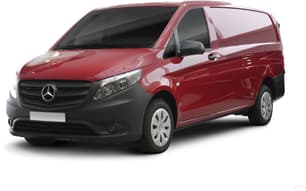
We recently trialled M-B’s Vito-based contender in this pioneering LCV market segment, to see how it measures up in Australia’s highly competitive medium-sized (2.5-3.5-tonne GVM) van market.
Genesis has been in Australia for seven years, which in car industry terms is ancient (given the rapid pace of new arrivals). But the Hyundai-owned luxury brand has yet to make a real dent on challenging the likes of BMW and Mercedes-Benz and is now facing growing threat from the likes of Zeekr and Omoda-Jaecoo.
So it has opted for the tried and tested method of appealing to Australian customers - more performance. Australians have always had a soft spot for the likes of BMW M and Mercedes-AMG, so Genesis is hoping its new performance sub-brand, dubbed Magma, will help give it a sales boost as well as an image enhancement.
The Genesis GV60 Magma has just arrived in Australia and is the first member of what is planned to be an entire family of Magma halo vehicles.
An electric performance small SUV is an unusual choice for a hero model, but there are some good reasons why this has potential and why it makes sense to be the first Magma offering. And both those reasons are largely the same, because the GV60 Magma is based on the same underpinnings and features and much the same powertrain as the Hyundai Ioniq 5 N and Ioniq 6 N.
Just like Hyundai N has three core elements - Corner Rascal, Racetrack Capability and Everyday Sportcar - Genesis has created a trio of pillars for Magma. These are Design: Unspoken Dominance, Driving Sensation: Captivating Control and User Experience: Sharpened Immersion.
Or to put it another way - slightly different, but fundamentally the same premise given the shared mechanical DNA. But Genesis has definitely put its own spin on it, so read on to find out if Magma is hot or not.
It’s arguably the best-looking mid-size van on the market, particularly with the optional enhancements fitted to our example. And its longer (km-based) service intervals and capped-price servicing costs offer substantial savings compared to a diesel Vito equivalent.
However, the eVito has a much higher purchase price, smaller payload, shorter driving range, can’t tow a trailer and feels a tad under-powered at low speeds. Plus filling its battery with fresh charge takes much longer than filling a tank with diesel, which may or may not be an issue depending on planned usage.
Therefore, a buyer would need to have not only a sizeable purchasing budget but also very specific and resolute criteria for this vehicle to shine in a commercial role.
An electric SUV is certainly an unconventional choice for a halo model, and is unlikely to be a big seller, but that’s not really the focus for Genesis. Instead, the arrival of the GV60 Magma means something bigger for the brand.
It’s a clear sign of intent from Genesis that it means business with Magma and has a long-term plan for Australia and taking on the likes of BMW M and Mercedes-AMG.
But, as for the car itself, it’s undoubtedly a very nice proposition, with some genuine performance potential and an engaging driving experience - even if it is thanks to technology rather than simple mechanics.
To dismiss it as simple a ‘luxury Hyundai’ would be doing it a disservice, too, as it offers not only a more premium package but overall a different driving experience. It’s less outrageous than either the Ioniq 5 N or 6 N, but still outrageously fast.
Note: CarsGuide attended this event as a guest of the manufacturer, with travel, accommodation and meals provided.