What's the difference?
Numerous commercial van manufacturers are adding battery-electric vehicle (BEV) variants to their model line-ups.
Anecdotal evidence suggests these vehicles are best suited to city and suburban fleet duties, in which they cover short-loop daily driving distances that are comfortably within a manufacturer’s claimed battery range and return to depots each day to be recharged.
However, given that it’s still relatively early days for electric vans, potential buyers are faced with numerous potential deal-breakers compared to conventional internal combustion engine (ICE) equivalents.
These include higher purchase prices, limited driving ranges, longer 'refuelling' times, heavier kerb weights (due to their large batteries) and resulting smaller payload ratings. And they are usually not rated to tow.
However, they can also offer lower operating costs. And they produce zero tailpipe emissions, which according to Mercedes-Benz "creates a powerful marketing tool (for buyers) to demonstrate their commitment to operating sustainably".
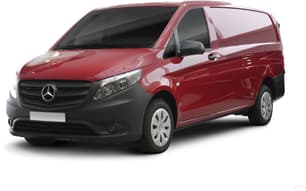
We recently trialled M-B’s Vito-based contender in this pioneering LCV market segment, to see how it measures up in Australia’s highly competitive medium-sized (2.5-3.5-tonne GVM) van market.
Sometimes, a vehicle facelift doesn’t amount to much. Maybe a nip here, a tuck there, but to be sure you’re looking at the new version, you need to check the badges.
To be honest, the revised Polestar 3 SUV is a bit of that, with very little to visually distinguish the facelift from the previous car. But underneath there are some serious upgrades which, in that oh-so-Swedish understated way, serve to make the Polestar 3 an even more tantalising prospect.
The Polestar 3 has now moved to 800-volt technology which not only allows for faster charging, it also opens up the prospect of even more performance. A new generation of lithium-ion batteries also means greater range potential.
But it’s nice to see that Polestar hasn’t limited its attention to the drivetrain; there’s now a revised anti-roll-bar system and a recalibration of the power steering assistance. Which just goes to show that even though brands like Polestar trade on being an all-electric solution, there are still some engineers in Sweden who know how the rest of a car should work.
Meantime, the medium-large SUV space is a very crowded one right now, so the question is whether the new tech – invisible as it is – is enough to keep the Polestar 3 carving out its slice of that market.
It’s arguably the best-looking mid-size van on the market, particularly with the optional enhancements fitted to our example. And its longer (km-based) service intervals and capped-price servicing costs offer substantial savings compared to a diesel Vito equivalent.
However, the eVito has a much higher purchase price, smaller payload, shorter driving range, can’t tow a trailer and feels a tad under-powered at low speeds. Plus filling its battery with fresh charge takes much longer than filling a tank with diesel, which may or may not be an issue depending on planned usage.
Therefore, a buyer would need to have not only a sizeable purchasing budget but also very specific and resolute criteria for this vehicle to shine in a commercial role.
There’s some clever design work here and some gorgeous detailing that gives the Polestar 3 a bit of an edge compared with some of its less inspired opposition. It features a truly spacious interior and it’s more than just decent to drive with, frankly, astonishing performance in 500kW Performance form. Even the entry-level Rear Motor has plenty of oomph and could be argued to be the more intelligent choice.
But the interior layout with its melange of menu-driven functions to control basic, everyday functions is annoying and does the car no favours. Not to mention it’s simply not the Scandinavian way to place form before function.
Meantime the overall performance, dynamics and accommodation of the Polestar 3 place it pretty high on the totem of electric SUVs that actually move the game forward somewhat, and that’s largely down to that 800-volt architecture that brings faster charging and better range.
It doesn’t solve all the issues of modern car making, but as a step closer to Polestar’s ultimate aim of a climate-neutral motor vehicle, it’s a move in the right direction.
Note: CarsGuide attended this event as a guest of the manufacturer with meals provided.