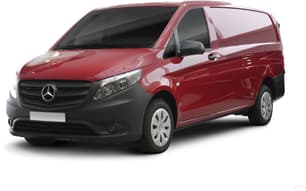
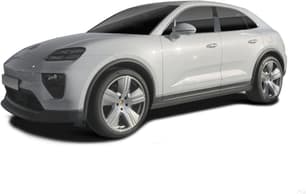
What's the difference?
Numerous commercial van manufacturers are adding battery-electric vehicle (BEV) variants to their model line-ups.
Anecdotal evidence suggests these vehicles are best suited to city and suburban fleet duties, in which they cover short-loop daily driving distances that are comfortably within a manufacturer’s claimed battery range and return to depots each day to be recharged.
However, given that it’s still relatively early days for electric vans, potential buyers are faced with numerous potential deal-breakers compared to conventional internal combustion engine (ICE) equivalents.
These include higher purchase prices, limited driving ranges, longer 'refuelling' times, heavier kerb weights (due to their large batteries) and resulting smaller payload ratings. And they are usually not rated to tow.
However, they can also offer lower operating costs. And they produce zero tailpipe emissions, which according to Mercedes-Benz "creates a powerful marketing tool (for buyers) to demonstrate their commitment to operating sustainably".
We recently trialled M-B’s Vito-based contender in this pioneering LCV market segment, to see how it measures up in Australia’s highly competitive medium-sized (2.5-3.5-tonne GVM) van market.
This might be the biggest gamble in Porsche's history. It's the latest version of its best-selling car, the Porsche Macan, only this one has a very big difference.
You see, this time, it’s all-electric. There is not an internal-combustion engine (ICE) in sight. And that makes climbing into an entry-level Macan significantly more expensive than ever before.
So, will this bold shift help or hinder the Macan in Australia? And is this the country’s best all-electric SUV?
There’s only one way find out.
It’s arguably the best-looking mid-size van on the market, particularly with the optional enhancements fitted to our example. And its longer (km-based) service intervals and capped-price servicing costs offer substantial savings compared to a diesel Vito equivalent.
However, the eVito has a much higher purchase price, smaller payload, shorter driving range, can’t tow a trailer and feels a tad under-powered at low speeds. Plus filling its battery with fresh charge takes much longer than filling a tank with diesel, which may or may not be an issue depending on planned usage.
Therefore, a buyer would need to have not only a sizeable purchasing budget but also very specific and resolute criteria for this vehicle to shine in a commercial role.
There is no doubting the substance of the Porsche Macan Electric. Its ride, steering and poise make it a joy to drive on twisting roads, and it ticks the practicality boxes, too.
The only lingering question is whether enough people are ready to make the all-electric switch. Only then will we know if Porsche's Macan gamble has paid off.
Note: CarsGuide attended this event as a guest of the manufacturer, with travel, accommodation and meals provided.
The eVito’s front-mounted electric motor drives the front wheels. Its lithium-ion battery is located beneath the standard Vito floor to ensure load volume is not reduced. This substantial battery is as wide as the load floor and extends from just behind the front wheels to just ahead of the rears. Its charging port is located behind a spring-loaded body flap ahead of the left front wheel.
It rides on a 3200mm wheelbase with 5140mm overall length, 1928mm width and a kerb-to-kerb 13-metre turning circle, with 1916mm height allowing access to underground and multi-storey carparks. It’s equipped with strut-type front suspension, semi-trailing arm/coil spring rear suspension and four-wheel disc brakes.
The Macan Electric looks sharp, all aerodynamic and swept-back like a range-maximising electric SUV should.
There’s functional method behind all this swoopy styling, too. The headlights look as though they’ve been chiselled into the body work, and at the grille, you’ll find active venting to help with cooling when needed.
There is also a sizeable front splitter that looks very much like the Macan is sticking its jaw out. All of which is to assist with aero and range.
It’s also a dual charging port layout with access left and right, though the latter is AC charging only, while the one on the left does both.
Step inside the Macan and you’ll find a familiar and very welcoming space. I especially like the twin-screen set-up that looks great in the way it's kind of embedded into the dash. Each is big, clear and easy to use.
I also really like the control panel that gives you quick-button access to the climate control, and the haptic feedback is next level, with the whole screen clicking in or out whenever you hit a button.
That said, in Turbo-guise you’re dropping almost $200,000, and some of the materials feel too hard and plasticky at that price point.
With its hefty 2318kg kerb weight and 3200kg GVM, the eVito has an 882kg payload rating. That is 183kg less than a diesel equivalent (119 Vito MWB RWD), given that the eVito is around 300kg heavier than the ICE version largely because of its battery.
And unlike the diesel alternative, which is legally rated to tow up to 2500kg of braked trailer, the eVito has no tow rating, which is consistent with other electric vans we’ve tested and a potential deal-breaker for tradies.
The cargo bay offers a competitive 6.0 cubic metres of load volume and is accessed through sliding doors on each side (822mm openings), with large internal assist-handles on the bulkhead. Rear cargo bay access is through a swing-up tailgate, which can limit the use of forklifts not fitted with extendable tynes. All doors and walls are internally lined.
The load area is 2678mm long, 1709mm wide and 1392mm high. With 1270mm between the rear-wheel housings, it can carry two 1165mm-square Aussie pallets or up to three 1200 x 800mm Euro pallets, secured by eight sturdy load-anchorage points.
The cabin bulkhead has a cavernous open storage area at its base which is handy for storing ropes, straps etc. The upper section of the bulkhead protrudes about 20cm into the openings of the side sliding doors which may obstruct loading of large items.
Cabin storage includes a large-bottle holder and bin in the base of each door, with smaller bins at mid-height. There’s also an overhead glasses holder, two cupholders and three open bins across the top of the dash, a single glovebox and a hidden compartment beneath the passenger seat which is handy for storing small items or valuables out of sight.
There is a little open-sesame magic at play with the Macan, and that starts at the frunk, where, if you lovingly caress the bonnet, it will automatically pop open for you, revealing an 84-litre storage space.
Rubbing the charging port will see it slide open, too, but just in case you’re not the kind of person who likes to fondle their car in public, you can use the key.
The Macan’s boot is a little more traditional, opening to reveal 540 litres (but just 480 litres in the 4S or Turbo) of storage with the rear seats in place, with a wide, flat and very useable area for your goodies.
The back seat of the Macan feels spacious enough, without being outstanding. There’s more than enough space for my 175cm frame, with enough knee and head room, but the way the middle console juts out will definitely eat into leg room for any middle-row passenger.
Elsewhere you get air-con controls with vents, along with bottle storage in each of the doors. There is also a pull-down divider that’s home to two extra cupholders.
Our test vehicle is the eVito Panel Van MWB (Medium Wheel Base), which comes equipped with a single 85kW/360Nm electric motor and a 60kWh battery for an eyebrow-raising list price of $91,051 plus on-road costs.
Our sparkling example looks more upmarket than the standard offering, as it’s equipped with the optional $2779 Sport Package comprising metallic paint (Brilliant Silver on ours), body-coloured front and rear bumpers, black roof rails, fog lamps, black leatherette upholstery and a choice of 17-inch alloy wheels. These good-looking rims are fitted with 225/55R17C Dunlop Econodrive tyres and there’s a standard full-size steel spare.
Other options, including premium infotainment and electronic interface functions, cargo bay wood-flooring/LED lighting and more, raise the as-tested list price to $99,871 - which means you’re looking at six figures to drive away in this stylish two-seater.
So, what’s a $100K electric Mercedes-Benz van include as standard equipment? Let’s start with a conspicuously long (8.0 metres) charging cable stored in a vinyl bag. There’s also a chrome grille, tinted windows and heated door mirrors, but headlights/daytime running lights/tail-lights are halogen when you’d expect to see LEDs at this price.
Inside, there’s a full steel bulkhead (with large window) separating the cabin from the cargo bay, a leather-wrapped and two-way adjustable multi-function steering wheel, two USB ports, high-gloss black trim appointments in the upper central console, and a chrome interior package including air-vents, air-con dials, door-handles and surrounds.
Also standard are ‘Comfort’ bucket seats for driver and passenger with heating, base-cushion length adjustment, fold-down inboard armrests and powered adjustments including height/reach lumbar support. The infotainment system has a relatively small 7.0-inch touchscreen, but there’s digital radio, voice command and multiple connectivity including Apple/Android devices.
The Macan arrives with four trim levels, the entry-level Macan, the Macan 4, Macan 4S and then the flagship Macan Turbo. The latter is just a name Porsche now applies to its go-fast models — obviously there isn’t an actual turbo in action.
The new electric range opens with the Macan, which lists at $128,400, before on-road costs. A reminder here that the old entry-level Macan with an ICE powertrain would have set you back less than six figures, so this one represents quite the jump.
Now, it should be pointed out that you can still buy the previous-generation ICE Macan, at least until supply runs dry. The brand isn’t getting any more, but suggests there are enough in the country to satisfy demand until around Q2 next year.
Next is the 4, which is $134,400 and adds a second e-motor. Then comes the 4S, yours for $149,300, before the range tops out with the Turbo, which climbs to $184,400. All prices before on-road costs.
Those are big numbers, but at least Australian-delivered cars are some of the best-specified on the planet.
That starts with the Macan, which gets a 12.6-inch digital instrument cluster, and a second 10.9-inch central touchscreen with Apple CarPlay and Android Auto.
It rides on 20-inch alloys, has synthetic-leather seats that are heated up front and Australian cars get things like the clever 'Porsche Active Suspension Management' (PASM) system as standard.
Next up is the Macan 4, which adds a second electric motor, but otherwise largely mirrors the base car’s spec. Next on the list is the 4S, which rides on a different 20-inch alloy, picks up LED matrix headlights, sports a better Bose stereo, a panoramic roof and four-zone climate control.
Finally, the Turbo is the big dog of the electric Macan range, packing serious power, but also arriving with its own 20-inch alloy wheel design (with 21-inch wheels a no-cost option) — an augmented reality head-up display, and things like the 'Porsche Electric Sport Sound', the 'Sport Chrono Package' and a performance-focused 'Sport+' drive mode.
The eVito’s single electric motor drives the front wheels via a single-speed transmission. It produces 85kW of power and 360Nm of torque from the energy stored in its 60kWh battery.
Using the steering wheel paddles, drivers can switch between five energy-recuperation modes to optimise battery range and reduce manual brake use. These range from D- (strongest deceleration/recuperation) through D, D+ and D++ which progressively reduce these effects. DAuto uses a radar sensor to automatically adjust the recuperation level according to surrounding traffic.
There are also three switchable drive modes comprising E+, E and C, which allow drivers a choice of energy consumption/performance levels.
The entry-level Macan is equipped with a single rear-mounted electric motor, and it will make a total 250kW (265kW with launch control activated) and 563Nm, which is enough to push the cheapest Macan to 100km/h in 5.7 seconds.
The 4 then adds a second electric motor for AWD, upping the grunt to 285kW (300kW with the launch function) and 650Nm, and drops the sprint to a brisk 5.2 seconds.
The 4S is probably the performance sweet spot, with its dual-motor set-up generating 330kW (380kW in launch) and 820Nm, and a blistering sprint of just 4.1 seconds.
But the Macan Turbo is a true monster. We’re talking 430kW (470kW with launch control), 1130Nm and a sprint to 100km/h that’s as fast as a Carrera Cup race car – just 3.3 seconds.
It’s twin-motor, all-wheel drive and offers the kind of brutal acceleration that gives you a little facelift every time you step on the accelerator.
Every Macan is fitted with a big 100kWh lithium-ion battery, which helps deliver a solid driving range no matter which one you choose.
The entry-level Macan will cover the most distance, at a claimed 654km, while the 4, 4S and Turbo will travel 624km, 619km and 616km, respectively.
The Macan rides on an 800V architecture, and is set up for 270kW DC high-speed charging, which will take 21min to go from 10 to 80 per cent. It will also accept 11kW AC charging, which should take 10 hours to go from empty to full.
Worth noting, though, that most home wall boxes are around 7.0kW, which means a full charge would take more like 13 hours plus.
It’s easy to get comfortable given the height/reach adjustable leather-wrapped wheel and powered multiple seat adjustments, which include base cushion rake and height/reach lumbar support. The base cushion can also be manually extended for more under-thigh support by sliding the front section forward.
There’s good eyelines to the door mirrors and, thanks to the large window in the cabin bulkhead, the central rear-view mirror has an unobstructed view through the tailgate window. The passenger-side mirror’s wide-angle view, combined with active blind-spot monitoring, help to minimise the large blind-spot over the driver’s left shoulder that all solid-walled vans share.
Steering is nicely weighted and communicative, unladen ride quality is supple thanks to its four-coil suspension, and four-wheel disc brakes provided reassuringly strong braking response. However, there was also noticeable tyre noise intrusion at speeds above 60km/h on coarse bitumen surfaces.
Acceleration from standing starts feels leisurely at best, even when using full power. This is when the eVito’s 2.3-tonne kerb weight is noticeable, which is not surprising when you compare its weight-to-power and weight-to-torque ratios with a diesel Vito (MWB) equivalent.
For example, based on kerb weights, the 119 CDI Panel Van (140kW/440Nm) has to move 14.2kg/kW and 4.5kg/Nm compared to the eVito’s much heavier 27.3kg/kW and 6.4kg/Nm.
However, the power delivery is seamless and once up to cruising speeds the response noticeably improves, fortunately in the 60-80km/h range where much city and suburban travel occurs. The key to fluent progress in traffic is maintaining momentum.
To test its load-hauling ability, we inflated the tyres to the recommended pressures and forklifted 650kg into the cargo bay through the side doors. Combined with driver and equipment, this equalled a 750kg (three-quarter-tonne) payload which was about 130kg short of its maximum rating.
With the cargo bay load positioned well ahead of the rear wheels, the rear suspension only compressed 25mm with no risk of bottoming-out over bumps.
Our 50km test route comprised mostly city and suburban routes (for which this vehicle is tailored) plus some highway driving. There wasn’t a noticeable drop in handling, braking or ride quality with this payload, although standing-start acceleration felt more subdued as you'd expect.
Porsche seemed at pains to prove that, though the all-electric Macan has lost its ICE heart, it's still worthy of the badge, and still very much a Porsche.
First stop, then, was the Norwell race circuit in Queensland, to put the Macan through its paces with 0-100km/h sprints, drifting (well drift attempts... ) on a watered-down skid pan and finally some high-speed running on the circuit.
And two things immediately became very clear. The first, and most obvious, was that, like the first men on the moon, we were likely among only a handful of people that might ever take their all-electric Porsche mid-size SUV to a race track. And second, this is one seriously sorted electric car.
Happily, for the many (read: every) owners who won't be pulling out of a pit garage at their next local track day, the Macan is actually more enjoyable on the road than it is on the track.
On the latter, there's a freedom to push too hard – what with the lack of trees, guard rails or oncoming traffic – and cracks do appear, mostly from the screaming tyres struggling with the two-tonne-plus weight.
But on public roads, where a thick fog of consequence prevents you pushing too hard, the Macan is a gem.
Porsche tends to have a knack for these things, I know, but the Macan is a seriously smooth and satisfying drive.
The ride is bang-on (comfortable enough on rougher surfaces, firm and grippy enough on twisting roads) and the steering is direct and confidence-inspiring.
Body-roll has been largely banished, too, with the Macan staying flat, stable and satisfying, even on the tighter stuff.
In much the same way the ICE Macan defined what it meant to be a driver's SUV, I think this one does the same in the EV space. And the fact that it does it with five seats and a decent boot is a sizeable bonus.
But there's no denying it lacks in the emotion department. That sense of excitement, the sound track, the hard-to-define fizz – as competent its this, and as weaponised as the EV powertrain is – it does feel a little clinical, like a tool doing its job and doing it well.
One important caveat. We've driven the 4 and Turbo to date. The entry-level Macan and the mid-tier 4S are still incoming. And I suspect I wouldn't be dropping my deposit on the Turbo.
Yes, the power is ridiculous, but I don't reckon you need it. For me, the 4 is more than enough, but I suspect the real performance sweet spot will be with the 4S.
There is currently no ANCAP rating. Even so, it comes with a suite of standard passive and active safety features including front, thorax and window airbags, AEB, blind-spot monitoring with rear cross-traffic alert, lane-keeping, active parking assist, crosswind assist, front/rear parking sensors, DRLs, active cruise control, reversing camera and more. There’s no speed sign recognition, though.
The Porsche Macan Electric is yet to be assessed by ANCAP, or by Europe’s NCAP, but it doesn’t appear to be missing any key equipment from its safety list.
That includes curtain airbags that extend all the way to the boot, AEB with pedestrian detection, lane keeping assist, a surround view camera and 'Intersection Assist'.
The eVito has a five-year/250,000km vehicle warranty with an eight-year/160,000km battery warranty and a 24-hour roadside assist support package. Scheduled servicing is every 12 months/40,000km whichever occurs first. Capped pricing for first five scheduled services totals $2432 or an appealing average of $486 per service.
The Porsche ownership experience is frankly underwhelming by modern standards, with the brand offering just a three-year/unlimited kilometre warranty, plus an eight-year/160,000km battery warranty.
The positive, though, is that servicing should only be required every two years or 30,000km. You also buy a prepaid service plan for three, four or five years, priced at $1495, $2795, $2995.