What's the difference?
Numerous commercial van manufacturers are adding battery-electric vehicle (BEV) variants to their model line-ups.
Anecdotal evidence suggests these vehicles are best suited to city and suburban fleet duties, in which they cover short-loop daily driving distances that are comfortably within a manufacturer’s claimed battery range and return to depots each day to be recharged.
However, given that it’s still relatively early days for electric vans, potential buyers are faced with numerous potential deal-breakers compared to conventional internal combustion engine (ICE) equivalents.
These include higher purchase prices, limited driving ranges, longer 'refuelling' times, heavier kerb weights (due to their large batteries) and resulting smaller payload ratings. And they are usually not rated to tow.
However, they can also offer lower operating costs. And they produce zero tailpipe emissions, which according to Mercedes-Benz "creates a powerful marketing tool (for buyers) to demonstrate their commitment to operating sustainably".
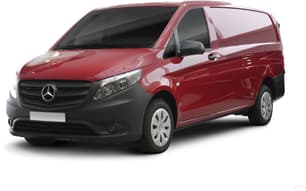
We recently trialled M-B’s Vito-based contender in this pioneering LCV market segment, to see how it measures up in Australia’s highly competitive medium-sized (2.5-3.5-tonne GVM) van market.
Kia’s newest addition is either an overpriced mistake or the logical next step for a brand looking to move up in the world.
It’s called the EV9 GT, and much like the many ‘GT’ variants that have gone before it, this one is packing plenty of performance. It’s also loaded with creature comforts, enough to push it into the same league as the luxury car establishment.
But it also takes Kia to new heights in terms of price, which were already pushing boundaries. And it comes at a time when electric vehicles are in hot demand, but at the other end of the price spectrum.
So is this the case of the right car at the wrong time, or simply the next step in Kia’s evolution?
It’s arguably the best-looking mid-size van on the market, particularly with the optional enhancements fitted to our example. And its longer (km-based) service intervals and capped-price servicing costs offer substantial savings compared to a diesel Vito equivalent.
However, the eVito has a much higher purchase price, smaller payload, shorter driving range, can’t tow a trailer and feels a tad under-powered at low speeds. Plus filling its battery with fresh charge takes much longer than filling a tank with diesel, which may or may not be an issue depending on planned usage.
Therefore, a buyer would need to have not only a sizeable purchasing budget but also very specific and resolute criteria for this vehicle to shine in a commercial role.
Whether you think the EV9 GT is an over-priced mistake or the logical next step for a brand looking to move up in the world will depend on your point-of-view.
Kia has certainly extended the appeal of the EV9 range, but possibly in the wrong direction. Certainly the wrong direction if the goal is to add significantly more sales.
A cheaper alternative to the $97,000 EV9 Air would likely be a more popular choice from the point-of-view of Australian families considering replacing their diesel-powered SUVs with something that doesn’t rely on the chaotic fuel market.Â
But that’s not really who the EV9 GT will appeal to. Instead, from the point-of-view of someone looking at a more expensive European option, whether it be an Audi Q8 e-tron, BMW iX or something else, the EV9 GT may be appealing in a very different way - assuming that they aren't driven by what badge is on the front.
Kia has certainly evolved beyond its ‘cheap and cheerful’ image or buying primarily for its long warranty. These days Kia is a mainstream brand, but whether it has enhanced its reputation enough to attract buyers willing to spend more than $130,000 will be decided in the showroom.