What's the difference?
Half a decade on, the current-generation Mazda 3 has weathered a world of change.
Cheap cars have vanished. Electric vehicles are commonplace and the small car class it belongs to has been decimated by SUVs. Big names like the Ford Focus, Holden Astra and Mitsubishi Lancer are history.
But while it looks identical to the car unveiled at the 2018 LA Auto Show, today’s Mazda 3 has also evolved, albeit gently.
Let’s see how competitive the latest and improved (as well as more expensive) version is.
Cupra is not trying to fit in.
In a car market that is getting more and more crowded the Volkswagen Group-owned Spanish performance brand is looking to stand out. Which is why its refreshed Leon hatchback range has added the most unlikely of new models - a small wagon.
The conventional hatchback is struggling to survive against the onslaught of SUVs, and almost every brand has abandoned the wagon in all its sizes, but not Cupra. It has added the Leon Sportstourer to its facelifted Leon hatchback range, giving buyers looking for something different a new alternative.
This new compact wagon is powered by a plug-in hybrid powertrain and joins the Leon hatch in a three-pronged line-up initially, with the Leon S mild-hybrid and VZx hot hatch. A red hot VZx version of the Sportstourer and plug-in hybrid hatch are locked in to join the local Cupra range in 2026, but for now we’ll focus on this trio.
Given how effortlessly it traverses the mainstream and premium small car classes, the Mazda 3 might be the best value small car on the planet.
With racy styling, sports car handling, classy interior presentation and impressive, intelligent efficiency, there’s plenty to sink your teeth into here.
Poor rear vision, a dark back-seat area and smallish boot aside, it doesn’t have any glaring faults.
In a world overrun with SUVs, props to Mazda for evolving the small car so brilliantly to mask a half-decade of existence. Continuous improvements have made the 2024 G25 Evolve SP Vision an essential small car shortlist proposition, regardless of price.
There's a lot to like about the updated Leon line-up, but probably not by lots of people. It won't be a best-seller, Cupra doesn't need or even want it to be. What it will do is offer something different, and in the case of the Sportstourer something very rare.
The S and VZx will face stiffer competition in the hatchback markets, primarily from Volkswagen, Audi and even Skoda, and it's hard to pick an area where they really stand out from the competition, apart from the unique styling. Not that they aren't pleasant cars to drive, it's just a crowded market.
Which is why the Sportstourer, especially with its plug-in hybrid powertrain, has a chance to be something that really sets Cupra apart from its rivals. Dynamic, efficient and different, it won’t fit in - and that’s exactly what the brand is hoping for.
Note: CarsGuide attended this event as a guest of the manufacturer, with meals provided.
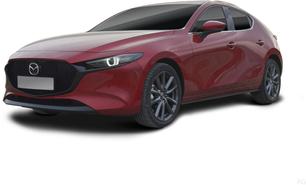
How is it that the current Mazda 3 is already five years old? This hatchback is still stunning, the sort of car you look back at when walking away.
The shape is sleek and almost coupe-like, with a shark-like nose, cab-backward-style long bonnet, upswept shoulder line and a fastback silhouette.
More importantly, it’s the way the light dances across the sculptured sides that draw the eyes in. Bereft of clutter, it makes you wish all mainstream manufacturers had the courage to be so daring.
We’ve said it before – the 'BP'-generation Mazda 3 (Axela in Japan) is the brand’s boldest C-segment hatch since the 1993 'BA' 323 (Astina/Lantis/323F).
But there’s a price to pay for such timeless beauty…
Design is a key tenet of Cupra’s ethos, because while it may share Volkswagen mechanical DNA, the Spanish brand wants to really stand apart when you look at or sit inside the Leon.
While it may be the same size as a VW Golf, it certainly doesn’t look or feel like one. Yes, there’s the typical Volkswagen build quality to the fit and finishes, but overall it has a unique Spanish style to it.
On the exterior, Cupra has given the Leon a major visual overhaul with the front end featuring a new-look grille, bumper and headlights. At the rear the tail-lights have been redesigned and now incorporate the logo into a single horizontal light bar that runs the width of the rear.
Inside there’s some new materials, but the most notable change is the introduction of a 12.9-inch multimedia screen. Ambient lightning available on all three models helps to highlight the cabin design.
There is a price to pay for all this quasi-coupe styling flair, and that’s a comparatively snug-feeling interior, though you’d never call it cramped.
Actually, the Mazda 3 is no less spacious than most of its competition in all but one area, with enough room even for 200cm drivers, along with sufficient shoulder width and ceiling height to match.
If you’re really tall, maybe that missing sunroof isn’t such a bad thing, after all.
Sat so low-down on cushy, enveloping front seats that offer plenty of comfort and support, this is the anti-SUV. Maybe Mazda should have called this the MX-3.
Sporty and spot-on, the driving position is a laid-back affair, with an emphasis on better ergonomics, as emphasised by the thoughtful placement of switchgear that’s all within easy reach, ahead of a beautifully flowing and layered dash. Proudly Japanese in flavour, it brings to mind functional minimalism.
Drilling into some of the 3’s finer interior details, the analogue-look digital instrumentation is super-legible, ultra-classy and gorgeously lit at night. As previously mentioned, the dials and surrounding air vents are reminiscent of the later Porsche 944 and 968.
It’s not just all for the sake of aesthetics, either.
Yes, it’s lovely, but the thinned-rim three-spoke steering wheel feels great to grip, with nifty little paddle shifters that are a delight to prod.
Same goes for the physical volume knob and climate-control buttons, sidestepping the need to get distracted and frustrated by virtual sub-menus.
And having a conventional gear lever with old-school Tiptronic-style shifts suits the 3’s athletic vibe.
Plus, forward vision is A-OK, ventilation is faultless, storage is better than you might expect, and the fit and finish is as good if not better than any of this 3’s German premium opponents.
Out back, the split-fold rear backrest is set at a comfortable angle, the cushion is well padded, and you’re provided with USB ports, air vents, and an armrest with two cupholders. More thoughtfulness.
But while knee room is fair, rear headroom isn’t great if you’re tall or wear a beehive, as the falling ceiling line reveals.
Vision out is limited by that rising window line and fat pillars. Getting in and out of the back requires some contortionist moves. And the small windows mean it can be gloomier in the back than a Smiths album.
Finally, at just 295 litres, the 3’s cargo capacity is disappointing. Sure, it eclipses the Corolla hatch’s 217L cubby, but other rivals are far larger back there.
At least the floor is wide and flat and there are 60/40-split backrests for cabin access for longer items.
Note that a space-saver spare wheel lurks underneath. Mazda argues there’s always the closely-related CX-30 if you need (slightly) more space (317L).
Meanwhile, at the other end of the 3…
While we’re talking about two different bodystyles here - hatch and wagon - the front seats are the same. So you are treated to Cupra’s stylish but thoughtful layout, which looks nice but also has good practicality.
The seats themselves are comfortable, even after extended periods behind the wheel, while there’s cupholders, sizeable door pockets, a lidded centre console box and a wireless smartphone charging pad.
The previously mentioned 12.9-inch multimedia screen dominates the centre console, sitting proudly at the top of the fascia. Unfortunately, Cupra (like Volkswagen) has fallen to the modern trend of ‘touch controls’ rather than physical buttons.
Not to sound like an old man yelling at clouds, but these touch-sensitive sliders are simply not as user-friendly, especially in a moving vehicle, as a traditional physical button or dial. While the multimedia system is easy to use, especially with Android Auto or Apple CarPlay fully integrated, adding dials for the stereo (on/off and volume) and the climate control would have been great.
Otherwise, the 12-speaker Sennheiser sound system with subwoofer and 390W amplifier sounds great, offering a premium in-car entertainment experience to match the Cupra’s price and positioning.
As for space in the back, which is obviously where the hatch and Sportstourer vary. There isn’t a lot to split them in terms of passenger space. These are both small cars, so neither offer the kind of room you’d get from an equivalent-sized SUV. The real difference is the cargo capacity, the hatch pair offer 344L (or 888L with the rear seats down) whereas the Sportstourer has a more generous 470L/1045L.
Mazda has rationalised the MY24 3 range, with fewer grades and no more manuals, sadly.
The pretty little piece of automotive industrial design you see here is the mid-range Evolve SP Vision, which sounds less like a car and more like a posh hairdryer from Vidal Sassoon.
Priced from $36,520 before on-road costs (or about $41K drive-away before you start haggling), this Mazda 3 is a sporty and well-equipped alternative to the likes of the speedy Hyundai i30 N-Line Premium, spacious Kia Cerato GT Turbo, new Subaru Impreza AWD 2.0R and evergreen Toyota Corolla ZR. All cost roughly the same money.
The thing is, do Mazda’s upmarket aspirations mean the 3 possesses the ride quality and chic to embarrass at times substantially more expensive hatchbacks with premium pretensions? We’re talking rivals like the BMW 1 Series, Mercedes-Benz A-Class, Peugeot 308 and VW Golf, here.
Stay with us, because we reckon you might be surprised by how far the 3 has come since its humble 323 predecessors.
Anyway, this version comes with most of the good gear, including a full suite of driver-assist safety tech like front and rear Autonomous Emergency Braking (AEB), blind-spot alert, lane-keep assist and adaptive cruise control, as well as keyless start and walk-away lock, powered driver’s seat with memory, 360-degree camera views, a head-up display, digital radio, sat-nav, auto tilt/folding exterior mirrors, dual-zone climate control, Bluetooth phone/audio connectivity and 18-inch alloys.
Oh, and for 2023, an upgraded version introduces a smartphone charger and wireless for the Apple CarPlay/Android Auto function, along with USB-C port access front and rear.
What’s missing at the Evolve SP Vision’s price point? Some mainstream rivals offer leather and a sunroof, available respectively in the more-expensive GT Vision, from $40,000, and flagship Astina grades, from nearly $42,500.
Still, that’s quite a lot of small car for the money, given the quality of the presentation and design. Speaking of which…
Knowing that hatchbacks and wagons aren’t big sellers and Cupra’s desire to stay boutique rather than mainstream, the line-up is relatively simple.
The Leon S kicks off the range at $46,990 (all prices listed exclude on-road costs) and comes with 18-inch black and silver alloy wheels, LED headlights, keyless entry and ignition, heated sports bucket seats, tri-zone climate control and a six-speaker sound system with Apple CarPlay and Android Auto.
The Leon VXz starts at $64,990 and includes 19-inch black and copper alloy wheels, multi-link rear suspension, adaptive dampers, front locking differential, upgraded brakes, quad exhaust and Cupra drive modes. There’s also leather-appointed seats and a 12-speaker Sennheiser sound system.
The VZe Sportstourer completes the line-up priced at $69,990 featuring unique 19-inch black and copper alloys, LED headlights and tail-lights, a power tailgate with handsfree opening and black roof rails. Inside it gets leather-appointed sports seats, heated front seats and steering wheel, tri-zone climate control, native navigation, Apple CarPlay and Android Auto plus the 12-speaker Sennheiser stereo.
When you think about it, shoehorning a big torquey engine in a light and agile small car is a recipe for fun. Ford did just that with the Escort RS2000 in the 1970s… and Mazda’s now an expert at it, too.
The engine in question is the G25, a 2.5-litre four-cylinder naturally aspirated twin-cam petrol engine, delivering 139kW of power at 6000rpm and 252Nm of torque at 4000rpm.
As this Evolve SP Vision hatch tips the scales at 1415kg, it makes for a healthy, and consequently very lively, power-to-weight ratio of over 98kW/tonne.
That’s if you decide to use all the available revs, which the six-speed torque-converter auto makes great use of.
Driving the front wheels, it offers a 'Sport' mode to extend the revs even more, which is keeping in line with this Mazda’s sporty character.
Less so is the company’s decision to ditch the old multi-link independent rear suspension system a few years back for a more prosaic torsion beam arrangement. We’ll get to how that affects ride and handling in a moment.
The three Leon models all feature a different powertrain, as each is targeting a distinctly different buyer.
The Leon S is powered by a 110kW/250Nm 1.5-litre turbocharged petrol engine with mild-hybrid assistance.
The Leon VZx gets a more potent 2.0-litre four-cylinder turbo-petrol engine that makes 221kW/400Nm, to put it right at the heart of the hot hatch market.
The Leon VZe Sportstourer manages to combine efficiency with performance, with a 1.5-litre turbo-petrol engine paired to an electric motor to make an efficient 200kW and 400Nm.
The one thing all three have in common is a seven-speed dual-clutch transmission and front-wheel drive.
Mazda claims the G25 averages 6.6L/100km on the combined cycle… for a carbon-dioxide emissions rating of 154g/km. On a 51L tank, that gives a potential distance of over 940km!
Driven good and hard in our hands, we managed 7.5L/100km, which isn’t bad given the speed and conditions it was subjected to.
Plus, the Mazda’s happy on 91 RON 'standard' unleaded petrol.
Naturally, the three different powertrains provide three very different fuel economy numbers.
The mild-hybrid system in the Leon S allows it to use just 5.4L/100km, which provides a theoretical range of up to 833km thanks to its 45-litre fuel tank.
The VZx is the thirstiest member of the range, not surprisingly, using 7.6L/100km. With its 50-litres tank it has a theoretical driving range of approximately 650km.
Finally, the Sportstourer VZe manages a claimed 0.4L/100km on paper, thanks to its 20kWh battery providing up to 121km of electric-only driving range. Obviously achieving that claimed figure in the real world is incredibly difficult (as it is with any PHEV) but we still managed to use just 2.4L/100km on our mostly extra-urban test drive, which is still a good return.
Ask yourself. What do you want from a new small car?
Since the first Familia of the early 1960s, Mazda’s been at it constantly, through the 1300 and 323 eras and into the modern age of the 3.
The Hiroshima brand knows its stuff. Space, practicality, comfort, ease, reliability and affordability. But a small car has to offer more, specifically in the way it makes the owner feel.
That’s why, while the Focuses, Lancers, Astras and Pulsars are gone, the 3’s still here. And it isn’t just the lush visuals inside and out that are, well, sensory-rich.
As older Alfa Romeo owners know, there’s something special about an engine that sounds alive, and the moment you push the 3’s starter, it purrs into life. That’s the first clue.
Slot the refreshingly old-school lever into Drive, and the G25 leaps into action, and, if you need it to, will keep pulling forward strongly, engine buzzing, like it’s on a mission.
That describes the torquey urge of this big 2.5L four, paired perfectly with the sensibly-geared auto.
We miss Mazda’s magnificent manual immensely, but the 3’s instant response reflects its favourable circa-100kW/tonne power-to-weight ratio.
And, as we’ve harped on in the past, the twin-cam unit’s extra oomph beyond 4000rpm delivers muscular high-speed responses akin to a good turbo – or a great old-school Alfa. You can keep your laggy dual-clutch transmissions, Europe.
Now, sweet, smooth and speedy performance is one thing, but having the chassis tuned with precise and fluid steering for tactile handling, and confident roadholding, backed by nuanced driver-assist and traction controls, are another.
There is a consistent and unifying control to the 3’s linear and forgiving dynamics, reminiscent of past masters like the Focus (and today’s brilliant Peugeot 308) that makes it a joy to drive enthusiastically through fast corners, with the knowledge that it won’t suddenly snap-oversteer and bite an unalert driver back.
For a Mazda, the ride is quiet enough, but there is still some droning transmitted through the cabin, via the Bridgestone Turanza (215/45) tyres, on coarse-chip bitumen surfaces.
And while suspension comfort is pretty impressive for the most part, larger bumps reveal the torsion beam’s limitations, as the car can occasionally thud over them in a way that we remember the multi-link rear end wouldn’t.
Anyway, what we’re saying is that, overall, the 3 Evolve SP Vision is an immersive and interactive driving experience that is right up there with the best of them.
Brawny performance, exquisite agility and a refinement that, collectively, have eluded every small Mazda in living memory until this generation’s 2019 debut. This 3’s right on the money. Still.
Obviously there are three very different variants in the Leon range, with three different powertrains and two different body styles, and yet there is a familiar feeling between all three when you’re behind the wheel.
This is arguably the ‘most Volkswagen-y’ element of the Cupras, with the solid, stable Volkswagen underpinnings coming through. This is, of course, not a criticism, but rather highlights the positive connections between Cupra and its parent company, which has allowed it to make an immediate impression on the Australian market.
However, it also means the Leons feel so familiar that they don’t leave you with a unique impression and driving character.
For example, the VZx is almost too good, too quick and too clinical. It lacks the excitement and engagement rival hot hatches offer, notably the Hyundai i30 N and Honda Civic Type R, but instead compensates by just being really capable.
Obviously, that may not be seen as a negative by everyone and for those who want that sort of engaging, dare I say ‘fun and edgy’, driving experience the Leon VZx may not be precisely what they are looking for. Still, the engine is potent and even the lack of all-wheel drive doesn’t dampen its performance abilities too significantly compared to the likes of a VW Golf R or Audi S3.
The Leon S offers a different proposition, a warmed up hatch, rather than something hot. On that front it delivers, providing a well-mannered drive but without the punch of the VZx.
The Sportstourer is arguably the pick of the range, with its combination of sharp driving dynamics and very efficient powertrain. At no point do you feel like Cupra compromised its sporty intent to make the Sportstourer save fuel. Instead, the PHEV powertrain offers plenty of performance when you need it but is otherwise quiet and efficient the rest of the time, helping it to sip fuel at a much lower rate than its Leon hatchback alternatives.
Tested way back when this generation was new in early 2019, the Mazda 3 scored a maximum five-star ANCAP crash-test rating.
On the driver-assist front you’ll find front and rear AEB (with a working range of 40km/h to 200km/h) with pedestrian and cycle detection available between 10-80km/h, while the 'Forward Collision Warning' operates from 40-200km/h.
Blind-spot monitoring, lane departure warning, lane-keep assist, 'Forward Obstruction Warning', rear and front 'Cross-Traffic Alert', 'Secondary Collision', auto high beams, breakaway pedals, adaptive cruise control (with full stop/go functionality and cruising/traffic support), parking sensors front/rear, 360-degree round-view monitor, reverse camera, traffic sign recognition, driver monitor and tyre-pressure monitors are also included.
The lane-keep support systems work between 55-200km/h.
Seven airbags – front, side, curtain and a driver’s knee bag – are fitted, along with anti-lock brakes with 'Electronic Brake-force Distribution', 'Emergency Brake Assist', stability control, traction control, hill-start assist are also fitted, seat-belt pretensioners, and two rear-seat ISOFIX points as well as three top tethers for child seat straps.
The Cupra trio come loaded with plenty of safety features including 10 airbags for excellent passive protection plus autonomous emergency braking, front and rear cross-traffic alert, blind spot warning and driver fatigue monitoring.
For convenience and safety there’s also adaptive cruise control, front and rear parking sensors and even self-parking.
As the Leon has had no major structural changes, the original 2021 five-star ANCAP rating still applies. However, it should be noted that ANCAP updated its testing protocols in 2023, so that five-star rating is different to a five-star rating applied since then.
Mazda offers a five-year/unlimited kilometre warranty, with five-years roadside assistance… and that’s nothing special nowadays.
Service intervals are at 12 months or every 15,000km.
A fixed-price service scheme is available, averaging out to $434 annually over the first five years. Mazda shows pricing right up to 16 years and 240,000km on its website.
All three Leons are covered by Cupra Australia’s standard warranty, which covers the first five-years/unlimited kilometres. Which is good, especially for a new and more premium brand, even if it’s obviously short of the best-in-market.
Servicing is required every 12 months/15,000km, whichever comes first, and Cupra is offering a servicing pack special until the end of 2025, of $1990 for five years. That works out to an average of $398 per year.
Cupra is expanding its dealer network in Australia too. The Leon drive event we attended began at the newly-opened Cupra Macarther in Sydney’s growing west. There’s also a new dealership at Melbourne’s Essendon Fields.
Of course, one of the key advantages that Cupra has over many other new brands to Australia is its Volkswagen/Audi connections, which allows its models to be serviced at those dealerships as well. That provides a much larger footprint for customers to find somewhere convenient to service their car, which cannot be underestimated.