What's the difference?
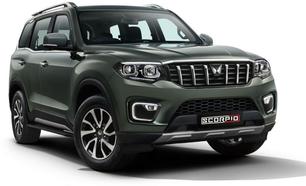
The Mahindra Scorpio is back – but now it has upgraded safety tech (including AEB) and it’s only available in one variant: the Z8L+.
This is a 4WD wagon with a fair bit of appeal: seven seats, a stack of standard features, a low-range transfer case, an automatic rear diff lock and its price-tag – at just under $50 grand – won’t kick you in the space near the pocket where you keep your wallet.
It hasn’t undergone any mechanical changes so is the Scorpio any good off-road?
Read on.
It’s 2026 and over 30 years and through six generations the Subaru Outback as we knew it… is gone.
Gone is the defiantly wagon-esque crossover style that was one of the first, as well as likely the most-successful, for the boxy beast you see here.
RIP, original Subaru Outback.
But, don’t worry, folks, because, except for a couple of issues, things only get better by and large, with the big new seventh-gen model.
And, in the most important ways, the 2026 Outback is a true Subaru at heart, so let’s dive straight in!
It may seem like I've been harsh on this Mahindra but I reckon the Scorpio Z8L+ is a positive product for the company.
It’s nice enough to drive on-road – reasonably refined and comfortable – and it’s also a capable 4WD, with some trade-offs.
But this seven-seat wagon remains a good value-for-money prospect with the addition of more driver-assist tech onboard boosting its safety and adding to its overall appeal.
Over 30 years and seven generations of Outback in Australia, the latest might just be the best.
It's great to drive, even better to sit in, very easy to live and willing to go further than most equivalent large SUVs at its price point.
The styling is definitely divisive, with purists unhappy that the long, crossover wagon silhouette is now gone, but what we have instead is a family-friendly vehicle that pleases on so many fronts.
We’d go as far as saying the latest Outback might be the most-rounded Subaru currently available, and great value to boot. And the base AWD is all the SUV most people will ever need.
That’s not bad for something this square!
Note: CarsGuide attended this event as a guest of the manufacturer, with travel, accommodation and meals provided.
Nothing has changed on the Scorpio’s exterior. It still reminds me of the early-generation Hyundai Terracan – long bonnet, generic cabin (i.e. inoffensive, soft lines, nothing to set it apart from most other mid-sized SUVs) and, though its off-road angles check out (more about those later) it looks quite low to the ground.
So it’s all standard for a 4WD wagon.
The Scorpio also has 18-inch alloy wheels, side steps, roof rails and a sunroof.
Potential main rival GWM Tank 300 holds sway in the looks department.
Historically, Subarus have majored on quirky. Kooky even.
Think buggy ‘60s 360, offbeat ‘70s 1400, spacey ‘80s Vortex, futuristic ‘90s SVX, Alfa-esque ‘00s pre-facelift Tribeca, dorky ‘10s Exiga. We’d go as far as saying that, in over 50 years, only a handful of Subarus have looked normal. And they’ve all been boring. The beautiful ones, like the original Impreza and ’03 Liberty, remain stunning.
But quirkifying such an important family car in such a mainstream segment… that's risky. And we’re here for Subaru’s boldness. We just wish the details weren’t so heavy handed.
Longer, larger and wider than any prior version, the 2026 Outback shares its stretched platform architecture fundamentals with the latest Forester. That’s a sound basis. Just Xeroxed up by about 15 per cent. Boxy shape. Deep glass. Wide doors. Form over function. This is designed to make life easier.
What you make of the Wilderness’ visual features, including the dramatic grille mask, SUBARU wording, painted trim surrounds and cladding-on-cladding (behold the Kia Tasman-like squared-off wheel arches if you dare) is down to personal taste. Eyes be damned! But it is so far-removed from the elegant grace of the previous model that some might argue a name change would at least have silenced the critics.
On the other hand, besides fugly being in Subaru’s DNA, a large, lofty SUV is probably truer to the term ‘outback’ than on any elegant and gracefully-silhouetted crossover wagon.
Meanwhile, the polar opposite is true inside. It’s as if the interior designers strove for class and calm, with none of the exterior styling’s visual noise, or shouting in the Wilderness’ case. And there is the luxury of space, vision and scope, further enhancing the Outback’s usefulness. That you can’t see the body, just the beautiful cabin’s detailing, elevates this Subaru. Unlike in the previous model, which was a bit of an aesthetic and functional mess inside.
Nothing much has changed inside the Scorpio, either, except for the addition of an electronic park brake.
The cabin has a neat layout with a 8.0-inch touchscreen multimedia system that is easy to operate but it needs to be bigger.
The synthetic leather trim looks and feels only adequately premium and if you more closely scrutinise the Scorpio’s interior it lacks the build quality, storage spaces and USB charge points of rival wagons.
Driver and front passenger get adequate room, while the second row is actually satisfactorily spacious without being capacious; behind my driving position I had more than enough leg, head and shoulder room – but, take note, I'm the size of a garden gnome. The third row is the stuff of nightmares – only joking, but it should quite rightly be limited to use by small children or your mate the jockey.
There’s one cupholder (between the driver and front passenger), door pockets are narrow and there are few other storage spaces. In this respect, the Scorpio cabin lacks general functionality.
The Scorpio also cops a mark down because of its third row. With the third-row seats in use, there’s a small rear cargo area, and those seats don’t fold flat so when they’re not in use they occupy a lot of what could be useable storage space.
As a result, the Scorpio is one of the few modern 4WDs I’d consider removing the third row every time long-distance loaded-up travel was on the cards – just so it’s a more practical touring vehicle.
Some features, such as the directional air vents, feel flimsy. Otherwise, the Scorpio’s cabin is adequately practical, rather than overly impressive.
Suffice to say, in terms of practicality, the Scorpio’s rivals have it beaten.
Like all Subarus, Outback boasts an interior of very high-quality craftsmanship, being built beautifully, without rattles or noises or jarring trim.
The difference here is just how pleasingly practical and easy yet attractive this environment is, from the moment that wide-opening door opens and shuts with reassuring solidity.
The horizontal dash layout departs from the Tesla-aping portrait screen domination of the previous generation, banishing the confusing and annoying virtual controls for real, live buttons.
But is it original? The layered presentation is attractive and distinctively Toyota… err Subaru. Yes, it is very much like the bZ4X-based Solterra EV’s look inside.
That’s no bad thing from an ergonomic point of view. The driving position is flawless, the seat/wheel/controls relationship considered and the placement of the climate controls, audio system, armrest and storage just right. We’re also happy to see the instrumentation display incorporate various visual choices, including digital analogue-style dials.
A particular callout goes to the slick and speedy tactility of the brand’s latest touchscreen, as well as the (again suspiciously Toyota-like) interface and graphics layout. It’s all good.
But wait, there’s more. The Outback’s front seats are claimed to be particularly supportive, and after hours in them on and off road, they seem to exceed Subaru’s claims.
If you’re expecting regular mid-sized SUV levels of interior space, be prepared to be impressed, because the Outback’s extra sizing outside seems to be multiplied inside. There’s ample room for long legs, big hats, broad shoulders and buxom hips. It all works so well. This is probably one of the best modern SUV interiors, period. Nothing seems to have been overlooked.
The rear seat is presented to please, too. It can seem a bit drab in the lower-line models, but the same virtues of effortless entry/egress, seat comfort, convenience (including air vents, USB ports, cupholders and armrest placement) apply. We noted the lack of road/tyre noise intrusion at speed, too.
Behind the very sixties Jeep Wagoneer-looking rear is a vast luggage area, complete with a low floor, remote rear-seat folding handles, 12V outlet and quality trim. And that space-saver spare lives underneath.
Subaru seems to have designed this car from the inside out and it shows. A rare 10/10 from us.
As mentioned, there is only one Mahindra Scorpio now available, the Z8L+. And its price-tag is listed as from $48,990, drive-away. That’s $2000 more than its previous incarnation, the Z8L.
Standard features in the Z8L+ include a 8.0-inch touchscreen multimedia system (with wired Apple CarPlay and Android Auto), a 12-speaker Sony stereo, dual-zone climate control, front and rear parking sensors and a six-way power-adjustable driver’s seat.
New features include ventilated front seats, an electronic park brake, an auto-dimming rear view mirror and, more importantly, the Scorpio now has Level 2 Advanced Driver Assistance Systems (ADAS) detailed in the Safety section.
It also has 18-inch alloys, a full-sized steel spare, power sunroof and synthetic leather trim.
Exterior paint choices include 'Deep Forest', 'Everest White', and 'Stealth Black'. Metallic paint costs $495 and floor mats cost $125. Price as tested for this vehicle is $49,610.
Rivals such as the GWM Tank 300 and KGM Rexton offer more in this category.
Bad news first. Model-for-model, each Outback grade is now up around 10 per cent compared to the preceding, more petite and prettier version.
This means the cheapest of the five grades available, known simply as AWD (for all-wheel drive – this seems almost redundant for a non-BRZ Subaru), now kicks off from $48,990. All prices here are before on-road costs.
This includes a proper off-road mode, climate control, synthetic leather trim, a 12.1-inch multimedia touchscreen, 12.3-inch electronic driver display, wireless Apple CarPlay and Android Auto, a powered tailgate, heated front seats with powered driver’s side, chunky roof rails, 18-inch alloy wheels (with a space-saver spare – thank you, Subaru), nine airbags and comprehensive Advanced Driver Assist Systems (ADAS). Check out the safety section further down for more details.
Notes for the facelift, Subaru: Why can’t the base grade come with cloth, rather than clammy vinyl seats?
Next is the AWD Premium. From $53,490, that’s a reasonable ask given its 360-degree-view monitor, sunroof, heated steering wheel, powered front passenger seat and 12-speaker Harman Kardon audio upgrade.
The $56,990 AWD Touring includes Nappa leather, ventilated front seats, heated outboard rear seats, a wireless charger, active lane change, auto-fold mirrors with self-dipping in reverse (c’mon, this should be standard) and glossier alloys.
From here, we’re in new Wilderness territory. Two grades, AWD Wilderness from $59,690, adding more cladding upon cladding, a turbo engine, electronic dampers, 20mm extra ride height, broader 'X-Mode' off-road functionality, a wireless charger, claimed water-repellent seat trim, different fog lights, black-finish alloys and more.
But, strangely, you lose the sunroof, sat-nav, 360-degree view monitor and premium audio. Subaru demand another $3.0K to restore these in the flagship AWD Wilderness Apex from $62,690.
Still no cloth option, though. We’d like a new base AWD grade with the Wilderness mechanical gear and stance but not the extraneous cladding and visuals, and with coarse fabric upholstery, manual option and steel wheels. Maybe call it Leonie for fun.
Anyway, does new Outback represent value for money? One of its main rivals in the sparsely-populated five-seater large SUV class (most have three rows) is the Mazda CX-60. The AWD slots nicely between the slightly cheaper but very basic four-cylinder RWD Pure yet undercuts the much-sweeter six-cylinder AWD version, so we’d answer that with a yes.
Furthermore, when you tally up all that extra stuff, size and space, today’s out-stretched Outback offers comfortably more over the old model than that modest 10 per cent price hike suggests. That’s a win for buyers.
The Mahindra Scorpio Z8L+ has a 2.2-litre four-cylinder turbo-diesel engine, producing 129kW and 400Nm and it’s matched to a six-speed automatic transmission.
This engine-and-auto combination is sluggish at times but it’s generally okay.
The Scorpio has a part-time 4WD system (with high- and low-range) and an automatic rear diff lock.
Worth noting the Scorpio must be in neutral and stationary for the driver to shift into '4WD low-range', but the driver is able to shift between '2WD' and '4WD High' on the move, up to 80km/h.
This 4WD wagon’s '4Explor' system’s drive modes include 'Normal' (2WD for sealed surfaces), 'Grass/Snow' (4WD), 'Mud & Ruts' (4WD) and 'Sand' (4WD).
The Scorpio lags behind its rivals here.
Don’t worry, Subaru traditionalists. The Outback again offers a pair of horizontally-opposed 'boxer' four-cylinder engines.
The regular Outback versions are powered by a 2.5-litre twin-cam petrol unit making 137kW of power at 5800rpm and 254Nm of torque at 3700rpm.
Choosing the Wilderness switches things up to a 2.4-litre turbo version delivering 194kW at 5600rpm and 382Nm between 2000rpm and 3600rpm.
Both use a continuously variable transmission (CVT) with eight artificial ‘steps’ for a more torque-converter-like experience. Sadly, no manual gearbox is available.
Official fuel consumption is 7.2L/100km on a combined (urban/extra-urban) cycle on regular unleaded fuel.
Actual fuel consumption on this test was 9.0L/100km, which is better than the 9.6L/100km I recorded on my last Scorpio review a couple of years ago.
The Mahindra Scorpio Z8L+ has a 57-litre fuel tank so, going by those fuel figures, you could reasonably expect a driving range of about 633km from a full tank. It also has a 16-litre Adblue tank, so keep that mind.
Remember, that 633km is a best-case scenario figure and has not had a 30-50km safe-distance buffer subtracted from it. And it doesn't take into account the fact that, when being used for touring, the Scorpio may be loaded with people, pets, camping gear and more.
Rivals such as the GWM Tank 300 easily outclass the Scorpio when it comes to off-roading and all-round touring suitability.
Where the Outback regresses compared to its predecessor is efficiency.
Despite a modest 50kg weight rise, the substantially boxier shape is probably behind the jump in petrol consumption, rising nearly one litre per 100km compared to before in the Outback, and nearly 2.5L/100km, in the heavier Wilderness.
The combined average consumption figure for the 2.5-litre naturally aspirated engine is 8.1L/100km, for a carbon dioxide emissions rating of 183 grams per kilometre, while the 2.4-litre turbo manages 9.7L/100km and 228g/km.
Filling the 63L tank, expect an average range of about 777km in the former and just 648km in the latter. Surely, the coming hybrid version can’t arrive soon enough for some buyers.
At least both engines can drink from the standard 91 RON petrol bowser.
So much for the theory. Out in the real world, over a solid day's testing on- and off-road, we found there was a difference of about 1.5L/100km between the regular Outback and the Wilderness.
On road the Scorpio is reasonable. It’s comfortable and refined but can be a bit firm on the suspension it has – double wishbone and coil springs at the front, live axle with multi links, Watts link and coil springs at the rear. But for a four-wheel drive wagon it's quite nice on sealed surfaces.
The powertrain is generally a reasonable set-up, although there is lag between foot-down and acceleration and it holds onto gears for too long before upshifting.
There have been no mechanical changes to this Scorpio over the previous generation and that's fine because this Mahindra’s tractable engine offers reasonable power and torque across enough of a rev range to make it an effective 4WD.
The Scorpio feels comfortable and reasonable off road. And when it’s time to tackle ‘4WD-only’ territory, it is generally capable. High- and low-range gearing is decent, and as mentioned earlier, its off-road drive modes adjust traction control, among other aspects, to best suit the terrain you’re tackling.
Its no rock-crawling beast but as a result of these mechanical and technical elements this 4WD wagon is able to drive the kind of terrain you’d reasonably expect to be able to cover in a standard off-roader that's been engineered for 4WDing across light to moderately difficult terrain.
The Scorpio’s off-road angles and ground clearance are on par with mid-size SUV rivals. Ground clearance is a listed 227mm. It feels quite low, but if you drive it with care and consideration, you should be fine.
The rear diff lock doesn't feel as clunky in its application as it has in the past. Maybe I'm more forgiving in my old age because, as I mentioned earlier, there haven't been any upgrades mechanically or in terms of off-road-specific driver-assist tech or in diff lock operation.
Hill descent control works reasonably well, although it's not the greatest, allowing for some free-wheeling before it bites.
The Scorpio’s road-oriented Bridgestone Ecopia (255/60 R18) tyres are fine on formed dirt tracks but are found wanting on anything rougher than that.
In terms of towing capacity, the Scorpio is able to tow 750kg unbraked and 2500kg braked. So if you're looking to haul anything larger than a small box trailer, camper trailer or tinny, you'll have to look elsewhere.
GVM and GCM are 2610kg and 5155kg, respectively.
Main potential rival GWM Tank 300 has it over the Scorpio in terms of off-roading prowess and, even though it’s not a towing beast, the GWM wagon is better suited to life as a touring platform than the Mahindra.
Confession time. The way the previous Outback drove was profoundly disappointing. The steering felt numb, the ride was too stiff and the car seemed wilfully dull, even in the turbo version.
The contemporary Forester ran rings around it for driving pleasure and refinement.
But Outback number seven is completely different and maybe the best-driving non-WRX Subaru right now.
From the moment you climb on board this vast SUV from Japan, everything feels right – from the driving position and relationship with the controls, to the sumptuously comfy seats and commanding vision all around the vehicle. That’s a promising start.
Push the ignition and press the accelerator down, and the regular Outback 2.5 quietly, gently and smoothly moves off the line. With modest power outputs and a CVT, you might expect it to also sound revvy and droney, but instead the acceleration is strong and throttle responses determined.
We drove this for hundreds of kilometres and never found the performance lacking, even with three adults and their luggage on board, over hilly and even mountainous terrain. Yes, it is possible to have the CVT whining at higher revs, but not within normal driving scenarios. And the quietness and lack of road noise is terrific.
Moving to the Wilderness and its 2.4-litre turbo powertrain, the same applies, except of course mid-range response is significantly faster and with a slicker, more refined delivery. Press and squirt, this is deceptively quick, because the car does a great job in masking the noises and vibrations that working an SUV hard often elicit.
We only wish there was a manual option. With steel wheels, cloth seats and without the Wilderness' add-on gargoyles.
Now, it also seems that Subaru listened and learned from previous criticisms like ours, because the Outback’s newly-redesigned steering is a delight, with a natural, fluent sweetness and ease that’s combined with a pleasing connection with the driver.
The result is balanced, controlled and enjoyable handling, backed up by reassuringly stable road holding. We drove through a sudden, heavy thunderstorm near Bathurst on the first, hot summer afternoon’s test session, and found the Outback to feel impervious through such slippery conditions.
And this all largely applies to the Wilderness as well, though its 20mm-higher ground clearance (to 240mm) makes it feel a little less composed than the glued-down regular model. Both feature a stiffened body and multi-link rear suspension, by the way.
More progress has been made in the Subaru’s ride quality. Gone is the hard suspension feel, for a far-less firm set-up, providing a comfortable and queasy-free ride. Even in the loftier Wilderness. This is the model’s greatest advance over its predecessor and we’re extremely happy with the outcome.
Finally, other than the at-times over-eager driver-attention monitor, the ADAS tech provides subtle, nuanced back-up, with quiet lane-keep intervention, a measured adaptive cruise-control functionality and no jarring buzzes and warnings.
We also enjoyed a session taking both grades off road, to show off their 4WD prowess. The clearances are ample, the hill-descent tech effective and the ability to scramble over wet rocks impressive. The Wilderness especially may even live up to its name!
This is a difficult SUV to fault. The Outback’s breadth of capability on and off the beaten track give it an unusually wide bandwidth for what is a monocoque bodied family convenience. That there is so much sophistication and fun to be had as well make this so much better to drive and live with than the disappointing old version.
We can’t wait to get to know the latest Subaru better on more familiar roads.
The Mahindra Scorpio Z8L+ hasn't been tested by ANCAP, but as standard it has six airbags (front, side and curtain) and a 'Level 2 Advanced Driver Assistance System' which includes AEB, 'Forward Collision Warning', 'Front Vehicle Start Alert', adaptive cruise control, high-beam assist, lane departure warning, 'Smart Pilot Assist', 'Speed Limit Assist', lane keep assist and more.
It also has electronic stability control, front and rear parking sensors and a tyre pressure monitoring system.
Rivals such as the GWM Tank 300, with a full suite of driver-driver-assist tech and the maximum five-star ANCAP safety rating, have it all over this Mahindra in this category.
There is no ANCAP crash-test rating at the time of publishing, but anything less than the full five stars will come as a scandalous shock from Subaru.
The Outback’s aforementioned ADAS tech runs to AEB front and rear, rear cross-traffic alert, blind-spot monitoring, emergency lane-keep assist, lane-departure warning/prevention, a pre-collision braking system, adaptive cruise control with full stop/go functionality across all grades. Also present are traffic-sign recognition and new acceleration override tech to help prevent collision. Nine airbags are fitted, while a front-centre airbag is new to the series.
No AEB performance parameter information has been released as yet for Australian models.
Finally, there are two outboard rear-seat ISOFIX child restraint points and two top tethers available.
The Mahindra Scorpio Z8L+ has a seven-year/150,000km warranty and comes with seven years' of roadside assistance if your Scorpio is serviced by Mahindra.
The first service is scheduled at the 1500km mark, then every 12 months or 10,000km. Pricing details were not available at the time of writing.
Five years of capped price servicing is available at an average cost per visit of $471.
For reference, the GWM Tank 300 offers a seven year/unlimited km warranty, five years' of roadside assistance, and five years of capped price servicing (starting at $360 for the first service and topping out at $1035 for the sixth). Service intervals are scheduled for every 12 months or 15,000km.
At time of writing there were reportedly about 80 Mahindra dealerships spread across Australia. According to the company, "the dealer network spans all states and territories, including locations in major cities like Melbourne, Brisbane, Adelaide, and Perth". Your Scorpio can be serviced at any authorised Mahindra dealership.
Subaru offers a five-year/unlimited kilometre warranty, and that also comes with 12 months of roadside assistance.
Now, that's pretty average nowadays, so nothing special, particularly when other SUV companies like Mitsubishi, Nissan and MG offer conditional 10-year warranties.
Service intervals are at 12 months or 15,000km for both engines. There is a capped-price servicing offer covering this timeframe. They are currently listed at approximately $350, $530, $405, $705 and $370 for an average of $472 per workshop visit.
There are 128 dealers or authorised Subaru service centres across Australia as of January 1, 2026.