What's the difference?
Mahindra has a solid history in the agricultural world as a builder of farm equipment – tractors, harvesters and the like – and its Pik-Up ute and SUVs have been around for a while.
But the Indian car manufacturer has never managed to establish as much of a sales foothold in Australia's mainstream car market as it’d like to.
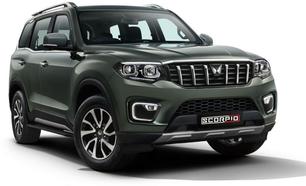
Well, the brand is hoping to change all that with the launch of its Mahindra Scorpio Z8L, a proper 4WD wagon that, on paper at least, has a lot to like about it.
It has six seats, a low-range transfer case, an automatic rear diff lock and plenty of standard features for a price-tag at just over $45 grand that won’t make your eyes water.
Read on.
The Jeep Compass is something of a unicorn among the long list of small SUVs sold in Australia. It is now the only model in either the light or small-SUV category that is available with a diesel engine.
That diesel is found under the bonnet of just one variant – the rugged Trailhawk which is also the flagship of the range.
Aside from Suzuki’s adorable Jimny light SUV, the Compass Trailhawk is the only small SUV with some off-road ability.
After going on sale in Australia in late 2017, the second-generation Compass was overhauled as part of a mid-life update in 2021. Aside from subtle styling tweaks, the biggest change was a new multimedia system.
Has Jeep done enough to lift the Compass from an also-ran to a model that buyers should consider, or was the update too little, too late?
It might seem like I’ve been harsh on the Scorpio but I actually reckon this vehicle is in fact a step in the right direction for Mahindra.
It’s nice enough to drive on-road – refined and comfortable – and it’s also a capable 4WD, with a few issues though…
It’s a good value-for-money prospect but it’s lacking a lot of driver-assist tech that should be onboard every modern vehicle, especially one that will serve as a family mover.
The Jeep Compass Trailhawk is a curious beast. On the one hand, it looks pretty cool, and it has a well-executed new interior, featuring one of the best multimedia set-ups in the business. It’s spacious and has a long list of standard comfort and safety gear.
Sadly, that’s where the positives end.
It is way too expensive for what you get, especially when you consider the quality of some of its rivals from mainstream and premium brands.
The driver assist features are badly in need of recalibration and the overall drive experience is a letdown.
If you really want a diesel-powered small SUV, perhaps look at one of the much better diesel models at the smaller end of the medium-SUV segment.
The Scorpion reminds me a bit of the early-generation Hyundai Terrcan – long bonnet, generic cabin, and it appears to sit quite low.
The Mahindra SUV has 18-inch alloy wheels, side steps, roof rails and sunroof.
It all looks fine and, anyway, the more interesting stuff on the Scorpion is under the skin – the fact that it is a body-on-frame 4WD.
When the second-gen Compass was revealed, it was seen by many as a mini Grand Cherokee. Which isn’t a bad thing. It looks tough enough, but also has a softer edge than something like the Jimny.
As part of the 2021 update, Jeep refreshed the styling with slimmer LED headlights and a new daytime running light signature, a revamped bumper and seven-slot grille, as well as a broader bonnet.
The Trailhawk features variant-specific red and black decals on the bonnet, and a unique grille treatment, as well as the visible skid plates and red tow hooks.
It certainly gives the impression of having some off-road cred, and while some will love the Trailhawk name emblazoned across the bonnet, it’s a bit much for me. The 'Galaxy Blue' premium paint looks too sparkly in direct sunlight and has an almost purple hue.
An example of wishful thinking is the green ‘Diesel’ badge with a leaf next to it on the rear of the vehicle. Save the eco badges for your electrified vehicles, Jeep.
The cabin is tidy and functional. The 8.0-inch touchscreen multimedia system is easy enough to operate without strife and the screen is clear, although it’d be great if it was bigger.
The tan synthetic leather interior trim looks good and superficially the whole interior looks nice, but if you inspect a little more closely the Scorpio’s cabin is missing the storage spaces, USB charge points and build quality of rival SUVs.
There’s one cupholder (between driver and front passenger), the door pockets are narrow and there are few other storage spaces.
With the third-row seats in use, there’s a very small rear cargo area, and those seats don’t fold flat so when they’re not in use they seriously impact the storage space.
As a result, the Scorpio is one of the few modern 4WDs that I’d consider taking out the third row every time long-distance loaded-up travel was on the cards – just so it’s a more practical touring vehicle.
Some features, such as the directional air vents, feel flimsy. Otherwise, the Scorpio’s cabin is suitably practical, rather than overly impressive.
The Compass sits in the small-SUV category but its larger dimensions mean it’s almost big enough to compete with models in the medium-SUV segment.
It’s longer, taller, wider and has a longer wheelbase than other larger small SUVs like the Kia Seltos and Honda HR-V, but isn’t as big as a mid-size Mazda CX-5.
It feels larger inside than other models it shares a platform with – namely the Jeep Renegade and Fiat 500X, that are no longer sold in Australia.
The biggest change ushered in by the update is the interior. Jeep has completely overhauled the cabin to the point that it’s unrecognisable compared to the pre-facelifted model.
The new dash design is much more appealing and the layout is well executed. There’s a mixture of soft-touch materials and plastic panels with red stitching running across the fascia. It’s so much more up-to-date than the old Compass and there’s a robust yet semi-premium look to the cabin.
A new steering wheel is in keeping with Jeep’s new generation of models that includes the Grand Cherokee due in Australia this year. It’s chunky, feels nice to touch and features clear audio, phone and cruise controls.
Jeep has persisted with its quirk of housing the volume and song/station skip buttons on the rear side of the steering wheel spokes. Once you remember which side volume lives (the right), it’s easy to change the levels. But surely it would be better to house them on the front of the wheel, with labels?
Storage wise, the glove box is narrow, as is the central bin, but it’s deep. The doors will hold 600ml bottles and the console houses two decent-sized cupholders with durable rubber lining which is easy to clean and can take a beating. The cupholders are separated by an upright phone holder.
Speaking of durable, that’s clearly the theme Jeep is going for with the Compass Trailhawk interior. It comes standard with rubber mats throughout, including the boot, which is great for protecting the carpet if you fancy a bit of camping.
What isn’t durable, however, is the cheap and tacky indicator stalk that feels like it will snap off every time you touch it.
After spending some time in European cars prior to the Jeep, it’s nice to experience strong air flow from the air conditioning system, especially at the height of a Melbourne summer. It’s also great to see physical buttons for the air con controls.
You can, however, also control the climate via the latest 'Uconnect 5' multimedia system housed in the 10.1-inch touchscreen.
This system is undoubtedly one of the Compass’ strong points. The modern graphics look very cool and the main icons make sense.
Once you dive into the menu there are extensive options but it’s not overwhelming. It’s intuitive and clever. The sat-nav visuals are clear and appealing too.
It’s an excellent set-up and better than systems from a whole host of Jeep’s mainstream rivals.
Apple CarPlay set-up was easy but there is an odd lag when selecting a command on the touchscreen that isn’t there when you use the Jeep system.
Another highlight is the exceptional Alpine nine-speaker audio system that’s part of the Trailhawk Premium package. It’s a belter!
The new digital instrument cluster has clear dials but changing the screen layout is fiddly. The Compass also lacks a head-up display.
The front seats with red embossed Trailhawk across the front look good, but the cushion feels like it’s elevating you in the seat. It’s not a problem with the power adjustment, it’s just the way the cushioning is designed. Thigh support is limited but upper body bolstering is good.
Visibility is impacted by the narrow rear windscreen and the tiny rear windows behind the C-pillar, that are pointless.
Rear occupants have access to lower air vents, a USB-A and USB-C port, 230-volt AC plug and a 12-volt DC plug. There are two map pockets, rubber floor mats and 600ml bottles will just fit in the door.
Space wise, there’s plenty of leg and toe room in the rear, and just enough headroom for this six-footer to avoid scraping the headliner.
Getting in and out of the front and rear seats is easy thanks to the Compass’ ride height.
The rear seats are flat and firm and the 60/40 split-fold seats have a fold-down central armrest with two cupholders.
When you open the power tailgate, the boot doesn’t look particularly big, but at 438 litres (1251L with rear seats folded), it’s five litres more than the Kia Seltos GT-Line and eight more than the Haval Jolion.
A full-size spare wheel lives under the boot floor and the cargo area features metal tie-down hooks and a small storage tray.
The cargo blind is useful but there’s nowhere to stow it when it’s not in use. And you have to lower the rear seats when you want to put it back in place.
The Scorpio is available in two grades: the Z8 with a drive-away price of $41,990 (at time of writing) and the Z8L at $45,990 drive-away (at time of writing), which we tested.
Standard features in the Z8L include an 8.0-inch touchscreen multimedia system (with wireless Apple CarPlay & Android Auto), wireless phone charger, a 12-speaker Sony stereo, dual-zone climate control, front camera (intended for off-road use), front and rear parking sensors, and a six-way power-adjustable driver’s seat.
It has a leather wrapped steering wheel and gearshifter, tan- and 'rich coffee'-coloured synthetic leather interior trim, a cooled glove box, sunroof, and six-seat layout (with two captain's chairs in the second row).
It has 18-inch alloy wheels, automatic wipers and projector LED headlights, push-button start, keyless entry and a tyre pressure monitoring system.
Our test vehicle also had floor mats ($200) and side steps (approximately $1250 fitted) as the only accessories.
Exterior paint choices include 'Deep Forest', 'Everest White', 'Napoli Black' (on our test vehicle), Dazzling Silver' and 'Red Rage'.
Jeep’s pricing for the updated Compass range is at the higher end of the segment compared with its rivals. It starts at $37,950, before on-road costs, for the Launch Edition and tops out at $51,650 for the range-topping Trailhawk.
Our Compass Trailhawk test vehicle was fitted with options including premium paint ($895) and a 'Trailhawk Premium' package ($4195) that added heated and ventilated front seats, heated steering wheel, a panoramic sunroof and a nine-speaker Alpine audio system. That bumped the price up to $56,740 before ORC, meaning it’s about $60,000 on the road.
Top-spec versions of competitor small SUVs are much cheaper than that. The Kia Seltos GT-Line is $42,200, the Mazda CX-30 X20 Astina is $47,390 and even the European Peugeot 2008 GT Sport is $43,990.
Considering you can buy an Audi Q3 40 TFSI quattro for $61,600 or a Volvo XC40 T5 R-Design for $56,990, Jeep is creeping into premium territory with the Compass Trailhawk.
Luckily, Jeep has packed the Compass Trailhawk with loads of standard goodies.
The Indian-built SUV includes keyless entry and start, wireless charging, leather bucket seats, dual-zone air conditioning, eight-way power adjustable driver’s seat, power folding exterior mirrors, auto-dimming rear-view mirror, a 10.25-inch digital instrument cluster, a 10.1-inch multimedia screen housing a 360-degree surround-view camera, satellite navigation and wireless Apple CarPlay/Android Auto.
As the rugged Compass variant, the Trailhawk comes with off-road bits as standard, like underbody skid plates, a 180-amp alternator, two front (red) tow hooks, reversible carpet and vinyl cargo mat, low-range gearing as part of the four-wheel drive system, hill hold control and a terrain-type mode selector.
Despite all the standard gear and unique off-road features, it still doesn’t represent great value compared with its rivals.
The Scorpio has 2.2-litre four-cylinder turbo-diesel engine, which produces 129kW at 3500rpm and 400Nm at 1750-2750rpm.
It has a six-speed automatic transmission, an auto-locking rear diff, and a part-time 4WD system with a dual-range transfer case incorporating low range.
Note: the Scorpio must be in neutral and stationary for the driver to shift into 4WD low-range, but the driver is able to shift between 2WD and 4WD High on the move, up to 80km/h.
Its '4Explor' system’s drive modes include 'Normal' (2WD for sealed surfaces), 'Grass/Snow' (4WD), 'Mud & Ruts' (4WD), and 'Sand' (4WD).
As mentioned, the Compass Trailhawk is now the only remaining small SUV in Australia offered with a diesel engine. Well, from a mainstream brand at least. The BMW X1 is the only premium small SUV offering with a diesel donk.
The Jeep uses a 2.0-litre four-cylinder turbo-diesel delivering 125kW at 3750rpm and 350Nm at 1750rpm. It is paired with a nine-speed automatic transmission and comes with four-wheel drive as standard.
Official fuel use is listed as 7.2L/100km on a combined cycle.
Fuel consumption on this test was 9.6L/100km, which is impressive, especially in light of the fact that we spent the lion’s share of two days during the test period in 4WD low-range.
It has a 57-litre fuel tank, so, going by those fuel figures, you could reasonably expect a driving range of about 593km out of a full tank.
Note: That 593km is a best-case scenario figure and has not had a 30-50km safe-distance buffer subtracted from it, and it also does not take into account the fact that, when being used for touring, the vehicle will be loaded with people, pets, camping gear and more.
Jeep’s official combined cycle fuel use figure for the Trailhawk is 6.9 litres per 100 kilometres. After a week of mixed but mostly urban driving, we recorded a much higher figure of 11.2L/100km.
The Compass has a 60-litre tank. Combined CO2 emissions are rated at 181g/km.
The Scorpio is a 4WD with a body-on-frame chassis. For those of you who don’t know (no shame in that) a body-on-frame chassis denotes a chassis onto which the vehicle’s separate body is attached, and the engine, wheels, and suspension are fitted.
The set-up is well suited to towing and/or carrying heavy loads, and 4WDing.
It’s 4662mm long (with a 2750mm wheelbase), 1917mm wide and 1857mm high. It has a listed kerb weight of 2100kg and a 12.6m turning circle.
Right, that’s enough (boring?) measurements for now.
This Mahindra 4WD is surprisingly refined on-road: quiet inside, comfortable and with a no-stress engine and a low-key workmanlike Aisin-sourced auto delivering a relaxed, almost lethargic combination on the road.
Steering has a nice weight to it, ride quality is okay, erring on the side of spongy rather than too firm, and some body roll creeps in on more energetic bends.
Overall, however, the Scorpio does satisfactorily well on sealed surfaces. But how does it perform off-road?
The Scorpio handled the undulating dirt track leading to our off-road test site with ease, riding nicely over the light to medium corrugations, and was only ever minimally unsettled by the bumpy terrain.
This Mahindra is able to be shifted between 2WD and high-range 4WD (4H on the dial) so you can keep moving even when the road/track surface changes all of sudden.
The Scorpio has plenty of old-school foundational 4WD mechanicals onboard – low-range and a rear diff-lock (albeit an automatic one) – and it also benefits from off-roading-oriented tech such as its 4Explor system with selectable terrain modes, each of which adjusts engine output, transmission settings and traction control to best suit the terrain, conditions and driving style.
It also has hill descent control and hill hold control.
Even its forward-facing camera comes in handy. I still think of these as more a novelty – I prefer to get out and check the track ahead or get a spotter to do the work for me – but I can see the inherent value of this tech in helping the driver to maintain vision, especially if forward visibility is compromised, say for instance up and over the crest of a steep rocky hill, or edging towards a steep drop into a creek bed.
While the Scorpio’s 400Nm may seem a bit lowly, that torque is on tap across a good spread of revs, and this 4WD does well with what it has. The engine keeps everything moving along nicely.
In terms of off-road-relevant measures, the Scorpio has 227mm of ground clearance, a guesstimated wading depth of 500mm or so (it’s not listed), and approach, departure and ramp-over angles of 27.2 (good), 21.3 (not so good), and 23.5 (okay) degrees, respectively.
The Scorpio is quite an effective off-road wagon and it tackled every obstacle it faced without fail, but it has to be driven with extreme care and laser-focused concentration.
No harm in that, I hear you cry. In response, I say, sure, but it’s bloody exhausting work having to nurse a vehicle through even innocuous terrain in order to avoid nudges, bumps and scrapes to its underbody and side steps.
Not to mention how tiring it is having to anticipate if/when off-road traction control and/or the auto diff-lock will engage – or not – at crucial moments.
Not a major concern on flat ground, but think about the auto rear diff-lock cutting out on you while driving up a rocky 32-degree hill. Yep, I’m old.
Now for some more of the Scorpio’s less-than-ideal characteristics.
1. I hinted at this in the previous paragraph: off-road traction control doesn’t seem as well calibrated as it should be. It’s a bit patchy in its application, and certainly not as seamless as the tech in something like the GWM Tank 300 (yes, I know – the Tank costs about $15,000 more.)
2. The automatic rear diff lock is on the wrong side of clunky, abruptly engaging as it senses wheel-spin then disengaging just as abruptly when it deems the problem over ... even if it isn’t quite over yet.
3. The Scorpio feels low: a lot of underbody components are vulnerable to rocks, tree stumps, track debris, and the AdBlue tank sits low behind the rear left-hand wheel.
4. The side-steps seem very flimsy. The right-hand side-step took a soft knock going over an exposed tree root early on one test day, which I thought nothing of. But when I looked at it soon afterwards, the fasteners had popped out at the front and middle of the sidestep.
I didn't think the bump had been anywhere near enough to result in that.
5. The Scorpio’s standard tyres – MRF Wanderer SUV tyres (255/60R18 “All-Season”) – are not great for hard 4WDing.
They don’t offer anywhere near the degree of grip you need in difficult 4WDing and they quickly became gummed up with mud. The Scorpio does have an underslung full-size steel wheel spare.
The Mahindra Scorpio Z8L has a listed payload of 510kg, and can legally tow 750kg (unbraked), and 2500kg (braked). Gross vehicle mass (GVM) is a listed 2610kg; gross combined mass (GCM) is 5155kg.
I experienced a bit of an issue on a drive home after a few hours of tough 4WDing: 4H kept trying to engage during a 100km stretch of highway.
A dot kept flashing above 4H near the shifter, and terrain modes (other than Normal) kept flashing on the centre console and driver info display and I was being prompted to drop below 80km/h to shift into 4H.
Of course, I’d earlier switched from 4H to 2WD at the end of our filming day (at the 4WD location) and made sure I'd engaged Normal mode before I left the dirt and drove onto a sealed surface.
When the 4H-related issues kept happening on the highway I was able to fix the problem by stopping, switching the Scorpio off and back on again – but I had to do this every 5.0km or so four times before it finally sorted itself out.
To Mahindra’s credit, technical staff members are looking into the issue.
Jeep claims the Trailhawk has some off-road ability, but we didn’t get a chance to test that. Most driving was around town, freeways and city fringe.
The first thing I noticed when I got behind the wheel was the awkward position of the accelerator pedal. It could be the wheel arch intruding into the footwell, but the right side of my right foot constantly brushed the carpeted panel. It’s annoying and a clear design flaw.
Another flaw is the idle-stop system. When you park, the idle stop kicks in and cuts the engine off. But if you want to properly turn the engine off and get out of the car, you have to do something to wake up the engine, then turn off the ignition. Another annoyance.
The diesel engine is responsive enough, but it lags on take-off and it’s not as torquey as expected. Accelerating hard doesn’t reward the driver with instant response, and momentum is blunted by steep ascents.
It does come alive around 3000rpm which seems to be a sweet spot.
The nine-speed auto can sometimes hold gears and the brakes are on the spongey side.
The Trailhawk feels like a heavy vehicle on the road. Much heavier than its 1621kg tare weight would suggest. As a result, it lumbers along and makes for sloppy handling.
It moves around the road too much and there is quite a lot of body roll in corners. It’s slow to respond coming out of corners, too.
The steering feels lazy and it’s weighted on the heavy side. It doesn’t make for an engaging steer.
Ride comfort around town is well sorted. For the most part, it absorbs speed bumps and crumby urban streets, without offering a truly comfortable ride.
Overall ride quality diminishes at higher speeds. It’s busy and jittery and never feels settled.
Needless to say, this is not the small SUV to buy for navigating city traffic or to take for a fun drive on your favourite twisty country road.
A brief section of unsealed road highlighted the excellent traction of the Trailhawk.
The 225/60 R17 Falken Wild Peak tyres produce a bit of tyre noise on coarse chip roads but otherwise the cabin is fairly well insulated from outside noise.
The Mahindra Scorpio Z8L does not have an ANCAP rating because it has not been tested.
As standard, it has six airbags (front, front side and curtain), electronic stability control, front and rear parking sensors, a tyre pressure monitoring system, as well as trailer sway and roll over mitigation, hill hold control and hill descent control.
It lacks a lot of driver-assist safety tech that’s onboard a lot of other vehicles at this price-point, and even cheaper.
The Jeep Compass was tested by ANCAP in 2017 and the updated model retains its five-star rating.
It features a solid list of standard safety gear including auto emergency braking with pedestrian and cyclist detection, forward collision warning, lane departure warning, lane keep assist, rear cross-traffic alert, a driver fatigue monitor, adaptive cruise control and traffic sign recognition, blind spot monitor, tyre pressure monitor, parallel and perpendicular park assist, 360-degree surround-view monitor, and front and rear parking sensors.
It has six airbags but does not include a front centre airbag that helps minimise injuries during a side collision.
The proximity sensor for the surround-view monitor is overly sensitive when parking or in traffic. It beeps a lot when it doesn’t need to.
Thankfully you can alter the strength of many of the Jeep’s driver assist functions because there are so many audible alerts that it can be overwhelming.
The forward collision warning can also be overly sensitive and go off when there’s clearly no danger. On the flip side, the adaptive cruise control is too slow to respond, prompting me to brake before getting dangerously close to the car in front on the freeway. I had to double check that the car was fitted with adaptive cruise and not just regular cruise control.
Jeep’s 'Active Lane Management System' caused some headaches. It ping pongs you between lane markings rather than centring the vehicle in the lane. It’s jolty and pulls at the wheel far too much.
Again, you can change the strength, but even on the lowest setting it intervenes far too much and makes for a truly frustrating drive experience.
It’s an opt-out system and by the end of my time with the Compass I switched it off every time I got behind the wheel. It’s one of the worst lane-keeping systems I have come across in some time.
On the positive side, the 360-degree reversing camera display is top notch.
The Mahindra Scorpio Z8L has a seven-year/150,000km warranty.
Service intervals are scheduled for every 12 months or 15,000km.
Pricing details were not available at time of writing.
The Compass comes with a five-year or 100,000km warranty and five years of free roadside assistance. Every time you service your vehicle at a Jeep dealer, another year will be added to the roadside assist program.
The servicing schedule is every year or 20,000km for a diesel Jeep, whichever comes first.
Jeep offers a capped-price servicing scheme for the first five years. The Compass Trailhawk costs $399 for each of these services.