What's the difference?
Lotus - it’s one of the most iconic names in the history of automobiles and was once Great Britain’s answer to Ferrari - on the road and the Formula One circuit.
But that was a long time ago, in the 1960s and ‘70s. Since then Lotus has been on a rollercoaster ride through various owners who put in various levels of investment, resulting in various degrees of success.
But through it all, Lotus has stayed true to the ethos of company founder, Colin Chapman - ‘simplify, then add lightness.’ It’s obviously a playful saying, but it spoke to the core elements of Lotus cars, agility and driving purity.
Lotus rarely worried about big, powerful engines and instead focused on creating the best-handling cars.
That was the past, though, because Lotus Cars is now owned by Geely, the Chinese automotive giant that also counts Volvo, Polestar, Zeekr and more under its control.
Geely’s vision for Lotus is very different to what has come before, with a future focused on building electric SUVs and sedans; such as the already released Eletre and Emeya.
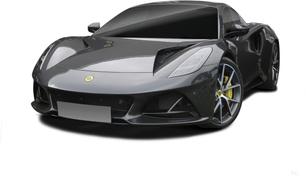
All of which is a very long way to get us to the car we’re actually testing - the MY24 Lotus Emira.
This is the last petrol-powered sports car from Lotus, and while it has been available already with a V6 engine, it has recently arrived with a Mercedes-AMG four-cylinder turbo.
Given its place in the grand scheme of things, the Emira not only needs to live up to the legacy of the iconic models that came before it, but also needs to lay the foundations for the brand’s electric future. Which is a lot of pressure for one car to carry…
Mazda’s MX-30 is an odd one. It’s Mazda’s third small SUV and its first production electric car, yet it wears the brand’s MX sports car prefix and originally launched as a combustion mild hybrid.
Of course, Mazda is no stranger to automobile enigmas, with left-of-field rotary choices in its past, and its semi-combustion SkyActiv-X engines showing a different take on the future, but can the brand’s innovative nature help make its first fully electric car a hit?
I drove an MX-30 E35 Astina shortly after its Australian launch to attempt to unravel its mysteries. Will it find its place in an increasingly busy EV marketplace? Read on to find out.
If this really is the final petrol-powered Lotus sports car then it’s a sad day for fans of the brand and its history. But it’s also worthy of celebration because they have made a car that is genuinely impressive.
It may not be perfect, and it will have to fight hard to lure buyers away from Porsche, BMW and co. but for anyone who enjoys a dynamic, engaging and incredibly fun sports car the Emira should be on your short-list.
Alternatively, if you’ve always dreamed of buying a traditional Lotus sports car and haven’t got around to it until now, this is your last chance so don’t wait too long.
The MX-30 is a tough one to give you a clear verdict on. In summary, though, the math just doesn’t add up. This car is way too expensive and offers next to no range for Australia’s vast intercity distances, essentially resigning buyers to a life within city limits.
On the other hand, I love the design ethos of this little SUV. It’s truly a statement, and it’s rare to find a car that is so committed to its uniqueness. It’s also easily one of the best EVs to drive right now, so those who understand its compromises will no doubt be left with smiles on their faces.
As mentioned earlier, the Emira is meant to be a bridge between Lotus’ past and its future - combining elements of its previous sports cars while also laying the visual tone for future models.
The design does a good job of that, because there’s clearly a link to the Exige and Evora of the recent past, but it also takes heavy influence from the limited-run Evija hypercar.
In turn, this new design language will spread out across the all-new electric models, including the Eletre SUV and Emeya sports sedan.
The styling does a good job of making the Emira look and feel like a premium sports car, without the need for any flashy wings or similar. It’s a simple, compact but stylish sports car.
This trend carries over to the cabin, with the more premium finish with the carpets, leather and good quality switchgear, as well as the digital instrument display and 10.2-inch multimedia touchscreen. Gone are the days of a Lotus having a minimalist, exposed aluminium interior with only the bare necessities. This is a proper premium sports car.
The MX-30 oozes design. I would go so far as to say this car is more focused on being a design statement than it is an SUV (as evidenced by its lack of practicality…) or an EV (as evidenced by its lack of range…).
Mazda’s Kodo design language is already eye-grabbing, so it’s to the MX-30’s credit that it manages to be striking, even against other members of the Mazda family, as it strays from a well-refined formula.
The large grille has been dumped in favour of something much smaller but the 3D effect of the Kodo face still persists. The light clusters adopt their own personality - they're inspired by the Mazda3, arguably, but they stand on their own.
The side profile, squat dimensions, and contrasting panel work (in our car’s case, a matte grey against the brand’s signature ‘Soul Red’) alert you to the fact that the MX-30 is something quite different indeed. And all this is before you notice the fact that it has clamshell rear doors.
Yep, that’s right, the MX-30 reaches into the brand’s history and brings back the outward folding door design once seen on the RX-8 rotary sports coupe. Opening it up is an event, and those doors wow onlookers with their unusual unfurling. Unfortunately, it’s not as smart as it looks, but we’ll get to that in the practicality part of this review.
The inside again blends familiar Mazda themes with entirely new ones. The material design is incredible. For the first time in a long time, I felt like a kid in some kind of tactile science museum, prodding, squeezing, and scratching at this car’s many interior elements to see if they were, in fact, made of the occasionally unbelievable materials they seem to be.
It doesn’t disappoint. Yes, the door cards really have a splash of an odd grey carpet material, very Volvo, the seats are really trimmed in some sort of synthetic leather, the quality grain of which has to be felt to be understood (it's very Mercedes), and the centre console is really made of recycled cork panelling, which is very BMW.
All of this might sound a bit silly (and the cork stuff perhaps is) but along with the stepped centre console design, weird semi-digital dash cluster and familiar bits out of other Mazdas, it is difficult to not enjoy being in such a creative and unusual space.
The commitment to this funky, unusual design, has some major practicality drawbacks, which we’ll take a look at next.
While it’s a more luxurious Lotus, it remains a compact and impractical sports car - and that’s very much on brand. In terms of storage inside the cabin, there are two cupholders and a small lidded console box, but the size of the cabin means everything is quite narrow and feels a little tight for space.
There is a decent sized, although not very deep, shelf behind the seats, so you can put smaller, softer items there and hope they don’t slide around too much.
In terms of actual luggage space, there isn’t much. There’s a small boot behind the engine, and while deep, it’s pretty narrow so you’ll only get soft bags in there if you plan on taking your Emira on a road trip.
Put simply, the MX-30 is about as practical as a sports coupe, which is a feat given it has the footprint and height of an SUV.
It starts with those clamshell doors. Sure, they look amazing, but they’re annoying to open because the handle is on the inside, so you have to open the front doors before you can open the rear ones. At best this costs you time when you’re just trying to load objects, pets, or kids, at worst it makes the rear of the cabin nearly impossible to access in a tight car park.
Even in my unit parking spot, I could barely access the rear seats, making it especially annoying when I just wanted to chuck a bag in the rear footwell.
Even if you don’t have trouble getting an adult back there, space is limited. Behind my own driving position, my knees were up against the seat in front, and while I had plenty of headroom, it feels a bit claustrophobic, thanks to the tiny windows and high beltline.
I’ll hand some credit to the commitment to this car’s design, though, the odd carpet trims continue into the rear doors, and there's even a plush padded surface for your elbows on either side. Nice touch. The seats also feel unusually low and sporty for an SUV, particularly an electric one.
As if it couldn’t be more clear that this car has the intention of being some sort of sports coupe, the front seats are lovely. Comfortable, supportive, and with plenty of soft trims throughout the cabin, I felt as though I had plenty of room here. The raised console design means the multimedia functions and toggles were easy to reach and use, and while the climate functions are somewhat awkwardly placed on a touch panel, at least they were set and forget most of the time.
There’s a tactile dial for volume control, and although the multimedia interface is dial-based rather than touch, Mazda’s system is one of the easiest to use once you get used to it.
There’s a large storage area under the centre console, hosting two USB ports and a household power outlet, and atop that there’s a cork-finished tray, which flips up to reveal dual bottle holders in the centre. Behind this there’s a small armrest console box, trimmed in the same plush padding as the doors and seats. Front occupants can also make use of small pockets in the doors and a glovebox.
Unlike some electric cars, the MX-30 doesn’t score a ‘frunk’, which seems like a wasted opportunity because the engine bay is half empty. Serviceable items look incredibly easy to access because of this, with liquid tanks and coolant hoses on display, but I can’t help but feeling Mazda could have put a small storage space here with some packaging trickery. It’s equally possible that there’s a crash-safety consideration, however.
Moving to the boot, and unfortunately there’s a small-hatch-sized 311 litres on offer, because there’s also next to no underfloor space, and you’ll have to store your charging cables in there, too, further reducing the space. With the cable bags strapped in place, the boot fit our largest (124L) CarsGuide travel case with little extra room to spare. It’s weekender luggage space at best, but then I suppose you won’t be able to go away for long with the range on offer anyway…
In terms of size and price, the Emira lines up almost directly against the Porsche 718 Cayman, which is a formidable adversary, but also the likes of the BMW M4. Notably, it’s significantly cheaper than anything offered by the likes of Ferrari, Maserati and McLaren.
The MY24 Emira range begins at $155,900, before on-road costs, for the entry-level model but stretches up to just over $206,000 for the i4 First Edition we’re driving here.
The Emira has been designed as a more premium and luxurious sports car compared to the stripped down and basic models of the recent past, such as the Elise and Exige, so it gets a range of items not previously seen on many Lotus models - such as carpeted floors and the choice of either Nappa leather or Alcantara trim.
Also included are LED headlights, climate control, keyless ignition, cruise control, rear parking sensors, a premium sound system and a 12.3-inch digital dashboard.
It's worth noting the MY25 Emira line-up was detailed earlier this month. You can read all about it, including pricing and specification, here.
The price and features equation for electric cars is somewhat different from the status quo of their combustion equivalents. You can’t just consider standard spec inclusions, there’s a need to factor in range and charging capability, too, as battery capacity and AC to DC charging converters can have a dramatic effect on the cost.
Frustratingly for Mazda’s EV offering, the sums don’t add up as neatly as I’d like them to. The MX-30 EV is available in one top-spec trim, the E35 Astina, which wears a before-on-roads cost (MSRP) of $65,490.
This places it in the same league as the Hyundai Kona electric Highlander ($66,000), Kia Niro EV S ($67,490), and Tesla Model 3 Standard Range + which just had a significant price cut ($59,900).
To make things worse for our fledging Mazda EV, it has a WLTP-rated range of just 200km (or 225km using the ADR method)! There’s no two ways about it; this is pitiful in the face of the aforementioned rivals, all of which offer ranges in excess of 420km when measured against the same standard. Even the much cheaper base-model Nissan Leaf ($49,990) offers 270km of range.
You can’t not factor this in with an EV purchase, particularly in Australia where grand distances between cities essentially rules out any intercity trips for the MX-30 EV.
The brand is hoping this car’s funky and innovative design cues, which we’ll talk about in the next part of this review, will win the hearts of city-slickers, but the MX-30 is not lacking on the standard equipment front, either.
Stuff you’ll get out of the box includes 18-inch alloy wheels, an 8.8-inch multimedia screen (which, like this car’s CX-30 and Mazda3 siblings is a non-touch unit, controlled through a central dial), Apple CarPlay and Android Auto connectivity, a 7.0-inch semi-digital dash cluster, Bose 12-speaker premium audio, built-in sat-nav, head-up display, semi leather synthetic interior trim, full LED exterior lighting, a holographic head-up display, single-zone climate control with its own 7.0-inch touch panel controller, heated front seats, as well as keyless entry with push-start ignition.
The MX-30 has some unique interior materials, and I’m not sure why more EVs don’t have a full-size domestic power socket, as this car does under the centre console at the front. Handy for when you need to charge household devices larger than a phone on-the-go (hair-curling tongs perhaps?). There are a few spec omissions, however. Dual-zone climate, power seat adjust, and a wireless phone charger are chief among the missing.
The MY24 Emria first arrived in Australia with the same Toyota-built 3.5-litre V6 engine Lotus had used in recent years in the likes of the Exige and Evora. However, this new AMG-built four-cylinder provides a fresh choice.
Importantly, while built by Mercedes-AMG, the tuning and calibration is unique to Lotus (but we’ll discuss that in detail later).
That means the 2.0-litre unit is tuned to make 268kW/430Nm, which is less potent than AMG offers in its 310kW/500Nm A45 hot hatch, although a more potent version of the four-pot Emira has been confirmed for MY25.
The engine is paired with an eight-speed dual-clutch auto transmission, which you can either leave in automatic mode or change gear manually using the F1-style paddles on the steering wheel.
The MX-30 has an electric motor on the front axle with a single-speed reduction-gear transmission. It produces low-sounding figures of 107kW and 271Nm of torque, which is less than most of its rivals, although it has more power and less torque than the equivalently sized (but much cheaper) MG ZS EV.
Although these power figures don’t look as impressive as rivals, it’s worth remembering that the MX-30 has much less weight to carry around, so when it comes to driving it’s a much better story than it appears. More on that later.
The MX-30 offers three levels of regenerative braking, controlled through the wheel-mounted paddle-shifters, a necessary touch, and one that offers decent feedback on how your driving style is affecting range, via the dash and multimedia screen.
Given the Emira is a sports car, the four-cylinder turbo is tuned for performance over economy and that’s reflected in an 10.1L/100km return on the combined (urban/extra-urban) cycle. That’s not too bad for a sports car, but is relatively thirsty given the engine capacity and the overall size of the car.
The Emira is equipped with a 60-litre fuel tank, so it has a driving range of approximately 594km.
The MX-30 has some advantages here, in that its tiny (35.5kWh to be precise) lithium-ion battery pack means it charges up pretty quickly. The downside? It’s not as quick as it could be, and its efficiency leaves a little to be desired.
As already discussed at length, this small battery means a very short range – between 200 and 224km depending on which standard you want to go by, and the MX-30 is claimed to consume 18.5kWh of energy on the combined cycle.
This is disappointing because not only is the claim higher than rivals like the Kona electric and Nissan Leaf, but in reality, I couldn’t best it with predominantly city driving, as I have previously been able to in all its rivals. Over some 250km of testing I managed a dash-reported 18.9kWh/100km.
The MX-30 EV takes a European-standard Type 2 CCS charger, the most popular kind in Australia, and will charge up at a rate of 50kW on DC or 6.6kW on AC.
It would have been nice to see that boosted to at least 7.2kW AC to be a bit more competitive on AC charging speed. For a car that will need to be charged frequently, even a 10-minute difference in charging time is important. While 50kW DC is about right for a battery pack this size, I assume there will be cooling issues pushing that to 100kW+ as the Hyundai Kona electric and Tesla Model 3 with nearly twice the battery size are capable of.
Mazda estimates a charge time of 36 minutes on DC, three hours on a three-phase AC charger, or nine hours from a ~2.4kW wall outlet. I charged my MX-30 a single time before returning it, from about 10 – 80 per cent, with it maxing out at around 50kW. It charged in less than 40 minutes, however, as promised.
Just to be clear right up front, the score for this section is heavily biased towards the car's dynamic attributes, because frankly the Emira can be hard to live with at times.
At urban speeds the powertrain feels like a dog straining at its leash, which can result in some awkward moments.
For example, there were multiple instances where the gearbox refused to change out of second gear when exiting a roundabout, letting the engine rev quite hard and likely annoying my neighbours.
Some of the gear changes can be clunky too, not slotting as sweetly as they should on a sports car costing in excess of $200K.
However, you forget all that when you get the Emira onto a stretch of twisty, winding open road (preferably smooth tarmac) and move it from the 'Tour' to 'Sports' mode. The car comes alive, revving hard, shifting with precision and feeling like a puppy running through a field in pure ecstasy.
Like the great cars to come before it from Lotus, the Emira is in its element carving through corners. The steering is incredibly accurate, direct and responsive - as good as any sports car I’ve driven in recent memory. The chassis responds to those inputs with immediacy, too, feeling nimble, agile and engaging.
This is Lotus at its best.
Usually, it’s easier here to talk about how electric cars are different from their combustion counterparts, or how they are great for an electric car. In the case of the MX-30, however, it’s just a great car to drive.
I’ll admit, I didn’t expect this little EV to match, much less exceed the driving experience of its CX-30 sibling, but it was a pleasant surprise to find out how great it was.
It turns out that having a much smaller battery, and therefore a much lower kerb weight than most EVs, means the MX-30 feels light, agile, and rapid compared to all of its rivals, which goes some way to making up for its lesser outputs.
In fact, I had no trouble with the motor at all, with the MX-30 feeling faster and more responsive than the Hyundai Kona electric or the Kia Niro EV.
Mazda’s handling prowess is also on full show here, with the smooth and accurate steering allowing me to point this little SUV with remarkable accuracy. The steering tune is lighter than the Kona electric, but a bit more significant than the Kia Niro's. It emboldens you to have a bit of fun, and again, unlike rivals, Mazda’s suspension tune has your back.
It’s sporty enough to engage you, but not so firm that it sends tremors through the cabin, an impressive feat considering it has a less complex torsion bar rear. If anyone had asked me, I would have sworn it was multi-link all-round.
The whole experience feels very similar to helming the CX-30 or Mazda3, but I’d even say the MX-30 feels better over the front end, with less rough rebound than its siblings.
It also makes a cool noise. Mazda have given the MX-30 an artificial tone, plumbed through the speakers, and unlike the science-fiction hum generated by the Hyundai group EVs, the Mazda’s is a warm drone, more reminiscent of a combustion engine.
To be clear here, the MX-30 is no Tesla Model 3. That car is seriously rapid, with mind-bending handling, although I will say there’s a certain poise and refinement to the way the Mazda drives. Even in the corners, it’s confidence inspiring, with the torque-vectoring magic built into the electric motor on full show.
Perhaps one of the reasons that this car is a tad less efficient than its rivals is its lack of weight, which would allow more energy to be fed back into the battery during regenerative braking. Or perhaps its regen braking modes are a bit too forgiving, either way it’s nice that the Mazda offers three easily controllable levels via the paddle-shifters. I even became a fan of the quaint analogue power dial, even if it does give you a bit less feedback than the sleek software suites in Hyundai Group or Tesla offerings.
The MX-30, then, hits an unexpected niche. The benefits of its smaller battery pack and a focus on handling make this car one of the best EVs to drive today, even if you’re restricted to city limits, and regular recharging.
Sports cars are not typically beacons of safety, not that they’re dangerous but the priority is speed, not complex and often weighty safety technology. It’s part of the reason these types of cars are rarely crash tested by the authorities, as is the case of the Emira.
But this more modern and luxury focused Lotus comes with a raft of safety items including adaptive cruise control, an anti-collision system (Lotus-speak for AEB), fatigue alert, road sign information, a vehicle speed limiter, lane departure warning, rear cross-traffic alert and lane change assist.
Like all recently launched Mazdas, the MX-30 is packed full of advanced ‘i-Activesense’ safety gear. In terms of cutting-edge items, this includes freeway-speed auto emergency braking, now with low-speed intersection assist as well as pedestrian and cyclist detection, lane-keep assist with lane-departure warning, blind-spot monitoring with active intervention, as well as front and rear cross traffic alert, with rear emergency braking.
The MX-30 also has the expected suite of electronic assistance but goes further to include torque vectoring and has a total of 10 airbags – a lot for a very small cabin. It also comes packed standard with front and rear parking sensors, as well as a 360-degree parking camera suite. It’s amongst the best safety suites in terms of pure features in the small SUV segment.
The MX-30 has a maximum five-star ANCAP safety rating to the 2020 standards.
Lotus Australia offers a three year warranty, which is in line with Porsche's cover, so that’s competitive in the sports car market.
However, the brand does not offer capped price servicing, so you’ll need to discuss with your local dealer how much regular maintenance will cost you. The service intervals are every 12 months/15,000km.
The MX-30 is covered by Mazda’s industry-standard five-year and unlimited kilometre warranty, while the battery pack is covered by a separate eight-year promise, on par with its Korean rivals. Mazda includes roadside assist for the duration of the warranty.
The EV has service intervals of 12 months or 15,000km whichever occurs first, and a five-year service plan comes in at $1273.79, working out to an average of $254.76 a year. That’s getting close to Toyota levels of cheap servicing, and so it should, given electric cars (at least in theory) have much less to attend to when it comes service time.