What's the difference?
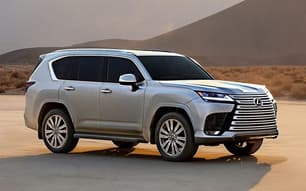
The march away from diesel power and towards a petrol-hybrid future in off-roaders continues. Okay, so it’s a full-sized Lexus we’re talking about, but the off-road credentials of the Toyota LandCruiser 300 Series-based Lexus LX have never been in question, have they?
The full-sized, super-lux Lexus LX might never see the Simpson Desert or the Old Telegraph Track, but that doesn’t mean it couldn’t tackle either with a fair degree of ease. So there’s no way Lexus would allow a new hybrid driveline to compromise any of that. Besides, this is the same driveline that will take the LandCruiser on its next step, so you better believe it’s the real deal.
Of course, the Lexus badge and somewhat frightening price tag also infer a high degree of plush and tech, and, let’s be honest, those elements are more likely to get a leading role in the LX’s day-to-day strut, as opposed to the walk-on part played by the off-road stuff.
So does all this make the LX one huge, high-tech mash up of conflicting priorities, then? That probably depends on how pragmatically you view motor vehicles generally, but one thing’s for sure, if the hybrid LX is paving the way for the next generation of LandCruiser powerplants and drivelines, then we’re all ears.
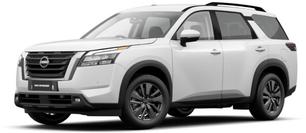
The Nissan Pathfinder has evolved over the years from what was quite a rough-and-tumble Ford Everest style vehicle to a remarkably plush three-row family SUV.
Although it took a while to reach Australia, when the fifth-generation version landed in late 2022 it was a huge leap over its predecessor. And yet it has been a relatively slow seller in Australia.
In the first half of 2024 only 405 were registered, less than a tenth of the segment benchmark Toyota Kluger (5861 sales).
This can be largely attributed to a lack of choice in the Pathfinder range, following Nissan culling entry-grade variants early on leaving only the relatively expensive Ti and Ti-L grades, both fitted with a V6 petrol engine.
To increase customer choice, Nissan has reintroduced the ST-L mid-spec trim with the option of front-wheel drive for under $60,000, before on-road costs. But is it a good buy?
Huge specification in terms of convenience and safety gear are matched by an equally huge range of abilities in this vehicle. As well as rock hopping with the best of them, this is also a phenomenal touring rig and a more-than-capable off-roader. Of course, whether you can see yourself clambering up the side of a muddy creek crossing in $202,000 worth of vehicle is a personal matter, but rest assured, the Lexus will do it if you ask it to.
In the case of the hybrid LX, however, the vehicle now has an extra dimension to cover off, and from what we can see, it does take the efficiency and running costs of the big wagon to a new, better place. Mind you, that may only be the case if diesel continues to cost a dollar-a-litre more than petrol at the bowser.
The shift to petrol power also brings with it a level of mechanical background noise that we’re not entirely sure fits the Lexus legend, while additions such as the camera-based rear-view mirror system seems to be a conversation starter rather than an actual improvement.
There’s a lot to like about the Nissan Pathfinder. The current model not only looks a lot better than its predecessor but in ST-L trim — and with an even cheaper front-wheel drive model — it offers the kind of value Australian families are chasing.
For all its practicalities, towing capacity and refined driving experience, the Pathfinder’s fatal flaw is its limited engine choice. A thirsty petrol V6 with no engine start-stop tech stunts its appeal for those who live in suburban areas where a Kluger hybrid just works better.
The ST-L is a worthy consideration for your next purchase if you’re less bothered about fuel use, and it's the pick of the line-up, offering just about every creature comfort and safety feature you'd want in a good-value package.