What's the difference?
If you believe there should be a ute version of everything, Jeep has long been there for you with a tray-backed Gladiator version of its iconic Wrangler off-roader.
But the Gladiator has hardly attracted the same love as its mainstream ute rivals, preferring a more lifestyle-oriented vibe, which it leans into extra hard for this 2026 update.
While it might look pretty much identical from the outside, Jeep has made some pretty significant changes underneath to make it a better overall offering, with a nice reduction in price, too.
So is it now worth your consideration? Read on to find out.
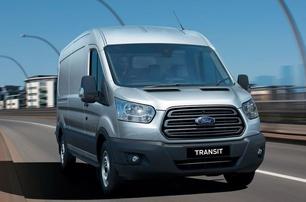
Meet Ford’s electric pioneer for Australia - the E-Transit.
It may not be as exciting as a Tesla Model S, Porsche Taycan or Audi e-tron, but this electric version of the Blue Oval’s large van will help create a new market for zero-emissions commercial vehicles.
This is seen as a major opportunity by Ford to provide an electric alternative to typically diesel-powered vans, which will no doubt prove popular with fleet operators looking to cut fuel costs and corporate emissions. While unlikely to suit all van buyers, thanks to its limited range and recharging restrictions, for those companies with shorter delivery routes it will certainly have appeal.
Ford’s research (performed by YouGov) suggests up to 58 per cent of business “can see EVs becoming part of their vehicle fleet in the future".
But it’s just Ford’s first step into the larger world of electric vehicles. We’ve already had confirmation the smaller E-Transit Custom is headed our way and there are good odds the Mustang Mach-E will eventually find its way to Australian showrooms, so there’s plenty of exciting models in store for Ford.
In the meantime, though, the E-Transit isn’t due in Australia until sometime in the first half of 2023, but CarsGuide was able to take one for a test drive near Ford’s Detroit headquarters recently to get a taste of what’s to come.
The Gladiator is far from the most practical, versatile, or sensible dual-cab on the market. Not going to lie, though. This is the most fun I’ve had in a ute in a long time.
Ford has taken an unorthodox approach to entering the electric vehicle market in Australia, avoiding the hype around the Mustang Mach-E and F-150 Lightning and instead laying the foundations with the E-Transit.
But it’s a savvy move, giving the brand a chance to enter what should be a largely untapped market with a vehicle that should appeal to what buyers are looking for. With unchanged space compared to the diesel-powered Transit, the switch to a more powerful electric powertrain makes the E-Transit a win-win scenario for those with a suitable daily driving routine.
Note: CarsGuide attended this event as a guest of the manufacturer, with travel, accommodation and meals provided.
Despite a legion of trendy retro-styled off-road pretenders, from the Ineos Grenadier to the GWM Tank 300, there’s nothing quite like the original Jeep style which the Gladiator shares with its Wrangler sibling. Unless you’re Mahindra which has technically been producing Willys Jeep successors for longer, but that’s another story for another time).
The new Rubicon looks a bit more swish in 2026, with the body coloured wheel arches and a tweaked grille which is now wider and shorter. The two-tone roof which was previously optional is now standard.
It looks rugged, tough, and undeniably classic, with the mud terrain tyres sealing the deal.
Of course, you can’t forget the many so-called ‘Easter eggs’ Jeep hides about the place. In the case of the Gladiator, these include a silhouette of a Willys Jeep climbing up the driver’s side windscreen, a gorilla imprint on the opposite side signifying the windscreen is now constructed from the same stuff designed to make your phone scratch-free. The tray features imprints of dirtbike tyres where you might want to strap two in and even the recirculate button on the climate unit is in the shape of a Wrangler. Nice touch.
On the inside generally, it feels like a purpose-built vehicle in much the same way as an old Defender. It leaves you with a sense of how genuine it all is, with loads of physical switchgear and an overall shape meant to replicate the no-nonsense appeal of Jeeps dating back to the Willys.
Perhaps the most interesting thing about the design is there’s nothing very different about the E-Transit compared to the regular Transit. Which is a good thing, because the Transit is already a popular delivery van so any change for the sake of difference may have messed with the winning formula.
In fact, the design element that is important is the way Ford has laid the battery packs flat inside the ladder-frame chassis which means none of the cargo space has been compromised. This means the E-Transit has the same load area as its internal combustion equivalent, which is key for any delivery van.
However, also like an old Defender, the Gladiator’s interior is full of compromises to maintain its iconic design.
The seating position is awkwardly high, which is fine when off-roading, but can be limiting when you’re just driving around a city, and the footwell is half taken up by a transmission tunnel so there’s nowhere to rest your foot.
The door cards are pretty basic because the doors are removable (although Jeep stresses this is only legal on private property), but elsewhere there’s much-appreciated levels of functionality in an era of touch-based controls.
The centre control panel, for example, features physical dials for high-use functions and toggles or buttons for everything else. It’s mercifully easy to use and old-school motorists will also love the physical shifters for gear selection and the transfer case alongside. And an analogue handbrake is an increasingly rare sight.
There are even buttons we didn’t ask for, like the four pre-wired auxiliary switches, and while the dash trades away a fully digital panel for a digital supervision screen with analogue dials either side, it suits the character of the car.
It’s not the most comfortable space to be in, however. Not only is the seat base super high off the ground, but despite the Gladiator’s imposing dimensions the front seat somehow feels narrow.
Storage is okay, but not on the same level as many rival utes. The basic doors score nettings on each side, with two deep and useful bottle holders in the centre console. The armrest box is two-tiered which is handy, and there’s a small glove box. Outside of this, there’s not a lot of storage up front.
The rear seat is decent when it comes to space for the ute segment, although it is also very high off the ground and hard to clamber into thanks to the way the rear door is shaped. Once you’re in there, be sure not to smack your head on the frame, which seems like it could be an easy thing to do.
Again, nets feature in the doors, with two more nets on the backs of the front seats, which also feature luggage hooks. There are dual adjustable air vents back there and two bottle holders moulded out of the centre console. They're nicely-sized, but will eat into the legroom of any adult you want to put in the centre rear position, making it extra cramped if you have three across.
The back seat features some things I’ve never seen before, though. There’s a huge storage area underneath the seats with its own lid, and some limited storage space behind the seat backs which features a removable Bluetooth speaker which also automatically re-charges when it’s docked back there. Cool.
The rear window features an opening port, which is also rare, while all the main storage compartments are lockable for when you want to leave the car with the roof and/or doors off.
Capacities and payloads have never been a strong point for the Gladiator. The tray measures 1531mm long, 1443mm wide and 1137mm between the arches, making it unable to fit a standard-sized Australian pallet. The payload is also limited at just 693kg, far short of the close-to-one-tonne many work-focused dual-cabs can hit.
However the tray isn’t for show only, featuring an array of useful tie-down points and a built-in rail system to help secure all sorts of objects. There are even steps built into the rear bumper design for easier access and a full-size spare wheel underneath.
The braked trailer towing capacity is limited to just 2721kg which is also short of the industry benchmark 3500kg, all of which may limit its use as a work vehicle, or even its appeal as a touring vehicle. I could see how these capacities are easily exceeded with a rooftop tent, recovery gear, a fridge, supplies and at least one passenger.
The cabin is very similar to what you’ll find in the Transit, so there will be familiarity for anyone making the switch from the diesel-powered version. The rotary shifter and 12.0-inch tablet-style multimedia screen make for a smart look but also means minimal space is wasted.
It’s a thoughtfully designed cabin, with plenty of usable storage spaces, including three cup-holders, a pair of bottle-holders and deep storage shelves on the top of the dashboard. The doors are particularly noteworthy, with multiple storage areas carved into the available space.
The seats are comfortable and, naturally with a high-roof van, there’s plenty of head room which creates a spacious feeling.
Behind the seats is the cargo area. In the US-specification E-Transit we drove there was a dividing wall between the cabin and the back of the van, with a small sliding door to access the cargo area, but it’s unlikely this will be offered in Australia. Instead, local models will likely have a hard divider between the cabin and back, with a small window for visibility.
As mentioned earlier, the floorspace in the E-Transit remains the same as the Transit thanks to the battery being laid underneath the floor, so there’s plenty of cargo volume that will please fleet buyers.
In the US the E-Transit’s cargo area measures 11.3-cubic-metres with the medium-height roof and expands to 12.4cu/m with the high-roof body.
Ford says the “targeted payload” will be 1616kg.
For this update, the Gladiator has been trimmed down to just one variant, the fully-loaded, top-spec Rubicon.
While the lesser Night Eagle grade has been discontinued, the good news is the Rubicon is now more affordable, starting at $82,990, before on-road costs. Although this still pitches it against only the most expensive mainstream dual cabs.
At this price, for example, you could pick a Ford Ranger in luxury Platinum or sporty Wildtrak form, or even as a plug-in hybrid. However, this car’s classic vibe and purpose-built feel, with a big six-cylinder petrol engine, is more reminiscent of the Ineos Grenadier Quartermaster, which wears a price tag well in excess of $100,000.
While it might be a pricey ute, the Gladiator Rubicon comes with all the gear plus extra stuff for this update, including new 17-inch two-tone wheel designs clad in pricey BF Goodrich mud terrain tyres, Nappa leather seats and a more powerful standard alternator with pre-wired auxiliary switches.
There are also body-coloured fender flares replacing the previous black plastic ones, 12-way power adjust and heating for the front seats, extended soft-touch materials throughout the cabin, a much larger and better-specified 12.3-inch multimedia touchscreen (with built-in nav) as well as wireless Apple CarPlay and Android Auto connectivity. In addition, the LED headlights have picked up an auto high-beam function and the spray-in bedliner for the tray is now standard.
Standard overlanding kit includes the brand’s signature 'Roc-Trac' on-demand 4x4 system, which includes front and rear differential locks, an electronic sway bar disconnect (pretty rare), manually selectable low-range gearing (with a 4:1 ratio), as well as additional underbody protection and rock-slider side steps.
Not enough? This is the only ute on sale in Australia where you can remove the roof and pop the windscreen flat for a full-on Barbie (or maybe Ken) Power Wheels vibe.
Ford Australia originally announced the E-Transit would arrive by “mid-2022” but that date has been pushed back thanks to the ongoing supply challenges faced by most car companies.
While the initial technical details have been confirmed - the first model available will be the 420L long-wheelbase version - the company hasn’t locked in detailed local specifications and pricing yet.
The closest comparison in the current Transit range is the 350L, which is available in both mid- and high-roof variants. Based on the model we test drove in the US, there are similar specifications between the two, including 16-inch steel wheels, partial-leather-trimmed seats and Ford’s SYNC4 multimedia system displayed on a 12.0-inch centrally mounted screen.
While pricing isn't confirmed, it's likely the E-Transit will carry a premium over the Transit so we'd estimate a starting price in the mid-$60,000 range.
There’s a relatively massive 3.6-litre non-turbo, non-hybrid ‘Pentastar’ petrol V6 engine under the bonnet, producing 209kW/347Nm.
Sounds old-school because it is, and it remains the only option for this machine in Australia despite emissions regulations closing in and a 2.0-litre four-cylinder turbocharged engine available in the current Wrangler and overseas versions of the Gladiator.
The V6 is mated to a predictable ZF-sourced eight-speed (torque converter) automatic transmission and drives either the rear- or all four wheels depending on the mode selected.
One element of the E-Transit we are clear on is what’s under the bonnet. The E-Transit is powered by an 198kW/430Nm electric motor that powers the rear wheels and draws energy from a 68kWh battery.
That means the E-Transit is the most powerful member of the Transit family, with the rest of the range powered by the 125kW/390Nm 2.0-litre four-cylinder turbo diesel engine.
Ford claims the E-Transit has a range of 317km (on the WLTP cycle), which may not sound like a lot for a commercial van but Ford claims in the US the daily average for such vehicles is only 120km.
In order to save charge, the E-Transit is equipped with an Eco Mode which limits top speed, regulates acceleration and limits climate control settings. Ford claims this allows the driver to cut energy usage by between eight to 10 per cent when driven at highway speeds or when unladen.
As you might imagine, the large naturally aspirated petrol engine combines with the over 2.0-tonne Gladiator to make for a relatively steep fuel bill.
Consumption is a hardly-impressive 12.4L/100km on the official combined (urban/extra-urban) cycle, with our car consuming even more - 12.9L/100km - on our three day test covering nearly 500km and with no shortage of freeway time either.
Brim the 83-litre tank and theoretical range is around 670km, dropping to just over 640km using our on-test figure.
Charging will be a key element of the E-Transit’s appeal (or not) to buyers, with fleets needing to maximise the van’s time on the road. Ford claims that with a 115kW DC fast-charger the E-Transit battery can go from 15 per cent charge to 80 per cent in just 34 minutes.
With the onboard 11.3kW charger it takes 8.2 hours to get the battery back to 100 per cent capacity.
The E-Transit supports bi-directional use of the battery too. In the US the E-Transit is available with its Pro Power Onboard technology as an option. This allows for the driver to draw up to 2.4kW of power from the vehicle’s battery to power tools and other equipment as necessary.
One feature that is confirmed for the Australian-bound E-Transit is what Ford calls, Scheduled Pre-Conditioning. This is a system that allows the operator to pre-set the climate control for the cabin while the van is still on charge so that you can still have maximum charge available when you start driving.
The Gladiator is interesting to drive for many reasons. Mainly, because as a purpose-built off-roader it's a little compromised when it comes to on-road manners.
For example, the high seating position and tapered bonnet shape might be great for visibility off-road, but the boxy design of the chunky A-pillars (designed to keep the car in one piece when the doors roof and windscreen are removed) make it a little difficult to see properly around corners at T-junctions or roundabouts in the confines of a city.
Even proximity of my head to the roof presented a problem when trying to see whether traffic was coming at an intersection with the vehicle angled downhill.
The next alarming trait is how vague the steering is while on the tarmac. It’s an unfortunate characteristic of the Gladiator’s rugged live front axle, making this ute a bit of a handful to steer at low speeds. And it tracks all over the place on the freeway, requiring constant vigilance and steering input from the driver at higher speeds.
It’s also noisy, despite this 2026 version featuring extended sound deadening in the cabin. It needed it. The knobbly mud terrain tyres make their presence felt through a resonant droning entering the cabin at all speeds.
Then, at freeway pace, the wind noise from the Gladiator’s blocky shape picks up. You can feel the sound waves leaking in through the removable doors and plasticky removable roof. There are even silly things like being able to feel reverberations of the sound system through the accelerator pedal.
So, I should hate the Gladiator, right?
Wrong.
This thing is ridiculous amounts of old-fashioned fun. The V6 engine is keen to rev and the transmission lets you ride the gears out, creating a throaty roar and lurching acceleration reminiscent of old Commodores.
While the mud terrain rubber is noisy and offers questionable levels of grip on tarmac or in the wet, the thick sidewall combines with coil springs and chunky Tenneco shock absorbers all-around to make for a pretty decent ride for a ladder-frame vehicle.
In addition, we took the Gladiator for a quick off-highway jaunt as its design intends and it performed as-expected. It has great approach and departure angles, with good visibility for peering over moguls and into ruts or dips.
The mechanical hardware feels up to the task, and while it might slip once or twice as the less sophisticated traction systems (compared to, say, a modern Defender) find their bearings, the Gladiator ate up the moderately challenging trails we found for it.
The chunky tyres come into their own, with the sidewall offering confidence, and the car clambers about with relative ease. Obviously, the enormous 3488mm wheelbase and resulting 18.4-degree breakover angle are the Gladiator’s Achilles heel, making me think twice about cresting certain hills or objects, and making this ute particularly prone to cringe-inducing underbody scraping.
Still, despite its comparatively unsophisticated approach and lack of environmental responsibility the Gladiator is a huge amount of fun to drive.
Electric vehicles have earned a reputation for rapid, exciting acceleration… but that’s not the case with the E-Transit. Performance could best be described as modest, with adequate but unspectacular acceleration.
Which is fine, because the E-Transit is not meant to be a ‘ludicrously’ quick van, instead it’s meant to haul a load as efficiently as possible. On that front it does a good job, with smooth (albeit gentle) acceleration and steady pulling power.
It’s important to note, though, that our test car was unladen - with only some shelving installed in the back. So we’ll have to reserve judgement on how the E-Transit performs with a full load on-board, on Australian roads.
The rest of the driving experience is as you’ll find with the Transit. The steering is nicely weighted and direct, which makes manoeuvring such a huge vehicle straightforward.
The ride is on the firm side, which isn’t unusual for either a van or an electric vehicle as it needs to control so much weight, but it isn’t uncomfortable and offers good control.
The previous Gladiator was awarded just a three- out of five-star ANCAP safety rating in 2019, although this updated version gets a few notable upgrades including side curtain airbags, seat reminder alerts and auto high beams.
On the modern active safety equipment front, the new Gladiator scores auto emergency braking, blind spot monitoring with rear cross-traffic alert, adaptive cruise control, roll mitigation as well as front and rear parking sensors and a halfway decent reversing camera.
Not present is lane departure warning or lane keep assist, and given how long the Gladiator is, it would be nice to have a front parking camera, too.
It’s disappointing to see the Gladiator miss key kit like lane keep assist, but unlike a lot of modern vehicles, the Gladiator isn’t annoying to drive and I didn’t find myself needing to turn any equipment off to make it work off-road, either.
The current Transit is not rated by ANCAP, as is the case with most of its full-size van rivals because the safety authority tends to focus on the mid-size vans - such as the Transit Custom, Toyota HiAce and Hyundai Staria-Load.
However, the E-Transit does have a solid safety package, with driver and passenger front, side and curtain airbags all standard. While the E-Transit’s local safety package isn’t locked in, the Transit already boasts autonomous emergency braking with pedestrian detection, lane-keep assist with lane-departure warning, rollover mitigation, side-wind stabilisation, trailer sway control and traffic-sign recognition, so it’s probably a safe bet these will all be included on the E-Transit.
We drove the high-roof E-Transit in the US and with a high-mounted reversing camera it was surprisingly easy to navigate for such a big vehicle.
It’s no secret ownership has long been an awkward topic for Jeep, with models like the Grand Cherokee previously causing all kinds of dramas for owners. A quick scan of forums suggests the Wrangler and Gladiator are less prone to issues compared to their more mainstream siblings in the Jeep line-up. So, food for thought.
Regardless, the Gladiator is offered with a five-year warranty which is distance-limited to just 100,000km, which is well off the pace, although a five-year capped price servicing pack is priced at a reasonable $399 per annual or 12,000km workshop visit.
The brand also offers lifetime roadside assist so long as you continue to service your Jeep in its authorised dealer network.
Ford Australia has already confirmed that the E-Transit will be covered by Ford’s now-standard five-year, unlimited kilometre warranty, plus an extended eight-year/160,000km warranty specifically for the battery and high-voltage electric components.