What's the difference?
If you believe there should be a ute version of everything, Jeep has long been there for you with a tray-backed Gladiator version of its iconic Wrangler off-roader.
But the Gladiator has hardly attracted the same love as its mainstream ute rivals, preferring a more lifestyle-oriented vibe, which it leans into extra hard for this 2026 update.
While it might look pretty much identical from the outside, Jeep has made some pretty significant changes underneath to make it a better overall offering, with a nice reduction in price, too.
So is it now worth your consideration? Read on to find out.
Numerous commercial van manufacturers are adding battery-electric vehicle (BEV) variants to their model line-ups.
Anecdotal evidence suggests these vehicles are best suited to city and suburban fleet duties, in which they cover short-loop daily driving distances that are comfortably within a manufacturer’s claimed battery range and return to depots each day to be recharged.
However, given that it’s still relatively early days for electric vans, potential buyers are faced with numerous potential deal-breakers compared to conventional internal combustion engine (ICE) equivalents.
These include higher purchase prices, limited driving ranges, longer 'refuelling' times, heavier kerb weights (due to their large batteries) and resulting smaller payload ratings. And they are usually not rated to tow.
However, they can also offer lower operating costs. And they produce zero tailpipe emissions, which according to Mercedes-Benz "creates a powerful marketing tool (for buyers) to demonstrate their commitment to operating sustainably".
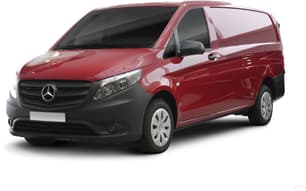
We recently trialled M-B’s Vito-based contender in this pioneering LCV market segment, to see how it measures up in Australia’s highly competitive medium-sized (2.5-3.5-tonne GVM) van market.
The Gladiator is far from the most practical, versatile, or sensible dual-cab on the market. Not going to lie, though. This is the most fun I’ve had in a ute in a long time.
It’s arguably the best-looking mid-size van on the market, particularly with the optional enhancements fitted to our example. And its longer (km-based) service intervals and capped-price servicing costs offer substantial savings compared to a diesel Vito equivalent.
However, the eVito has a much higher purchase price, smaller payload, shorter driving range, can’t tow a trailer and feels a tad under-powered at low speeds. Plus filling its battery with fresh charge takes much longer than filling a tank with diesel, which may or may not be an issue depending on planned usage.
Therefore, a buyer would need to have not only a sizeable purchasing budget but also very specific and resolute criteria for this vehicle to shine in a commercial role.
Despite a legion of trendy retro-styled off-road pretenders, from the Ineos Grenadier to the GWM Tank 300, there’s nothing quite like the original Jeep style which the Gladiator shares with its Wrangler sibling. Unless you’re Mahindra which has technically been producing Willys Jeep successors for longer, but that’s another story for another time).
The new Rubicon looks a bit more swish in 2026, with the body coloured wheel arches and a tweaked grille which is now wider and shorter. The two-tone roof which was previously optional is now standard.
It looks rugged, tough, and undeniably classic, with the mud terrain tyres sealing the deal.
Of course, you can’t forget the many so-called ‘Easter eggs’ Jeep hides about the place. In the case of the Gladiator, these include a silhouette of a Willys Jeep climbing up the driver’s side windscreen, a gorilla imprint on the opposite side signifying the windscreen is now constructed from the same stuff designed to make your phone scratch-free. The tray features imprints of dirtbike tyres where you might want to strap two in and even the recirculate button on the climate unit is in the shape of a Wrangler. Nice touch.
On the inside generally, it feels like a purpose-built vehicle in much the same way as an old Defender. It leaves you with a sense of how genuine it all is, with loads of physical switchgear and an overall shape meant to replicate the no-nonsense appeal of Jeeps dating back to the Willys.
The eVito’s front-mounted electric motor drives the front wheels. Its lithium-ion battery is located beneath the standard Vito floor to ensure load volume is not reduced. This substantial battery is as wide as the load floor and extends from just behind the front wheels to just ahead of the rears. Its charging port is located behind a spring-loaded body flap ahead of the left front wheel.
It rides on a 3200mm wheelbase with 5140mm overall length, 1928mm width and a kerb-to-kerb 13-metre turning circle, with 1916mm height allowing access to underground and multi-storey carparks. It’s equipped with strut-type front suspension, semi-trailing arm/coil spring rear suspension and four-wheel disc brakes.
However, also like an old Defender, the Gladiator’s interior is full of compromises to maintain its iconic design.
The seating position is awkwardly high, which is fine when off-roading, but can be limiting when you’re just driving around a city, and the footwell is half taken up by a transmission tunnel so there’s nowhere to rest your foot.
The door cards are pretty basic because the doors are removable (although Jeep stresses this is only legal on private property), but elsewhere there’s much-appreciated levels of functionality in an era of touch-based controls.
The centre control panel, for example, features physical dials for high-use functions and toggles or buttons for everything else. It’s mercifully easy to use and old-school motorists will also love the physical shifters for gear selection and the transfer case alongside. And an analogue handbrake is an increasingly rare sight.
There are even buttons we didn’t ask for, like the four pre-wired auxiliary switches, and while the dash trades away a fully digital panel for a digital supervision screen with analogue dials either side, it suits the character of the car.
It’s not the most comfortable space to be in, however. Not only is the seat base super high off the ground, but despite the Gladiator’s imposing dimensions the front seat somehow feels narrow.
Storage is okay, but not on the same level as many rival utes. The basic doors score nettings on each side, with two deep and useful bottle holders in the centre console. The armrest box is two-tiered which is handy, and there’s a small glove box. Outside of this, there’s not a lot of storage up front.
The rear seat is decent when it comes to space for the ute segment, although it is also very high off the ground and hard to clamber into thanks to the way the rear door is shaped. Once you’re in there, be sure not to smack your head on the frame, which seems like it could be an easy thing to do.
Again, nets feature in the doors, with two more nets on the backs of the front seats, which also feature luggage hooks. There are dual adjustable air vents back there and two bottle holders moulded out of the centre console. They're nicely-sized, but will eat into the legroom of any adult you want to put in the centre rear position, making it extra cramped if you have three across.
The back seat features some things I’ve never seen before, though. There’s a huge storage area underneath the seats with its own lid, and some limited storage space behind the seat backs which features a removable Bluetooth speaker which also automatically re-charges when it’s docked back there. Cool.
The rear window features an opening port, which is also rare, while all the main storage compartments are lockable for when you want to leave the car with the roof and/or doors off.
Capacities and payloads have never been a strong point for the Gladiator. The tray measures 1531mm long, 1443mm wide and 1137mm between the arches, making it unable to fit a standard-sized Australian pallet. The payload is also limited at just 693kg, far short of the close-to-one-tonne many work-focused dual-cabs can hit.
However the tray isn’t for show only, featuring an array of useful tie-down points and a built-in rail system to help secure all sorts of objects. There are even steps built into the rear bumper design for easier access and a full-size spare wheel underneath.
The braked trailer towing capacity is limited to just 2721kg which is also short of the industry benchmark 3500kg, all of which may limit its use as a work vehicle, or even its appeal as a touring vehicle. I could see how these capacities are easily exceeded with a rooftop tent, recovery gear, a fridge, supplies and at least one passenger.
With its hefty 2318kg kerb weight and 3200kg GVM, the eVito has an 882kg payload rating. That is 183kg less than a diesel equivalent (119 Vito MWB RWD), given that the eVito is around 300kg heavier than the ICE version largely because of its battery.
And unlike the diesel alternative, which is legally rated to tow up to 2500kg of braked trailer, the eVito has no tow rating, which is consistent with other electric vans we’ve tested and a potential deal-breaker for tradies.
The cargo bay offers a competitive 6.0 cubic metres of load volume and is accessed through sliding doors on each side (822mm openings), with large internal assist-handles on the bulkhead. Rear cargo bay access is through a swing-up tailgate, which can limit the use of forklifts not fitted with extendable tynes. All doors and walls are internally lined.
The load area is 2678mm long, 1709mm wide and 1392mm high. With 1270mm between the rear-wheel housings, it can carry two 1165mm-square Aussie pallets or up to three 1200 x 800mm Euro pallets, secured by eight sturdy load-anchorage points.
The cabin bulkhead has a cavernous open storage area at its base which is handy for storing ropes, straps etc. The upper section of the bulkhead protrudes about 20cm into the openings of the side sliding doors which may obstruct loading of large items.
Cabin storage includes a large-bottle holder and bin in the base of each door, with smaller bins at mid-height. There’s also an overhead glasses holder, two cupholders and three open bins across the top of the dash, a single glovebox and a hidden compartment beneath the passenger seat which is handy for storing small items or valuables out of sight.
For this update, the Gladiator has been trimmed down to just one variant, the fully-loaded, top-spec Rubicon.
While the lesser Night Eagle grade has been discontinued, the good news is the Rubicon is now more affordable, starting at $82,990, before on-road costs. Although this still pitches it against only the most expensive mainstream dual cabs.
At this price, for example, you could pick a Ford Ranger in luxury Platinum or sporty Wildtrak form, or even as a plug-in hybrid. However, this car’s classic vibe and purpose-built feel, with a big six-cylinder petrol engine, is more reminiscent of the Ineos Grenadier Quartermaster, which wears a price tag well in excess of $100,000.
While it might be a pricey ute, the Gladiator Rubicon comes with all the gear plus extra stuff for this update, including new 17-inch two-tone wheel designs clad in pricey BF Goodrich mud terrain tyres, Nappa leather seats and a more powerful standard alternator with pre-wired auxiliary switches.
There are also body-coloured fender flares replacing the previous black plastic ones, 12-way power adjust and heating for the front seats, extended soft-touch materials throughout the cabin, a much larger and better-specified 12.3-inch multimedia touchscreen (with built-in nav) as well as wireless Apple CarPlay and Android Auto connectivity. In addition, the LED headlights have picked up an auto high-beam function and the spray-in bedliner for the tray is now standard.
Standard overlanding kit includes the brand’s signature 'Roc-Trac' on-demand 4x4 system, which includes front and rear differential locks, an electronic sway bar disconnect (pretty rare), manually selectable low-range gearing (with a 4:1 ratio), as well as additional underbody protection and rock-slider side steps.
Not enough? This is the only ute on sale in Australia where you can remove the roof and pop the windscreen flat for a full-on Barbie (or maybe Ken) Power Wheels vibe.
Our test vehicle is the eVito Panel Van MWB (Medium Wheel Base), which comes equipped with a single 85kW/360Nm electric motor and a 60kWh battery for an eyebrow-raising list price of $91,051 plus on-road costs.
Our sparkling example looks more upmarket than the standard offering, as it’s equipped with the optional $2779 Sport Package comprising metallic paint (Brilliant Silver on ours), body-coloured front and rear bumpers, black roof rails, fog lamps, black leatherette upholstery and a choice of 17-inch alloy wheels. These good-looking rims are fitted with 225/55R17C Dunlop Econodrive tyres and there’s a standard full-size steel spare.
Other options, including premium infotainment and electronic interface functions, cargo bay wood-flooring/LED lighting and more, raise the as-tested list price to $99,871 - which means you’re looking at six figures to drive away in this stylish two-seater.
So, what’s a $100K electric Mercedes-Benz van include as standard equipment? Let’s start with a conspicuously long (8.0 metres) charging cable stored in a vinyl bag. There’s also a chrome grille, tinted windows and heated door mirrors, but headlights/daytime running lights/tail-lights are halogen when you’d expect to see LEDs at this price.
Inside, there’s a full steel bulkhead (with large window) separating the cabin from the cargo bay, a leather-wrapped and two-way adjustable multi-function steering wheel, two USB ports, high-gloss black trim appointments in the upper central console, and a chrome interior package including air-vents, air-con dials, door-handles and surrounds.
Also standard are ‘Comfort’ bucket seats for driver and passenger with heating, base-cushion length adjustment, fold-down inboard armrests and powered adjustments including height/reach lumbar support. The infotainment system has a relatively small 7.0-inch touchscreen, but there’s digital radio, voice command and multiple connectivity including Apple/Android devices.
There’s a relatively massive 3.6-litre non-turbo, non-hybrid ‘Pentastar’ petrol V6 engine under the bonnet, producing 209kW/347Nm.
Sounds old-school because it is, and it remains the only option for this machine in Australia despite emissions regulations closing in and a 2.0-litre four-cylinder turbocharged engine available in the current Wrangler and overseas versions of the Gladiator.
The V6 is mated to a predictable ZF-sourced eight-speed (torque converter) automatic transmission and drives either the rear- or all four wheels depending on the mode selected.
The eVito’s single electric motor drives the front wheels via a single-speed transmission. It produces 85kW of power and 360Nm of torque from the energy stored in its 60kWh battery.
Using the steering wheel paddles, drivers can switch between five energy-recuperation modes to optimise battery range and reduce manual brake use. These range from D- (strongest deceleration/recuperation) through D, D+ and D++ which progressively reduce these effects. DAuto uses a radar sensor to automatically adjust the recuperation level according to surrounding traffic.
There are also three switchable drive modes comprising E+, E and C, which allow drivers a choice of energy consumption/performance levels.
As you might imagine, the large naturally aspirated petrol engine combines with the over 2.0-tonne Gladiator to make for a relatively steep fuel bill.
Consumption is a hardly-impressive 12.4L/100km on the official combined (urban/extra-urban) cycle, with our car consuming even more - 12.9L/100km - on our three day test covering nearly 500km and with no shortage of freeway time either.
Brim the 83-litre tank and theoretical range is around 670km, dropping to just over 640km using our on-test figure.
The Gladiator is interesting to drive for many reasons. Mainly, because as a purpose-built off-roader it's a little compromised when it comes to on-road manners.
For example, the high seating position and tapered bonnet shape might be great for visibility off-road, but the boxy design of the chunky A-pillars (designed to keep the car in one piece when the doors roof and windscreen are removed) make it a little difficult to see properly around corners at T-junctions or roundabouts in the confines of a city.
Even proximity of my head to the roof presented a problem when trying to see whether traffic was coming at an intersection with the vehicle angled downhill.
The next alarming trait is how vague the steering is while on the tarmac. It’s an unfortunate characteristic of the Gladiator’s rugged live front axle, making this ute a bit of a handful to steer at low speeds. And it tracks all over the place on the freeway, requiring constant vigilance and steering input from the driver at higher speeds.
It’s also noisy, despite this 2026 version featuring extended sound deadening in the cabin. It needed it. The knobbly mud terrain tyres make their presence felt through a resonant droning entering the cabin at all speeds.
Then, at freeway pace, the wind noise from the Gladiator’s blocky shape picks up. You can feel the sound waves leaking in through the removable doors and plasticky removable roof. There are even silly things like being able to feel reverberations of the sound system through the accelerator pedal.
So, I should hate the Gladiator, right?
Wrong.
This thing is ridiculous amounts of old-fashioned fun. The V6 engine is keen to rev and the transmission lets you ride the gears out, creating a throaty roar and lurching acceleration reminiscent of old Commodores.
While the mud terrain rubber is noisy and offers questionable levels of grip on tarmac or in the wet, the thick sidewall combines with coil springs and chunky Tenneco shock absorbers all-around to make for a pretty decent ride for a ladder-frame vehicle.
In addition, we took the Gladiator for a quick off-highway jaunt as its design intends and it performed as-expected. It has great approach and departure angles, with good visibility for peering over moguls and into ruts or dips.
The mechanical hardware feels up to the task, and while it might slip once or twice as the less sophisticated traction systems (compared to, say, a modern Defender) find their bearings, the Gladiator ate up the moderately challenging trails we found for it.
The chunky tyres come into their own, with the sidewall offering confidence, and the car clambers about with relative ease. Obviously, the enormous 3488mm wheelbase and resulting 18.4-degree breakover angle are the Gladiator’s Achilles heel, making me think twice about cresting certain hills or objects, and making this ute particularly prone to cringe-inducing underbody scraping.
Still, despite its comparatively unsophisticated approach and lack of environmental responsibility the Gladiator is a huge amount of fun to drive.
It’s easy to get comfortable given the height/reach adjustable leather-wrapped wheel and powered multiple seat adjustments, which include base cushion rake and height/reach lumbar support. The base cushion can also be manually extended for more under-thigh support by sliding the front section forward.
There’s good eyelines to the door mirrors and, thanks to the large window in the cabin bulkhead, the central rear-view mirror has an unobstructed view through the tailgate window. The passenger-side mirror’s wide-angle view, combined with active blind-spot monitoring, help to minimise the large blind-spot over the driver’s left shoulder that all solid-walled vans share.
Steering is nicely weighted and communicative, unladen ride quality is supple thanks to its four-coil suspension, and four-wheel disc brakes provided reassuringly strong braking response. However, there was also noticeable tyre noise intrusion at speeds above 60km/h on coarse bitumen surfaces.
Acceleration from standing starts feels leisurely at best, even when using full power. This is when the eVito’s 2.3-tonne kerb weight is noticeable, which is not surprising when you compare its weight-to-power and weight-to-torque ratios with a diesel Vito (MWB) equivalent.
For example, based on kerb weights, the 119 CDI Panel Van (140kW/440Nm) has to move 14.2kg/kW and 4.5kg/Nm compared to the eVito’s much heavier 27.3kg/kW and 6.4kg/Nm.
However, the power delivery is seamless and once up to cruising speeds the response noticeably improves, fortunately in the 60-80km/h range where much city and suburban travel occurs. The key to fluent progress in traffic is maintaining momentum.
To test its load-hauling ability, we inflated the tyres to the recommended pressures and forklifted 650kg into the cargo bay through the side doors. Combined with driver and equipment, this equalled a 750kg (three-quarter-tonne) payload which was about 130kg short of its maximum rating.
With the cargo bay load positioned well ahead of the rear wheels, the rear suspension only compressed 25mm with no risk of bottoming-out over bumps.
Our 50km test route comprised mostly city and suburban routes (for which this vehicle is tailored) plus some highway driving. There wasn’t a noticeable drop in handling, braking or ride quality with this payload, although standing-start acceleration felt more subdued as you'd expect.
The previous Gladiator was awarded just a three- out of five-star ANCAP safety rating in 2019, although this updated version gets a few notable upgrades including side curtain airbags, seat reminder alerts and auto high beams.
On the modern active safety equipment front, the new Gladiator scores auto emergency braking, blind spot monitoring with rear cross-traffic alert, adaptive cruise control, roll mitigation as well as front and rear parking sensors and a halfway decent reversing camera.
Not present is lane departure warning or lane keep assist, and given how long the Gladiator is, it would be nice to have a front parking camera, too.
It’s disappointing to see the Gladiator miss key kit like lane keep assist, but unlike a lot of modern vehicles, the Gladiator isn’t annoying to drive and I didn’t find myself needing to turn any equipment off to make it work off-road, either.
There is currently no ANCAP rating. Even so, it comes with a suite of standard passive and active safety features including front, thorax and window airbags, AEB, blind-spot monitoring with rear cross-traffic alert, lane-keeping, active parking assist, crosswind assist, front/rear parking sensors, DRLs, active cruise control, reversing camera and more. There’s no speed sign recognition, though.
It’s no secret ownership has long been an awkward topic for Jeep, with models like the Grand Cherokee previously causing all kinds of dramas for owners. A quick scan of forums suggests the Wrangler and Gladiator are less prone to issues compared to their more mainstream siblings in the Jeep line-up. So, food for thought.
Regardless, the Gladiator is offered with a five-year warranty which is distance-limited to just 100,000km, which is well off the pace, although a five-year capped price servicing pack is priced at a reasonable $399 per annual or 12,000km workshop visit.
The brand also offers lifetime roadside assist so long as you continue to service your Jeep in its authorised dealer network.
The eVito has a five-year/250,000km vehicle warranty with an eight-year/160,000km battery warranty and a 24-hour roadside assist support package. Scheduled servicing is every 12 months/40,000km whichever occurs first. Capped pricing for first five scheduled services totals $2432 or an appealing average of $486 per service.