What's the difference?
Hyundai has recently launched an updated Staria Load range, with the most significant addition for buyers of mid-size (2.5 tonne-3.5 tonne GVM) commercial vans being the first-time availability of a hybrid drivetrain.
On paper this new HEV (Hybrid Electric Vehicle) option brings numerous advantages over its diesel sibling, so we recently spent a week at the wheel to see if they are sufficient to win over traditional diesel van buyers.
The small van segment (Under 2.5-tonne GVM) is one of the smallest in Australia’s light commercial vehicle market, as it currently caters for only three contenders, the Volkswagen Caddy Cargo, Peugeot Partner and Renault Kangoo.
Although total sales in this category are a fraction of those achieved in the mid-size (2.5-3.5-tonne GVM) van division, these compact commercials are ideal for buyers not requiring the big one-tonne payload ratings and cavernous load volumes of their larger siblings.
Petrol and diesel-powered models are typically equipped with small displacement engines offering excellent fuel efficiency, combined with cabin ergonomics and driving dynamics which are the most car-like of any LCV offering.
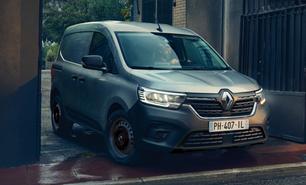
French manufacturer Renault released its third generation Kangoo range in Australia in 2024, comprising a mix of petrol and full-electric variants. We were recently handed the keys to one of the petrol models to see if it has what it takes to win costumers in this three-way fight.
The Staria Load HEV offers numerous advantages over its diesel equivalent including superior fuel economy, lower exhaust emissions, higher power output and a bigger payload. However, it also has a higher purchase price and no tow rating, so careful analysis of your specific work requirements will determine if Hyundai’s new hybrid van is fit for purpose.
The latest petrol-powered Kangoo has the pricing, practicality and performance to win friends in Australia’s small commercial van class. If you can afford an option pack or two, like those fitted to our test vehicle, it's even better.
The updated Staria Load range brings mild styling revisions of the headlights and front bumper along with a more conventional and (in our eyes at least) stylish grille design.
The roomy and practical cabin has also been refreshed with a new four-spoke leather-trimmed steering wheel and a more spacious and versatile centre console (see Practicality).
The refreshed Staria Load is available only in a two-seater configuration, as the five-seater ‘crew’ variant with a bench seat in the cargo bay has been discontinued.
Our test vehicle is less than 4.5 metres long (4488mm) and well under 2.0 metres in width (1859mm) and height (1830mm), making it ideal for those with either limited parking space and/or needing to access space-restricted areas in their working roles.
Its compact 2716 wheelbase results in an 11.3-metre turning circle. This is larger than you might expect, given it’s no tighter than Toyota’s shortest HiAce mid-sized van.
However, it’s also line-ball with its small van rivals, which highlights the restrictions in steering lock shared by front-wheel drive vehicles compared to rear-wheel drivers like the HiAce.
The Kangoo features MacPherson strut front suspension and its rear suspension uses torsion bar primary springing supplemented by a pair of secondary coil springs for carrying heavy loads. There’s also rack and pinion steering and a quartet of disc brakes.
Bodywork and wheels confirm its no-frills work focus, with unpainted dark grey plastic prominent on the hubcaps, front/rear bumpers and along the sides where bumps and scrapes usually occur.
It has tidy styling for a commercial van, including the sharp cabin design that combines a tasteful blend of grey and satin chrome hard surfaces with the practicality of wipe-clean fabric upholstery and vinyl floors.
With its peak kerb weight of 2091kg and 3130kg GVM, our test vehicle has a one-tonne-plus payload rating of 1039kg which is slightly higher than its diesel sibling (997kg). And it can legally carry up to 100kg of that payload on the roof.
However, unlike the diesel version which is rated to tow up to 2500kg of braked trailer, our HEV variant is not rated for towing. Obviously, this could be a deal breaker for tradies and other users who rely on being able to haul trailers to get the job done.
The cargo bay is 2500mm long and 1640mm wide with (according to our tape measure) 1250mm between the rear wheel housings, which means it can carry up to two 1165mm-square Aussie pallets or up to three Euro pallets, secured by a choice of eight load anchorage points.
It can also accommodate load heights up to 1436mm and offers a total (VDA) load volume of 4935 litres. That’s a snip under 5.0 cubic metres which is significantly less than the 6.2 cubic metres offered by the segment-leading Toyota HiAce LWB. Walls and doors are lined to mid-height and there’s a rubber load floor covering.
The cargo bay is accessed through sliding doors on each side with 870mm openings (just wide enough for a Euro pallet) or through the rear via the standard swing-up tailgate. However, for working roles that need rear forklift access, optional twin-swing doors with 180-degree opening are available. Our example is also equipped with a sturdy mesh-type cargo barrier from Hyundai’s genuine accessories range.
The cabin is a comfortable and practical workspace with its work-focused vinyl floor (ours also has genuine accessory all-weather floor mats), dark fabric-trimmed seats and wipe-clean hard surfaces.
There’s also plenty of storage courtesy of a glovebox, two overhead shelves, wide-opening doors with three tiers of storage including large-bottle holders, long shelves on either side of the dash plus a cup-holder next to the driver’s instrument display.
The centre fascia adds a wireless phone-charging pad, two USB-C ports, 12V socket and more small bins while the new centre console between the seats provides a cavernous open bin and two cup/small-bottle holders.
Our test vehicle’s 1447kg kerb weight and 2010kg GVM results in a useful 563kg payload rating.
It’s also rated to tow up to 1500kg of braked trailer and with its 3510kg GCM (or how much it can legally carry and tow at the same time) it can carry its maximum payload while towing its maximum trailer weight for optimum versatility.
Cargo bay access is through asymmetric rear barn-doors which can be opened to 180 degrees for forklift and loading dock access, or sliding doors on each side with (according to our tape measure) 625mm openings. The walls and doors are lined to mid-height and there’s internal lighting.
The cargo bay’s load volume is a competitive 3.3 cubic metres and with more than 1.8 metres in length, almost 1.6 metres in width and more than 1.2 metres between the rear-wheel housings, it can easily swallow one standard Aussie pallet or two Euro pallets.
The load floor, which does not include a protective liner as standard equipment, offers a choice of six load-anchorage points.
The solid bulkhead doubles as a sturdy cargo barrier and insulates the cabin from cargo bay noise, most of which comes from the tyres emanating through the rear-wheel housings.
Given its compact dimensions, the cabin is surprisingly spacious and accommodating even for someone my height (186cm), thanks to front doors that open to a full 90 degrees, generous leg and elbow room plus a high roof relative to the seating position that adds to the airy feel.
Storage includes a large-bottle holder and bin in the base of each door, single glove box, full-width overhead shelf, large open tray in the centre of the dash-pad and (in standard form at least) a centre console with two cupholders and trays for small items.
However, given our test vehicle is equipped with the optional Business Pack, the standard console is replaced with a more elaborate version, which in addition to a pair of cupholders has a wireless phone-charging dock up front and a box with hinged lid at the back.
There’s also a sizeable clamshell-lid compartment set into the dash-pad ahead of the driver, which includes a smartphone holder on a stalk that can be easily moved to either side of the compartment depending on driver preference.
Our only criticism is the lid on the optional console box. Although it’s been thoughtfully angled downwards at the front to provide the driver with comfortable elbow support, there’s no mechanism on the hinge to hold it in the open position.
This makes it awkward to access the box, as the angled lid naturally wants to keep closing on your hand, so a detent in the hinge would be useful.
And, in a similar context, we’d also like to see hinge detents (or struts) to firmly hold the rear barn-doors open in their 180-degree positions, given their propensity to slam shut if hit by wind gusts during loading/unloading.
This can potentially injure the operator, so these devices should be standard issue, not only for Kangoos but all barn-door vans.
Our test vehicle is the entry-level Staria Load HEV which comes standard with Creamy White paint, 1.6 T-GDi petrol-electric drivetrain and six-speed automatic transmission driving the front wheels for a list price of $53,490 plus on-road costs.
This pricing is higher than its Staria Load diesel sibling ($49,990) but lower than its better equipped Premium HEV stablemate ($61,240). It’s also cheaper than Ford’s Transit Custom Trend SWB Auto ($58,990) and almost lineball with the Toyota HiAce LWB Auto ($53,880) which dominates mid-size commercial van sales in Australia.
Although it’s the base model, our example comes well equipped for work duties with useful standard features that include:
New standard features include:
Over the air software updates that don’t require dealership visits.
The Kangoo petrol range is available in SWB (short wheelbase) with a choice of six-speed manual or seven-speed dual-clutch automatic, plus a LWB (long wheelbase) model available only with the auto.
Our test vehicle is the SWB auto, powered by the same 1.3-litre four-cylinder turbocharged engine shared by all petrol models, for a list price of $41,990.
That figure sits comfortably between petrol rivals in the small van class, including the Peugeot Partner Pro Short ($39,990) and Volkswagen Caddy Cargo TSI220 ($43,990).
Our example has been enhanced with genuine accessory carpet mats ($167) plus some desirable options including 'Highland Grey' metallic paint ($800) and the ‘Peace of Mind Pack’ ($1500) comprising blind-spot monitoring, front/rear/side parking sensors, driver attention alert, high-beam assist, navigation, overspeed prevention and traffic sign recognition.
It’s also equipped with the ‘Business Pack’ ($3000) which adds tyre pressure monitoring, hands-free key card, body-coloured external door handles, climate control, adaptive cruise control, centre console with armrest and storage, wireless smartphone charger, extra tinted rear barn-door glass, front fog lights, LED headlights and a leather-wrapped steering wheel.
This is in addition to its work-focused standard equipment list which includes 16-inch steel wheels and 205/65 R16 tyres with a full-size spare, plus auto-door lock when driving, rain-sensing wipers, a reversing camera and more.
The two-seater cabin, which is separated from the cargo bay by a solid bulkhead, is equipped with an electronic parking brake, two USB ports, two 12-volt sockets, a colour 4.2-inch driver’s info display and a multimedia system controlled by an 8.0-inch central touchscreen with wireless Apple CarPlay/Android Auto connectivity and smartphone dock.
In addition to its option packs, Renault also offers numerous single options including a 200kg GCM upgrade, different cargo bay sliding-door configurations, a smart digital rear view mirror and more.
The Staria Load HEV is powered by Hyundai’s 1.6 T-GDi (Turbocharged-Gasoline Direct Injection) hybrid drivetrain, which comprises a 1.6-litre four-cylinder turbo-petrol engine producing 132kW at 5500rpm and 265Nm across a wide peak torque band between 1500-4500rpm. It also has combined CO2 emissions of 147g/km which is lower than the diesel’s 183g/km output.
This engine is paired with a single electric motor that produces up to 54kW of power and 304Nm of torque. Their official combined power output is rated at 180kW (50kW more than the diesel’s 130kW) but there’s no official combined torque figure, given the petrol engine and electric motor do not produce their peak torque values at the same time. Even so, based on our test drive, its torque is ample for mid-size van duties.
The six-speed automatic transmission replaces the conventional hydraulic torque converter with a hybrid electric motor/engine-disconnect clutch assembly. However, it still shifts and behaves much like a conventional auto, including the choice of sequential manual shifting.
It also offers three drive modes comprising ‘Eco’, ‘Sport’ and ‘Smart’ with the latter offering the best balance of performance and fuel efficiency which we mostly used during our test.
The hybrid system is also equipped with what Hyundai calls ‘e-Motion Drive’ which incorporates a series of automated control strategies for the electric motor that actively enhance chassis dynamics to optimise ride quality, handling and stability.
New front subframe bushings bring additional rough-road comfort while rear hydro bushings allow for more natural body movement over bumps. NVH (Noise/Vibration/Harshness) has also been addressed with greater noise insulation within the dash structure and body mountings.
The Euro 6 emissions-compliant 1.3-litre turbocharged four-cylinder engine produces 96kW at 5000rpm and 240Nm at 1600rpm.
Its seven-speed dual-clutch automatic provides the option of sequential manual-shifting plus three drive modes comprising 'Normal', 'Eco' and 'Performance', which alter the shift calibrations to optimise engine efficiency in each setting. They are selected using a button on the dash.
Hyundai claims HEV combined consumption of only 6.5L/100km and the dash display was close to that at 6.8 when we stopped to refuel at the completion of our test. We covered a total distance of 339km comprising our usual mix of suburban, city and highway driving, of which more than 100km was carrying a heavy payload.
Our own figure, calculated from fuel bowser and tripmeter readings, came in slightly higher at 7.1L/100km. Even so, that’s outstanding economy for a mid-size commercial van in real-world use, given the much higher figures we recorded with a Toyota HiAce LWB (10.7L/100km) and Staria Load diesel (10.9L/100km) during our most recent tests of those models using similar test procedures.
So, based on our numbers, you could expect an extensive real-world driving range of around 900km from its 65-litre petrol tank, which is 10 litres less than its diesel sibling.
Renault claims average combined consumption of 6.4L/100km and the dash display was showing 7.8 when we stopped to refuel at the completion of our 254km test, of which about one third of that distance was hauling more than half a tonne of payload. We also had the annoying engine auto stop/start function switched off for the duration.
Our own figure, calculated from fuel bowser and tripmeter readings, was higher again at 8.6 which was still within the usual 2.0-3.0L/100km discrepancy between official and ‘real world’ figures.
So, based on our consumption number, you could expect a ‘real world’ driving range of around 630km from its 54-litre tank which should only be filled with premium petrol (min 95 RON).
Driving a hybrid van is no different to driving a non-hybrid van. Apart from accelerating, braking and switching between drive modes, the driver has no input in how the vehicle performs as it continuously monitors and distributes outputs from the petrol engine, electric motor and hybrid battery to ensure sufficient charge, good response and optimum fuel efficiency at all times.
So, the driver only needs to concentrate on driving while the hybrid components talk among themselves. You can feel and hear the smooth transitions between petrol and electric power which are also visually tracked by information on the digital screens.
Although the HEV has more power than its diesel sibling, we didn’t sense a dramatic performance increase given its kerb weight is also higher.
Even so, it’s an energetic performer with good acceleration from standing starts combined with surefooted handling and braking. The unladen ride quality is firm, as you’d expect given its one-tonne payload, but with enough suppleness to maintain acceptable ride comfort.
To test its GVM rating we forklifted 650kg into the cargo bay which with driver equalled a total payload of around 750kg. The rigid-beam axle/leaf-spring rear suspension only compressed about 20mm under this weight which ensured it had plenty of wheel travel remaining to avoid any bottoming-out on our test route.
It hauled this payload with ease which included our 13 per cent gradient, 2.0km set climb at 60km/h. Engine braking on the way down, in a manually selected second gear, was not as robust but within expectations given its relatively small 1.6-litre displacement restraining a heavy payload. Overall, this hybrid drivetrain is well calibrated for commercial van use.
However, for potential buyers doing regular highway travel, we recommend fitment of Hyundai’s genuine accessory solid bulkhead between the cabin and cargo bay, to insulate occupants from considerable tyre noise emanating from the rear wheel housings at these speeds.
Apart from the huge and unavoidable solid-walled blind-spot over the driver’s left shoulder, the Kangoo feels more like a nippy small car than a commercial van.
The driver’s seat has no adjustments for lumbar support or base-cushion rake and the backrest angle is restricted by the bulkhead close behind it, but there’s still enough room even for tall people to find a comfortable driving position.
Its leather-rimmed wheel feels nice in your hands and the unladen ride quality is excellent, with nicely weighted and responsive steering feel, reassuringly strong braking and suspension settings that combine good handling response with supple bump absorption.
The turbocharged 1.3-litre four is a refined and willing performer, albeit with softer response below its peak torque band which is tapped at 1600rpm.
From there it happily spins its way to maximum power at 5000rpm, with the dual-clutch auto getting the best out of this engine in all drive modes, when either unladen or hauling a heavy load.
Its diminutive size and agility are well suited to zipping through heavy city traffic, squeezing into tight loading zones or negotiating narrow and crowded city lanes for delivery work.
Manual sequential-shifting allows more direct control if preferred when hauling heavy loads, or for those simply wanting a more engaging drive experience (particularly in Performance mode).
It's impressively quiet up to 80km/h in city and suburban use, but at highway speeds tyre noise becomes more intrusive (particularly on coarse bitumen surfaces) and some wind noise is evident.
The engine requires only 2000rpm to maintain 110km/h cruising speeds and the (optional) adaptive cruise control is resolute in maintaining its speed settings, even on long and steep descents.
To test its GVM rating, we forklifted 415kg into the cargo bay which with driver equalled a payload of just over half a tonne, or about 50kg under its legal limit.
The rear suspension compressed 55mm, which engaged the long cone-shaped jounce rubbers positioned inside the rear coil springs to provide a second stage of load support.
The Kangoo coped commendably with this payload, floating smoothly over bumps and with minimal effect on handling, braking and engine performance.
It also made light work of our 13 per cent gradient, 2.0km-long set climb at 60km/h, quickly self-shifting down to fourth gear to easily reach the summit.
Engine-braking on the way down was not as robust, as you’d expect from such a small engine with more than half a tonne on its back, but still within expectations for small vans.
Our only gripes are the absence of a full-width driver’s left footrest and that the thick panel separating the bulkhead windows almost completely blocks the central mirror’s view through the LHS barn-door. You can option a smart digital mirror with rear-facing camera to resolve this issue, but that’s another $800.
The Staria Load HEV comes standard with a five-year/160,000km warranty and a separate eight- year/160,000km warranty covering the hybrid battery. There’s also 12 months of complimentary roadside assistance which is renewable annually with scheduled Hyundai dealer servicing.
Scheduled servicing is every 12 months/15,000km whichever occurs first. Hyundai offers a five-year pre-paid servicing plan covering the first five scheduled services but pricing is calculated from a participating dealer's scheduled servicing prices at the time the plan is purchased, rather than a national standard set by Hyundai (hence the lower score in this segment).
The Kangoo petrol is backed by a five year/200,000km warranty, whichever occurs first. There's also complimentary roadside assist for up to four years/120,000km, with annual renewals available after that.
Scheduled servicing is every 12 months/30,000km with capped-pricing for the first five scheduled services totalling $2385, or an average of $477 per year.