What's the difference?
Hyundai has recently launched an updated Staria Load range, with the most significant addition for buyers of mid-size (2.5 tonne-3.5 tonne GVM) commercial vans being the first-time availability of a hybrid drivetrain.
On paper this new HEV (Hybrid Electric Vehicle) option brings numerous advantages over its diesel sibling, so we recently spent a week at the wheel to see if they are sufficient to win over traditional diesel van buyers.
Is there a class of vehicle more overlooked in Australia than the humble light van?
While the pragmatic and often hatchback-based small van is dwarfed in size and sales by the popular ute as the commercial vehicle of choice here, the case is completely reversed in Europe, where light commercial vans dominate city streets, favoured for their compact nature and relative fuel efficiency.
What is it about Australia which makes the ute more successful? Is it just our history of locally producing them? Do you really even need one, or are the Europeans on to something?
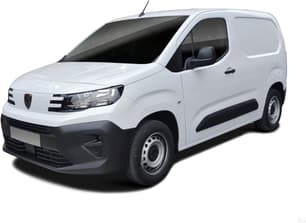
I spent a week reacquainting myself with the freshly facelifted 2025 Peugeot Partner to find out.
The Staria Load HEV offers numerous advantages over its diesel equivalent including superior fuel economy, lower exhaust emissions, higher power output and a bigger payload. However, it also has a higher purchase price and no tow rating, so careful analysis of your specific work requirements will determine if Hyundai’s new hybrid van is fit for purpose.
It might not be the most modern looking or feeling small van, but amongst its competitors, the Partner stands out for its relative value and load-lugging capabilities.
It’s somewhat fun to drive but now feels a bit plain on the inside, and could benefit from a few extra options and features to make it more comfortable and maybe even a little more customisable.
Still, I think the Peugeot Partner will fit the needs of many primarily city-based small businesses or tradies who want to work out of a compact and easy-to-drive van instead of an unwieldy and often overkill dual-cab ute.
The updated Staria Load range brings mild styling revisions of the headlights and front bumper along with a more conventional and (in our eyes at least) stylish grille design.
The roomy and practical cabin has also been refreshed with a new four-spoke leather-trimmed steering wheel and a more spacious and versatile centre console (see Practicality).
The refreshed Staria Load is available only in a two-seater configuration, as the five-seater ‘crew’ variant with a bench seat in the cargo bay has been discontinued.
The Partner’s recent update brings with it a new, more contemporary face, with the ‘claw’ style light fittings clasping a body-coloured panel in place of the usual grille fitting. It also updates all the badgework to match the French brand’s passenger car range.
Thanks to these upgrades, as well as the fetching colour and Premium body-matching highlights, it looks pretty schmick at a distance, but up close you can start to tell the Partner’s relative age.
It simply doesn’t look as contemporary or coherent in its design as the much newer ground-up fifth-generation Caddy or third-generation Renault Kangoo with which it competes.
A big part of this is due to the Partner being based on a much older platform which is shared across a lot of Stellantis brands. It started life as the third-generation Citroen Berlingo in 2018, and needs to warp its look overseas to fit the Fiat Doblo, Toyota Proace and Vauxhall Combo (although the Partner is the only version sold in Australia).
As a result, up close you can see its somewhat pieced together brand identity bits and boxy, upright bodywork.
There are some odd touches, like the plastic bumper at the front not matching the gloss black highlights or body coloured bumper at the rear, and the contemporary badgework finished in a matt grey adds yet another texture and colour to the mix.
The theme continues inside, with a huge plastic dash piece jutting into the cabin space. Here, the bits from Peugeot’s passenger car range have been integrated, including the cool 'squircle' steering wheel, digital dash elements and the multimedia screen.
In the centre, the electric shifter part from cars like the current 2008 small SUV has been embedded in the sea of plastic.
It technically matches the brand identity, but it doesn't stop the Partner’s interior from feeling a bit cobbled together, rather than the more unified corporate identity which is so well executed in the VW Caddy, which is almost hard to tell apart from a Golf.
The software is another area the Partner could use some work. It’s fairly simple and straightforward to use, but the layout isn’t very customizable, both for the multimedia suite and digital dash.
Again, the Caddy runs rings around Peugeot in this department, with its more impressively-featured and nicer-looking software it shares with other VW Group passenger cars.
There are also little areas which feel like they’re behind the pace for a top-spec variant. The steering wheel is hard plastic without even the option for a softer wrap, for example, and the Caddy offers an alternate optional synthetic leather seat trim for an operator willing to dish out a little extra cash.
With its peak kerb weight of 2091kg and 3130kg GVM, our test vehicle has a one-tonne-plus payload rating of 1039kg which is slightly higher than its diesel sibling (997kg). And it can legally carry up to 100kg of that payload on the roof.
However, unlike the diesel version which is rated to tow up to 2500kg of braked trailer, our HEV variant is not rated for towing. Obviously, this could be a deal breaker for tradies and other users who rely on being able to haul trailers to get the job done.
The cargo bay is 2500mm long and 1640mm wide with (according to our tape measure) 1250mm between the rear wheel housings, which means it can carry up to two 1165mm-square Aussie pallets or up to three Euro pallets, secured by a choice of eight load anchorage points.
It can also accommodate load heights up to 1436mm and offers a total (VDA) load volume of 4935 litres. That’s a snip under 5.0 cubic metres which is significantly less than the 6.2 cubic metres offered by the segment-leading Toyota HiAce LWB. Walls and doors are lined to mid-height and there’s a rubber load floor covering.
The cargo bay is accessed through sliding doors on each side with 870mm openings (just wide enough for a Euro pallet) or through the rear via the standard swing-up tailgate. However, for working roles that need rear forklift access, optional twin-swing doors with 180-degree opening are available. Our example is also equipped with a sturdy mesh-type cargo barrier from Hyundai’s genuine accessories range.
The cabin is a comfortable and practical workspace with its work-focused vinyl floor (ours also has genuine accessory all-weather floor mats), dark fabric-trimmed seats and wipe-clean hard surfaces.
There’s also plenty of storage courtesy of a glovebox, two overhead shelves, wide-opening doors with three tiers of storage including large-bottle holders, long shelves on either side of the dash plus a cup-holder next to the driver’s instrument display.
The centre fascia adds a wireless phone-charging pad, two USB-C ports, 12V socket and more small bins while the new centre console between the seats provides a cavernous open bin and two cup/small-bottle holders.
So design-wise the Partner might barely hit the brief when it comes to matching it up with Peugeot passenger car design, but one area where it manages to shine is in-cabin storage.
There’s lots on offer, massive bottle holders and pockets in the doors, storage areas galore in the big plastic dash, with trays in the centre and passenger side, as well as behind the multimedia screen and under the shifter.
There are a set of non-variable bottle holders cut out of the top of the dash, as well as hidden storage compartments under both front passenger seats.
I should mention at this point the Partner has a three-across front bench, although actually putting three people in there will be quite the squeeze, especially given the centre of the dash juts quite far into the cabin area, leaving the centre occupant with nowhere to put their knees.
Maybe it will suit a child in a pinch if you plan to have this as a small business vehicle which may need to be dual-purpose from time to time.
There’s also a fold-down rotating table thing in the backrest of the centre position, designed to be used with a laptop. Another feature of the Partner’s dash is physical toggles and buttons for the climate controls, which are increasingly rare in favour of touch-based menus.
In terms of load area dimensions, the Partner LWB offers 3.9 cubic metres (excluding the bulkhead) and dimensions come in at 2167mm long, 1527mm wide (1229 between the arches) and 1243mm tall. This should accommodate two Euro-sized palettes.
Loading and securing should also be relatively breezy thanks to sliding doors on both sides, a barn door rear which hinges out of the way for forklift loading, and no less than 10 tie down rings.
It also scores decent LED lighting in the roof, so you can see what you’re doing in a poorly lit warehouse, or when using the load area at night.
As for capacities, the Partner LWB has a payload of 898kg. It claims a 950kg braked towing capacity (not much more than the unbraked of 740kg) although in reality 740 seems to be closer to the limit thanks to the 74kg towball download rating.
How does this compare to the Caddy? I was surprised to find the Caddy 5 in equivalent LWB form has a smaller load area (3.7 cubic metres) and a significantly lower payload of 695kg.
However, it can tow slightly more (up to a claimed 1500kg - however has a 75kg max towball download). Additionally, the Partner isn’t able to be fitted with a tailgate to replace the barn doors (an option which some buyers may prefer on the Caddy).
A full size spare wheel is present on all variants to keep you on the road.
Our test vehicle is the entry-level Staria Load HEV which comes standard with Creamy White paint, 1.6 T-GDi petrol-electric drivetrain and six-speed automatic transmission driving the front wheels for a list price of $53,490 plus on-road costs.
This pricing is higher than its Staria Load diesel sibling ($49,990) but lower than its better equipped Premium HEV stablemate ($61,240). It’s also cheaper than Ford’s Transit Custom Trend SWB Auto ($58,990) and almost lineball with the Toyota HiAce LWB Auto ($53,880) which dominates mid-size commercial van sales in Australia.
Although it’s the base model, our example comes well equipped for work duties with useful standard features that include:
New standard features include:
Over the air software updates that don’t require dealership visits.
Given the uniquely European nature of a van like this, it makes sense the remaining options offered to us are only from French and German makers.
In fact, this Peugeot Partner is one of just three left for you to choose from. Starting from $39,990, before on-roads (for a Pro SWB), the Partner goes into battle against its Gallic nemesis, the Renault Kangoo, and the defending small van champion in the form of VW’s popular fifth-generation Caddy.
Unlike its rivals, though, the Partner range is automatic only and exclusively powered by a three-cylinder, turbo-petrol engine (if you exclude the electric ePartner).
This immediately gives it a leg up, as in its most affordable form, it already undercuts the base manual Caddy (TSI220 SWB - $40,990) and most affordable automatic Kangoo (SWB auto - $41,990) although the Renault holds onto the most affordable price-tag in the segment if you’re happy shifting yourself, at $38,990 for its SWB manual.
The specific version we’re looking at for this review is the Premium LWB, which wears a price-tag of $45,990 and adds an additional 350mm to its length over the SWB.
Standard kit on Premium versions includes items otherwise missing on the Pro, like 16-inch alloy wheels instead of steel wheels, LED headlights instead of halogen, push-start ignition instead of turn-key, dual-zone climate instead of single-zone as well as body-coloured highlights, rails and door handles in place of plain plastic fittings.
Standard items across the range include a 10-inch central touchscreen with wireless Apple CarPlay and Android Auto, a digital instrument cluster, cloth seat trim, a 180-degree reversing camera, a digital rear vision mirror to make up for the standard windowless barn doors, a glaze-finish bulkhead to separate the cabin and load area, as well as an array of active safety items we’ll explore later.
The fetching blue scheme our car was painted in comes at an additional $690, and from there you can modify further with an array of factory options.
Key among them are a choice of windows for each sliding door ($486 each) or the barn door ($503), a metal cargo barrier to protect the bulkhead ($1146), an LED cargo light kit ($350), roof racks ($536) or a more comprehensive roof kit ($2610).
Additionally, long-wheelbase versions can be equipped with a cargo bay floor kit ($894), wall protection kit ($960) or the rubber floor mat which our van had ($600).
A complete towing set-up will set you back $1045 for the towbar and $510 for the wiring harness.
From a base of nearly $50K then, you can easily add a few thousand to the price once you start ticking boxes, but it is important to note not every commercial van, even ones a size up, offer this level of factory customisation.
This gives the Partner deeper (and warranty-covered) customisation for various trade purposes straight from the factory.
For what it’s worth, I matched our test car in the configurator and ended up with a final price of $52,429 with drive-away pricing set to Sydney.
Out of curiosity, I also priced up a VW Caddy Cargo LWB petrol auto with as close as I could get to the same equipment as this Partner Premium, and was surprised to find I had to tick a lot more option boxes to get LED headlights, alloy wheels (although the Caddy alloys are larger at 17-inches), premium paint, colour matching body panels, keyless entry with push-start and a rubber floor mat.
The total price for the spec-matching Caddy came in at $57,952 drive-away in Sydney.
The Staria Load HEV is powered by Hyundai’s 1.6 T-GDi (Turbocharged-Gasoline Direct Injection) hybrid drivetrain, which comprises a 1.6-litre four-cylinder turbo-petrol engine producing 132kW at 5500rpm and 265Nm across a wide peak torque band between 1500-4500rpm. It also has combined CO2 emissions of 147g/km which is lower than the diesel’s 183g/km output.
This engine is paired with a single electric motor that produces up to 54kW of power and 304Nm of torque. Their official combined power output is rated at 180kW (50kW more than the diesel’s 130kW) but there’s no official combined torque figure, given the petrol engine and electric motor do not produce their peak torque values at the same time. Even so, based on our test drive, its torque is ample for mid-size van duties.
The six-speed automatic transmission replaces the conventional hydraulic torque converter with a hybrid electric motor/engine-disconnect clutch assembly. However, it still shifts and behaves much like a conventional auto, including the choice of sequential manual shifting.
It also offers three drive modes comprising ‘Eco’, ‘Sport’ and ‘Smart’ with the latter offering the best balance of performance and fuel efficiency which we mostly used during our test.
The hybrid system is also equipped with what Hyundai calls ‘e-Motion Drive’ which incorporates a series of automated control strategies for the electric motor that actively enhance chassis dynamics to optimise ride quality, handling and stability.
New front subframe bushings bring additional rough-road comfort while rear hydro bushings allow for more natural body movement over bumps. NVH (Noise/Vibration/Harshness) has also been addressed with greater noise insulation within the dash structure and body mountings.
There is just one combustion engine option in the Partner range, a three-cylinder 1.2-litre turbocharged petrol unit producing 96kW/230Nm which drives the front wheels via an eight-speed automatic transmission.
The only alternative to this is the E-Partner which sports a 100kW/260Nm electric motor instead.
The three-cylinder petrol is a perky unit sourced from Peugeot’s passenger car line-up, although the Partner range doesn’t quite offer the VW Caddy’s breadth of options; the choice of a 1.5-litre four-cylinder petrol or a 2.0-litre diesel in two states of tune.
Hyundai claims HEV combined consumption of only 6.5L/100km and the dash display was close to that at 6.8 when we stopped to refuel at the completion of our test. We covered a total distance of 339km comprising our usual mix of suburban, city and highway driving, of which more than 100km was carrying a heavy payload.
Our own figure, calculated from fuel bowser and tripmeter readings, came in slightly higher at 7.1L/100km. Even so, that’s outstanding economy for a mid-size commercial van in real-world use, given the much higher figures we recorded with a Toyota HiAce LWB (10.7L/100km) and Staria Load diesel (10.9L/100km) during our most recent tests of those models using similar test procedures.
So, based on our numbers, you could expect an extensive real-world driving range of around 900km from its 65-litre petrol tank, which is 10 litres less than its diesel sibling.
One of the key downsides of the Peugeot’s Euro-compliant turbo-petrol engine is it requires mid-shelf 95RON fuel, which could be a blow to those who want to drill down on running costs.
Claimed fuel consumption on the official combined (urban/extra-urban) cycle is decent, at 6.3L/100km. Ours spent the week mainly urban commuting and landed closer to the official urban number of 7.3L/100km with a total of 7.2L/100km over a few hundred kilometres.
The 60-litre fuel tank should allow for roughly 950km of driving range at the official consumption. More like 830km using our test figure.
Driving a hybrid van is no different to driving a non-hybrid van. Apart from accelerating, braking and switching between drive modes, the driver has no input in how the vehicle performs as it continuously monitors and distributes outputs from the petrol engine, electric motor and hybrid battery to ensure sufficient charge, good response and optimum fuel efficiency at all times.
So, the driver only needs to concentrate on driving while the hybrid components talk among themselves. You can feel and hear the smooth transitions between petrol and electric power which are also visually tracked by information on the digital screens.
Although the HEV has more power than its diesel sibling, we didn’t sense a dramatic performance increase given its kerb weight is also higher.
Even so, it’s an energetic performer with good acceleration from standing starts combined with surefooted handling and braking. The unladen ride quality is firm, as you’d expect given its one-tonne payload, but with enough suppleness to maintain acceptable ride comfort.
To test its GVM rating we forklifted 650kg into the cargo bay which with driver equalled a total payload of around 750kg. The rigid-beam axle/leaf-spring rear suspension only compressed about 20mm under this weight which ensured it had plenty of wheel travel remaining to avoid any bottoming-out on our test route.
It hauled this payload with ease which included our 13 per cent gradient, 2.0km set climb at 60km/h. Engine braking on the way down, in a manually selected second gear, was not as robust but within expectations given its relatively small 1.6-litre displacement restraining a heavy payload. Overall, this hybrid drivetrain is well calibrated for commercial van use.
However, for potential buyers doing regular highway travel, we recommend fitment of Hyundai’s genuine accessory solid bulkhead between the cabin and cargo bay, to insulate occupants from considerable tyre noise emanating from the rear wheel housings at these speeds.
One thing which I always like about these little European vans for trades is they’re usually very humane and easy to drive compared to a dual-cab or a van in a larger market segment.
They tend to offer closer to the feel of a passenger car, with some of the little luxuries which are missing in big hollow diesel units like some form of refinement and less noise.
The Partner is no different, and shone in some ways I did not expect.
The brand has done a good job of making it feel like a Peugeot passenger car from a touch-point perspective with the dash elements and the small chuckable steering wheel.
It also has a swift steering ratio, making even this LWB version feel nimble and agile for darting around corners and down tight laneways just as I’m sure its French creators envisaged.
The peppy three-cylinder engine helps the hatch-like feel. It offers a punchy turbo surge and a satisfyingly gruff soundtrack, which makes this little commercial offering quite fun to drive.
The ride is also remarkably smooth for a commercial vehicle, even completely unladen. Car-like suspension handles the bumps and potholes of the city environment well, which could make this a good choice for delivery drivers who will spend a lot of time in urban environments, and maybe are less concerned about getting so close to the GCM rating.
However, it’s not quite as polished as the Caddy, which won me over big time when the fifth generation version arrived in 2022.
The Peugeot can suffer from significant bouts of turbo lag, and its eight-speed transmission can be occasionally jerky from a stand-still, making for the odd awkward moment at T-junctions and roundabouts where this van takes a second to get going again.
Additionally, some of the fun, refined feeling wears away over time as you constantly come into contact with the hard plastic trims of the interior, and the scratchy urethane steering wheel.
This can get a bit jarring over a full day of driving. It’s for this reason VW puts a leather-bound steering wheel in even basic versions of the Caddy these days.
The software also leaves a lot to be desired, with minimal customisation and laggy interfaces.
Sure, the reality is you’ll spend most of your time working with Apple CarPlay or Android Auto which worked perfectly in my time with the car, but it would be nice to have more customisation for the dash and a few nicer menus for the multimedia screen.
All in all, then, it’s a nice little van to drive, and is excellent at urban duties, but it has a slightly industrial character which will eventually catch up with you after a long day behind the wheel.
The Caddy is better in pretty much every way behind the wheel, but then it also costs over $5000 more in equivalent spec and can't carry as much stuff.
The Staria Load HEV comes standard with a five-year/160,000km warranty and a separate eight- year/160,000km warranty covering the hybrid battery. There’s also 12 months of complimentary roadside assistance which is renewable annually with scheduled Hyundai dealer servicing.
Scheduled servicing is every 12 months/15,000km whichever occurs first. Hyundai offers a five-year pre-paid servicing plan covering the first five scheduled services but pricing is calculated from a participating dealer's scheduled servicing prices at the time the plan is purchased, rather than a national standard set by Hyundai (hence the lower score in this segment).
The Partner is covered by a par-for-the-course five year and 200,000km warranty which applies to the rest of its light commercial range, paired with five years of roadside assistance.
The Partner requires servicing once every 12 months or 15,000km.
When it comes to pricing, you can package the car up with either a two- or four-year service plan (priced at $400 or $1000, respectively) which Peugeot claims can save you up to $437 compared to a-la-carte servicing.