What's the difference?
What is it about single letters and performance cars?
BMW has M, Volkswagen has R, Lexus has F, and with only 23 choices left Hyundai opted for N - which stands for Namyang, site of the brand’s sprawling proving ground and development centre in South Korea, and Nurburgring, the famous German racing circuit where its performance cars are fine-tuned.
And like BMW M Sport, VW R-Line and Lexus F Sport, the Korean giant has N Line as a ‘lite’ option. Sporty models that add a little more punch and visual flair without crossing the line into hardcore hot-rod territory.
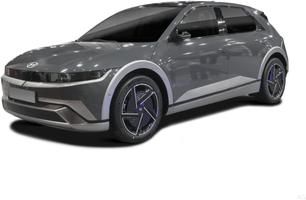
And this is one its latest examples, the pure-electric Ioniq 5 SUV in top-spec Epiq AWD trim and equipped with the N Line Option Pack as well as the tricky Digital Mirror Pack.
In this configuration it slots into the $90K price band, which means it has a lot to live up to in terms of performance, safety, driving dynamics, value and more.
So, stay with us to see if this premium five-seater is the kind of sporty EV SUV that gets your heart racing.
It’s pretty hard to miss the LDV D90.
Mainly because it is gigantic; it's one of the biggest SUVs you can buy. In fact, I’d say what’s drawn you to this review is maybe you’ve seen one of these behemoths trucking past, and you’re wondering what the LDV badge is all about and how this relatively unknown SUV stands up against popular rivals and other notable newcomers.
To get one confusing thing out of the way, LDV once stood for Leyland DAF Vans, a now-defunct British company which has been brought back to life by none other than China’s SAIC Motor – yes, the same one which also resurrected MG.
So, is this MG big brother worth looking into? We took the recently released diesel version of the D90 on test for a week to seek some answers…
The Hyundai Ioniq 5 Epiq N-Line AWD leverages an electric powertrain’s best attributes brilliantly well.
It’s ultra smooth and comfortable with ample performance and great dynamics thanks in part to this car’s N Line spec.
Its price tag pits it against formidable competition from the German Big Three, Tesla and others. But it has what it takes in terms of quality and value to fight that battle. It’s an impressive machine.
Looking for a cheap, powerful diesel SUV with huge cabin space and a humane third row for adults? The D90 is a really sound offering, especially considering the price of entry for this top-spec diesel which should resonate with Aussies a bit better than the petrol version.
It has plenty of issues that could be ironed out, but they’re all so small and not sale-breaking it’s almost annoying how much better the D90 could be with just a little work. Rivals should be looking over their shoulder for what comes next.
Is this a big hatchback or a mid-size SUV? I’m on team hatchback, while Hyundai defines the Ioniq 5 as an SUV.
But who cares? They’re just words and the fact is even after close to three years in market this five-seater looks fresh and contemporary thanks to its confident, chiselled lines and wide stance.
For car-spotters the N Line exterior treatment consists of flat aluminium badging, specific bumpers front and rear, with a deeper nose spoiler incorporating larger vents to cool the front brakes.
There’s also body-coloured cladding and side skirts, gloss black mirror caps, unique 20-inch alloy rims and a ‘hidden’ lighting signature across the top of the front bumper.
Inside there are Alcantara- and leather-appointed seats, an N Line-exclusive partially-perforated leather steering wheel, red contrast stitching and accents, and brushed metal covers on the pedals.
Add in the twin 12.3-inch screens display and this understated, super-cool interior comes to life with a sporty twist.
The Ioniq 5 scores points for a manual dial for audio control and an Ioniq 5 update earlier this year included a row of simple-to-use buttons for the ventilation system and another on the centre console for seat comfort settings and more. A sensible blend of physical and digital controls.
Some colleagues I’ve spoken to like the way the D90 looks. To me, it looks like someone gene-spliced a Hyundai Tucson with a SsangYong Rexton in a lab, then grew it in a stew of peptides and this was the result.
What can’t really be communicated in images is how truly massive the D90 is. At over five metres long, two metres wide and almost two metres tall, the D90 is certifiably huge. Given that’s the case then, it’s admittedly almost admirable that only the side profile makes this thing look a little goofy.
I think LDV has done a pretty good job on the front, and the rear is simple but well resolved for a vehicle that rides on a ladder chassis (just take a look at the Pajero Sport for how ladder-chassis rear designs can get… controversial…).
The wheels, garnishes, and LED headlights are all tastefully applied. It’s not ugly… just confronting… size-wise.
Inside shares some familiar characteristics with sister-brand MG. Look from a distance and it’s all quite nice, get in too close and you’ll see where the corners have been cut.
The first thing I don’t like about the interior is the materials. Apart from the wheel they are all pretty cheap and nasty. It’s a sea of hollow plastics and mixed trims. The faux-wood pattern, which is clearly just a print on a plastic resin is particularly gnarly. Reminds me of some Japanese cars from 20 years ago. It might work for the Chinese audience, but that’s not where the market is in Australia.
On the other hand, you could say “well, what do you expect at this price?” and that is true. Everything is here and works, just don’t expect the D90 to be playing alongside the established players when it comes to fit, finish, or material quality.
The huge screen works to finish the dash, but that darned software is so ugly you’ll wish it didn’t. At least all the major touch-points are ergonomically accessible.
At just over 4.6m long, a little under 1.9m wide and a fraction more than 1.6m tall the Ioniq 5 comfortably fits the medium SUV profile.
But arguably its most significant dimension is a 3.0m wheelbase which is huge for a car of this size as evidenced by the wheels pushed out to the corners.
What that means is plenty of space inside, but before you can even get in the capacitive touch power door handles may look cool and help aero performance with their flush fit design but I’m not a fan. They’re hard to grip most of the time and don’t work well from an ergonomic point-of-view.
That said, once inside the front seats are adjustable six ways to Sunday and at 183cm tall I have plenty of head space and breathing room in general.
In terms of storage there are big pockets in the doors with room for bottles and thanks to the ‘shift-by-wire’ gear controller located on the steering column there’s room between the seats for a substantial console including a pair of cupholders, a slot for devices and a lidded tray (which doubles as a centre armrest) with that whole rear section able to swing up to allow access to a large lower shelf underneath.
In fact, the entire console unit easily slides fore and aft to liberate more legroom for the centre rear position. There’s also an oddments cubby in the lower part of the dash and a decent glove box.
Then, for connectivity and power there are three USB-C sockets (one in the dash switchable to streaming), a wireless device charging pad and a 12-volt outlet.
In the back that long wheelbase comes into its own. Sitting behind the driver’s seat set for my position I have loads of foot, leg and headroom.
Storage runs to door pockets with room for bottles, a fold-down centre armrest with a pair of cupholders, there are netted map pockets on the front seat backs and pull-up sun shades on the rear windows.
There are controls for the front passenger seat on the inner edge of the front passenger seat backrest which allows rear seaters to adjust its position. Thoughtful.
For power there’s a pair of USB-C sockets and individual ventilation controls in the back of the B-pillars is welcome.
Then, not only is the electrically-adjustable rear seat split 60/40 in the backrest, it’s in the cushion, as well, which adds extra flexibility in terms of a balance between rear passenger space and room in the boot.
The boot is generous at 527 litres (VDA) with the rear seat upright and 1587L when it’s folded down.
There’s also a handy 24L ‘frunk’ under the bonnet, a decent portion of which is devoted to the (included) charging cable.
Interestingly, the Ioniq 5 AWD is rated to tow a 1600kg braked trailer with a trailer pre-wiring package standard.
There’s a repair/inflator rather than a spare tyre, which is never a good thing, but there is a ‘smart’ power tailgate and a ‘Vehicle-to-Load’ function that allows you to power and/or charge three-pin appliances from the car. Handy.
The D90 is as massive on the inside as it is on the outside. I’m talking better space than a minivan, and nothing says that more than the humane third row. At 182cm tall, I not only fit in the rearmost two seats, but I can do so in as much comfort as any other row. It’s staggering. There’s actual airspace for my knees and head back there.
The second row is massive and on rails too, so you can extend the amount of room available to third-rowers – and there’s so much room in the second row, you’ll have space even with the seats moved forward.
My only criticism here is that the giant rear door is far enough forward to make clambering into the third row a little tricky. Once you’re there though there are really no complaints.
The boot is even usable with the third row deployed, with a claimed 343L of space. That should be hatchback-sized, but the measurement is a little deceptive as the space is tall but shallow, meaning it will only allow you to place smaller bags (a few, if you can stack them) with the remaining space.
The boot is otherwise cavernous with a wild 1350L available with the third row stowed flat, or 2382L with the second row stowed. In this configuration, with the front passenger seat slid forward to its furthest position, I was even able to get a 2.4-metre-long benchtop in the back. Truly impressive.
Without buying an actual commercial van then, this could be the cheapest way into such room, especially in a 4x4 bi-turbo diesel SUV. No arguing with that.
Second-row occupants get their own climate control module, USB ports and even a full-sized household power outlet, with more legroom than you could possibly need. My only complaint was that the seat trim seemed a little flat and cheap.
Front occupants get large cupholders in the centre console, a deep armrest box (with no connectivity in it, just a randomly placed DPF cycle switch), pockets in the doors, and an awkward binnacle under the climate controls that houses the single available USB port. My phone didn’t fit in there.
No complaints about leg and headroom in the front either, though, with plenty of adjustability to boot. The driver’s seat offers a commanding view of the road, although it can be a little unsettling to be so far off the ground in corners… more on that in the driving section.
It shows how far the Hyundai brand has come over its close to 40 years in the Australian new-car market that one of its five-seat SUVs wearing a price tag in excess of $90K doesn’t knock the Earth off its axis.
But a sticker price of $91,300, before on-road costs, does apply the pressure because it puts this primo Ioniq 5 Epiq N Line AWD in the same orbit as versions of the Audi Q4 e-tron, BMW iX3, Mercedes-Benz EQB, Tesla Model Y and Volvo’s XC40 Recharge.
In fact, our test car’s price includes the N Line Pack which is technically a $2500 option and its digital mirrors add a further $3000 for an as-tested price of $94,300, before on-road costs.
So, you should rightfully expect a handsome standard equipment list and this full-fat Ioniq 5 doesn’t disappoint.
Aside from the safety and performance tech we’ll get to shortly this car includes 20-inch alloy rims, all LED exterior lights (with auto LED projection headlights), dual-zone climate control, power driver and front passenger seats (heated/ventilated), heated rear seats, ambient lighting, a head-up display, wireless Android Auto and Apple CarPlay, Bose eight-speaker audio, digital radio, built-in nav and voice control for key functions.
There’s also Alcantara- and leather-appointed seat trim, BlueLink connected car services (with a five-year complimentary subscription), configurable ambient lighting, wireless device charging, a fixed glass roof, a heated steering wheel, heated and power-folding exterior mirrors, auto rain-sensing wipers, keyless entry and start, and ‘Remote Smart Parking Assist’.
That last one allows you to start and move the car forwards and backwards remotely (via the key) to insert it into or extract it from tight parking spots… or just impress your friends.
Suffice it to say the Ioniq 5 Epic N Line AWD stands up well against its competitors when it comes to included features for the money.
On paper, the seven-seat D90 is immediately quite appealing. At $47,990, it is literally a lot of car for the money. This latest iteration, the bi-turbo diesel, is only available in Executive trim at this price, but you can pinch pennies further by choosing one of the lesser petrol turbo variants.
Regardless, and much like its MG sister brand, LDV is good at making sure that essential spec boxes are ticked.
This includes screens galore as is popular in the Chinese market, including a massive 12-inch multimedia screen and 8.0-inch digital dash.
A screen is only as good as the software that runs on it though, and let me tell you, the D90’s software is not good. A quick flick through the weirdly small menu reveals barebones functionality, terrible resolution and response time, as well as possibly the worst execution of Apple CarPlay I’ve ever seen.
I mean, it doesn’t even use all of that screen real estate! Not only that, but in a recent overhaul to CarPlay, Apple released software to utilise wider displays – so the car’s own software must simply be incapable of supporting it. Inputs also proved laggy, and I had to repeat myself on multiple occasions to get any use out of Siri. Unlike every other car I’ve used, the software in the D90 wouldn’t return to the radio after you hang up or stop talking to Siri. Frustrating.
I’d rather have a far smaller display that actually worked well. The semi-digital dash was functional, although barely did anything that a small dot-matrix display isn’t capable of and had one screen which for my entire week said ‘loading’. I’m still not sure what it was meant to do…
At least it supports Apple CarPlay at all, which is more than could have been said for segment hero, the Toyota LandCruiser.
The D90 does tick some necessary items that are quite good. LED headlights are standard, as are leather seats with eight-way power adjust for the driver, a heated multi-function steering wheel, 19-inch alloy wheels (which still somehow look small on this huge thing), three-zone climate control, eight-speaker audio system, electric tailgate, keyless entry with push-start ignition, a reversing camera, front and rear parking sensors, tyre-pressure monitoring, as well as a fairly substantial safety suite which we’ll explore later in this review.
Great on paper then, the bi-turbo diesel engine is a boon, as is the fact that the D90 rides on a ladder chassis with an electronically-controlled low-range terrain mode for the transmission, too.
You’d expect to pay more – even from Korean and Japanese rivals for this much specification. No matter which way you cut it, the D90 is good value.
The Ioniq 5 Epiq AWD is powered by a permanent magnet synchronous electric motor on each axle, both powerful, but the rear unit packs a bigger punch.
And combined peak outputs of 239kW and 605Nm are substantial with especially the latter delivering eye-widening acceleration.
Drive goes to all four wheels via a single-speed, reduction gear auto transmission on both axles. And a ‘Disconnector Actuator System’ is able to disengage the front wheels to reduce drag losses from the front motor and improve energy efficiency.
The D90 was initially offered in Australia with a 2.0-litre turbo petrol four-cylinder, but this 2.0-litre bi-turbo diesel makes much more sense, both for towing and long-distance touring.
It’s a four-cylinder offering a healthy 160kW/480Nm. You’ll note that’s pretty close to Ford’s similar 2.0-litre bi-turbo diesel, which is currently offered in the Everest…
The diesel also gets its own transmission, an eight-speed torque converter automatic with computer-controlled ‘Terrain Selection 4WD’.
This gives the D90 diesel a max towing capacity of 3100kg braked (or 750kg unbraked) with a max payload of 730kg.
The Ioniq 5 Epiq AWD is powered by an 84kWh liquid-cooled lithium-ion battery, borrowed from the high-performance Ioniq 5 N.
Thanks to 800-volt compatibility it can accept a 350kW DC charge which translates to an up to 80 per cent charge time of around 18 minutes, which expands to just over an hour using a more typical 50kW charger.
Connect to AC at the Ioniq 5’s maximum 10.5kW capacity and quoted charge time is just over six hours.
Official energy consumption on the combined (urban/extra-urban) cycle is 19kWh/100km and claimed range is a useful 495km.
Over a mix of urban, suburban and freeway running on test we saw a real-world average of 16.8kWh/100km, which is impressive for a car with this much performance potential.
The D90 diesel is said to consume 9.1L/100km of diesel on the combined cycle, but ours didn’t score near that with a figure of 12.9L/100km after a week of what I’d consider “combined” testing.
The D90 a big unit, so that number doesn’t seem outrageous, it’s just nowhere near the claim… All D90s have 75-litre fuel tanks.
In terms of straight line performance we’re talking 0-100km/h in a tick over 5.0 seconds and I see anything in the five-second bracket as properly quick.
With more than 600Nm of peak pulling power at your disposal there’s always plenty of pulling power for efficient in-traffic moves and safe highway overtaking.
The shift-by-wire gear selector on the steering column takes some getting used to but once you’re in tune with it, it’s surprisingly convenient, especially during slow speed parking or turning manoeuvres.
There are multiple modes - ‘Eco’, ‘Normal’, ‘Sport’ and ‘Snow’. Sport mode spices things up a bit with more urgent responses and the ‘HTrac’ AWD system uses multiple sensors to manage potential wheelspin and optimise drive in wet conditions or on loose dirt surfaces.
Suspension is by struts at the front and multi-links and the rear and the Ioniq 5 in this configuration is ultra-smooth and comfortable.
Even hitting pretty aggressive speed bumps and ruts in the road and the car soaks them up without fuss. You’re used to EVs being a little harsh in terms of ride compliance thanks to their relative weight, but that’s not the case here.
As part of a model upgrade introduced earlier this year Hyundai says it undertook a “comprehensive revision to the suspension tune”, which includes high-performance dampers on this N Line. And despite low-ish profile (255/45) Michelin Pilot Sport EV tyres on the 20-inch rims it remains comfortable and quiet.
The upgrade also included body reinforcements in the B- and C-pillar, door surrounds and under the body for a stiffer platform overall.
That pays off in the dynamics. Despite its 2.1-tonne weight the Ioniq 5’s steering is accurate and nicely weighted. It doesn’t feel lumbering or ponderous despite its relative heft.
The physical brakes are ventilated discs front and rear with regenerative available through four levels, the most aggressive setting being ‘i-Pedal’ which allows single-pedal driving.
It will slow the car to a full stop, harvesting the most energy possible in the process, although you might need a dab on the brake pedal if things are tight.
Miscellaneous observations include a 12m turning circle, so be ready for three-point turns where you didn’t think you’d have to.
Hyundai's (and Kia’s) default over-speed warning is present in full-force taking clicks through multiple screens to switch off and avoid its incessant audible alarm saying you've exceed what the car believes is the posted limit (every time you restart the car).
The recently released Tucson Hybrid features a short-cut function to do away with this issue and it would be welcome here.
The CPU underpinning the multimedia system is more powerful and response is speedy without a hint of lag.
And the camera based ‘mirrors’ take some getting used to. For many, they’re the answer to a question no one was asking. I mean, conventional mirrors work pretty well and any aero benefit from the smaller camera units has to be modest. But once you’re in tune with them the hi-def screens are excellent.
A flip of the switch on the interior rear view mirror allows you to side-step tall heads or loads in the back of the car but minimal depth of field is also (visually) awkward at first.
The D90 is easier to drive than it looks… to a degree…
It lacks some polish of its more established rivals, which results in a drive experience that isn’t bad, but occasionally frustrating.
The ride somehow manages to be soft and harsh at the same time. It undulates over larger bumps, while transmitting the worst parts of smaller, sharper ones to the cabin. It speaks to a lack of calibration between the suspension and dampers.
That having been said, the D90 masks its ladder chassis underpinnings well, with little of that typical body-on-frame jiggle that some rivals still struggle with.
The drivetrain is good, but a little unruly. As you’d imagine from the figures, there’s more than enough power on tap, but the transmission tends to have a mind of its own.
It will occasionally lurch between gears, pick the wrong gear, and off-the-line will sometimes be delayed before shunting the D90’s bulk forward with a sudden mountain of torque. It doesn’t sound particularly good either, with the diesel surging through the rev range with industrial crudeness.
By the time the D90 has reached cruising speed though, there’s really not much to complain about, with the D90 milling along with plenty of power in reserve for overtaking. The view of the road is commanding, but you really feel the D90’s high centre of gravity in the corners and under heavy braking. The physics of such a large object are undeniable.
I have to say, LDV has done a fantastic job of the D90’s steering, with a quick, light feel that betrays the SUV’s size. It manages to stray on the right side of lightness though, not being so disconnected that you lose a feeling of where the wheels are pointing. No mean feat in something this shape.
Overall then, the D90 isn’t bad to drive and has some genuinely great characteristics, it just also has a litany of small issues that get in the way of it being truly competitive with segment leaders.
The Ioniq 5 received a maximum five-star ANCAP score from assessment in 2021, receiving its highest scores for adult and child occupant protection and the on-board safety assist systems.
The Ioniq 5 stacks up well relative to its competitors when it comes to safety. In fact, there’s so much crash avoidance tech on-board, courtesy of the Hyundai ‘SmartSense’ active safety suite, it would be straight up boring to list it all, but the highlights include AEB (with car-to-car, pedestrian and cyclist detection as well as junction turning and crossing functions), blind-spot monitoring and collision avoidance, lane keeping assist and lane departure warning, rear cross-traffic alert and rear AEB as well as active cruise control (with stop and go).
There are even more assists, warnings, monitors and alerts, but it’s important to note they (almost) all operate with relative subtlety. I did switch off the steering assist/lane-keeping functionality when it became confused and overly intrusive on twisting city curves.
If a crash is unavoidable, there are seven airbags on-board including a front centre bag to minimise head clash injuries in a side-on impact, as well as ‘Automatic Collision Notification’ and an emergency SOS call function operated through the Bluelink system.
For baby capsules/child seats there are three top tether points across the second row with ISOFIX anchors in the outer positions.
The LDV D90 carries a maximum five-star ANCAP safety rating as of 2017, and has a fairly comprehensive active safety suite.
Included on the diesel is auto emergency braking (AEB) with front collision warning, lane-departure warning, blind-spot monitoring, driver-attention alert, traffic-sign recognition, and adaptive cruise control.
Not bad for the price, and nice that there’s nothing optional. Expected items include electronic traction, stability, and brake controls, as well as six airbags.
The curtain airbags do extend to the third row, and there’s the bonus of a reversing camera and a tyre-pressure-monitoring system.
There is a full-size steel spare under the boot floor, and the D90 also gets dual ISOFIX and three top-tether child-seat mounting points.
Hyundai covers the Ioniq 5 with a five-year/unlimited-km warranty, which is the mainstream market norm, with a separate eight-year/160,000km warranty for the drive battery; also an expected term.
Roadside assistance and sat-nav updates are renewed annually if the vehicle is serviced at an authorised Hyundai dealer.
Service interval is two years/30,000km which is appropriate for an EV given its relative mechanical simplicity and a ‘Lifetime Service Plan’ locks in scheduled maintenance costs for the life of the vehicle.
Service cost for the first five years is $1220, with each of the two services required in that time coming in at $610. Competitive for an EV in this part of the market.
LDV covers the D90 with a five-year/130,000km warranty, which is not bad… but falls behind sister brand MG, which offers seven years/unlimited kilometres. At the very least it would be nice to have the unlimited kilometre promise.
Roadside assist is included for the duration of that warranty, but there’s no capped price servicing offered through LDV. The brand gave us indicative pricing of $513.74, $667.15, and $652.64 for the first three annual services. An initial six-monthly 5000km checkup is free.
All D90s need to be serviced once every 12 months or 15,000km, whichever occurs first.